


After years of bike travel, I’ve come to really value lateral frame stiffness. While it’s not an absolute necessity, a stiff frame makes a noticeable difference in handling, stability, and the overall ride feel of a bike.
In this article, I’ll cover when frame stiffness actually matters and when it doesn’t. I’ll show you how to spot a stiff touring bike without even taking it for a ride, and we’ll also explore how stiffness relates to rider comfort, frame size, belt drivetrains, and different construction materials.
This article was originally published in December 2018 but has been updated in February 2020.
Why Stiffer Is Better When It Comes To Bike Travel

Most touring bikes are designed to carry both front and rear loads, and it’s the frame that has to resist the twisting forces created between these two points. A stiffer touring frame offers several advantages.
Extra Stability
At certain speeds, a fully loaded touring bike can develop a bit of front-to-rear wobble. While frame stiffness isn’t usually the root cause (it’s more often due to an unbalanced front load or a slightly out-of-round wheel), a stiffer frame is better at resisting this oscillation. This becomes even more important on drop-bar touring bikes, where you have less steering leverage to correct a wobble once it starts.
Unbalanced Front Loads
Perfectly balancing front panniers isn’t always realistic. I pack mine based on accessibility (kitchen gear on one side, camping gear on the other), which leaves one pannier slightly heavier. With a very stiff frame, I’ve noticed these weight differences are less likely to induce oscillations, even when the load is uneven. In short, more stiffness gives you greater flexibility in how you distribute your front luggage.
Confidence-Inspiring Ride
The torsional rigidity of a stiff frame makes a touring bike feel more predictable and controlled. With less noticeable flex in the top tube and down tube, the bike feels planted and stable under load—something that naturally inspires more confidence on long journeys.
Frame Materials And Stiffness

The good news is that you can build a very stiff touring bike out of any common frame material – aluminium, steel, titanium, or even carbon. Ultimately, it all comes down to the frame’s engineering and design.
Take titanium, for example. Compared to steel, a titanium frame with the same strength is roughly half the weight and about half as stiff. To bring stiffness up to a practical level, manufacturers typically use larger-diameter tubing. The result is a frame that’s strong and stiff, often lighter than steel, but also more expensive.
Aluminium behaves a bit differently. Using the same tube dimensions, aluminium is about one-third as stiff, one-third the weight, and only about half as strong as steel. To compensate, aluminium frames are built with oversized tubing and thicker walls, which helps achieve the necessary stiffness and durability.
To read more about frame materials and bike travel, head over to my in-depth article HERE.
How To Tell If A Bike Frame Is Stiff
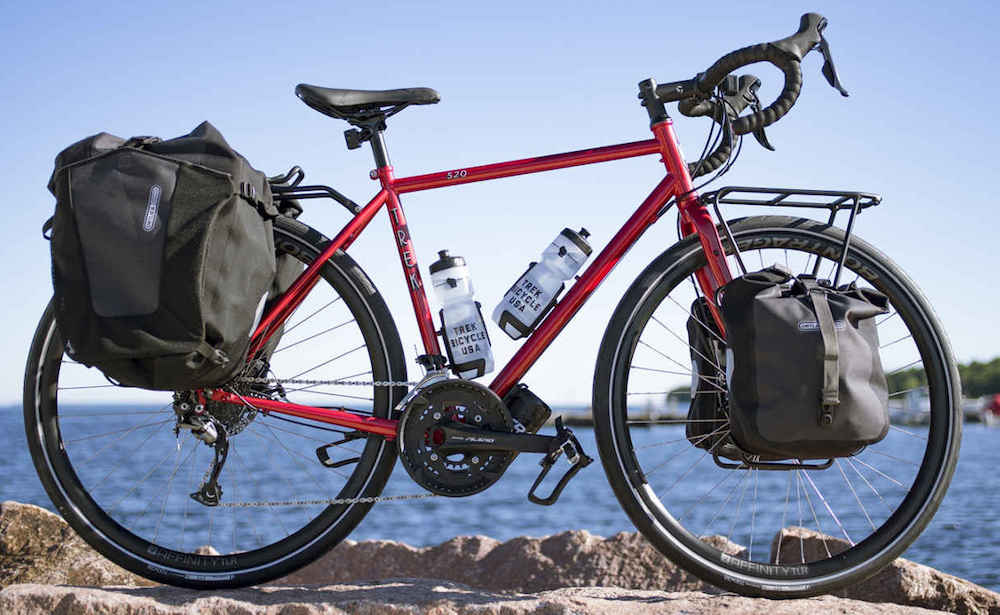
Measuring frame stiffness isn’t an exact science, but there are a few reliable indicators. In general, stiffer frames use larger-diameter tubes with thicker walls. Factors like frame size, tube butting, ovalization, and material quality also play a role – though those details are rarely shared by manufacturers.
While ultra-light, thin-walled, oversized tubing does exist, you won’t find it on touring frames. That kind of tubing is reserved for high-performance road bikes. For example, Columbus Spirit OS steel tubing can be as thin as 0.4mm in the tube centre – far too delicate for a loaded touring rig.
Another good sign of stiffness is an oversized head tube (especially if it houses an internal upper headset assembly). A larger head tube gives frame builders more surface area to connect big tubes, which helps increase overall torsional rigidity.
If you can’t test a frame fully loaded, here’s a quick guide to spotting stiffer touring frames based on tubing dimensions:
Steel
-
Down tube: 34.9mm or larger (e.g. 38.1mm, 42mm, 44mm)
-
Top tube: 31.7mm or larger (e.g. 34.9mm)
-
Double or triple-butted tubing
Titanium
-
Down tube: 41.5mm or larger (e.g. 48mm)
-
Top tube: 34.9mm or larger (e.g. 37.3mm, 38.1mm)
-
Double or triple-butted tubing
Aluminium
-
Down tube: 44mm or larger (e.g. 48mm)
-
Top tube: 38mm or larger (e.g. 44mm)
-
Double or triple-butted tubing
Bike Size And Frame Stiffness
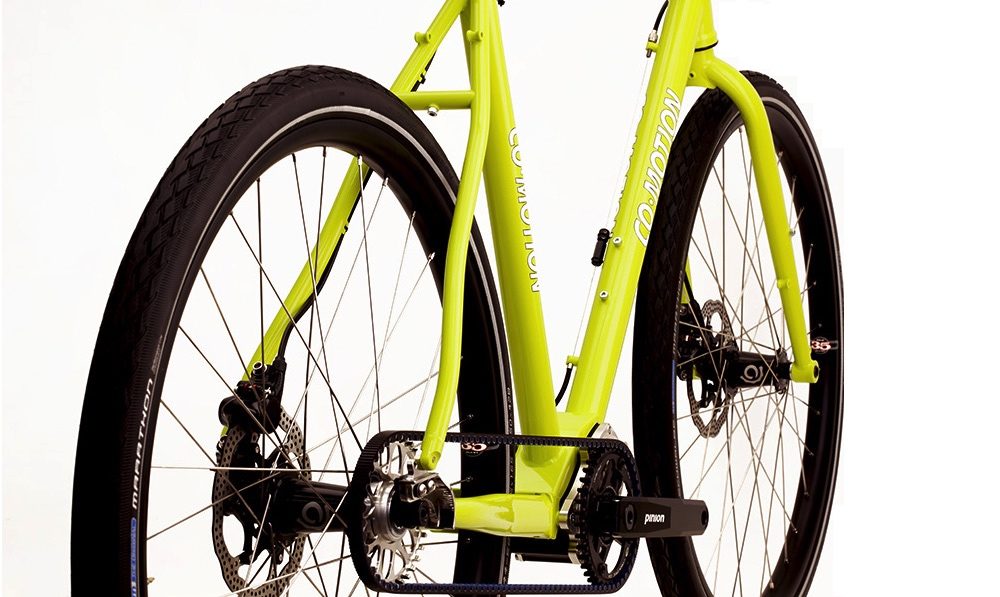
If you’re a smaller rider, you’ll generally notice less variation in stiffness between touring frames. That’s because shorter tubes naturally make smaller frames (44 to 52 cm) stiffer. In fact, tubing with slightly smaller diameters is usually more than adequate for these sizes.
On the other hand, if you’re tall like me, it’s worth seeking out frames with the largest possible tubing diameters – you’ll feel greater differences in stiffness. Tall riders carrying heavy loads may even benefit from a marathon tube, an extra reinforcement that connects the head tube to the seat stays. That said, these designs are less common today, as modern tubing is available in much larger diameters than in the past, making additional reinforcement less necessary.
When Frame Stiffness Matters Most
When You’re Carrying Heavy Loads
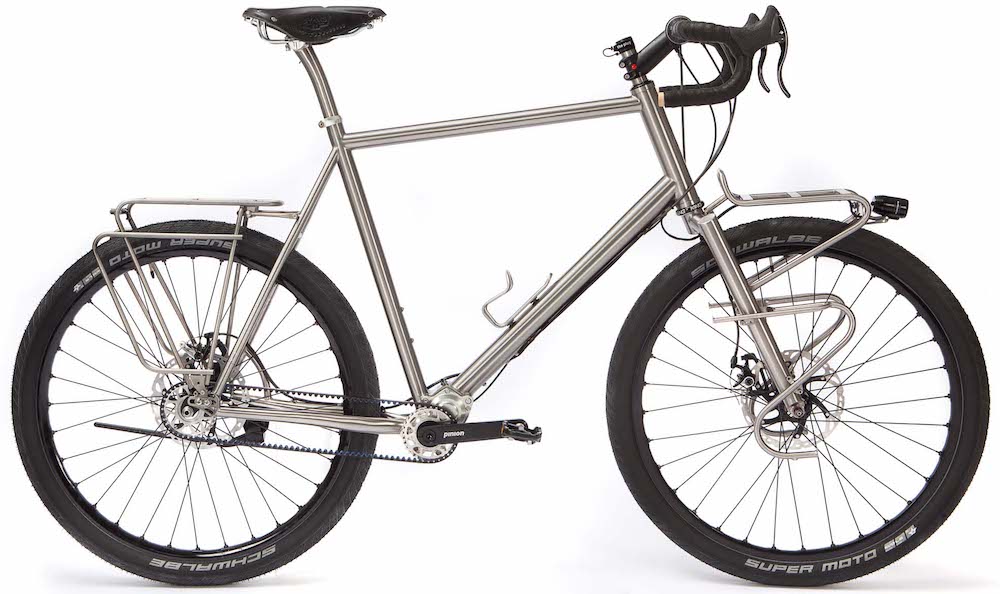
A typical touring setup distributes weight across both ends of the bike. The heavier the load, the more stiffness the frame needs to manage the twisting forces. For example, I usually carry about 8 kg up front and 15 kg on the rear. With this setup, the aluminium tubing of my KOGA touring frame (or oversized steel tubing of my Co-Motion) feels noticeably stiffer and more stable than my previous steel Surly Disc Trucker.
If you’re riding with less luggage weight, say 5 to 10 kg total, frame stiffness is generally less important and won’t have a major impact on your ride.
When You’re Running a Belt Drivetrain
Belt-drive frames demand a particularly stiff rear triangle; otherwise, the belt can derail from the cog. In fact, both Gates and Rohloff set minimum stiffness standards for frames designed to work with their systems. Beyond simply keeping the belt in place, extra stiffness has another benefit: it allows you to run lower belt tension, which can reduce drivetrain resistance at low power outputs.
What About Comfort?

It’s often assumed that stiff frames are uncomfortable to ride. But even if that were true, it helps to put frame comfort into perspective.
Most bike frames require over 500N of force to flex just one vertical millimetre. In real terms, that means your body weight only produces about a millimetre of frame flex. Compare that to a carbon seatpost like the Ergon CF3 Pro, which takes only 69N of force per millimetre, so it can easily flex around 10mm just by sitting on the saddle.
And neither of those is your bike’s primary source of suspension – that role belongs to the tyres. With as little as 10N of force, a wide tyre can deform by a millimetre or more.
When you look at it this way, tyres and seatposts contribute vastly more vertical compliance than the frame itself. Which means in practice, you’ll be hard-pressed to notice any meaningful difference in comfort between frames of varying stiffness.
Read more about why seatposts are overlooked yet critical for comfort HERE.
Summary
Frame stiffness plays a key role in the stability of a loaded touring bike. By adding just a few hundred grams of extra material, you get a bike that feels more planted, predictable, and confidence-inspiring on long tours. Combined with a good seatpost and wide tyres, even a very stiff touring frame can be just as comfortable as any other bike.
You can usually gauge the stiffness of a touring frame by checking its tube diameters. While it’s not an exact science, the stiffest frames almost always use the largest-diameter tubing available.
For light bikepacking setups, or for bikes carrying heavy loads primarily at one end, a high frame stiffness is less critical.
Find Out Whether Steel, Aluminium or Titanium Is The Best For Bike Travel HERE


