


If you’re looking for a true paradise for off-the-beaten-path adventures, we can highly recommend bike touring South Africa.
After nearly three years of cycling across the continent, South Africa still stands out as one of our favourite countries. It’s an incredible place to ride, likely up there with the world’s best if you’re into the more adventurous side of bikepacking.
Before our trip, we assumed the Great Karoo would be a dull desert stretch we’d simply cruise through in our aero bars. Instead, almost every day brought a highlight. Riding through spectacular poorts (mountain passes), enjoying afternoon swims, or stopping at fantastic padstals (farm stalls).
We ended up splitting my Bike Touring South Africa guides into two separate posts. This article covers our route from Cape Town to Lesotho, including the Great Karoo, Little Karoo and Garden Route.
That should make the information easier to navigate, while also reflecting the reality that most cyclists crossing the continent tend to head either toward Namibia or Lesotho. That said, if you have the time and flexibility, you really should ride both the Karoo and the Western Cape!
For the Western Cape section from Cape Town to Namibia, click HERE.
South Africa at a Glance
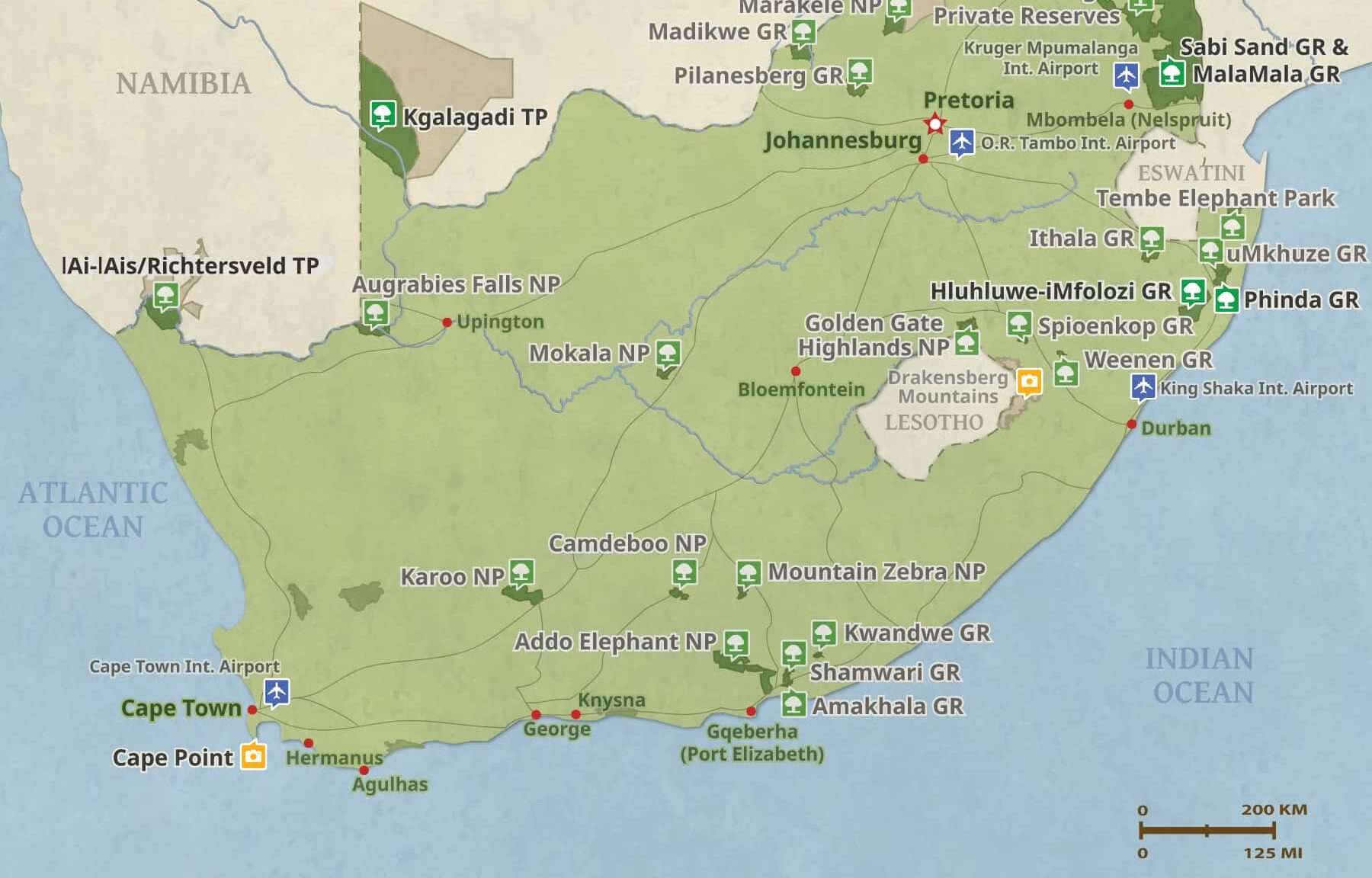
South Africa is roughly twice the size of France, yet it often feels much larger. Every few hundred kilometres, the language, culture, and landscape seem to change. The country has 12 official languages, and each community maintains its own distinct cultural identity.
For me, though, the greatest highlight was the ever-changing flora. The Cape Floristic Region, which stretches across the country’s southwestern corner, is one of the world’s richest biodiversity hotspots. It is home to more than 9,000 plant species, around 70% of which are found nowhere else on Earth. Travelling by bicycle through these landscapes gives you the time to truly notice and appreciate them.
Beyond its natural and cultural diversity, South Africa is also a logistically easy place to cycle. Resupply is straightforward thanks to well-stocked grocery stores, and you’ll often find good restaurants even in small towns or on farms along quiet dirt roads. People were also incredibly welcoming, with several inviting us to spend a night in their homes. Throughout our time in the country, we rarely found ourselves wanting for anything.
While South Africa remains one of our favourite destinations, the long history of apartheid and systemic racism is still visible today. It can be especially confronting in rural areas, where large farms are often white-owned, while nearby townships are densely populated by Black South Africans who, decades after apartheid ended, still face significant barriers to land ownership.
If you take the time to learn about this history before visiting, it provides valuable context and a deeper understanding of the many complexities of South African society and how apartheid continues to shape life today.
Top Places To Visit
Swartberg Nature Reserve
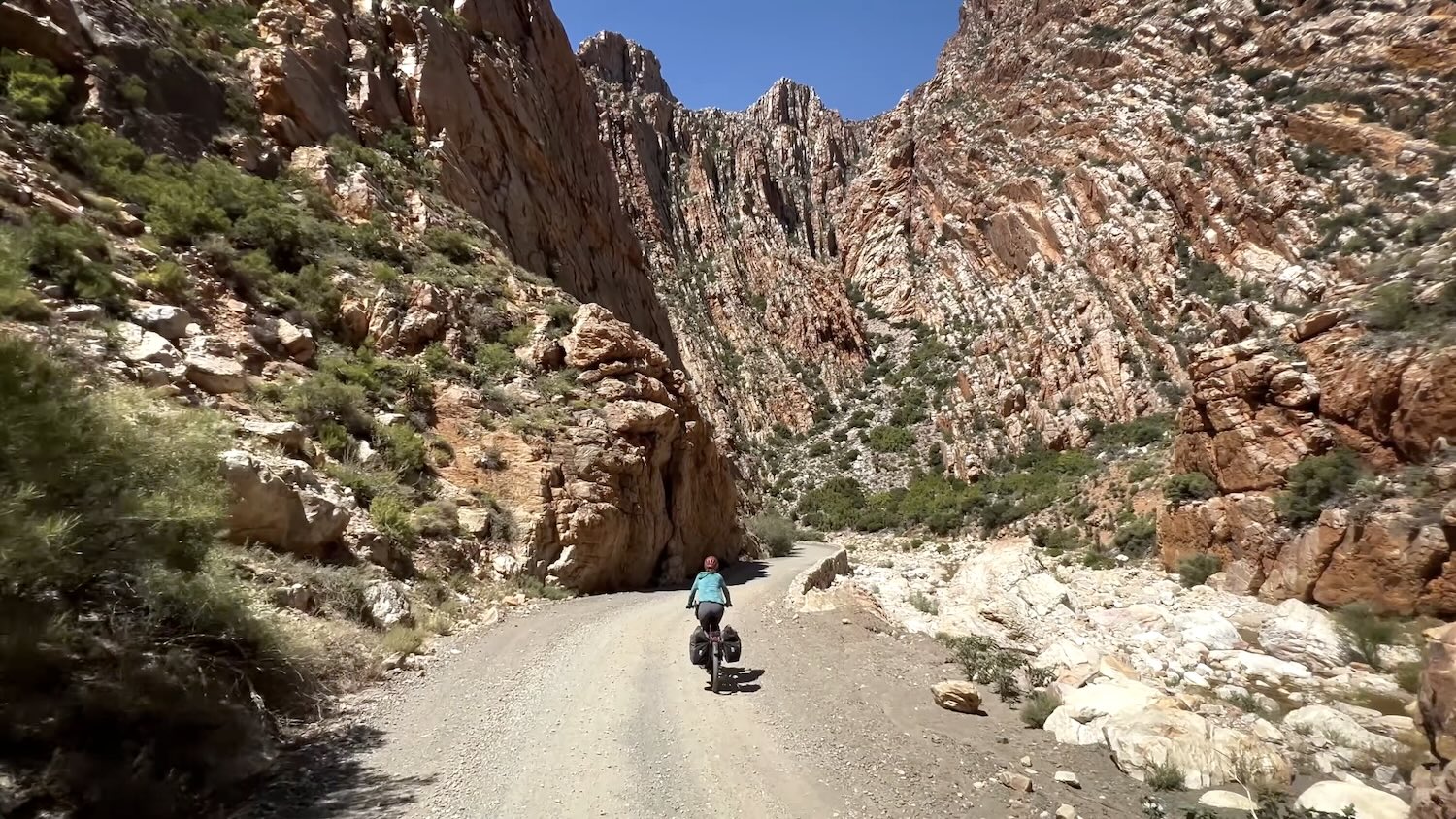
Our favourite part of this entire stretch was undoubtedly the Swartberg Nature Reserve and the surrounding mountains. Between the dramatic rock formations, incredible views, swimming holes, unique flora and fauna, caves, rich history, and nearby charming towns, it really has a bit of everything. Swartberg Pass may even be the best mountain pass to cycle in the whole country.
Prince Albert
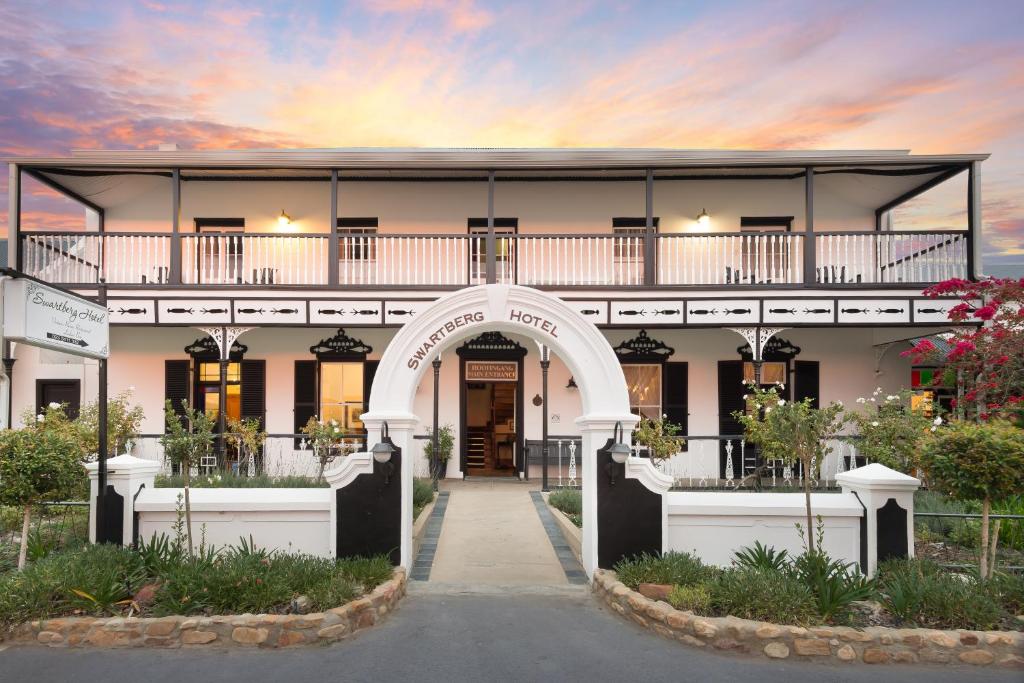
This charming town on the edge of the vast Karoo sits between some of the most spectacular mountain passes in the region. It’s well worth planning a rest day here. The main street is lined with historic Cape Dutch houses, many of which now host excellent restaurants, cafés, and even a campground.
Cango Caves
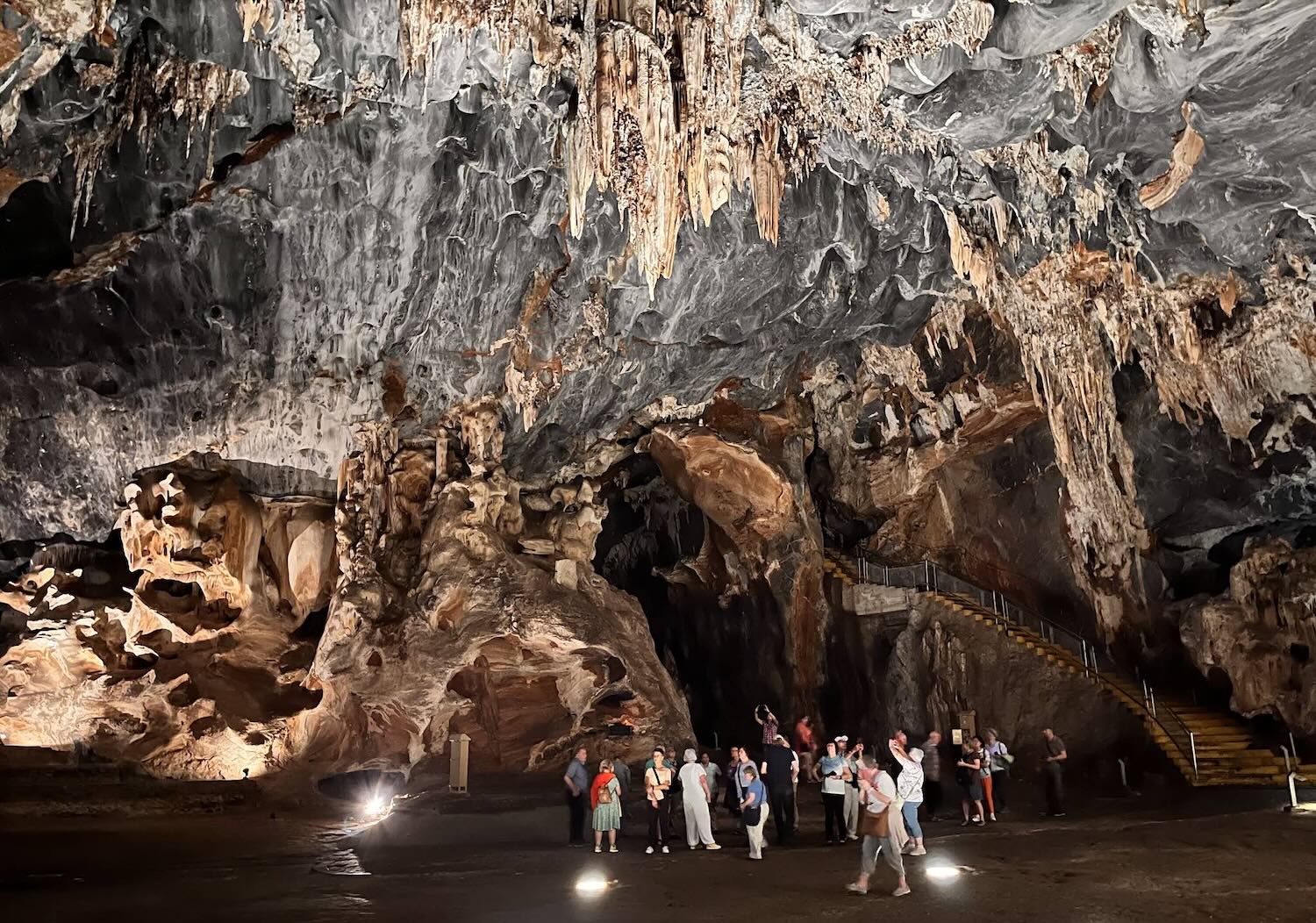
The largest cave system in Africa, the Cango Caves are also said to be South Africa’s oldest tourist attraction. If you’re visiting the Swartberg Nature Reserve and Prince Albert, you’ll pass right by them. They’re well worth a couple of hours to explore.
Kogelberg Nature Reserve and Surrounds
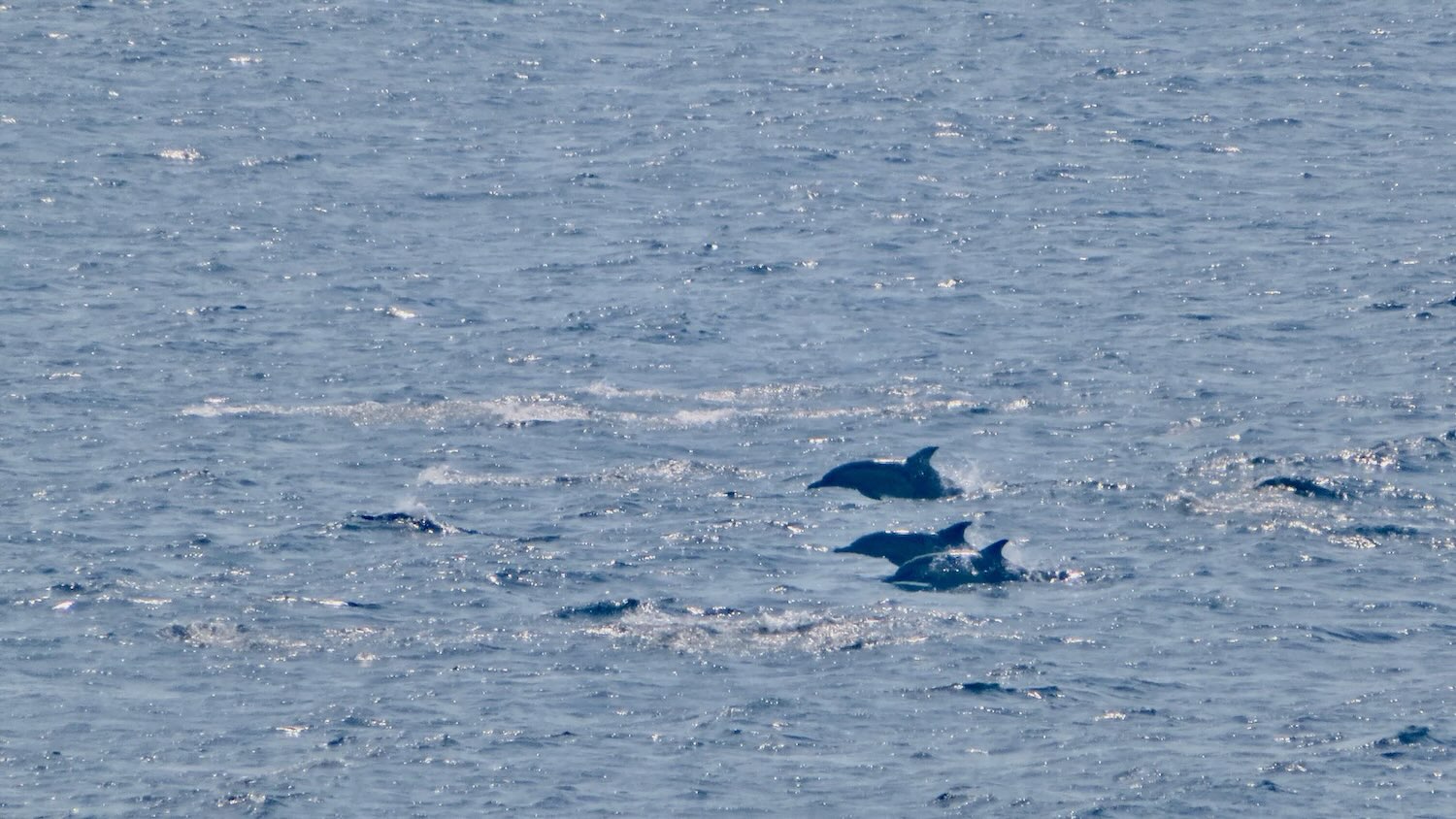
Just 100 km from the hustle and bustle of Cape Town lies the Kogelberg Nature Reserve and its surrounding towns. From the cliffside roads, we watched pods of hundreds of dolphins passing below. There’s also plenty of hiking, along with lovely botanical gardens.
These mountains are also home to the Cape leopard, which is sometimes known to make its way down to the beach to prey on unsuspecting penguins. Nature can be ruthless.
Mountain Zebra National Park
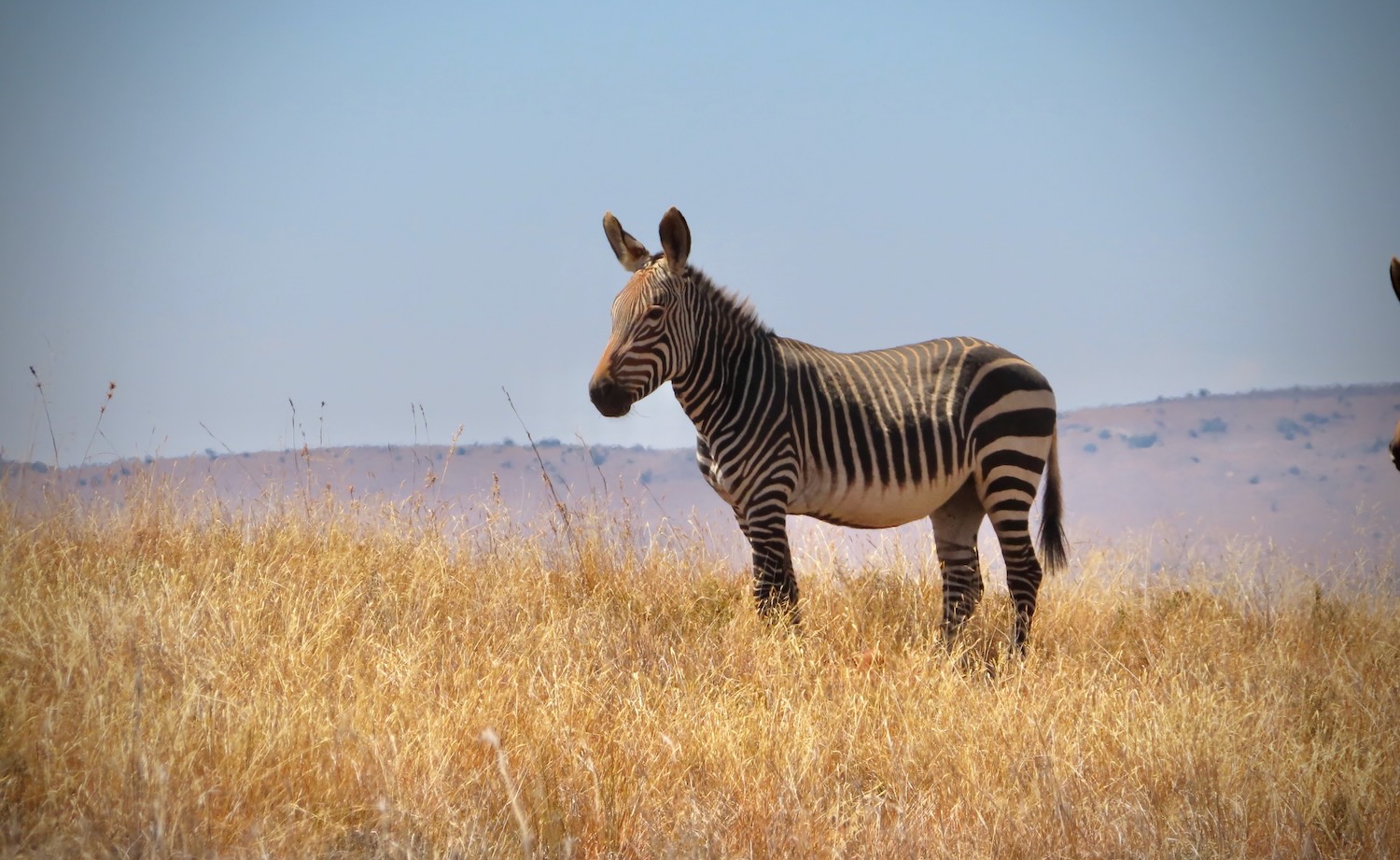
While you can’t cycle inside the park, it is well worth a stop. Originally established to save the Cape mountain zebra from extinction, the park now protects one of the last strongholds of this rare subspecies.
Alongside a short safari to spot the zebras, we also joined a cheetah tracking experience. This is one of the few places in Africa where you can safely see wild cheetahs at such close range. Rangers drive you through the park while triangulating signals from radio-collared cheetahs. Once located, you continue on foot and get remarkably close to the animals (around five metres), which are wild but habituated to human presence.
When we visited in February 2024, the cheetah tracking was surprisingly affordable.
Garden Route
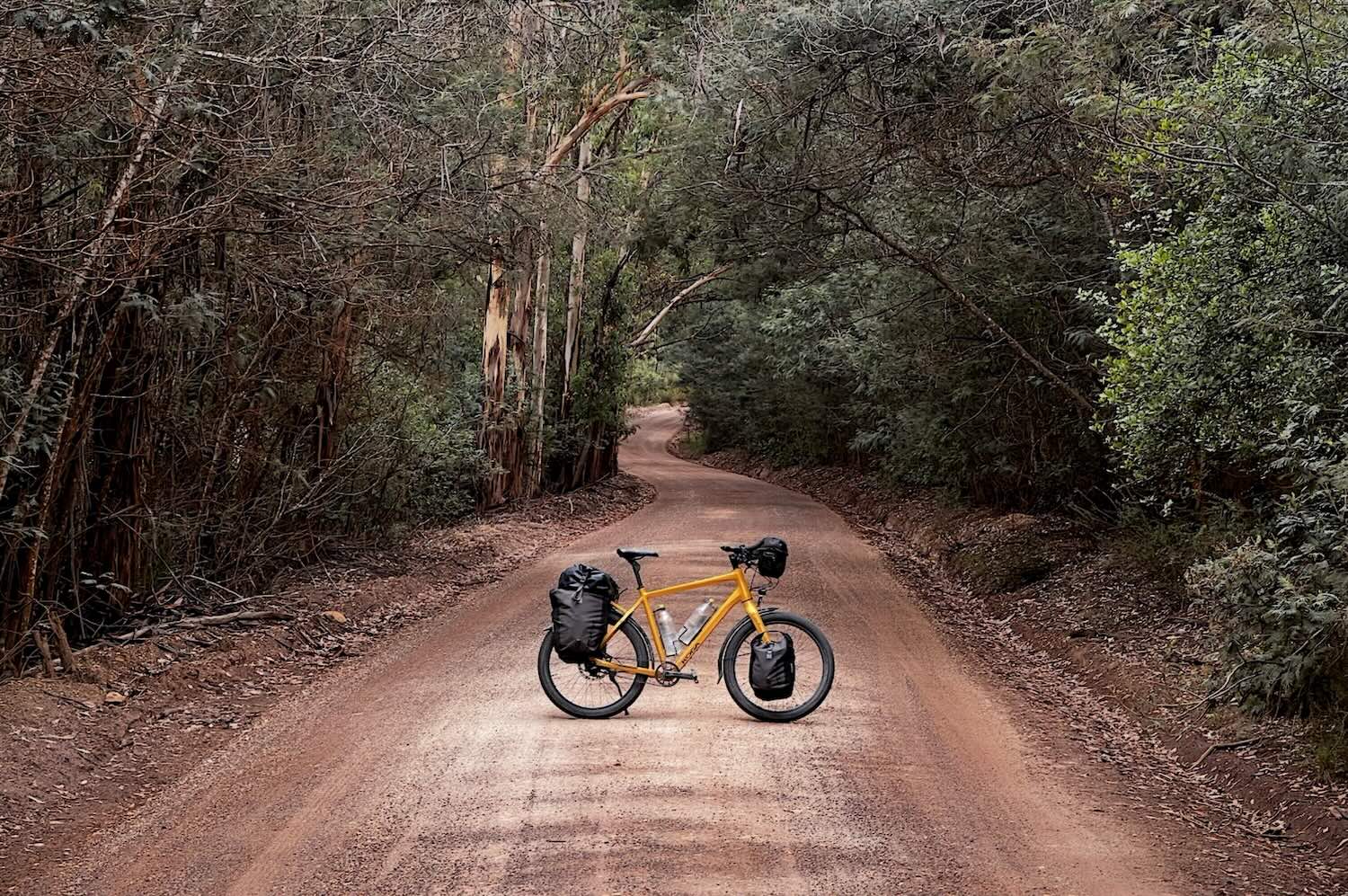
The Seven Passes Road, an unpaved back road linking George and Knysna, was a highlight. Parts of this route are truly beautiful, winding through forests and valleys. If you’re especially lucky, you might even spot the endemic Knysna turaco, or the lone wild female elephant inhabiting the Knysna Forest known as Oupoot (well, confirmed sightings are only twice a decade for her).
That said, perhaps our expectations were simply too high after months of hearing how much we would love the Garden Route. There were certainly beautiful sections, but this stretch of coastal towns didn’t quite live up to the hype for us. We found the roads too busy to fully enjoy, and much of the surrounding area felt heavily urbanised. Reaching many of the coastal towns also required riding on a busy highway, which we found fairly unpleasant.
Ostritch Farms
The Karoo’s hot, dry climate is ideal for raising ostriches, so you’ll pass plenty of farms as you ride through the region. While we didn’t stop to visit any, cycling past them was entertaining enough. The ostriches often run alongside you on the other side of the fence, making for a pretty fun stretch of road. Why are they so silly?!
Where Did We Go Bike Touring in South Africa’s Karoo?
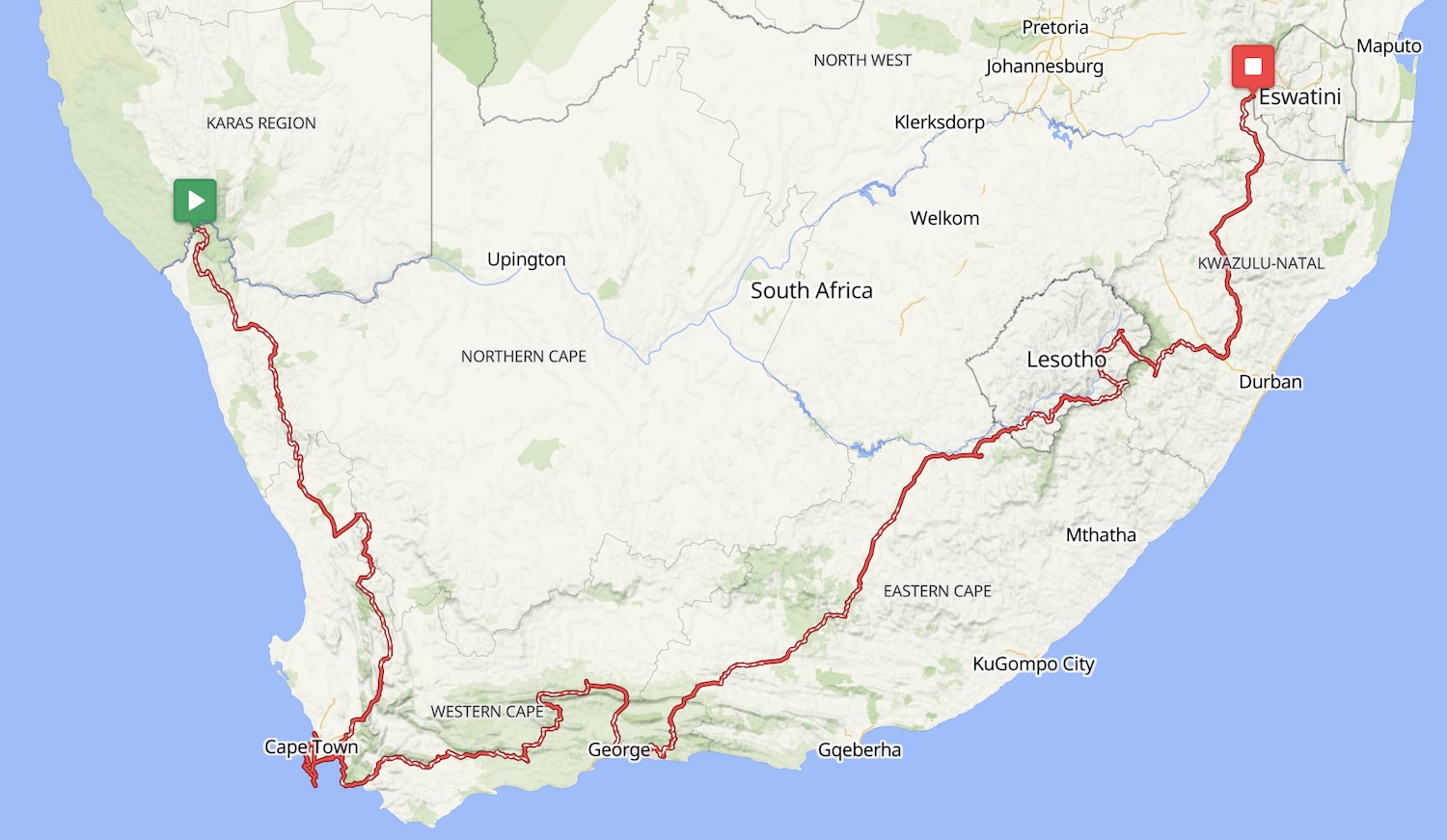
Our Karoo ride covered around 1,400 km, starting in Cape Town and finishing in Lesotho. We began in the Klein Karoo (“Little Karoo”), stopping at padstals along the way and enjoying coffee at the many cafés scattered through its small towns. The riding led us through scenic, narrow passes, with plenty of chances for daily swims in secluded rivers and well-known swimming holes.
After passing through Seweweekspoort, we tackled the most challenging section I’ve ever “ridden”: a one-kilometre, near-vertical hike-a-bike. That climb eventually brought us into Die Hel, a once remarkably isolated farming community hidden deep within the mountains.
A few days later, we dropped down to the Garden Route, where we rode through lush old-growth forests and made the most of the excellent bakeries and coffee shops. From there, we climbed Prince Alfred Pass and entered the vast landscapes of the Great Karoo.
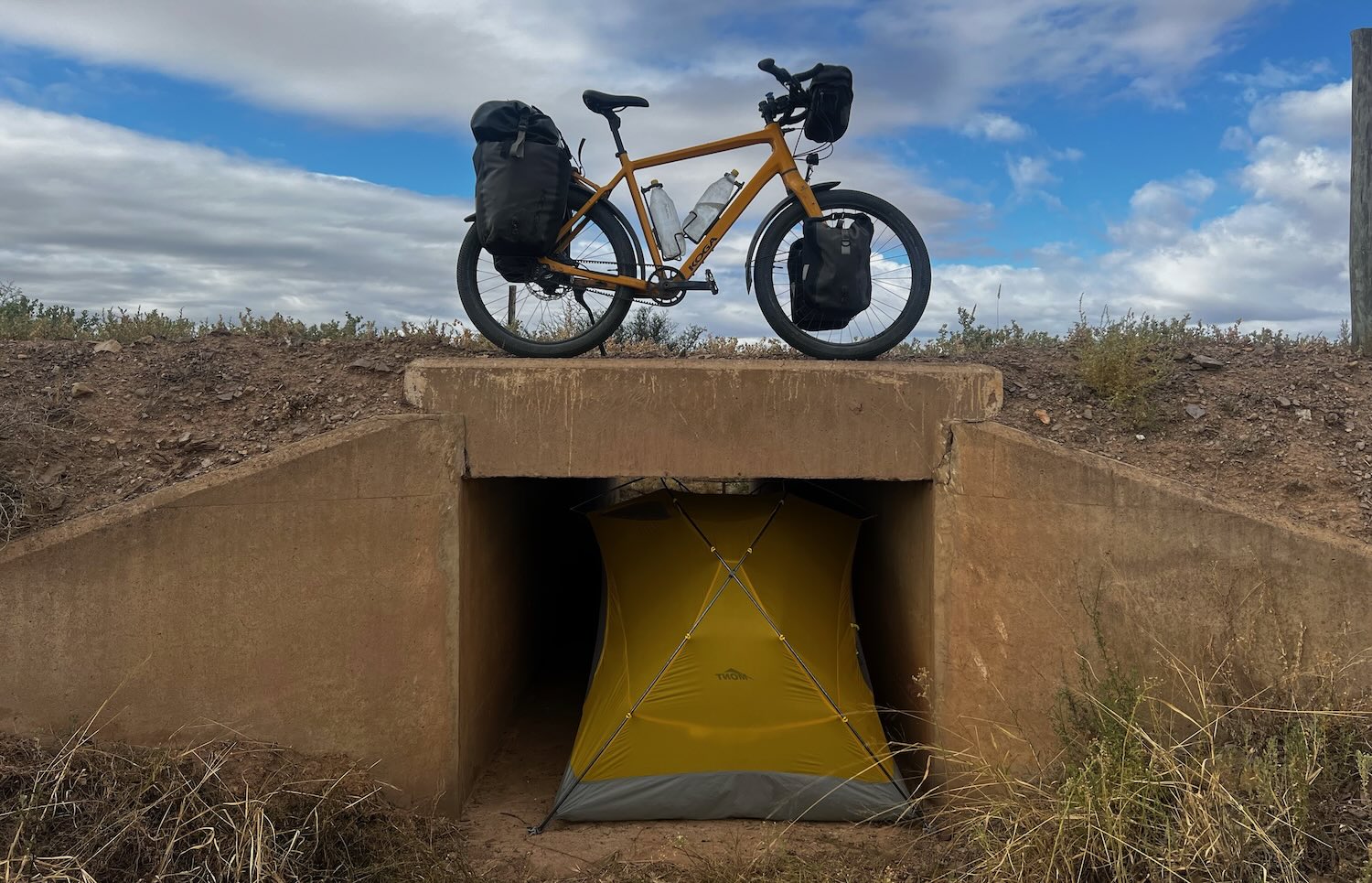
In the Great Karoo, we followed quiet farming roads northeast toward Lesotho. The terrain was mostly flat, allowing for some big mileage days. At night, we sometimes camped beneath roadside drainage culverts to shelter from the strong, howling winds that sweep across the plains.
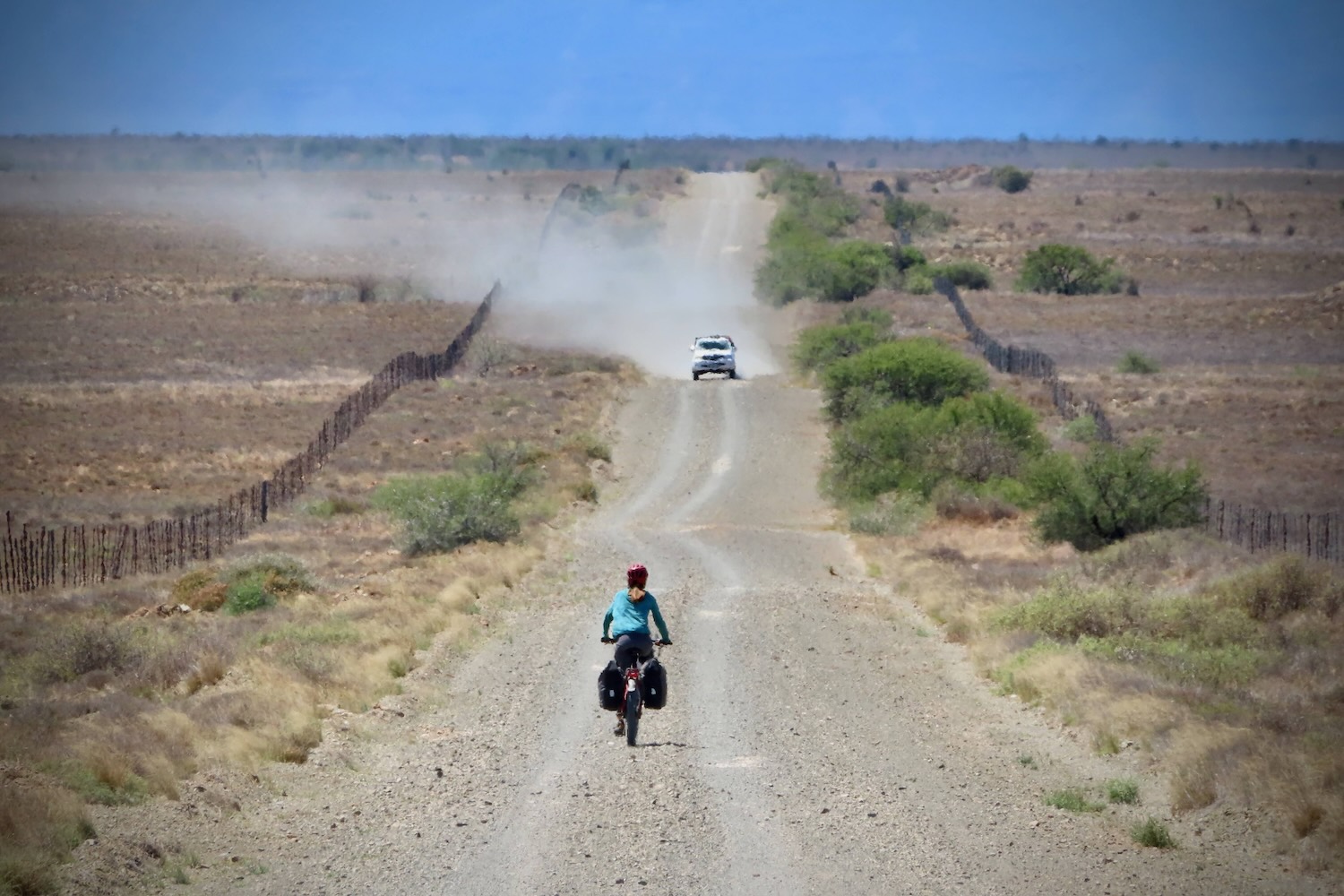
Before the trip, we assumed the Karoo might feel like a long, dull desert crossing. Instead, we grew to love its immense open landscapes, even if the unpredictable winds occasionally made camping a challenge. Our journey through the Karoo ended when we crossed into Lesotho at Tele Bridge.
We took around 30 days to cycle from Cape Town to Lesotho, including a few side quests along the way.
If you only have time to ride part of the route, the stretch from Cape Town to Knysna offers the greatest variety of scenery, along with excellent resupply options and plenty of charming towns with cafés and restaurants.
While we also enjoyed the section from Knysna to Tele Bridge through the Karoo, the stronger and more unpredictable winds, combined with longer distances between resupply points, make it a slightly more demanding and less relaxed option.
A Cycling Route Through Hell
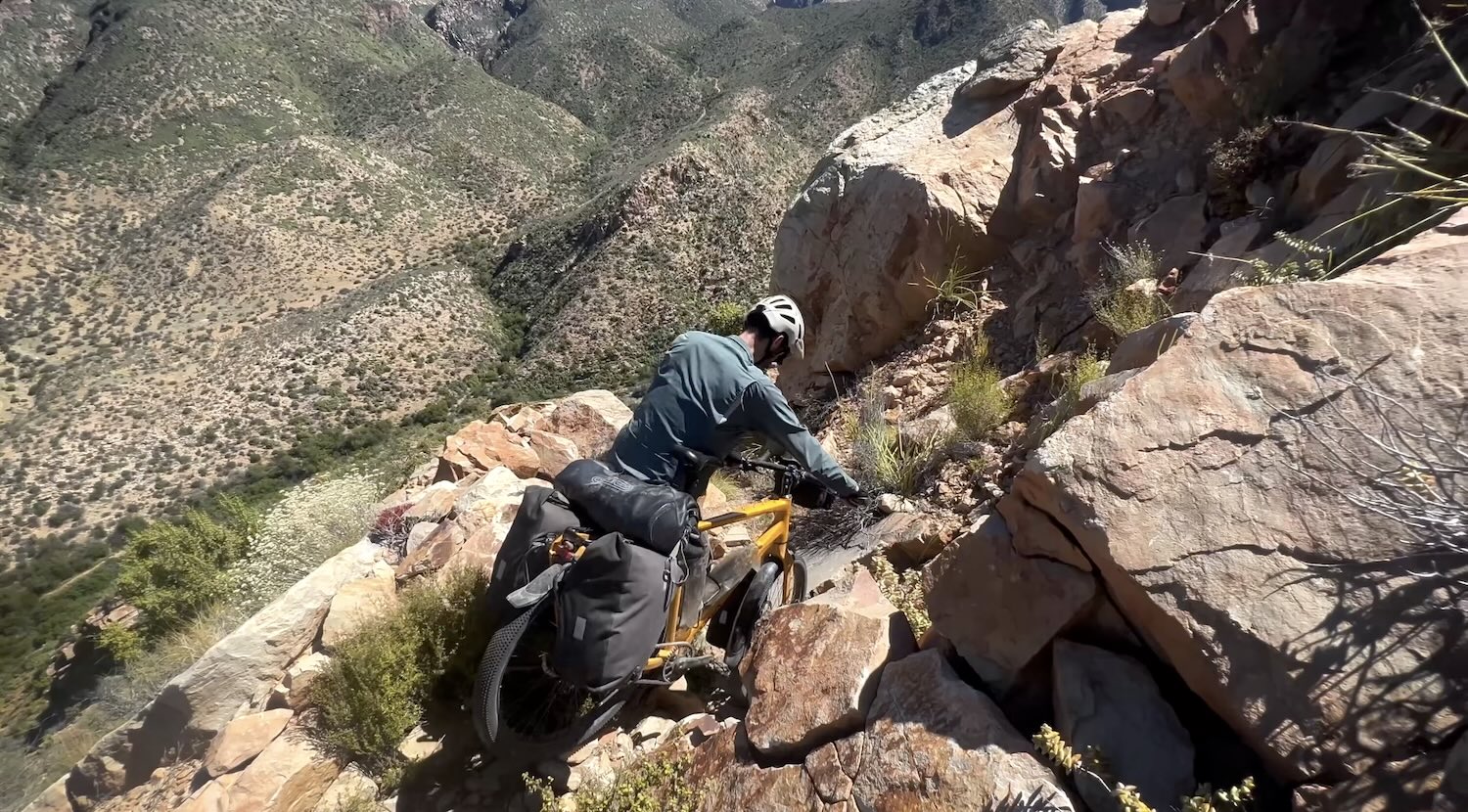
If you’re after a truly epic route linking some of our favourite roads in South Africa, Die Hel (also known as Gamkaskloof) is legendary. Alee even made a video covering just these two days of riding; it’s that special.
This narrow, 600-metre-wide valley is isolated, lush, and fed by year-round water, which once supported a small farming community. It had no road access until 1962, adding to its remote charm.
The ride begins by climbing and scrambling down “The Ladder” trail, which drops 400 m (1,300 ft) over just 1.5 km (under a mile). We completed it in about two hours and only had to remove our panniers once. But Alee is exceptionally strong, so plan accordingly.
Heading east along the valley floor, Fonteinplaas Gamkaskloof Campsite is a welcome stop, offering cold drinks, camping, and meals. The family running the farm can also advise which streams are safe for refilling bottles before the climb out of the valley.
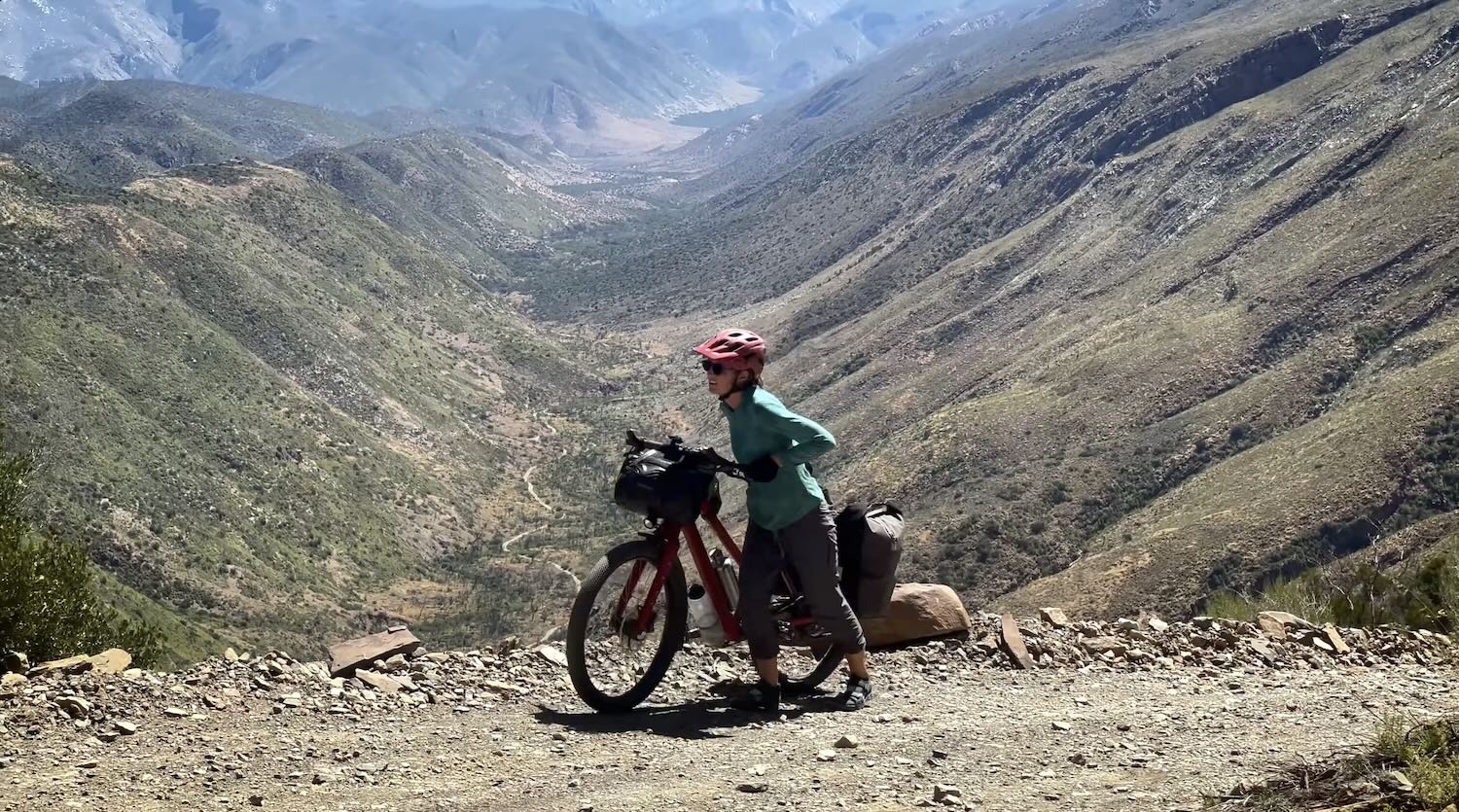
The climb out delivers incredible views. The opening section is a sustained 12% grade for 4 km (2.5 miles), after which the road undulates through stunning Karoo flora. It’s tough, but absolutely worth it. We rode this pass in February when temperatures reached 42 °C (108 °F), and we definitely would not recommend climbing in that kind of heat.
Riding Die Hel requires some planning. You’ll need to reserve a stay at Boplaas Guest Farm and obtain the gate code to pass through their 10-foot-high game fence, which is secured with a combination lock.
The Ladder itself sits on CapeNature land, and there is a radio-controlled park gate on the western side. If you’re travelling west to east, simply tell the person on the intercom that you’re headed to Boplaas Guest Farm. The contact details are found on a waypoint HERE.
Best and Worst Roads Through The Karoo
Seweweekspoort
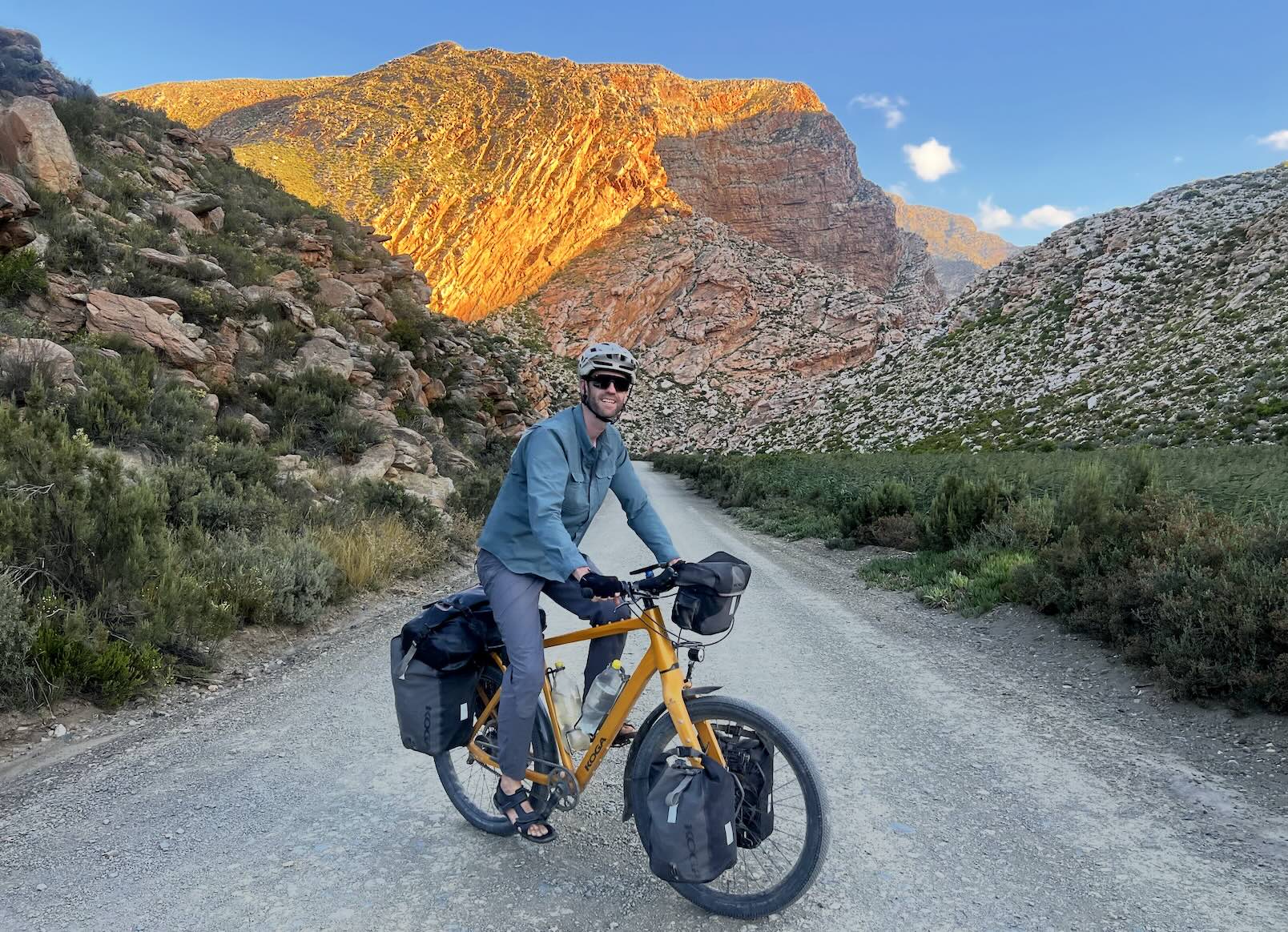
Hailed by some as “the most beautiful 17 km stretch of gravel road in South Africa,” Seweweekspoort more than lives up to its reputation. The road gently climbs while winding through a dramatic river gorge, flanked by towering cliffs on both sides. It’s not a main route, so you’re likely to have it almost entirely to yourself.
Bonus: there’s a lovely dam called Tierkloof, marked on iOverlander at the southern end, which is perfect for a swim.
Meiringspoort Along the Groot River (N12)
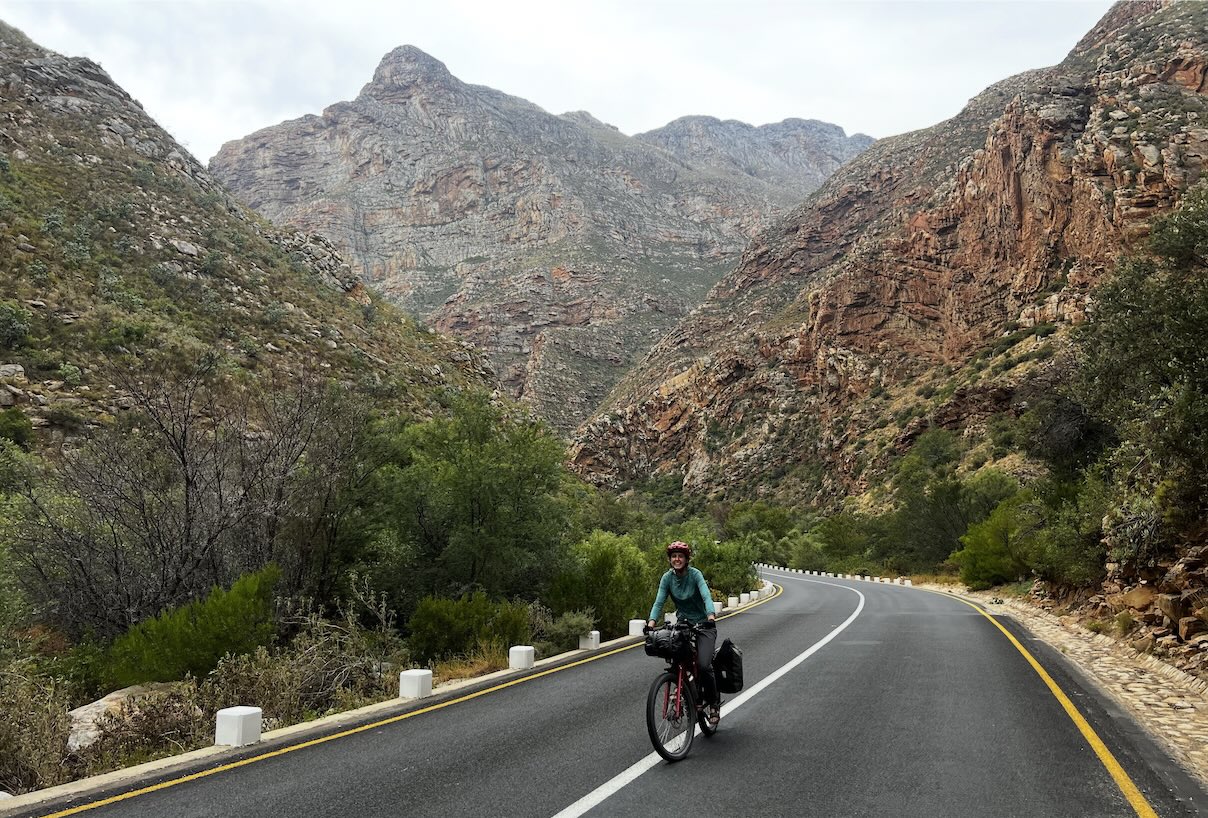
It takes a truly exceptional paved road to make this list, and the N12 through Meiringspoort delivers. With striking scenery, numerous swimming holes, and excellent farm stalls along the way, it’s a standout stretch of road.
Swartberg Pass (R328)
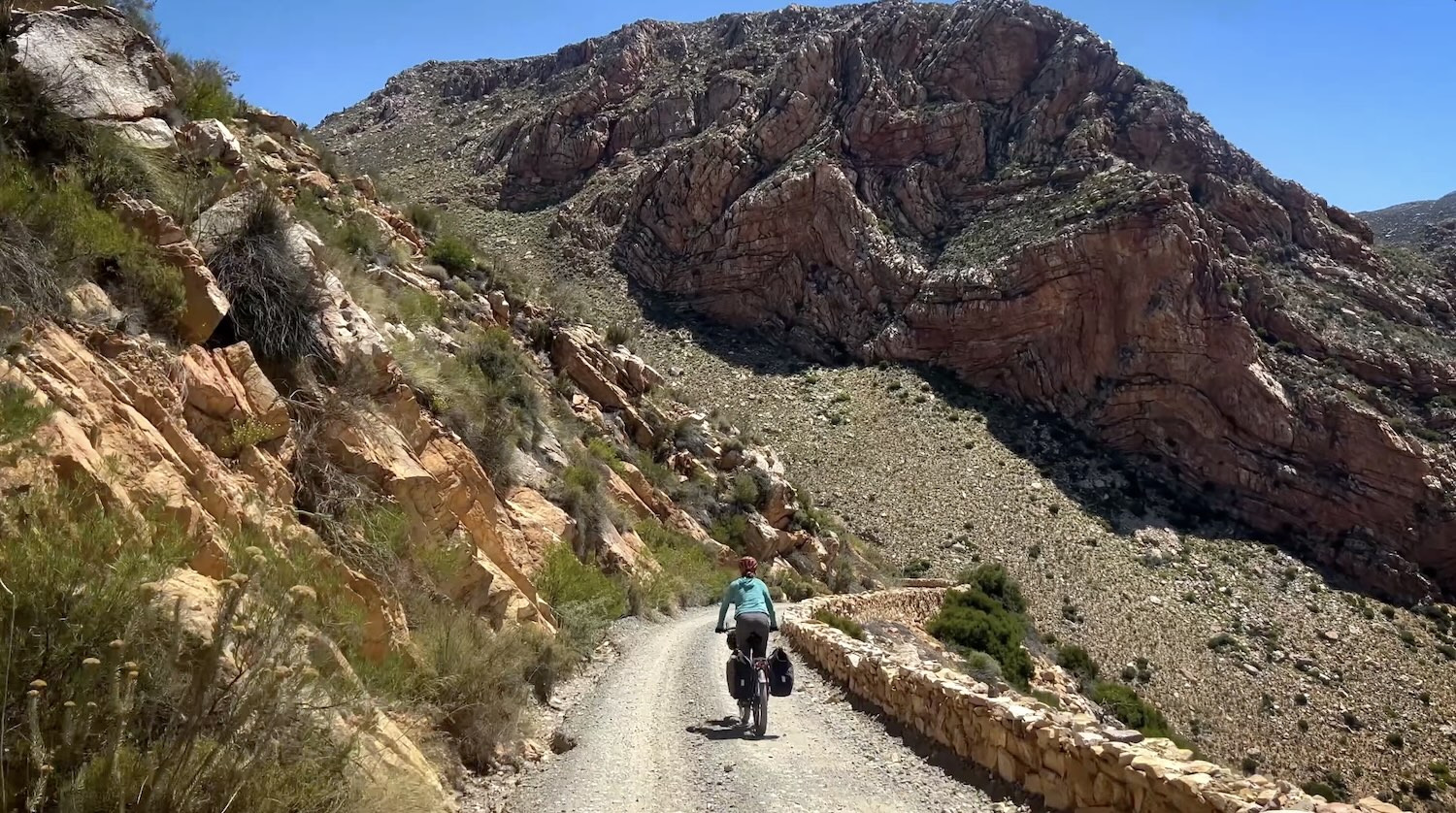
With hand-cut switchbacks, sweeping views, and a charming coffee shop at the bottom, Swartberg Pass is an unforgettable ride. It’s one of those routes that feels as rewarding as it is challenging.
Montagu Pass into George
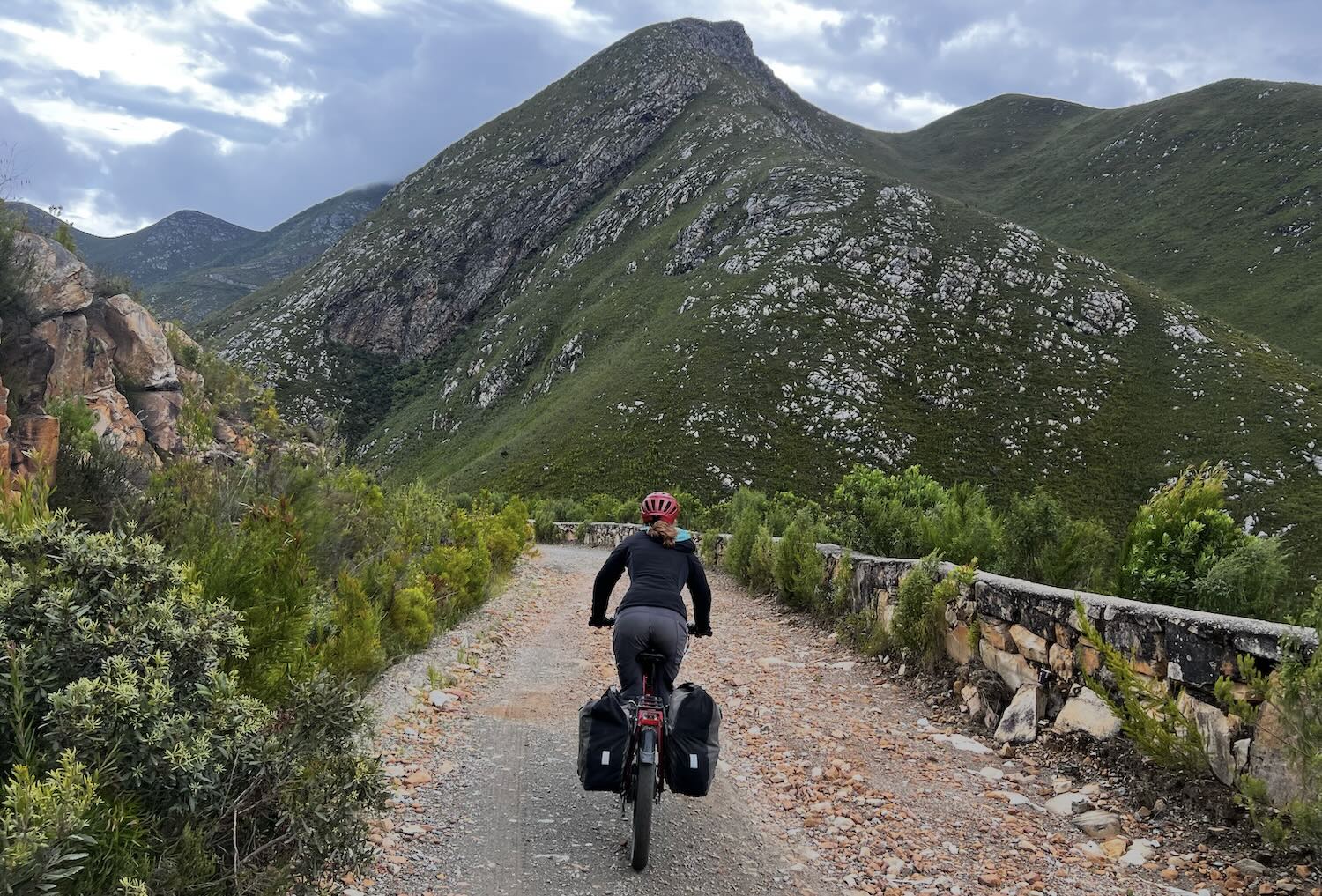
This 17 km pass descends into George, winding through indigenous mountain fynbos and offering expansive views all the way to the ocean.
When we rode it, the route was closed to motorised traffic, which meant we had it to ourselves. Some reports on iOverlander mention phone theft in the area, so it’s worth staying aware of your surroundings.
Prince Alfred Pass (R339)
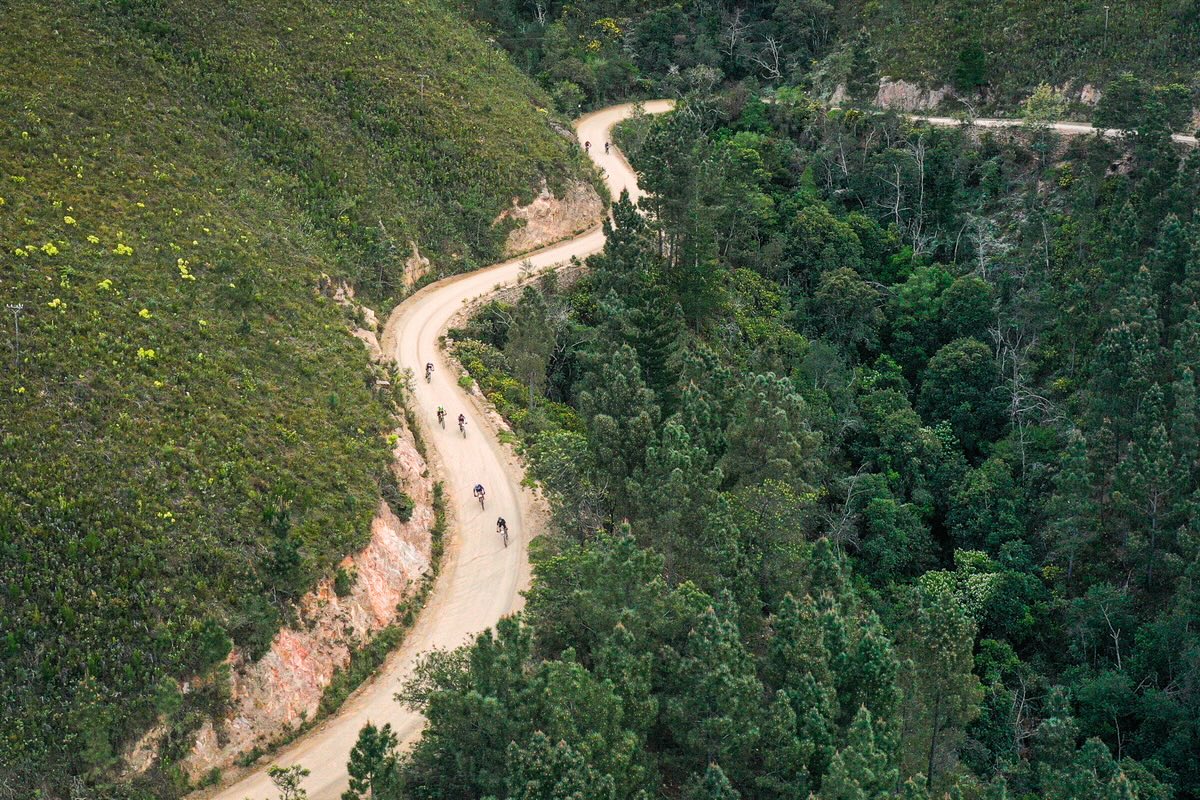
Prince Alfred’s Pass is a 69 km gravel mountain pass, linking Knysna and Avontuur through the Outeniqua Mountains. It’s recognised as the longest publicly accessible mountain pass in the country, winding through forests with dramatic scenery and no guardrails. It’s worth stopping at Angie’s G-Spot, a well-known and welcoming biker bar for a drink and some snacks.
Our Least Favourite Road
In most countries, it’s easy to identify the worst road. Surprisingly, that wasn’t really the case in South Africa. Thanks to a well-developed road network and an abundance of quiet gravel routes, we were able to avoid busy highways and instead enjoy mostly peaceful paved or dirt roads throughout our journey
Other Recommended Bikepacking Routes In The Karoo
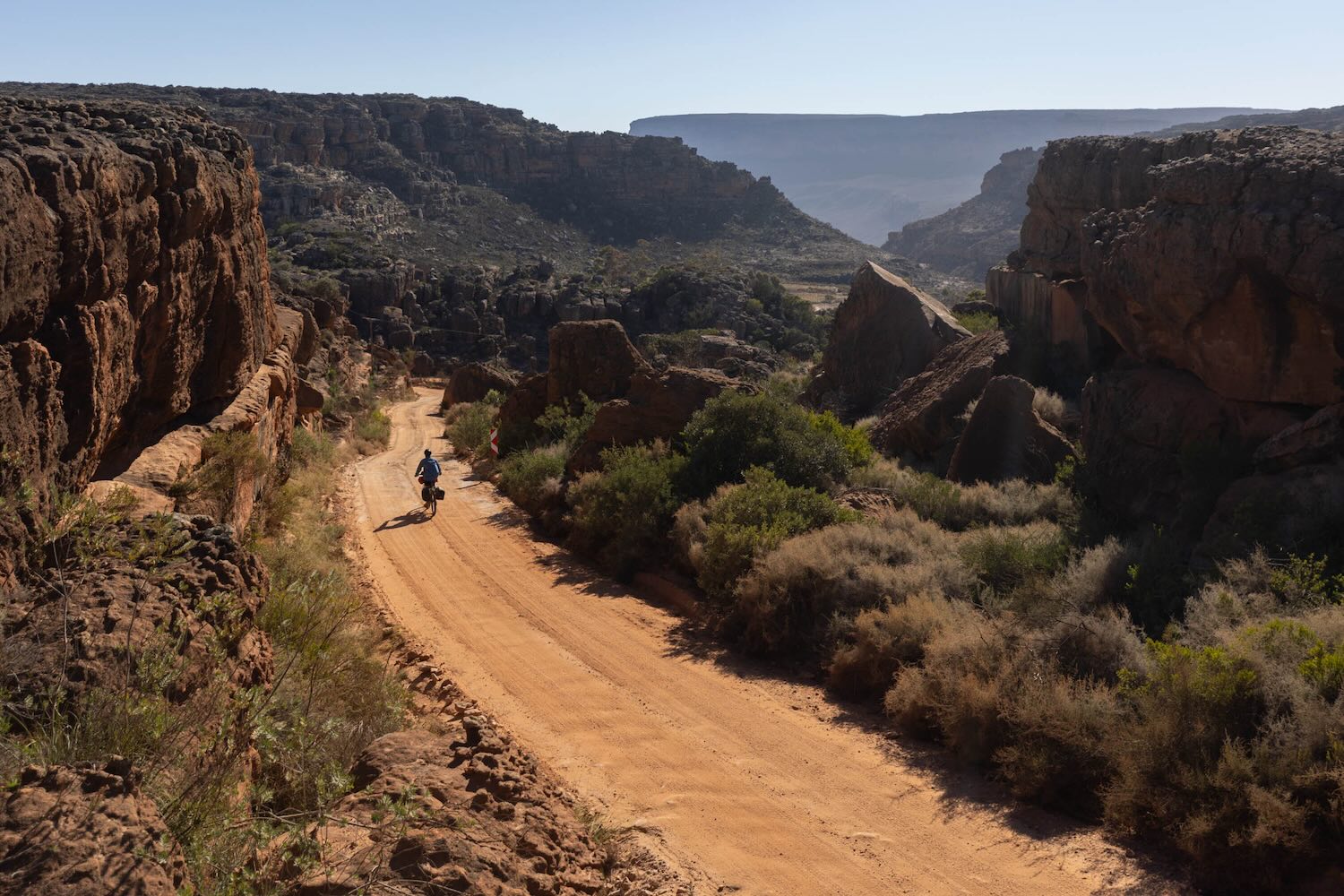
SAND 1 is Jana and Johan’s epic route published on BIKEPACKING.com.
It begins in Stellenbosch and winds its way across South Africa before eventually reaching northern Namibia. Along the way, it links many of the finest passes in the Klein Karoo. Check the full route out HERE.
Our own route was heavily influenced by Jana and Johan. If you’re considering cycling through the Karoo, it’s well worth reading their article first. It’s beautifully written, and their passion for the Karoo is genuinely infectious.
The Best Time For Bike Touring In The Karoo?
South Africa’s Karoo is divided into two distinct regions: the Klein Karoo and the Great Karoo.
The Klein Karoo, meaning “Little Karoo”, is a long, narrow valley around 350 km in length, lying between the coast and the Great Karoo. It stretches roughly between Cape Town and the Garden Route. The climate is relatively temperate, with wet winters (June to August), hot summers (December to March), and very pleasant riding conditions through autumn and spring.
The Great Karoo extends from the Garden Route almost to Lesotho. It is windier and far more arid, with hot summers and cold winters. Because of the temperature extremes at both ends of the year, spring and autumn are generally the most comfortable seasons for cycling through the Karoo.
What Bike Is Best For Bikepacking the Karoo?
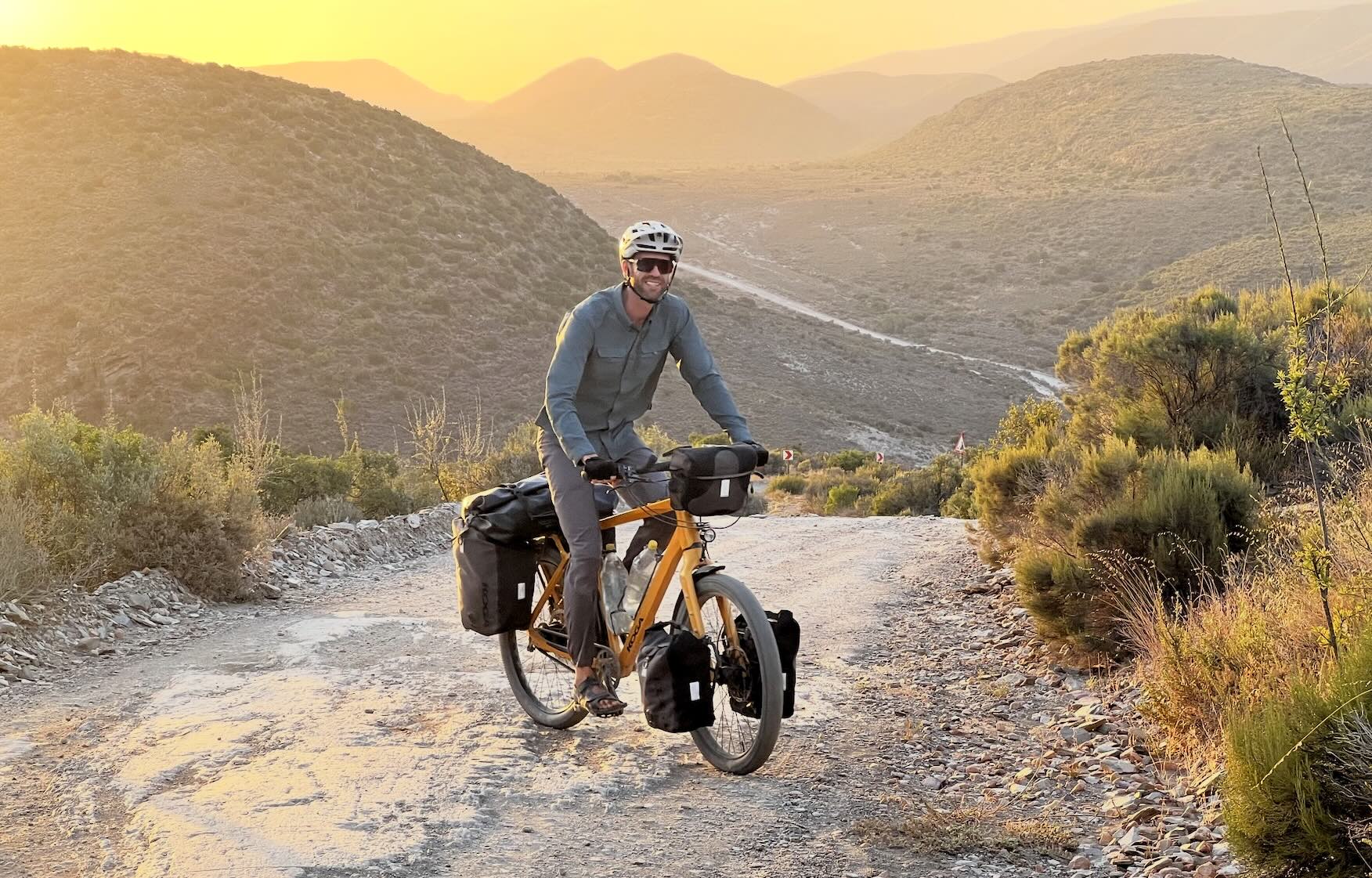
A gravel bike is more than capable of handling the Karoo.
While there are some steep climbs, they are usually short rather than long and sustained. Wider tyres will improve comfort on the occasional corrugated roads, but overall, many of the roads are surprisingly smooth.
The biggest challenge is often the wind. At times, it can be absolutely relentless, and it rarely blows from one consistent direction. You might enjoy a tailwind one moment, only to be battling a headwind ten minutes later. It’s well worth checking the forecast on an app like Windy before setting out each day so you can plan around the conditions.
Food in South Africa
One of our favourite parts of cycling through South Africa’s farming regions is stopping at a farm stall, or padstal as they are known in Afrikaans. These charming stops usually offer treats like koeksisters (deep-fried braided dough), a wide selection of biltong (jerky), and plenty of cold drinks. They’re perfect for a snack break, though not ideal for a full resupply since fresh produce and staples are often limited.
In medium-sized towns such as Prince Albert or Sterkspruit, you’ll usually find smaller branches of chain grocery stores carrying most of what you need. Larger towns, such as Nxuba (formerly, and still often called, Cradock), have full-sized Spar supermarkets with a complete range of essentials.
Water Resupply in the Karoo
One thing South Africans take pride in is that tap water is generally safe to drink across much of the country. That makes sourcing drinking water far easier, even in remote areas.
That said, the Karoo can become extremely hot, and villages are often widely spaced. Fortunately, farmers were always happy to top up our bottles, and often went out of their way to give them a thorough clean as well.
Accommodation & Camping in The Karoo
There are several inexpensive hotels throughout the Karoo, though many do not have an online presence. Apps like iOverlander or Rolling Around can be invaluable for tracking them down.
We didn’t stay at any formal campgrounds, although some do exist, particularly along the Garden Route. Another option many bikepackers use is asking farmers if they can camp on their land, which often leads to a friendly and safe experience. This is ideal if you’re not comfortable with wild camping.
Wild camping in the Karoo ranges from fairly easy to moderately challenging. In rural areas, fences are common, but houses are few. In those situations, we either found open gates or set up camp inside tall roadside drainage culverts. These drains also provided shelter from the often brutal winds sweeping across the plains.
Despite the occasional challenge of finding a suitable campsite, we managed to wild camp every night and had a great experience doing so.
Safety While Bikepacking in South Africa
Before arriving, we often heard warnings like, “You’ll get robbed the second you cross the border.” While that kind of advice can sound alarming, it largely reflects South Africa’s higher crime rates in major cities rather than the rural roads where we spent most of our time cycling.
Throughout our journey, we generally felt safe. As with bikepacking anywhere, basic precautions go a long way: keep your phone on you, avoid displaying electronics or cash, don’t ride at night, and be willing to adjust your route if something doesn’t feel right.
Additional Notes
- Bunny Chow is a South African culinary gem: a hollowed-out loaf of white bread filled with curry. Invented in Durban, it’s delicious, portable, and surprisingly inexpensive. You can usually find it in medium to large towns across the country.
- Cycle Touring ZA in Lady Grey has everything you might need for a bike touring trip, from brands like Ortlieb, Brooks, Schwalbe, and Revelate. Lady Grey itself is a cute small town if you need a rest.
- For mobile coverage, Vodacom proved to be the most reliable and comprehensive cell service provider.


