


Imagine a chainless eBike drivetrain with not just five or ten gear ratios, but infinite gears! The gears change instantly, and without any perceivable noise, clunk, or interruption.
This drivetrain is centrally mounted, low-maintenance, damage-resistant, and delivers up to twice the torque of current eBike motors.
Today, we’re talking about eCVT drivetrains and why they might be the future of eBike tech. We’ll dive into how eCVTs work, their advantages and disadvantages, and the companies pushing this innovation forward.
Note: This article was originally written in May 2025 but has been updated in July 2026.
The Evolution of eBike Drivetrains
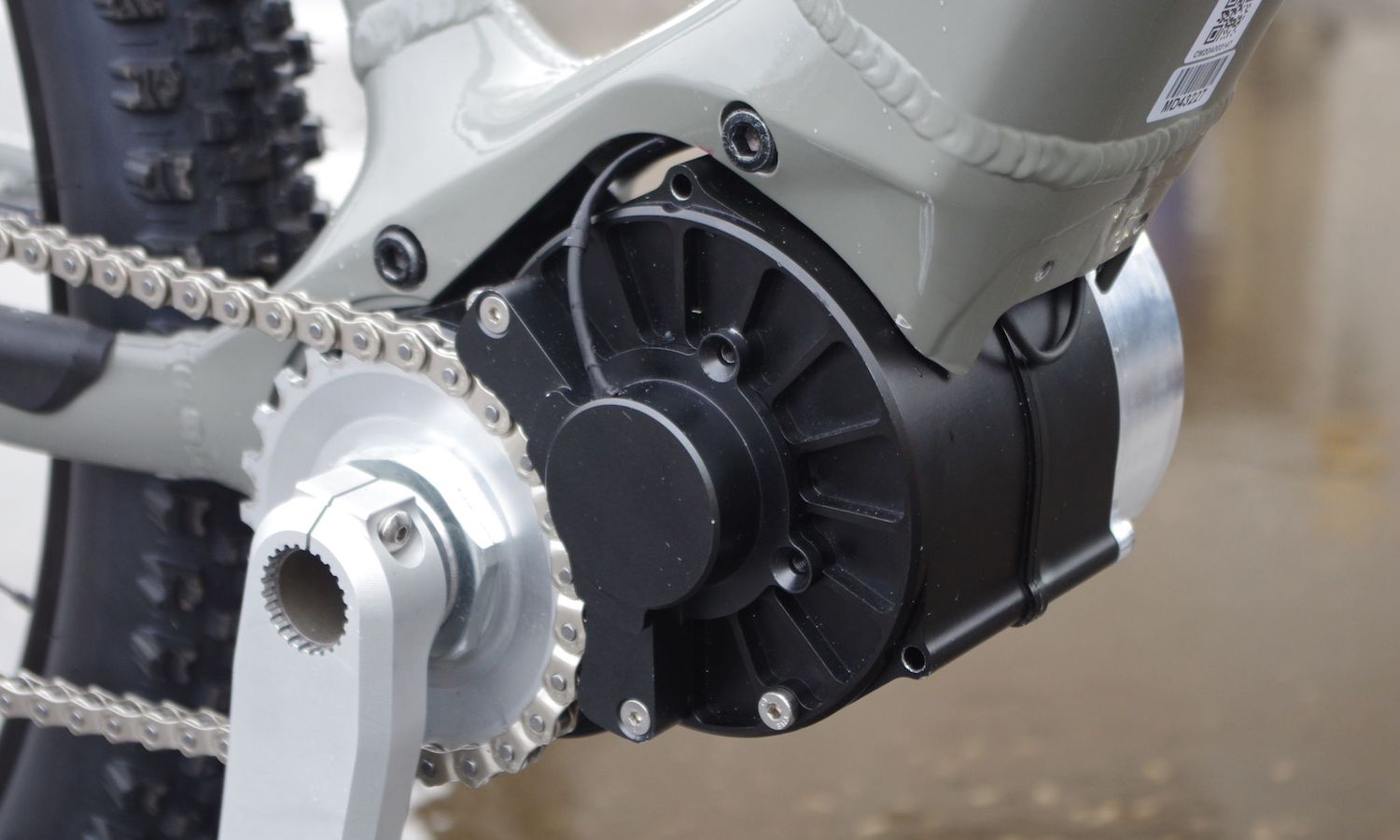
eBikes are the fastest-growing bicycle category, and that boom has fuelled rapid development in motors and drivetrains.
E-bike motors are smaller, lighter, quieter, and more efficient than ever before. Power delivery is smoother, pickup speeds are quicker, and new innovations are changing their design.
One of those innovations is a fully integrated drivetrain where the motor and gearbox are built into one unit. This solution simplifies the drivetrain, weather seals the gear components, and improves the weight distribution of the bike.
Some integrated drivetrains have now taken it even further by stripping out the gearbox components and using an electronic continuously variable transmission (eCVT) instead.
eCVT Drivetrains For Bicycles

An eCVT is just like other motor gearbox units; however, the difference is that it uses two electric motors and a planetary gear set to achieve variable gear ratios.
If that sounds like something from a hybrid car, you’re spot on. The design is similar to the eCVT used in vehicles like the Toyota Prius.
Here’s a brief explanation of how an eCVT works.
How Do eCVT Drivetrains Work?

There are two motors in a bicycle eCVT.
- The direct motor provides pedal assistance, much like any standard mid-drive motor
- The speed ratio motor also contributes pedal assistance, but its primary job is to adjust the bike’s gear ratio. It does this by spinning the front sprocket faster or slower relative to your pedalling cadence via a planetary gear.
The two motors are continuously controlled together by the bike’s electronics. The controller adjusts the speed ratio motor while balancing the assistance provided by both motors, allowing it to maintain your preferred pedalling cadence while delivering smooth power to the rear wheel.
And because the speed ratio motor can be adjusted in extremely small increments, the system provides an effectively infinite number of gear ratios. These gears are changed smoothly and instantly, with zero interruption to pedalling.
There are more advantages to eCVTs too.
The Advantages of eCVT Drivetrains
Completely Effortless Riding

Riding with an eCVT is completely effortless, as they continuously adjust to keep you at your preferred cadence, no matter the speed or incline. All you have to do is choose a cadence you like, and the motor takes care of the rest. And should you come to a stop, the motor will automatically put you in the ideal gear for takeoff.
For those who prefer manual control, shift buttons will provide instant gear changes, even under a full pedal load. The shifting on these systems is faster than any other bicycle drivetrain – it takes just half a second to go from the lowest to the highest gear ratio.
Increased Durability & Reduced Maintenance
Durability and low maintenance are also major advantages. With fewer exposed parts and fully sealed internals, eCVTs are far less prone to damage than derailleur drivetrains. Additionally, there are significantly fewer components that wear out over time, which cuts down on servicing and replacement parts.
Some eCVTs support chainless drivetrains altogether, pairing with either drive shafts or belt drives instead of traditional chains. These alternatives are cleaner, quieter, and longer-lasting, further reducing the need for regular cleaning or adjustment.
High Torque Output & Reverse Mode

In terms of performance, these systems pack a serious punch, with their dual motors delivering up to 200Nm of torque, which is significantly more than most motors, and perfect for mountain bikes or fully laden cargo bikes.
And for those same cargo bikes, a unique benefit is the reverse mode. Because the system can spin the front chainring backward as well as forward, parking is especially easy.
Wide Gear Ranges and High Drive Efficiency

eCVTs also offer exceptionally wide gear ranges, up to 1000%, which means you can crawl up steep inclines and still cruise comfortably at high speeds. This range is roughly double that of most bicycle drivetrains.
Power transfer is handled more efficiently than with traditional CVTs, which often lose energy to friction in sliding pulleys or rotating spheres. Instead, eCVTs use motor control and planetary gear sets to deliver excellent overall efficiency.
Even better, eCVTs can constantly fine-tune the bike’s gear ratio for peak motor efficiency, helping you get the most out of every charge.
Regenerative Braking & Better Weight Distribution

Some systems go even further by incorporating regenerative braking. This means you can recover energy while braking or descending, extending battery range and reducing brake pad wear. In some designs, you can even backpedal to slow the bike down.
And lastly, thanks to their centralised, mid-mounted design, eCVTs also contribute to improved weight distribution, which translates into better handling, especially on off-road terrain.
As you can see, eCVTs offer many benefits. But there are some trade-offs too.
The Disadvantages of eCVT Drivetrains
Pedal Lag & Weight

There’s a slight delay (around 20 to 40 milliseconds) between your pedalling input and the motor response. It’s minor but noticeable, similar to the difference between using a rear hub with 24 engagement points versus one with 72.
Weight is another factor. eCVTs tend to be heavier than a motor and derailleur combo. For example, a DJI Avinox system paired with an SRAM derailleur setup is roughly 500 to 1000 grams lighter than its eCVT counterpart.
DJI Avinox: 2520 grams
Crank Arms: 550 grams
Chainring/Spider: 150 grams
Derailleur: 492 grams
Cassette: 452 grams
Chain: 300 grams
Total: 4464 grams
Gobao X1P eCVT: 3800 grams
Crank Arms: 550 grams
Chainring/Spider: 150 grams
Rear Sprocket: 100 grams
Chain: 300 grams
Total: 4900 grams
Battery-Powered Shifting & Noise

These systems also rely entirely on battery power for gear shifting. If your battery dies, you could be stuck in the lowest gear. That said, most manufacturers build in a reserve capacity for enough shifts to get you home.
Noise may also be a drawback with this motor-gearbox configuration, as a dual-motor setup typically generates more sound than the best single-motor systems. That said, without large spur gears in the mix, overall noise levels remain relatively low.
Strange Pedalling Characteristics (Some Designs)
In some designs, the pedals drop to a resting position when stationary or without battery power. That could be a nuisance if the battery temporarily disconnects while riding, such as when hitting a bump.
Additionally, some entry-level eCVTs can feel less direct under high-torque situations. This is because you’re engaging the internal components (such as a belt or two) before you engage the external chain.
Difficult Repairs
And finally, repairs can be more complicated. With more electronics and sensors involved, fixing an eCVT usually requires a trained technician and specialised tools. As with any motorised system, it’d be prudent to only use a system with good local support.
Right, that’s the full list of trade-offs. Let’s now take a look at the companies pushing this technology forward.
Current & Upcoming eCVT Drivetrains
Revonte ONE

The first eCVT I want to show you is the Revonte ONE.
The stats are excellent on this unit with a monstrous 200 Nm torque, 480% gear range, and 4.7 kg weight. To put this weight in perspective, it’s heavier than the Pinion MGU (4.1 kg) and Intradrive GD8 (4.5 kg) but lighter than the Valeo Smart eBike System (4.9 kg).
I tested a prototype Revonte ONE three years ago, and it was already performing exceptionally well. It shifted through the gears smoothly and unobtrusively, with only a very slight delay between pedalling and motor response.
A cool thing about the Revonte design is that the direct motor is set perpendicular to the speed ratio motor to minimise the packaging size.
Sadly, Revonte recently filed for bankruptcy. They’ve sold their intellectual property to another company in the eBike space, so expect it to reappear under another brand.
Owuru E2

Currently found in Decathlon bikes, the Owuru E2 is optimised for smooth city riding. It’s a touch lighter (4.6kg) than the Revonte, but it has a smaller gear range (265%) and less torque (65 to 120Nm).
The E2 has a different layout from other motors. The crank is connected to the planetary gear set via a belt, and the direct motor is connected to the gear set via a separate belt. The combined motors supply power to the small output sprocket.
As a result of its design, this motor feels a bit spongy under strong pedal input. That makes it great for cruising and less ideal for high-performance riding, which, luckily, is not its intended use.
Gobao X1P
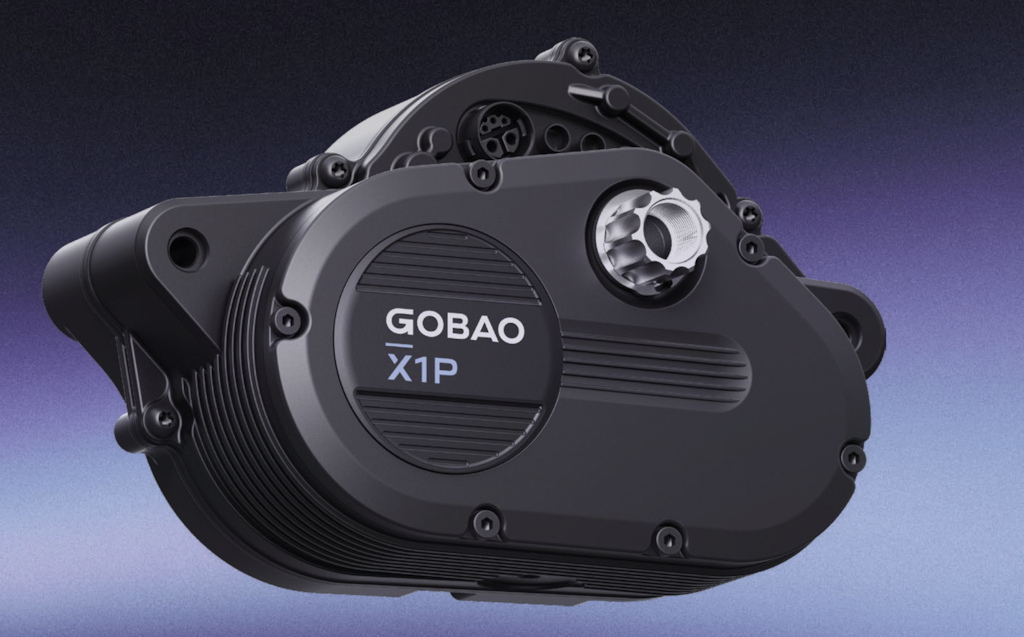
Gobao unveiled its X1P eCVT drive unit at Eurobike 2026, with production expected to begin in early 2027. Weighing just 3.8 kg, it delivers an impressive 150 Nm of torque and 1,500 W of peak power. The X1P currently offers a 500% gear range (matching a 1X drivetrain), although Gobao says the transmission can be configured to provide up to 600% (matching a Pinion 12-speed gearbox).
A more affordable version, called the X1, is also planned. It will produce 120 Nm of torque and 1,200 W of peak power, paired with a slightly smaller 400% gear range.
Like several other eCVT systems, the X1P features regenerative braking. When you stop pedalling, the motor gently slows the bike while recovering energy back into the battery. Riders can also increase the braking effect by backpedalling, allowing even more energy to be recaptured.
Charging speeds are on another level with the X1P. Gobao’s new 30A fast-charging technology can reportedly recharge its 750 Wh battery from 0% to 80% in just 28 minutes, which is dramatically faster than competing systems. For comparison, an Avinox 700 Wh battery with a 12A charger takes around 76 minutes to reach 80%, while a Bosch PowerTube 800 requires roughly 180 minutes.
So far, Gobao hasn’t announced any major eMTB manufacturers that will be using either the X1P or X1.
Avinox MG Concept
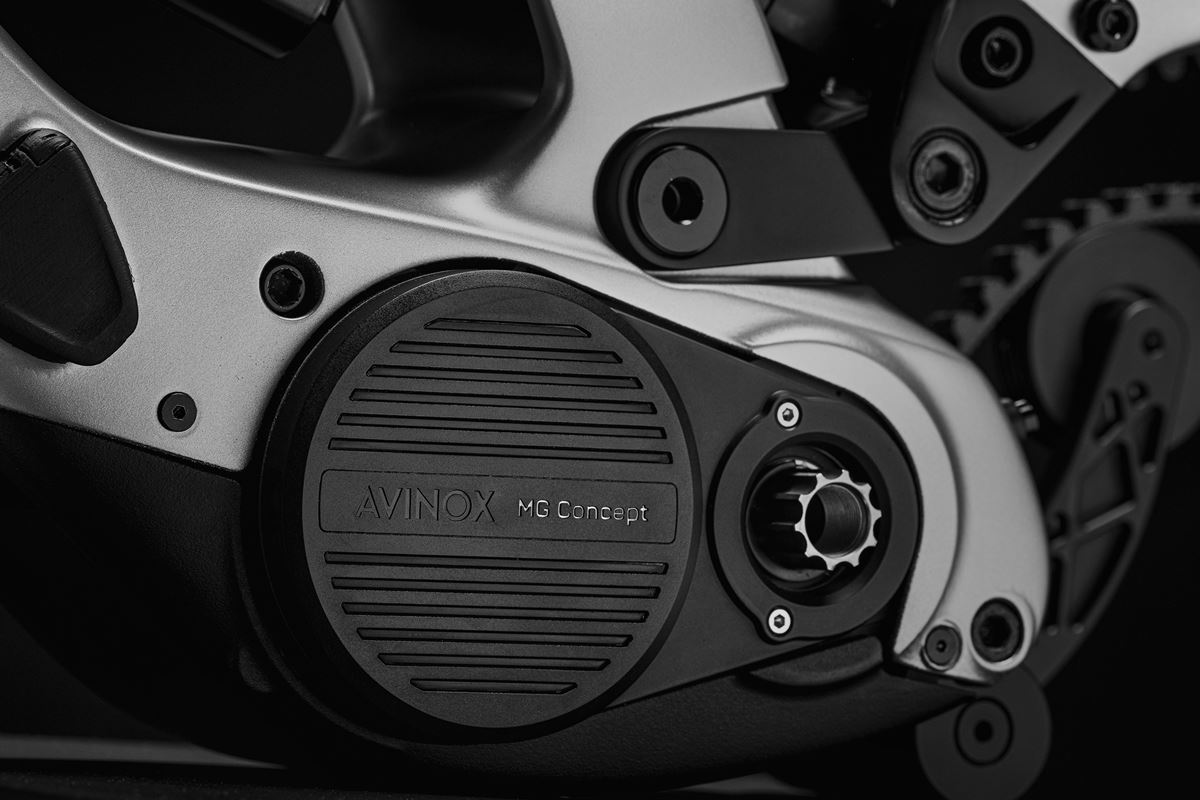
Avinox is planning to release its new “MG Concept” combined motor and gearbox in 2027. While the company hasn’t officially confirmed it, it’s almost certainly an eCVT transmission.
The eCVT offers a 520% gear range, matching SRAM’s 12-speed Eagle Transmission and slightly exceeding Shimano’s 510% range. Despite the integrated transmission, the MG Concept appears to be only marginally larger than the existing Avinox M2S motor in comparison photos.
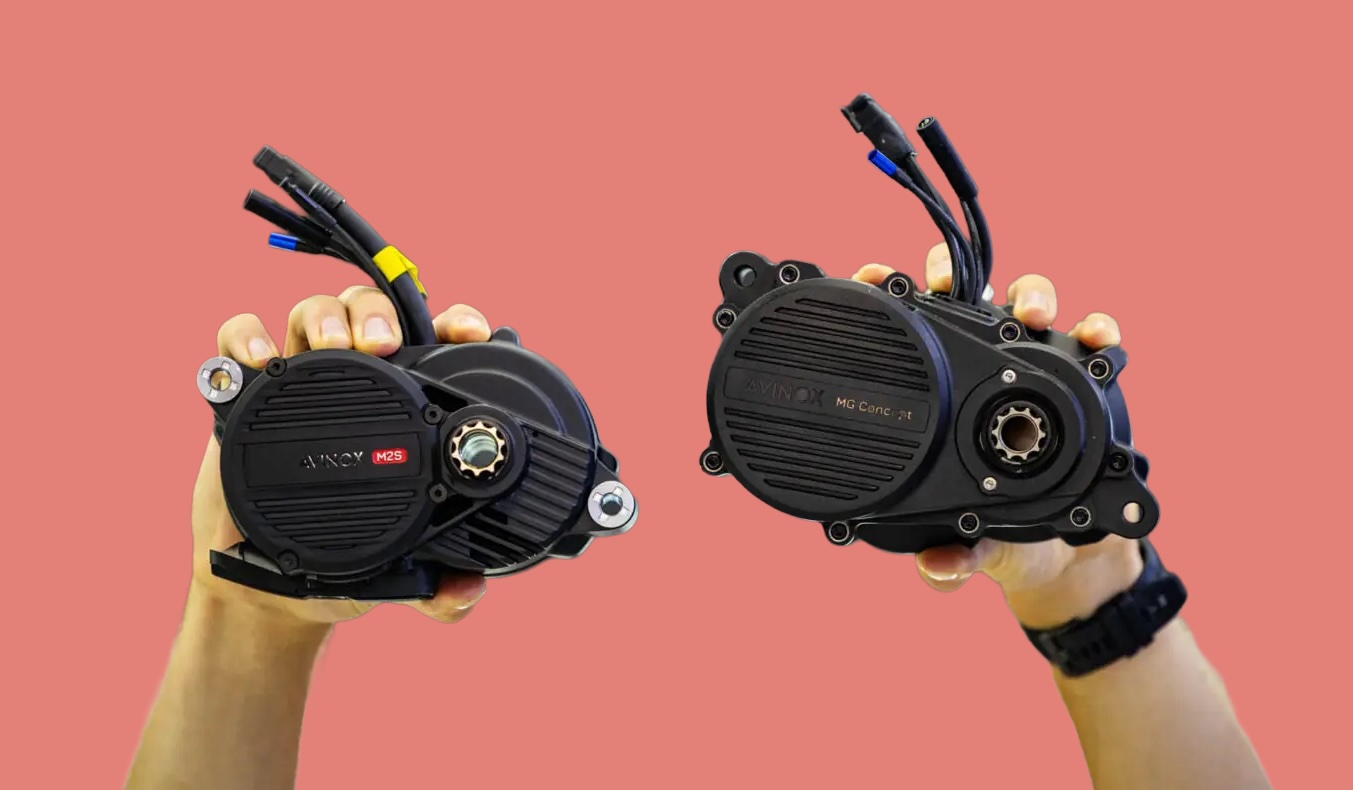
According to Avinox, the MG Concept can make gear changes in less than 0.1 seconds while maintaining uninterrupted power delivery. The gear changes are said to be super smooth and can be made under full pedal load. You can change gears while coasting or when stationary, and the system can shift gears with the motor assistance turned off and under loads of up to 300 Nm of torque.
Avinox also plans to offer a high level of tunability. In addition to fully automatic shifting, riders will be able to select a manual mode and choose how many virtual gears are spread across the transmission’s overall gear range.
Driven Orbit Drive

Orbit Drive is a development from the team behind the wild Driven drivetrain, and it connects to the rear wheel via a drive shaft. By using a chainless drivetrain that’s protected from the elements, Driven reduces bike maintenance even further.
The specs are comparable to other eCVTs, with a torque rating of 90 Nm and a weight of 4.6kg.
However, Orbit Drive takes a completely different approach when it comes to design. The two motors are connected to a gear set just like normal, but instead of a planetary gear, this is a variable-speed bevel differential built around the crank.
The direct motor is connected to a bevel gear on one side of the “orbit”, and the speed ratio motor connects to the other. When the speed ratio motor engages its side of the “orbit”, the output can spin faster.
One thing working against this design is that bevel gears inherently have higher losses than straight-cut gears, and there are a lot of them here. But if other aspects of drivetrain performance are excellent, a reduction in efficiency can easily be overlooked.
Villiger Dynamic Drive

Villiger Technik, known for its agricultural equipment, is entering the eBike world with a lightweight eCVT called Dynamic Drive.
It’s still in development, but the stats suggest a serious contender – it’s said to be 20% lighter than other motors (3.8kg), while offering 100 Nm of torque and over 1000% gear range.
Ellio

The last eCVT drivetrain you should know about is by Ellio. This Belgian company specialises in two-wheel drive eBikes that can travel at 45km/h.
The Ellio eCVT layout is completely different to the others, as it has been built using modified e-bike parts. The direct motor is found at the front wheel, the speed ratio motor is above the crankset, and the planetary gear is in the rear hub. Two drive belts connect everything.
Ellio bikes have fully automatic gear changing, regenerative braking and massive batteries for extra range. All you have to do is set your cadence (from 55 to 90 RPM), and the bike will do the rest.
Unique to this bike is a ‘cruise control’ feature, which maintains your cycling speed even as you vary your pedal inputs. And another cool feature only possible on a two-wheel drive bike is the traction control. Ellio bikes can identify wheel spin or loss of grip and reduce the torque delivered to the wheel (or wheels) to regain traction.
Before I sum everything up, let’s quickly chat about why eCVT bicycles aren’t mainstream yet.
Why Aren’t eCVT Bicycles Mainstream?

Bringing a new motor and gear system to market is expensive and difficult. It takes years of R&D and millions in investment.
It typically requires the backing of a major company (like Bosch or Shimano) to get the technology off the ground. These brands have deep resources, tonnes of experience, and can quickly scale up production and secure partnerships to get their product out there.
Most eCVT projects are startups. While the technology is impressive, mass adoption will take time – unless a major player decides to bring it into their lineup.
Are eCVT Drivetrains the Future of eBikes?
With automatic gear changes, seamless shifting, increased durability, and chainless drivetrain options, eCVTs offer compelling advantages.
There are still challenges to solve, like reducing weight, minimising pedal lag, and expanding service networks. But the potential is enormous.
As the technology matures and more major brands enter the market, I expect eCVT bicycles to become a common sight on roads, trails, and bike paths within the next decade, but time will tell whether that prediction pans out.


