

If you want to improve rear-end comfort on your bike, there are plenty of options. Notable seatposts I’ve tested include the Ergon Allroad Pro carbon seatpost and the Kinekt Active suspension seatpost. I found the Kinekt Active had a few drawbacks that stopped me from using it day-to-day, particularly its springiness and tendency to bottom out.
My current everyday setup is the Ergon carbon post. It offers up to 20 mm of vertical deflection and, on top of that, it looks great. But I’ve still been looking for something even more comfortable.
One seatpost that has always intrigued me is the elastomer-damped Cane Creek eeSilk. In theory, it avoids the springiness and bottom-out issues of the Kinekt, while potentially offering a step up in comfort over my Ergon carbon post.
So I bought a Cane Creek eeSilk suspension seatpost and fitted it to my bike.
Note: This seatpost has now been discontinued and has been replaced by the Cane Creek eeSilk+, which I’ve reviewed HERE.
The Cane Creek eeSilk Suspension Seatpost
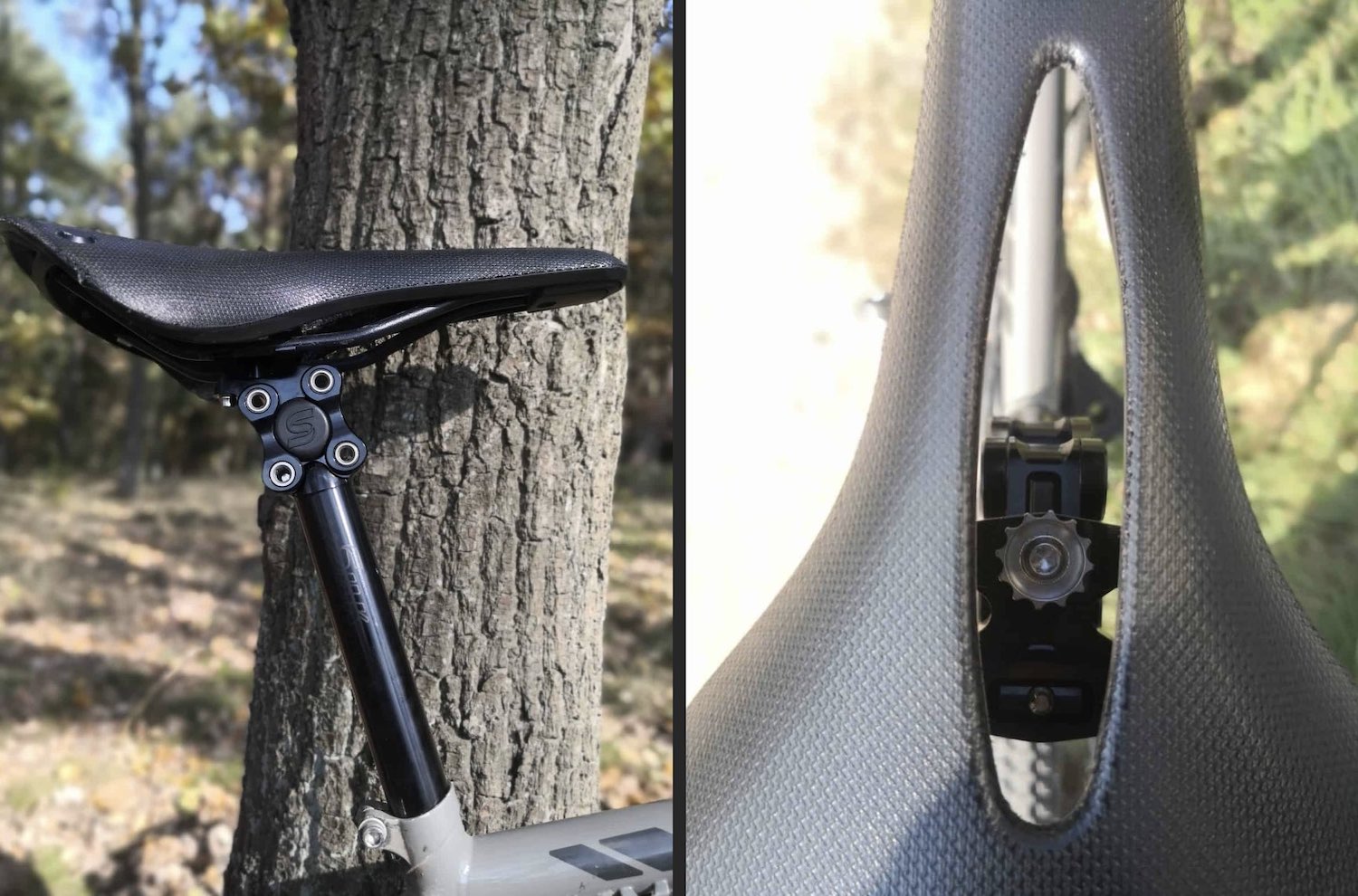
Cane Creek eeSilk vs Ergon Allroad Pro
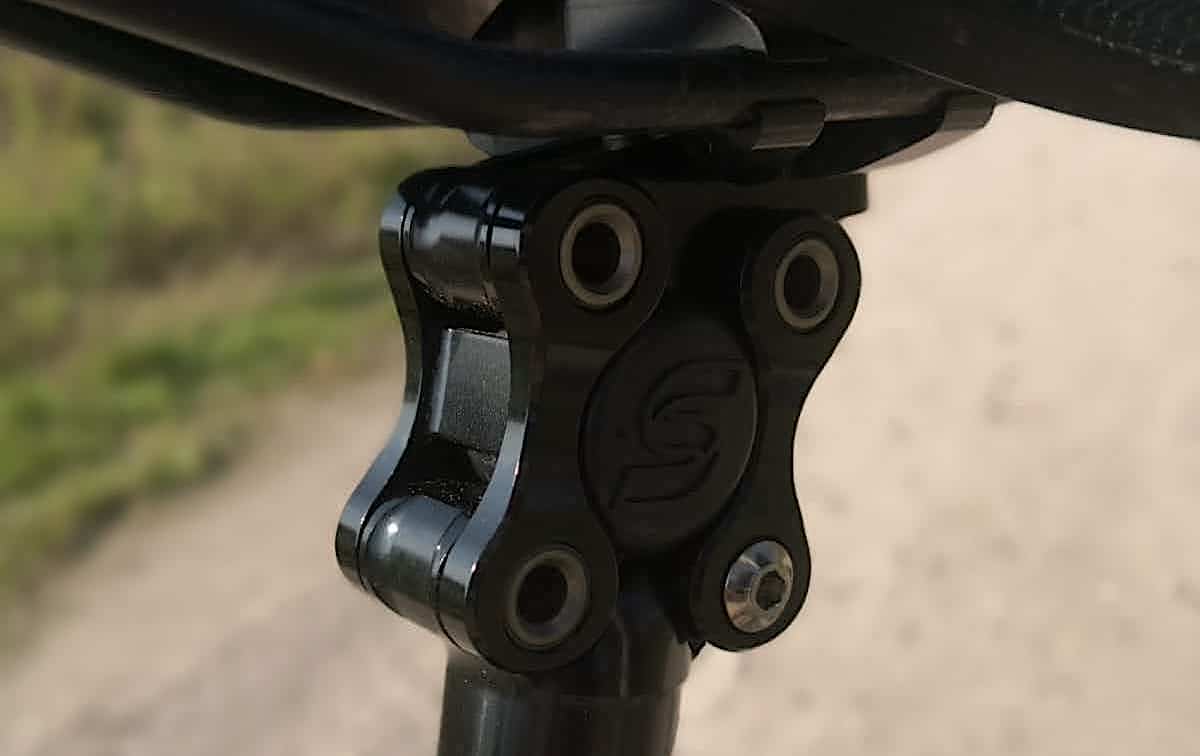
When comparing my Ergon and Cane Creek seatposts, one of the most noticeable differences is the character of the suspension travel.
When I tested the GT Grade Carbon gravel bike alongside my steel Jamis Renegade, the carbon frame had a distinctly “muted” ride feel. The same analogy applies here. The Cane Creek eeSilk has a more muted sensation under load, while the Ergon Allroad Pro feels bouncier and more spring-like.
This isn’t a negative either way. In fact, some riders may prefer the softer, more muted feel over a springier response. It really comes down to personal preference.
Another difference shows up under larger impacts. With the eeSilk, you can feel it approaching its limit more clearly. There’s a mild sensation of it topping out, although it’s nothing like the hard bottom-out you get with the Kinekt Active. It remains quiet, with no audible clunking, but compared to the Ergon Allroad Pro, the final portion of the travel does feel slightly harsher.
It’s a subtle difference overall, but it was noticeable on rough forest trails.
The Major Advantage of the Cane Creek eeSilk
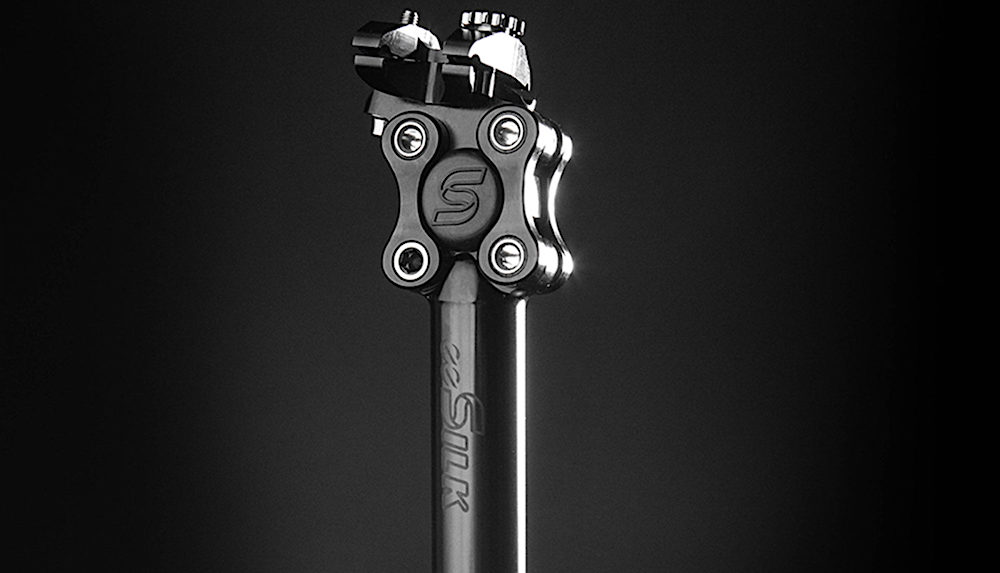
Unlike the Ergon Allroad Pro, the Cane Creek eeSilk isn’t limited in the same way by body weight or seatpost leverage. You can simply swap elastomers to tune it to your body weight and preference.
By contrast, the Ergon Allroad Pro either works well for you, or it doesn’t. Its performance is heavily dependent on body weight and how much of the exposed seatpost is available above the frame. With only a short amount of post showing, there simply isn’t enough leverage for it to deflect effectively.
The Cane Creek eeSilk is slightly heavier than the Ergon (295 g vs 220 g), but the difference is small compared to most other suspension seatposts. It’s also Di2 battery compatible.
It offers a modest 8 mm setback, whereas the Ergon relies on a 25 mm setback to get the most out of its design, which can make saddle setup a little more challenging. Ergon does offer a 10 mm setback version, although the company notes that a reduced setback can slightly diminish its vibration-damping effectiveness.
Finally, the eeSilk supports riders between 100–113 kg (220–250 lb), while the Ergon is rated up to 100 kg (220 lb).
Setting Up The Cane Creek eeSilk
The Cane Creek eeSilk ships with three elastomer options. The lightest is for riders between 45–73 kg (#3), the medium covers 68–95 kg (#5), and the firmest supports 90–113 kg (#7).
The elastomer fitted on arrival was correctly matched to my weight, so I was able to get straight into testing without any setup changes.
For my tests, I installed it on my Jamis Renegade benchmark bike running Soma Cazadero 700 x 42mm tyres (30 psi), paired with a Lauf Grit SL fork and a Redshift ShockStop stem.
Vibration Test Results
You can see my vibration measurement procedure & outdoor test courses HERE.
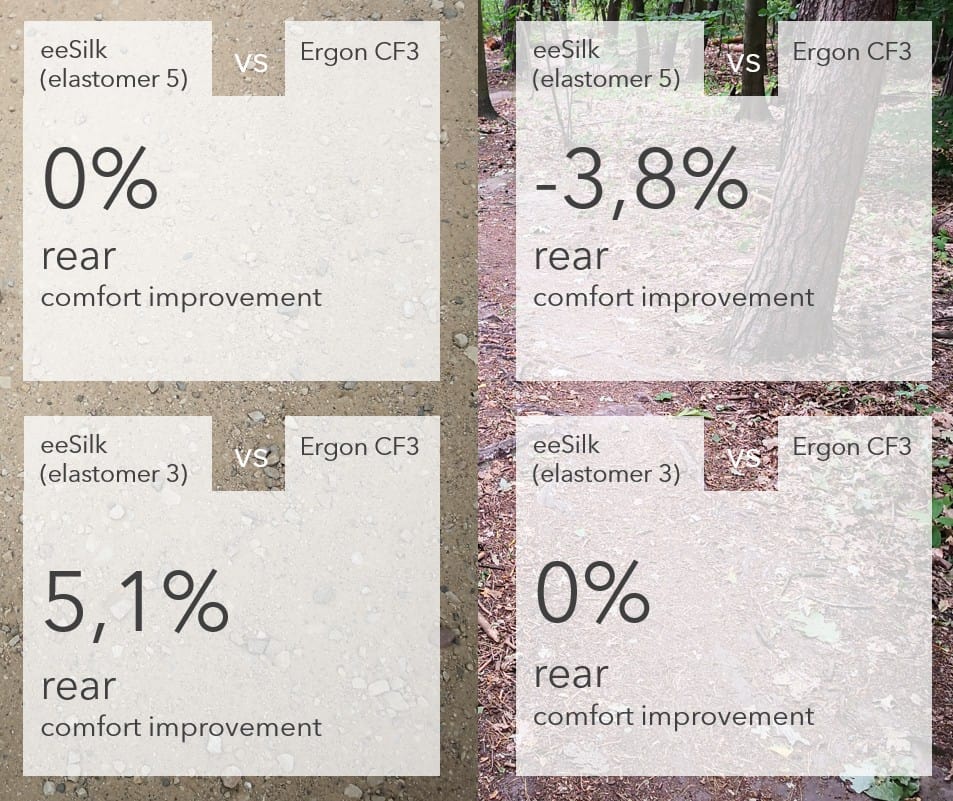
The vibration readings on my Jamis Renegade were very similar to those from my Ergon Allroad Pro seatpost.
On the fast gravel route, the Cane Creek eeSilk felt just as comfortable when using the correctly matched elastomer for my body weight. On the bumpy forest trail, however, it was slightly less comfortable – by about 3.8%, to be exact.
Based on my experience with the Redshift ShockStop suspension stem (which also uses elastomers), I wanted to see how the eeSilk would behave with a softer spring rate, so I switched to the 45–73 kg elastomer (#3) and re-ran the test.
This time, comfort on the bumpy forest route matched the best results, and I saw over a 5% improvement on fast gravel compared to the Ergon Allroad Pro. However, the ride character changed noticeably – the elastomer felt like it was sitting too deep in its travel.
This is an area where Cane Creek could improve. Elastomers are a strong solution for suspension, but the spring rate steps could be more finely tuned. In my case, something between #3 and #5 would likely be ideal.
Is the Cane Creek eeSilk Worth It?
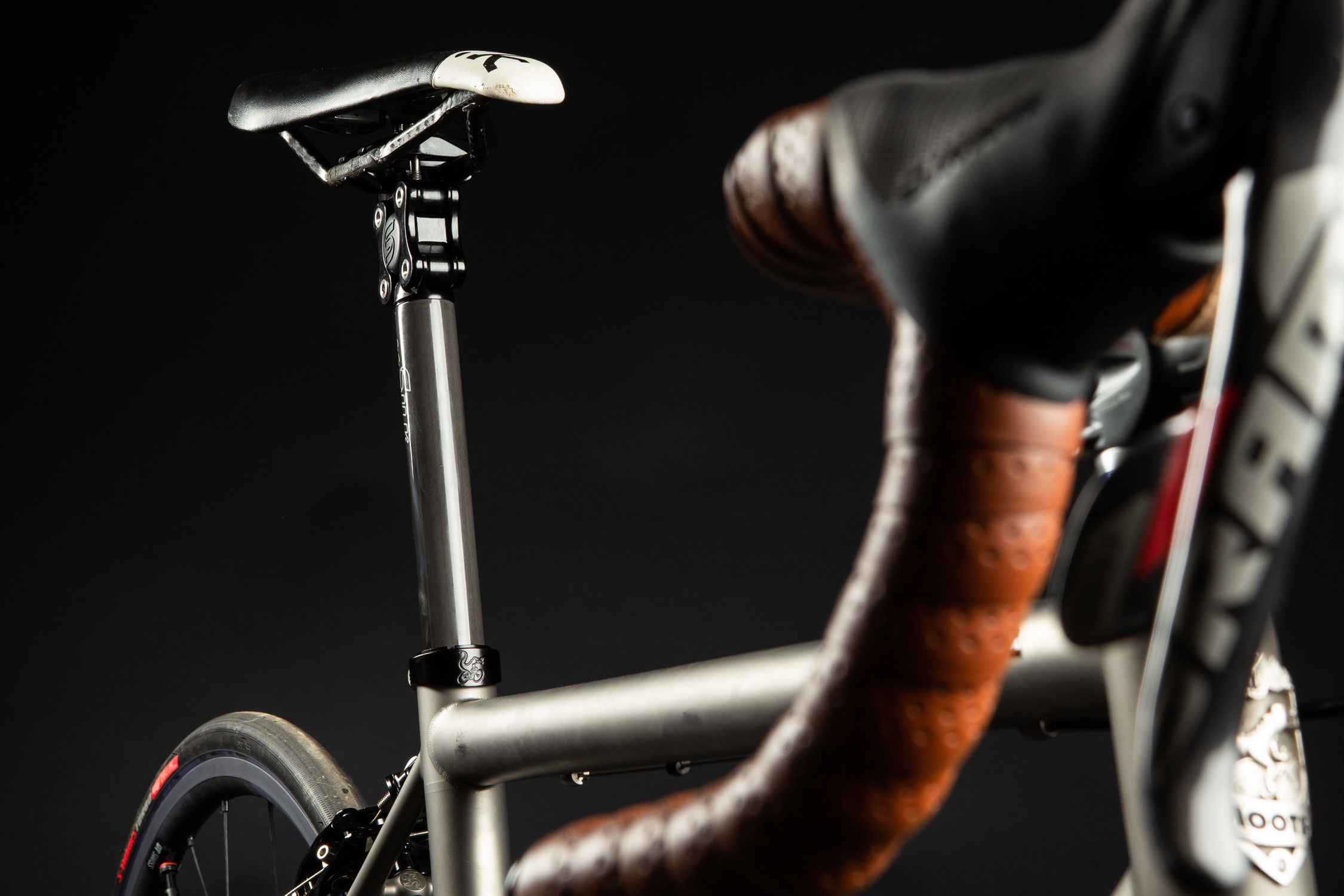
The Cane Creek eeSilk suspension seatpost is an excellent choice if:
- You only have a small amount of exposed seatpost
- You prefer an 8 mm seatpost setback
- You weigh between 100 and 113 kg (220–250 lb)
- You prefer a more “muted” suspension feel
- You don’t want a seatpost that feels bouncy
In vibration testing, it performed broadly on par with my Ergon Allroad Pro.
That said, I do think the elastomer range could be improved. At the moment, there are only three spring rates available, which may be sufficient for many riders, but I would have preferred an option between the #3 and #5.
As a result, the eeSilk won’t be making its way onto my benchmark bike.
You can support the CyclingAbout Comfort Lab by purchasing a Cane Creek eeSilk seatpost on Amazon. Simply click HERE to make your purchase, and a small commission will come our way.


