


At the moment, there seems to be a divide between e-bike riders and those who rely solely on their own pedalling power.
But it doesn’t have to be that way.
Ultimately, there’s no “right” way to travel by bike. From my experience with e-bikes, you can enjoy a very similar journey whether or not you have a battery and motor.
In this article, we’ll take a closer look at e-bikes—their motors, batteries, and the most common questions about travelling with them.
What Are the Advantages of e-Bike Touring?
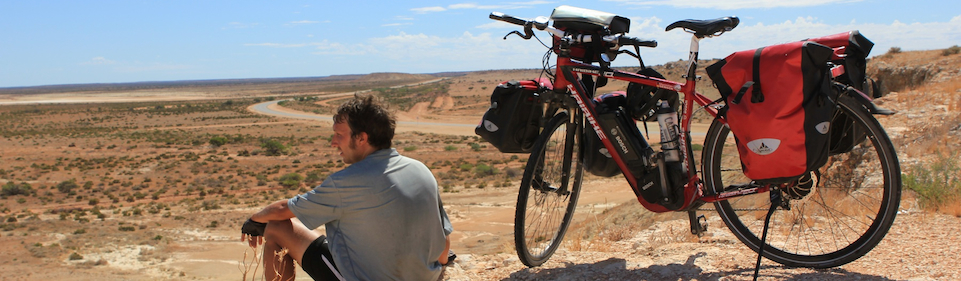
-
They offer the speed of running with the effort of walking.
-
You arrive at your destination with more energy for other activities.
-
Headwinds and hills are easier to tackle with less strain.
-
Cover more distance per day without extra effort.
-
Help balance the pace between cyclists of different fitness levels.
-
Ideal for riders with injuries or conditions like knee pain, back pain, or asthma.
-
Enable longer tours in a shorter amount of time.
-
Encourage non-cyclists to experience bike travel.
-
Ultimately, it’s better to explore actively, independently, and energised than to skip bike travel altogether.
What Are the Disadvantages of e-Bike Touring?

-
They are heavy – often 20 to 30 kg compared to 10 to 20 kg for a regular touring bike.
-
More components mean more potential mechanical issues.
-
Your route may be influenced by the need to find charging points.
-
You might become preoccupied with charging opportunities, sticking to main roads and towns.
-
If the battery runs out, you’re left pedalling the extra weight of the motor and battery.
-
They are more expensive than traditional touring bikes.
Are E-Bikes Reliable?
A high-quality electric system can handle bicycle touring without issues. Most e-bike motors and batteries are well-sealed and built to withstand shocks. Quality components can operate in temperatures from -15 °C to +45 °C and handle conditions like sandstorms, mud, snow, hail, and rough roads.
According to Gijs Stevers, who rode his e-Bike from Norway to South Africa, the only problem he ever encountered was a fogged-up computer display after heavy rain.
What Is the Range of a Touring eBike?
The range of an e-bike depends on many factors: battery size, pedalling effort, assistance level, terrain, wind, rider weight, bike weight, tyre pressure, road surface, and more. In practice, this means the range can vary widely – from as little as 10 km to as much as 300 km.
Gijs Stevers notes that if you can ride at 18 km/h on flat, calm roads, a 250 W motor can boost your speed to around 25 km/h. With a 400 Wh battery at this level of assistance, you could expect up to 100 km of range. Choosing lower assistance levels will extend this even further.
Many e-bike tourers manage their battery carefully, reserving power for hills and windy sections. Riders also learn to conserve energy by coasting downhill and using gears efficiently to stay in the optimal pedalling range.
Charging On The Road
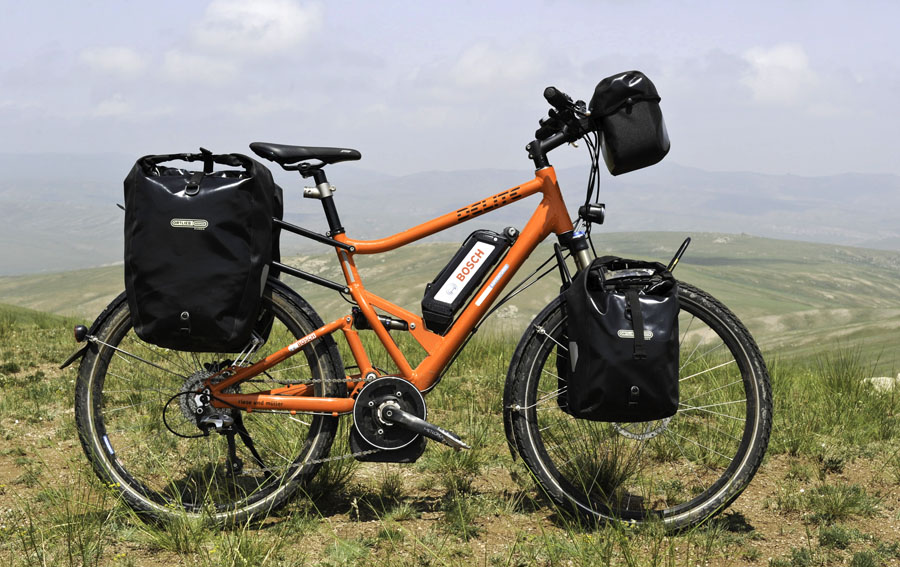
It is surprisingly easy to find powerpoints on a bike tour. Most people recharge their batteries at hotels and guesthouses that they stay in along the way, but you can recharge in cafes, petrol stations, churches, offices and supermarkets if you’re polite enough. If you cycle more than 100km per day you may want to consider doing a bit of charging over lunch. A half-charge over a restaurant lunch should get you another 50km down the road.
The full charge time for electric bikes is often 3-4 hours, depending on battery size.
Are They Really Worth The Trouble On A Bicycle Tour?
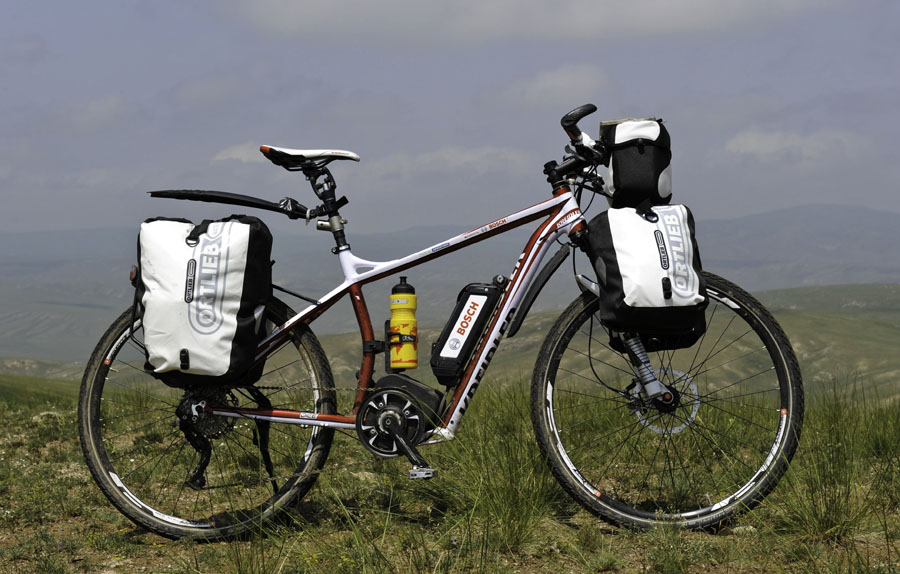
They can be – depending on what you want to get out of your trip. The bike itself is rarely a limitation, as modern motors are reliable and recharge quickly. In most populated areas, finding power outlets is straightforward.
Gijs Stevers points out that the extra weight of an e-Bike is offset by the motor’s assistance on hills. To extend their range, many e-bike tourers carry two batteries. This way, even on the highest pedal-assist setting, they can still achieve around 100 km of riding from a total of 800 Wh of battery capacity.
E-Bike Classes
Throttle
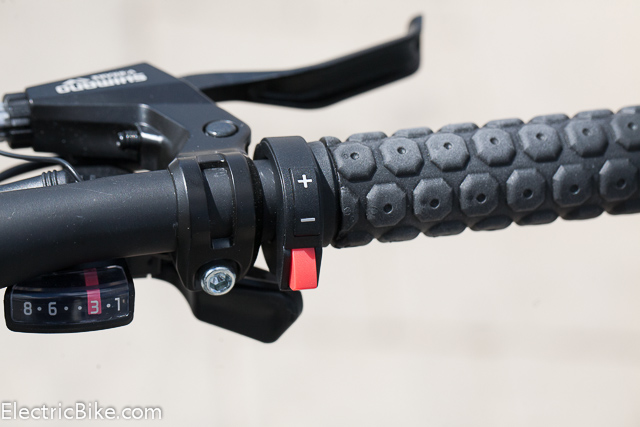
Throttle e-bikes let you control the motor directly via a handlebar twist grip or button, similar to a motorcycle throttle. You decide when and how much power to use. Some bikes combine throttle systems with pedal assist for extra versatility.
Pedal Assist (Pedelec)
Pedal-assist e-bikes, or pedelecs, provide motor assistance only when you’re pedalling. A torque sensor in the motor detects your effort, often paired with a cadence sensor for greater precision.
High-quality systems have minimal delay between when you start pedalling and when the motor kicks in, delivering smooth, seamless power. Some models can even adjust power dynamically – providing more assistance when you pedal hard and less when you pedal lightly.
Mid-Drive Motors
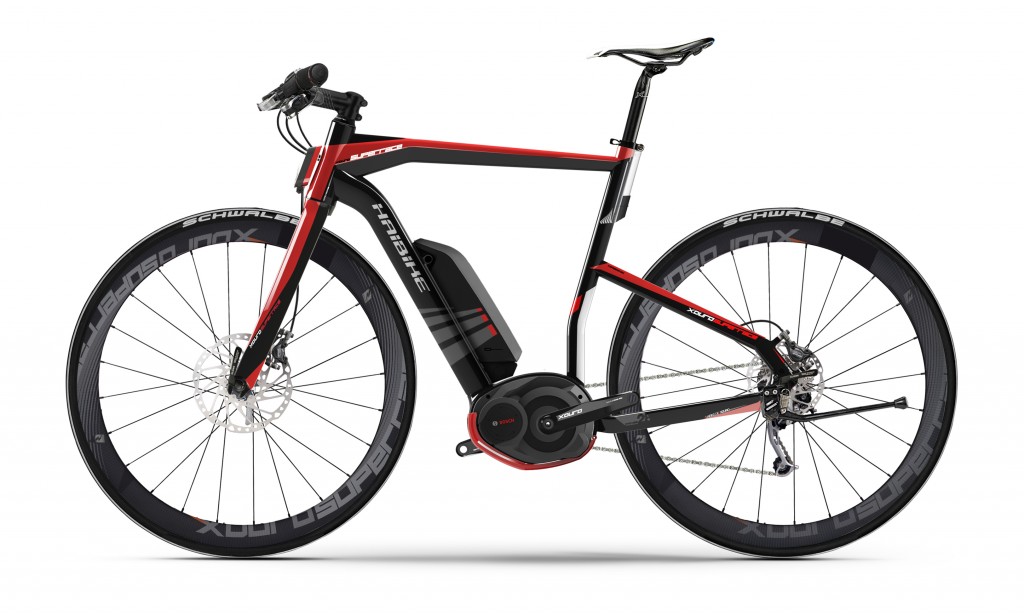
Mid-drive motors are located at the bike’s crankset, and most e-bike manufacturers now favour this setup.
Their main advantage is that they work with the bike’s gears, delivering optimal torque in a variety of conditions—whether climbing hills or riding on flat terrain. This makes them both efficient (extending range) and effective (especially on climbs).
Mid-drive bikes use standard wheels, allowing for options like internal-gear or dynamo hubs, and making maintenance (such as fixing punctures) quicker and easier. These systems are typically lighter than hub motors, with the weight positioned low and central on the frame, minimally affecting handling.
Unlike hub motors, mid-drive systems don’t require torque arms or reinforced dropouts, though the frame often needs to be designed specifically for them.
Mid-drive manufacturers include: Bosch, Yamaha, Panasonic, Bafang, Shimano
Hub-Drive Motors
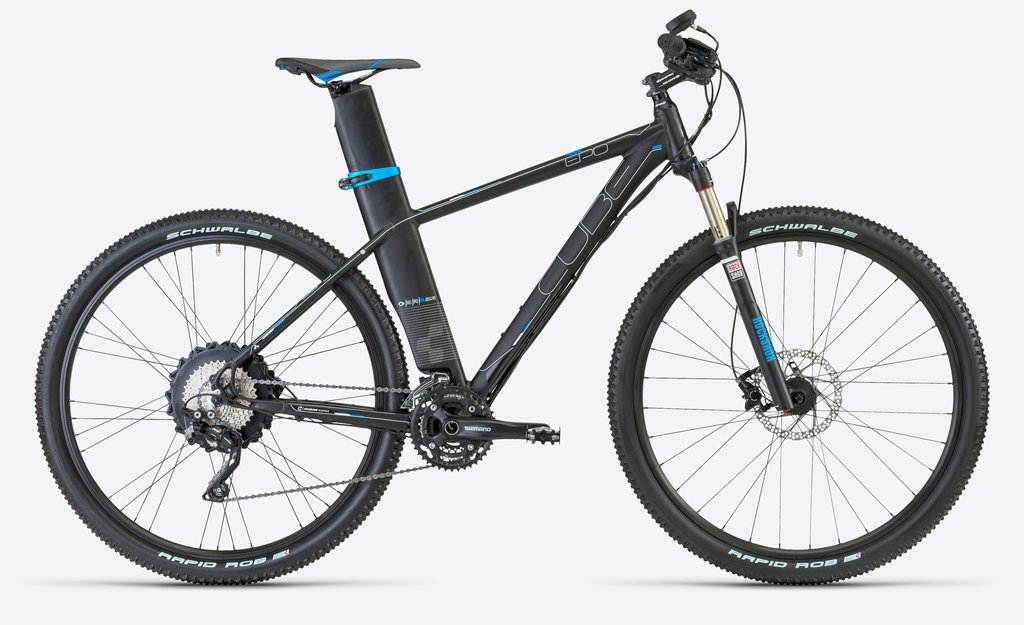
Hub motors are the most common type of motor on electric bikes. They can be very powerful and efficient, and are easy to fit to most standard bikes.
Geared hub motors (like the BMC V4) are smaller, lighter, and more efficient on hills, with minimal wheel resistance. The trade-off is increased motor noise and slightly reduced reliability due to their 10+ moving parts.
Direct-drive hub motors are the quietest and most reliable, as they have no moving parts. However, they are heavier and provide less torque for climbing. Some direct-drive systems also allow for regenerative braking, capturing energy on descents.
Front Hub Motors
Front hub motors are simple, elegant, and ideal for retrofitting standard touring bikes. They are often preferred when using internally geared hubs, such as Rohloff 14-speed, Shimano Alfine, or Nuvinci. The main downside is that the added weight at the front can affect bike handling.
Front hub motor manufacturers: Grin, Bagang
Rear Hub Motors
Rear hub motors are popular on modern e-bikes because the added weight on the rear wheel has less impact on handling. This allows for the use of heavier, more powerful motors (up to 1500 W) for extra performance. Rear hub motors require derailleur gearing or a Pinion gearbox, and stronger rear frame dropouts are necessary for high-powered setups.
Rear hub motor manufacturers: Grin, Bagang
Electric Trailers

A motor on your bike isn’t the only way to get a boost – electric trailers can do the job too! You can buy a Ridekick trailer, or even build your own with an integrated electric front hub.
The main advantage of an electric trailer is that you can easily unhitch it when you don’t need the extra power, avoiding the weight of a motor and battery on your bike.
Power and Speed
In many parts of the world, electric motors are legally restricted. In Europe and Australia, e-bikes are limited to 250 W, while Canada allows up to 500 W, and the USA up to 750 W.
Speed limits also apply, generally between 25 and 32 km/h (15–20 mph), depending on the country.
Are motors over 250 W necessary? A 500 W motor can provide roughly twice the assistance, but the battery will last about half as long. For most bike travellers, where range is a priority, a 250 W motor paired with a large battery is typically more than enough.
A Bit More On Batteries
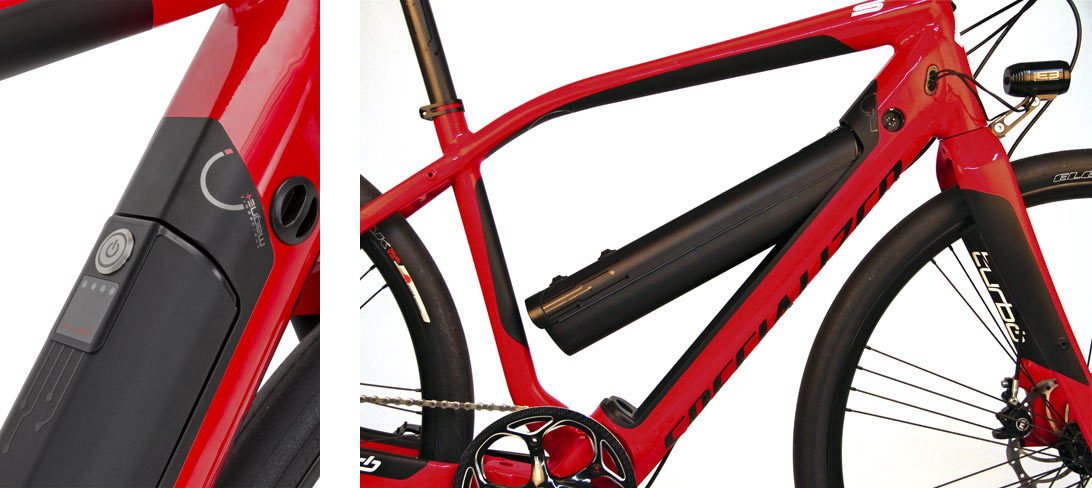
E-bike batteries come in a variety of configurations, but the key figure to consider is the total energy stored, measured in watt-hours (Wh). You can calculate this by multiplying the battery voltage by its amp-hours:
Voltage × Amp-hours = Watt-hours
Example: 48 V × 11 Ah = 528 Wh
Batteries are commonly available in 24 V, 36 V, and 48 V configurations, with capacities typically ranging from 6 to 17 Ah. This results in battery packs between roughly 200 and 700 Wh. Simply put, the larger the battery, the farther you can ride between charges.
Keep in mind, larger batteries are heavier and more expensive. For touring, a minimum of one or two 400 Wh+ batteries is recommended.
Battery placement varies: under the rear rack, along the seat tube, or on the down tube. The optimal location for a heavy battery is low and central (often along the seat tube) to minimise its effect on bike handling.
Electric Bike Prices
As with most things, it’s worth investing in a mid-range e-bike to get a product that is both reliable and well-refined. Most sources recommend a minimum of around US $1,500, though you may need to spend up to US $4,000 to find the bike you really want.
Retrofit electric kits are less visually sleek but can be a cost-effective alternative, often coming in under US $1,000 for a mid-range battery and motor. They also allow you to convert a touring-specific bike you may already own (more on retrofit kits below).
The Top E-Bikes For Bicycle Touring

Although none of these bikes is specifically designed for long-distance touring, they are all high-quality and come with decent components. For extended tours with heavy loads, you may need to upgrade the spokes and rims to more heavy-duty options on any of these off-the-shelf bikes.
It’s important to test ride as many bikes as possible, since e-bikes come in many different styles. Pay attention to your riding position, the bike’s ability to carry water, and whether there’s space for racks and mudguards. If you want to dive deeper, study the frame geometry to see how well the bike is suited for touring.
Here’s a selection of high-quality e-bikes to consider:
-
BH Emotion Evo City
-
Cube Touring Hybrid EXC
-
Diamondback EXC
-
Easy Motion Evo Race
-
Felt SPORTe
-
Focus Aventura Impulse 2.0
-
Gazelle Chamonix T10
-
Gepida Alboin 1000
-
Haibike XDURO Trekking RX
-
Kalkhoff Sahel Impulse 8
-
OHM XU700
-
Raleigh Misceo iE
-
Scott E-Sub Tour
-
Specialized Turbo
-
Storck Raddar Zero2Eight
-
Stromer ST2
-
VSF Fahrradmanufaktur P-1000
Retrofit Kits For Touring Bikes
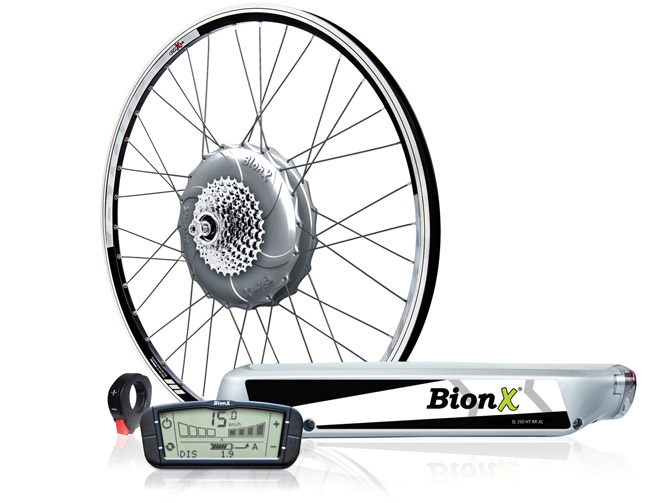
If you already have a touring bike, you can turn it into an electric bike with a conversion kit. Kits are often cheaper than buying a complete e-bike with similar performance. Prices range from a few hundred dollars up to around US $2,000 for the more powerful options.
For the best balance of value, performance, and longevity, it’s recommended to aim for the mid-price range, which typically offers good batteries and reliable components. The Canadian brand Bionx is widely regarded for its refined products, though its prices reflect the quality.
Brands to explore:
-
Ansmann
-
Bionx
-
Dillenger
-
E-Bike Kit
-
Ezee


I live in Alaska, I bought and built a Crystalite 72v Brute Ebike kit. I thought I was more or less alone with an electric bike up here, and for a while (about 6 years ago) I was for the most part. Now this concept has taken off (finally) and I feel like I may have bought a dinosaur. This is a 2880 watt system, and the batteries are 14 ah, so the system is 1008 watt hours. I intend to more than double the battery capacity by replacing the lead acid batteries with Lithium Ion batteries (very expensive) to 30 ah.
The new batteries are practically the same weight, but will put the machine at 2160 watt hours capacity. After reading this, I am blown away at how powerful this machine is, and Crystalite is not mentioned here as a popular brand. None of the systems mentioned are more than 500 watt hours, and I can see why now. I really don’t need to carry 50 lbs of batteries, nor do I really need a 72v system. 48v probably would be more than enough on a long trip and it would eliminate one third of the weight for the same capacity.
I am very excited to find so much online about Electric Touring because that was my intended use for this machine to begin with, and it’s nice to know I’m not alone.
I had also intended to attempt to carry roll up solar panels in case I needed to recharge in a remote area (Like Denali National Park). These are even more expensive than the batteries (twice as much). So obviously this endeavor will be financially challenging, but am really happy that I may have allies out there who can offer their experiences in this rapidly growing field.
I will be visiting this site again for sure.
Thank you very much!!
Trace Gentis
Wasilla, Alaska
Hi Trace. Thanks for dropping by and I’m stoked you’re digging the info on e-Bike touring! I hope you get some e-Bike trips under your belt soon. Let us know how your new batteries and charging system go. Alee
Hi Alee,
Very interesting and complete article, thank you.
Giovanni
Italy
The new hotness these days is the bafang BBSHD kits. Only mid drive you can buy that handles high power, mine does 1500w which is six times greater than that wimpy european stuff. There’s nothing on the market like it.
And a kilowatt of the new 18650b power density cells only weighs 9 pounds, a couple of those bad boys and you can do hundreds of miles with a mid drive. The future of ebikes is bright indeed 🙂
Those are some impressive numbers – I’ll check out the kits!
Trace,
Lithium will definitely save you weight. However, stepping down to 48V but keeping the same amp-hour capacity (reducing cell count by 1/3) will also reduce your total energy by 1/3.
Cheers!
I just now finished a cargo ebike with 7kwh of lithium Panasonic battery, that’s 7,000wh! Its 90 pounds heavy, low to ground, & handles great! Its urban commuter mid drive also. So I get more than 300+ miles range. 500wh battery is pathetic! This is how you get around! Capable of 8,000-10,000 watts, its a 103.6v nominal, 68AH battery! I’m on facebook to see the latest look of the bike, its too cool for most, including its 12v system!
Wow – sounds amazing!
As far as I know – a number of airlines don’t allow you to take an eBike on an airplane due to the lithium battery.
I recently did a mid-drive retrofit to my Kona Sutra while touring NZ. The benifits were immediately apparent as the pedal assist helped me slice through headwinds and climb the hills/mountains. A Derringer build and a 36v battery propelled me along when needed at an average speed of 20k/hr using it only when needed. Under these conditions battery life was roughly 7-8 hrs. Charging at gas stations, restaurants, and campgrounds was easy although a full charge from empty would take 6-7 hrs.
Drawbacks??
My triple crankset was reduced to a single dropping the bike from 27 to 9 gears.
International travel is a burden as airlines won’t let you travel with the battery. NZ Post also refused to forward the battery. Courier costs as well made this method unattainable. Fears in the transport industries of batteries catching fire have increased these costs.
Keep in mind battery innovation is on-going in the industry. New battery configurations are developing yearly and what was new this year can often be obsolete next year. I found this out after arriving in Australia with the intent to simply purchase a new one. I ended up reconfiguring the plug to the motor to be universal and bought a similar size Bafang. Cost for this was half the transport fees.
Another concern…I’m a minimalist when it comes to weight. With the battery and motor mid bike and panniers with camp gear on the rear this puts less weight in the front. Speed wobble becomes an inherent possibility. Redistribute weight accordingly!!!
You sound like a closeted gay guy…. you can’t call yourself a minimalist and be into long distance ebike camping. Face it, you are now one of us Riding Large. You found out how wonderful rides can be uphill, into the wind and still have creature comforts along to make everything better. To still have enough energy to take a hike at the end of long-distance days. I carry around 150 lb. of gear, water, and food, and that doesn’t count bike, motor or batteries. As far as speed wobble is concerned I have learned to keep the weight well distributed and I always ride with full front panniers when moving between base-camps. If the front is too light the wobble is Way worse. I use a 14-Speed Rohloff Speedhub and it meshes with the BaFang mid-drive like they were made for each other. Peas and carrots. Would I like to have a “Super” high gear for hard-ball sailing? Sure, but I can run at 35+ on level surfaces if I want to spend the power that way and that’s with full gear. My latest luxury is an inflatable chair. Stop anywhere and be able to recline, maybe under an umbrella even, and enjoy the view.