


Wheels are typically among the components that contribute the least to comfort on a gravel bike, at least if we go by the available wheel deflection test data.
That said, a few brands claim their designs offer noticeable comfort gains. Spank, for instance, uses Vibrocore foam inside its rims, while Spinergy takes a different approach with its distinctive synthetic PBO fibre spokes.
Curious to see if these claims hold up, I decided to try Spinergy’s gravel-specific GX 700C wheels. Here’s how they performed in my testing.
The Spinergy GX Gravel Wheels
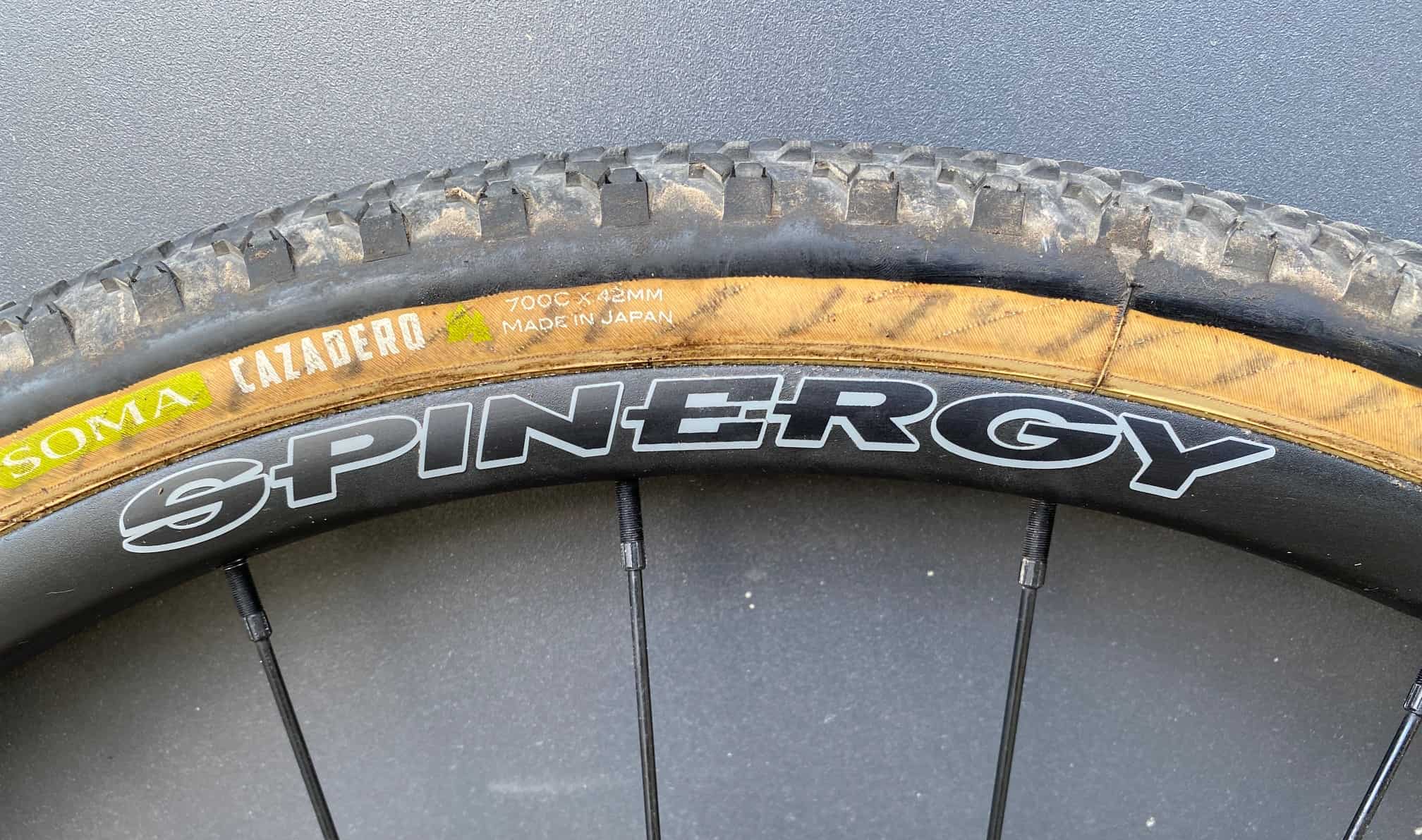
While testing various carbon gravel bikes, I was consistently impressed by how effortlessly they accelerated.
When chatting with friends about what made those bikes feel so lively, one point kept coming up: wheel weight plays a major role in how responsive a bike feels.
That was a big motivator for me to try the Spinergy GX 700C wheels. I wanted to see whether upgrading from my fairly average aluminium wheelset (with its standard 32 stainless steel spokes) would make my bike feel faster.
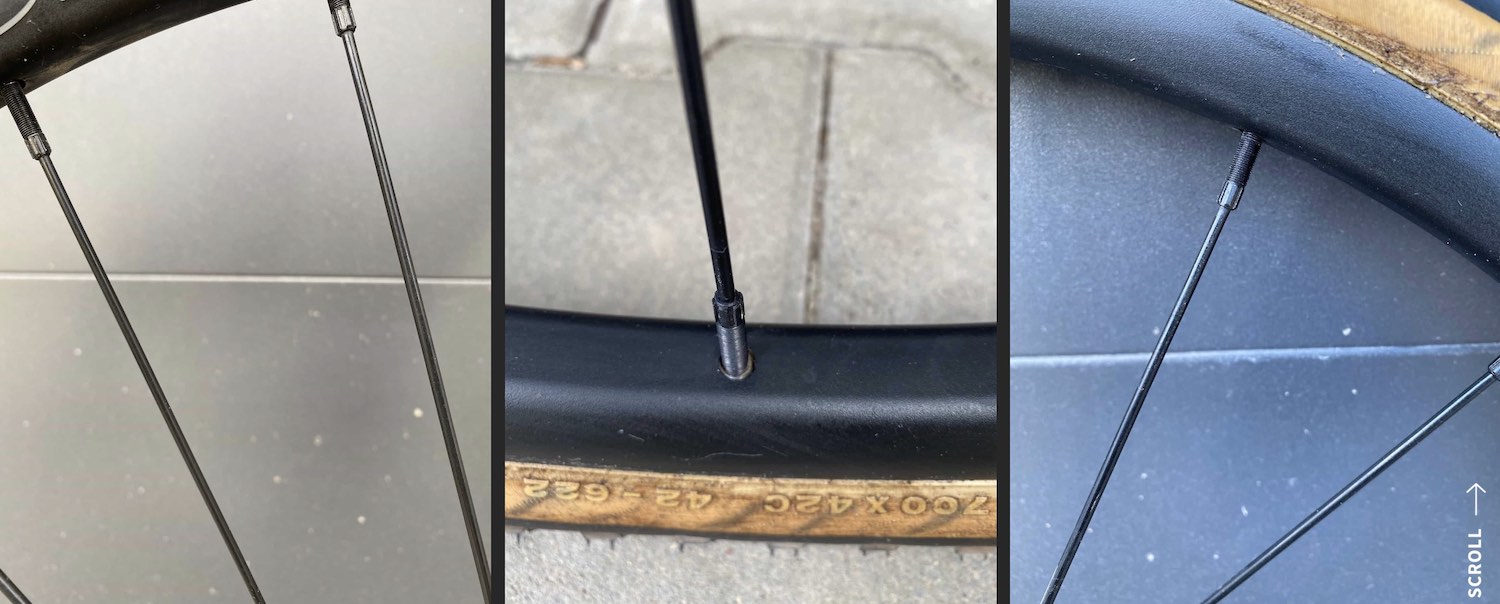
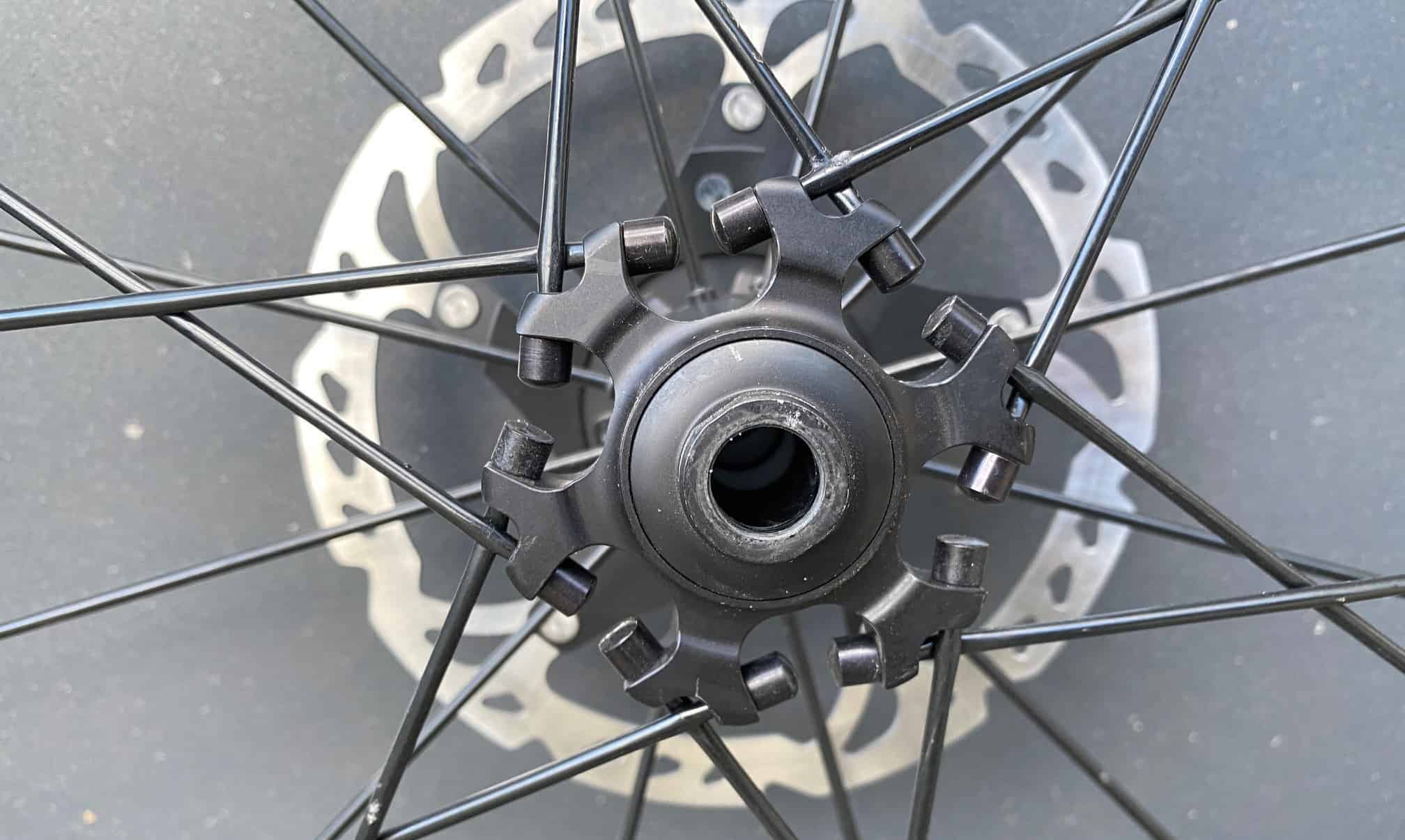
The Spinergy GX wheels use just 24 ultra-light spokes (more on those soon), and the complete wheelset tips the scales at only 1,475 grams. On paper, that should translate into noticeably snappier acceleration.
Once mounted, though, the difference wasn’t as dramatic as I’d hoped. The bike did feel quick to get moving and perhaps a touch more “lively,” but it never matched the punchy acceleration of the carbon bikes I’d been testing.
Some reviewers have mentioned that Spinergy’s PBO fibre spokes can introduce a slight delay in power transfer, but I personally didn’t notice any lag at all.
A Spring Alone Is Not Enough For Comfort

Spinergy is best known for its distinctive PBO fibre spokes, which the company claims are three times stronger than steel spokes while weighing only half as much.
But the benefits go beyond weight. Tests have shown that PBO fibre spokes can “spring” more effectively than steel, theoretically offering greater ride comfort.
The keyword, though, is spring. A spring on its own doesn’t automatically make for a smoother ride – it still needs to manage how that stored energy is released. Without damping, the energy absorbed has to go somewhere, often transferring back into other parts of the bike, such as the tires or even the rider.
This concept reminded me of the Lauf Grit SL suspension fork, which also relies purely on a spring mechanism without a damper. In my experience, it worked well on rough forest trails where impacts were larger and less frequent, but on fast gravel roads with constant, high-frequency chatter, the rapid rebound made it far less effective.
The Spinergy GX Wheel Ride Feel
My first ride on a bumpy forest trail was, frankly, a bit underwhelming. I didn’t notice any real improvement in comfort, and if anything, it initially felt like I was getting more feedback through the bike compared to my basic ATD 470 wheelset.
Could that be the “springiness” effect of the PBO spokes? Possibly. However, as I spent more time on them, I began to adapt to the sensation and gradually noticed a subtle improvement in comfort. It wasn’t dramatic, but it was there.
I could detect the difference at both 25 psi and 50 psi tire pressures, which confirmed that the effect came from the wheels rather than the tires. Still, this was no magic carpet ride, not even at 25 psi. Far from it.
To properly understand how much comfort these wheels actually provide, I decided to measure the vibrations directly.
My Bike For The Comfort Test
I carried out a series of vibration tests using my Jamis Renegade, stripped of any other comfort-enhancing components. This setup would give the wheels the best possible chance to demonstrate their vibration-damping capabilities.
The test configuration included an FSA rigid stem, Zipp Service Course handlebars, an FSA rigid seatpost, an Accent saddle, and Soma Cazadero 700C x 42mm tires (tested at both 25 and 50 psi pressures).
Vibration Testing The Spinergy GX Wheels
You can see my vibration measurement procedure & outdoor test courses HERE.
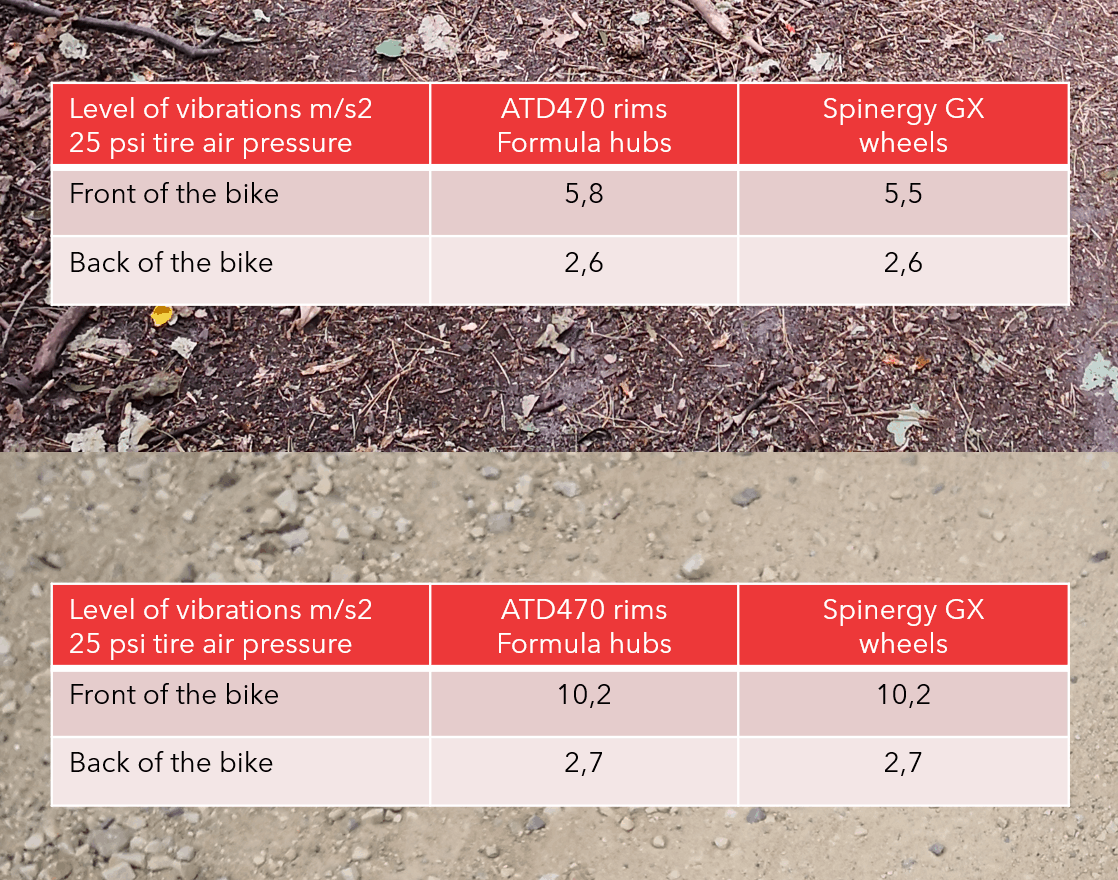
On the bumpy forest trail with the tires set to 25 psi, the Spinergy GX wheels managed to reduce front-end vibrations by about 5%. That’s a meaningful improvement and certainly not insignificant.
However, in all the other 25 psi test scenarios, I couldn’t detect any noticeable difference in vibration levels between the Spinergy wheels and the other wheelsets.
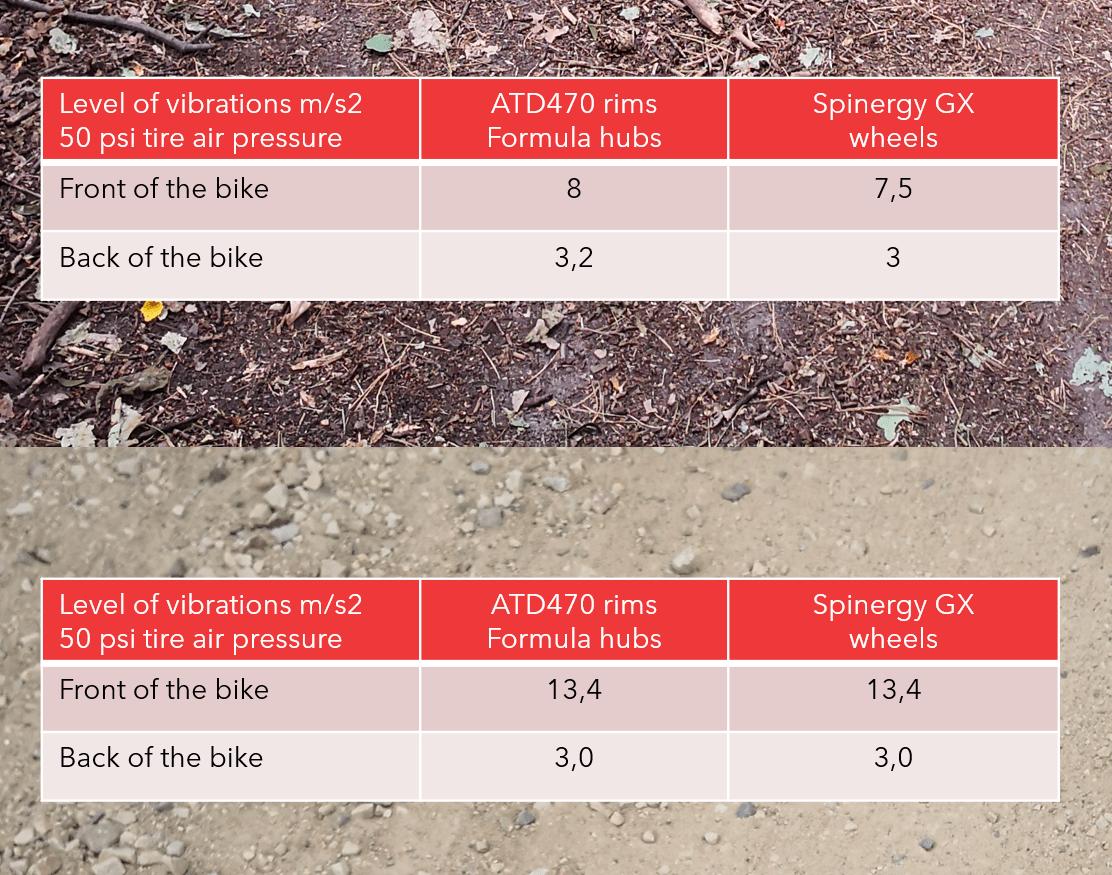
Next, I increased the tire pressure to 50 psi to see whether this setup would allow the wheels themselves to contribute more to vibration damping, with the tires doing less of the work.
At this higher pressure, the Spinergy front wheel delivered about 6% more comfort than my standard wheels on the bumpy forest trail. Interestingly, I also recorded a 6% improvement at the rear, this time a difference I could actually feel.
The only catch is that I never ride with 50 psi in my tires, so it’s hard to consider this a practical comfort advantage.
Given that the “springy” Lauf Grit SL fork had already proven less effective on fast gravel roads compared to other forks, I wasn’t expecting the equally “springy” Spinergy GX wheels to perform miracles in that scenario. And they didn’t. On the high-speed gravel test, there was no measurable difference in comfort between the wheelsets.
High-frequency chatter is notoriously difficult for any comfort-oriented component to absorb, especially those relying on spring-like flex without effective damping.
Other Small Details About The Wheels
The Spinergy GX wheels feature a well-designed rim profile that’s both wide and relatively shallow.
With a 24mm internal width, the rims provide noticeably better sidewall support compared to my ATD470 rims, which have a narrower 17mm inner width. They’re also exceptionally easy to set up tubeless, perhaps the easiest I’ve worked with so far.
Even after a full week of riding, my Soma Cazadero tires held air perfectly, with no significant leakage. That’s always satisfying and one of those moments that reminds you why going tubeless is worth it.
Visually, the wheels stand out. The PBO spokes are noticeably thicker than traditional steel spokes, and the rim holes are correspondingly larger. Spinergy offers these spokes in a range of colors, allowing you to personalize your bike and make it stand out from the crowd.
However, that distinctive design comes with a trade-off: servicing is more complicated. To true the wheels, you’ll need to remove the rim tape and use the special tools included with the wheelset. For emergencies, it’s a good idea to carry a few spare spokes, but Spinergy assures that the PBO fibre spokes are extremely durable, so replacements should be a rare necessity.
Are Spinergy GX Gravel Wheels Worth It?
PROS
- Nice and lightweight
- Some comfort improvement
- Look cool!
- Easy tubeless setup
CONS
- Wheel truing is difficult
- Somewhat high price
- Hard to buy (Europe)
Yes, I think so. After all my testing, I’ve decided to keep them.
The price is very reasonable, I really like their distinctive look, and they deliver a small but noticeable improvement in front-end comfort on the bumpy forest trails I frequent. On top of that, they’re significantly lighter than my previous wheelset, which gives the bike a livelier feel.
That said, they’re not a miracle cure for comfort. The difference is subtle rather than transformative, but for weight, looks, and overall performance, the Spinergy GX wheels are a solid upgrade.


