


If you ride steeper or rougher terrain, brakes are one of the most important components on your bike. The best MTB brakes combine high stopping power with precise braking control, giving you the ability to shed speed quickly and reliably.
However, the real advantage of powerful brakes is just how little lever effort is required to access that power. And reducing lever effort can make a huge difference to hand and arm fatigue, particularly on long descents. I’ve found that many riders assume they’re exhausted simply from riding rough terrain, but brakes that require excessive lever force are usually a major part of the problem.
In this article, I’ll take you through the fundamentals of braking systems, show you the top-performing brakes from a braking lab test, and highlight the models that offer the best combination of outright power and control.
Let’s get into it!
Creating Powerful Mountain Bike Brakes
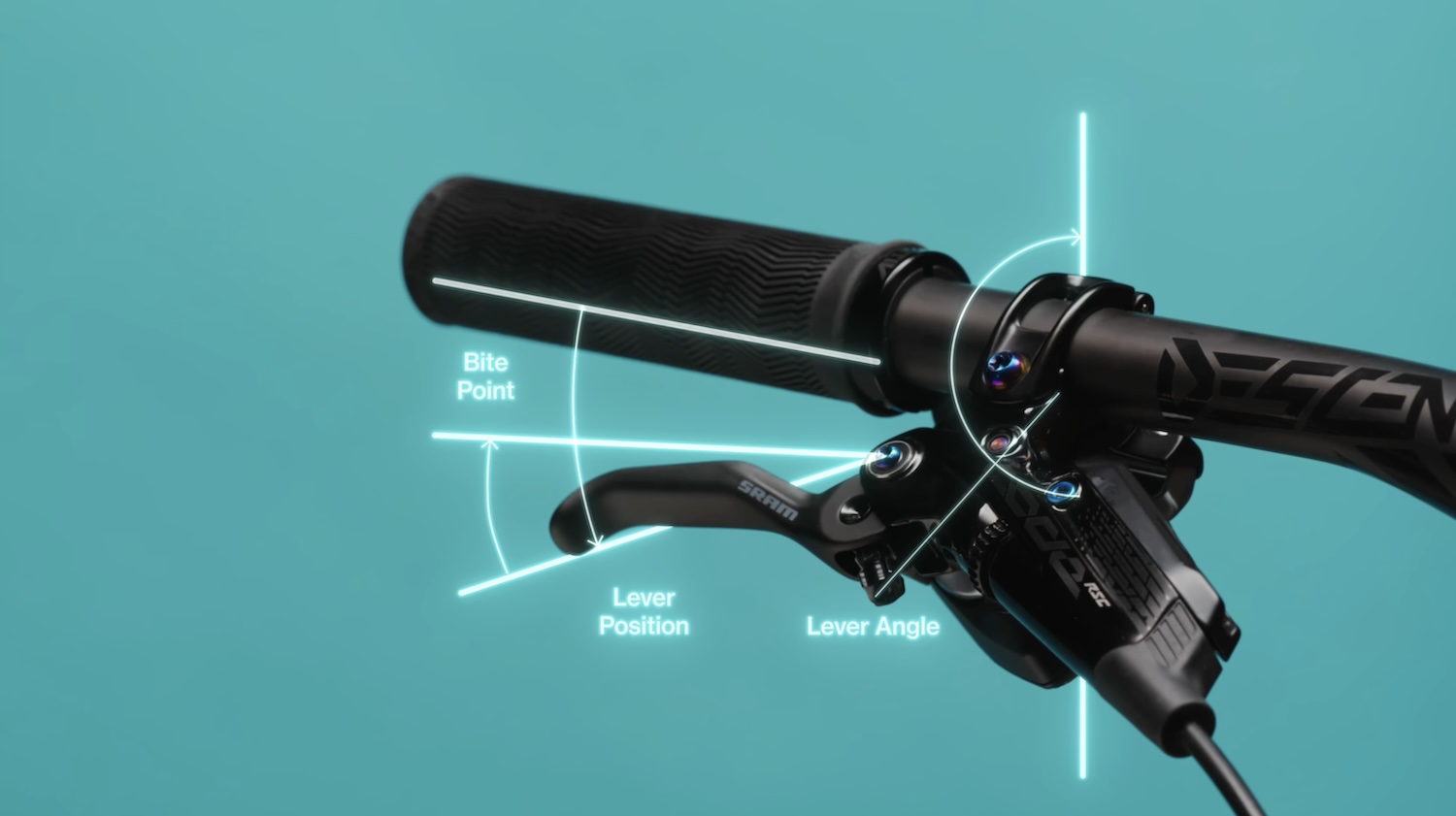
Powerful disc brakes rely on several elements working together. The key factors include caliper piston area, the hydraulic and mechanical leverage of the brake system, rotor size, and the friction characteristics of the brake pad compound.
The best MTB brakes combine high stopping power with consistent performance under sustained braking. This is particularly important on long, steep descents, where the ability to maintain strong deceleration as temperatures rise can make a significant difference.
Some brakes deliver impressive power when cold but lose performance as heat builds, resulting in brake fade and reduced stopping force. A controlled deceleration lab test can reveal this drop in performance, making it one of the most useful ways to objectively compare brake systems.
But before we get into the deceleration lab test results, it’s worth looking at the other factors that contribute to how a brake feels and performs on the trail.
Braking Force Delivery Profiles
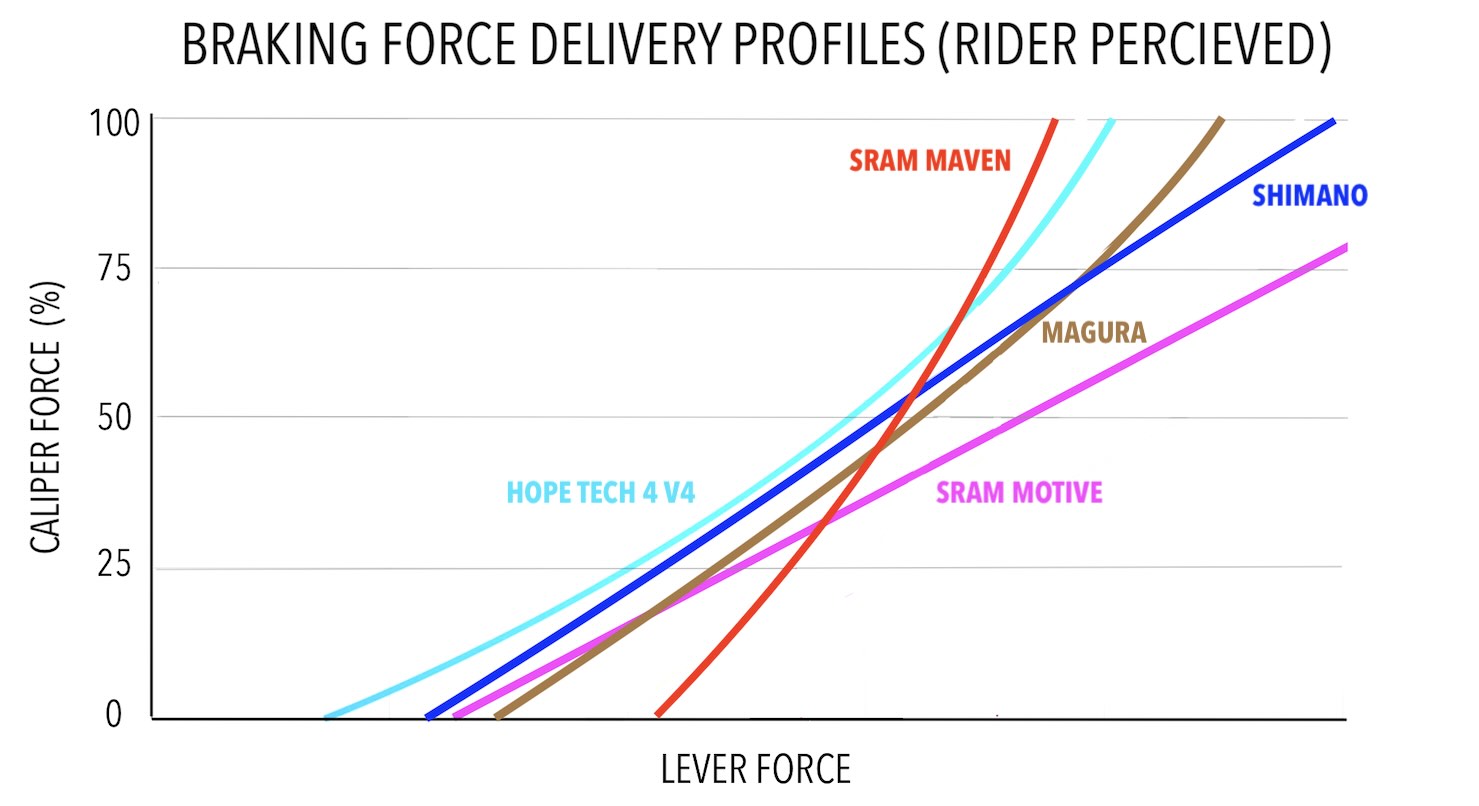
One useful way to compare brake systems is to look at how much caliper force they produce for a given amount of lever input. This reveals not only which brakes generate the most force for a given input, but also how progressively that force builds as you pull the lever.
Some brakes generate substantial caliper force with relatively little lever input (Hope and Shimano). Others require more force initially, but the power ramps up more aggressively as lever input increases (SRAM Maven).
Brakes with a more gradual force curve can actually provide a broader range of usable braking force that will make small adjustments easier (SRAM Motive). Brakes with a steeper force curve will reach high braking forces quicker but require more finger finesse to make those same braking adjustments (SRAM Maven).
Ultimately, there is no perfect force curve. Your body weight, preferred terrain, and even riding style all shape which profile works best for you.
That said, if you’re a heavier rider or regularly tackle steep terrain, you may frequently use 75% or more of a brake’s available output. In this case, a brake that delivers substantial force without requiring excessive lever effort at the higher end of the curve (that’s the 50 to 100% zone on the graph) is advantageous. The best brake models for that application would be the Hope or SRAM Maven brakes.
Conversely, lighter riders or those riding flatter trails may spend much of their time using a smaller proportion of the brake’s available output. In this situation, a brake that generates high caliper force with minimal lever input throughout the lower end of the curve (that’s the 0 to 50% zone on the graph) may be preferable. The best brake models for that application would be the Hope or Shimano brakes.
The Importance of Brake Pads
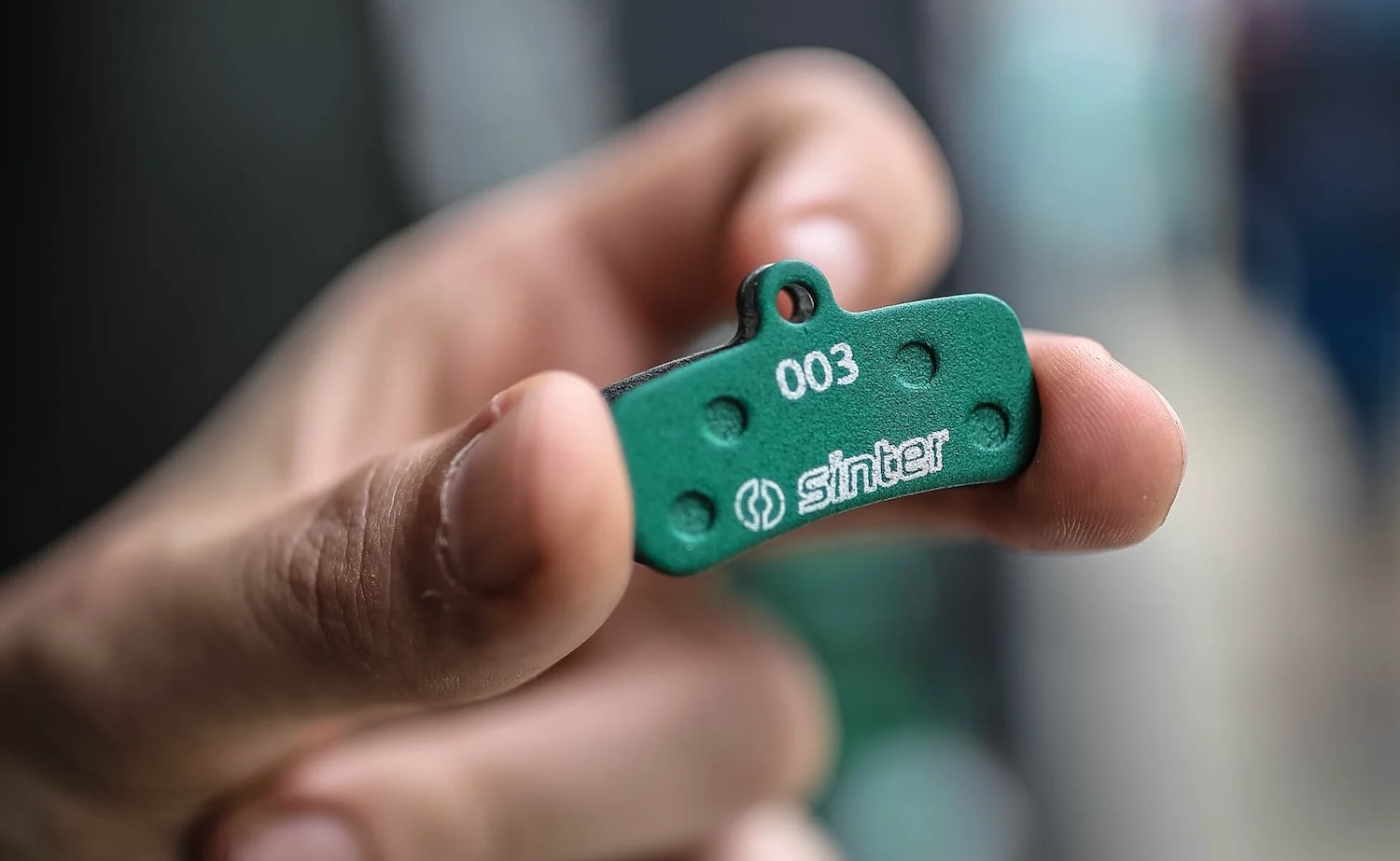
While characteristics like the caliper piston area are a major contributor to braking power, the brake pads determine how effectively that clamping force is converted into friction at the rotor. The pad compound therefore has a major influence on both braking performance and how that performance changes with temperature and conditions.
Metallic pads are generally prized for their durability, heat resistance and consistent performance during long descents. They also tend to perform well in wet and muddy conditions, where their resistance to wear is great. However, some metallic compounds need more heat to reach their optimal operating range and may offer less initial bite than softer compounds.
Organic pads typically offer strong initial bite and can provide excellent friction at lower temperatures, making them particularly effective when maximum deceleration is the priority. In the lab test featured below, you’ll see that switching to organic pads reduced braking time from 30 to 15 km/h by an average of 17.3% across eight different brake models. That’s a substantial improvement from a relatively simple component change.
Organic pads can also generate less heat at the pad interface in some applications, but their softer compounds generally wear faster, particularly in wet conditions. Modern pad formulations vary considerably, so it’s difficult to make blanket claims about the performance of all organic pads.
Semi-metallic pads sit somewhere between the two, aiming to balance friction, initial bite, durability and heat resistance. For riders looking for a compromise between power and long-term durability, they can be an excellent all-round option.
The Bedding-In Process For Disc Brake Pads
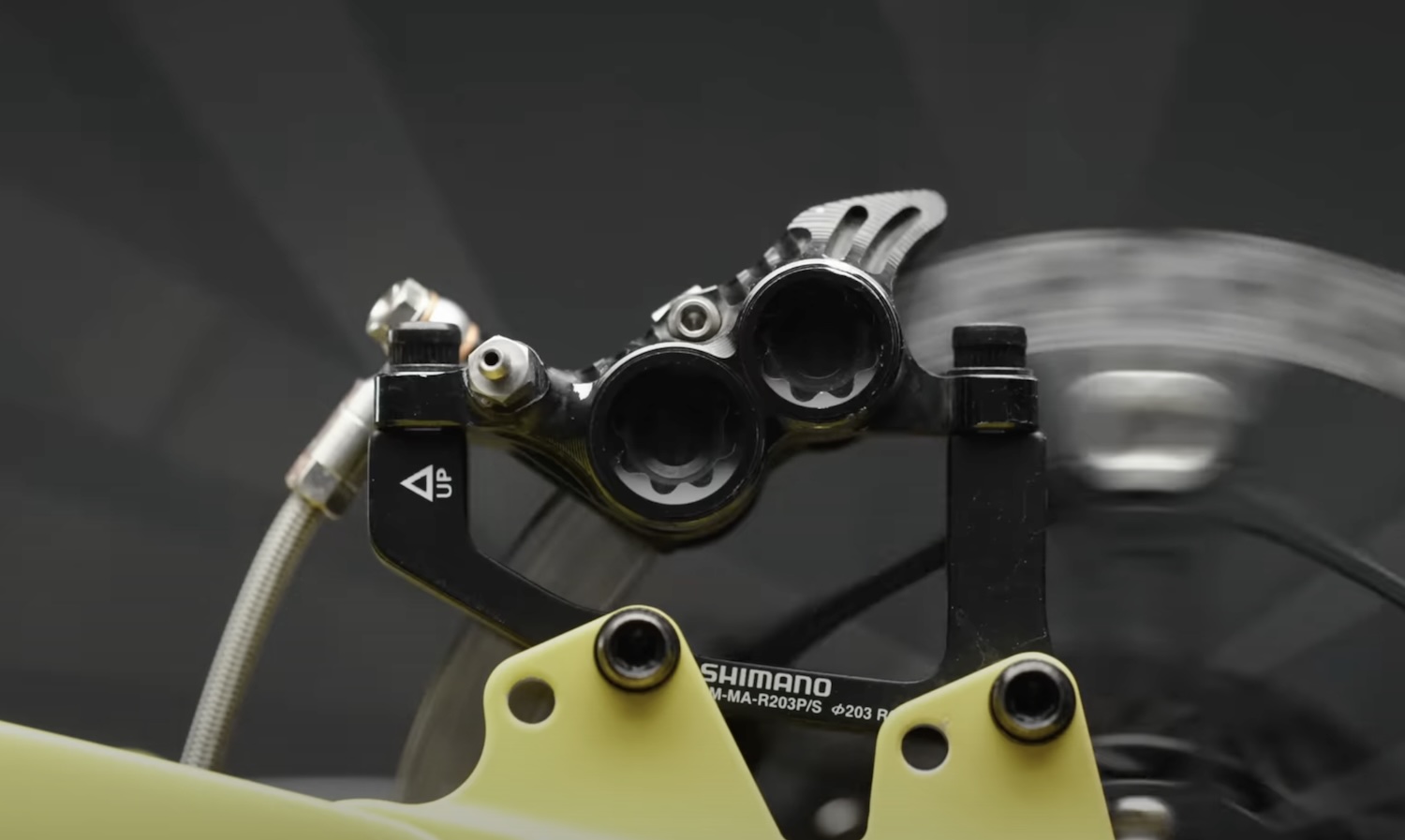
The bedding-in process is crucial for achieving the best braking performance from new disc brake pads and rotors.
Bedding-in transfers a layer of pad material onto the rotor, establishing the friction interface between the two surfaces. This helps maximise friction and reduce the risk of uneven deposits or glazing. For the best results, always follow the brake manufacturer’s recommended bedding-in procedure.
Skipping or rushing this process will reduce braking performance by quite a bit. This is particularly the case with metallic pads, which ideally need to reach higher temperatures during bedding-in. Without sufficient heat and the correct procedure, new metallic pads can feel noticeably weaker than otherwise.
It’s also worth keeping your pad compounds consistent with your rotors. If you switch from metallic to organic pads, for example, the existing transfer layer on the rotor may not be ideal for the new compound. So for the most consistent results, thoroughly clean or replace the rotor when changing between substantially different pad compounds, then bed in the new pads according to the manufacturer’s instructions.
The Role That Rotor Size Plays
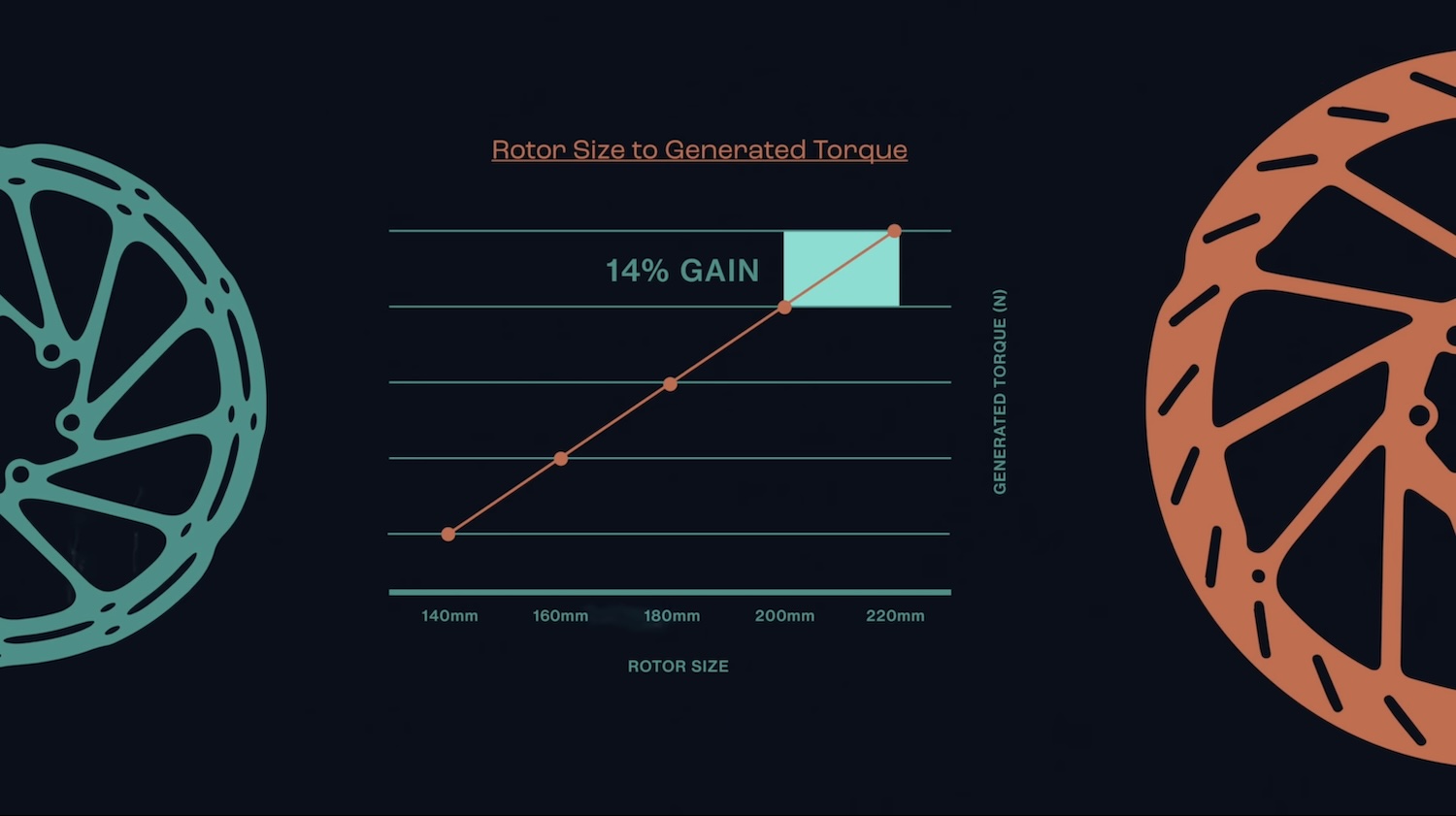
If you’re experiencing underwhelming braking performance and are running relatively small rotors (140 to 180 mm), stepping up in size is one of the simplest and most effective ways to increase braking power. A larger rotor increases the mechanical leverage at the wheel, meaning the same caliper force generates more braking torque. In turn, you need less force at the lever to achieve the same deceleration, which can help reduce hand and arm fatigue.
Data from SRAM suggests that increasing rotor size from 200 to 220 mm produces a 14% increase in braking torque, and an independent lab test by Enduro-MTB found that increasing rotor size from 180 to 200 mm reduced the time required to decelerate by an average of 18%.
I recommend at least a 200 mm front and 180 mm rear rotor for heavier riders, heavily loaded bikes, or anyone regularly tackling steep terrain. For many riders, 200 mm front and rear usually offers an excellent balance of power, weight and heat management.
Keep in mind that larger diameter wheels (29 or 32″) will also require larger rotors than smaller diameter wheels (26 or 27.5″). As a general guideline, moving from 27.5″ to 29″ wheels can be a good reason to consider stepping up one rotor size, while 32″ wheels may benefit from another increase.
How The Best MTB Brakes Compare in Lab Testing
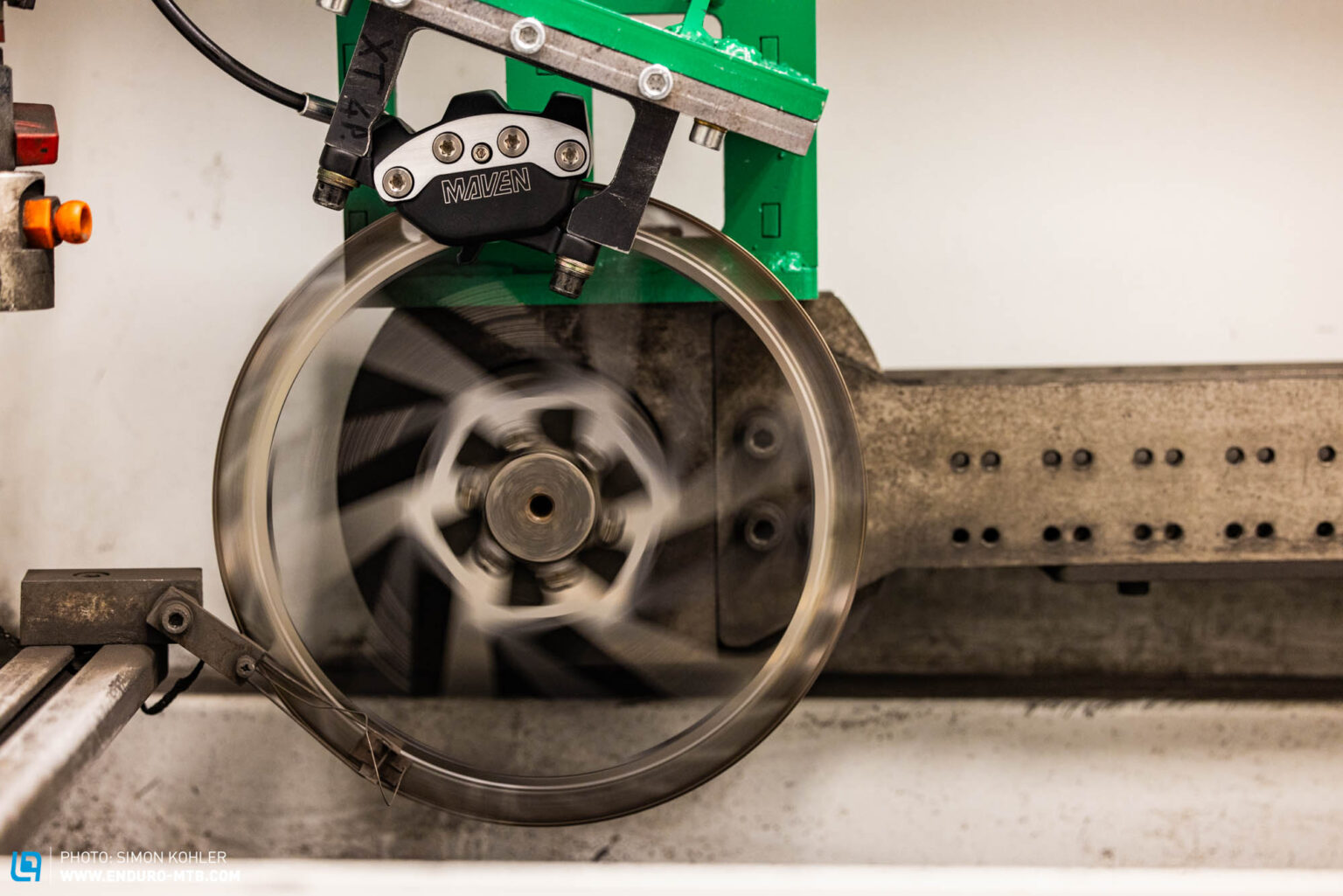
Enduro-MTB commissioned Sinter Braking to conduct a controlled laboratory test comparing the performance of several high-end MTB disc brake systems.
After bedding in the brake pads according to the manufacturers’ recommendations, Sinter subjected each brake to 20 repetitions of two braking scenarios. The first simulated a full stop from 30 km/h to 0 km/h, while the second measured deceleration from 30 to 15 km/h, replicating the type of braking typically used when slowing down before entering a corner. Each brake was given 10 seconds to cool between repetitions, and the results shown are the average across all 20 cycles.
For consistency, every test used a 200 mm rotor, with airflow maintained throughout the testing to simulate the cooling effect experienced during riding.
A consistent 40 N of force was applied to each brake lever to generate the braking force. That’s roughly representative of a firm braking effort when approaching a steep corner at speed. Among the pad options tested, the Sinter Race organic pads produced the best results, so the main results presented below are based on these pads.
There is an important caveat, however. Some brake models, marked with an asterisk, were not tested with Sinter Race pads. To make the comparison more consistent, I adjusted their results using the average improvement measured when switching from stock pads to Sinter Race pads on the other brake models.
This adjustment corresponds to a 17.3% reduction in braking time for the 30–15 km/h test and a 15.7% reduction for the 30–0 km/h test. These adjusted figures aren’t a substitute for directly testing every brake with the same pads, so they should be treated as estimates rather than measured results. However, they provide a useful indication of how these brakes might compare if all of them had been tested with the same high-performance pads.
You can see the full braking test data HERE.
30 to 15 km/h Deceleration Test
| Braking Time | Time Compared To Best Performer | |
|---|---|---|
| Trickstuff Maxima | 0.97 s | – |
| Hope Tech 4 V4 | 0.97 s | 0% Slower |
| Shimano XTR | 0.98 s | 1% Slower |
| SRAM Maven Ultimate* | 0.99 s | 2% Slower |
| Shimano XT* | 1.08 s | 10.2% Slower |
| Hayes Dominion | 1.11 s | 12.6% Slower |
| TRP EVO Pro | 1.26 s | 23.6% Slower |
The 30–15 km/h deceleration test closely mirrors real-world trail braking, particularly the braking you do when slowing down before entering a sharp corner.
Leading the field are the Trickstuff and Hope brakes, both delivering impressive stopping power with relatively little lever force. Just behind them are the Shimano XTR and SRAM Maven, which generate slightly less braking force at 40 N of lever force. However, the difference is small enough to fall within the likely margin of error.
A step below are the Shimano XT and Hayes Dominion, which trail the leaders by around 10 to 13%. At the bottom of the group are the TRP brakes, which deliver noticeably less braking force than the leading systems in this particular test.
30 to 0 km/h Deceleration Test
| Braking Time | Time Compared To Best Performer | |
|---|---|---|
| Trickstuff Maxima | 1.53 s | – |
| Hope Tech 4 V4 | 1.62 s | 5.6% Slower |
| SRAM Maven Ultimate* | 1.77 s | 13.6% Slower |
| Hayes Dominion | 1.85 s | 17.3% Slower |
| Shimano XTR* | 1.96 s | 21.9% Slower |
| Shimano XT* | 2.23 s | 31.4% Slower |
| TRP EVO Pro | 2.42 s | 36.8% Slower |
The 30 to 0 km/h test provides a clearer picture of brake performance during longer, high-load stopping events. Because the braking phase lasts roughly 1.5 to 2 times longer than in the previous test, it places greater demands on heat management. As a result, differences between the brakes become more pronounced.
It’s during these hard, sustained stops that the gap between the top-tier brakes and the rest of the field really starts to emerge.
Interestingly, the rankings shift under these longer braking efforts. The Hayes Dominion climbs from 7th to 4th place, while the Shimano XTR drops from 3rd to 5th. Meanwhile, the Trickstuff Maxima edges ahead of the Hope Tech 4, creating a clearer separation between the two leading brakes.
The Best MTB Brakes From the Lab Test
Trickstuff Maxima
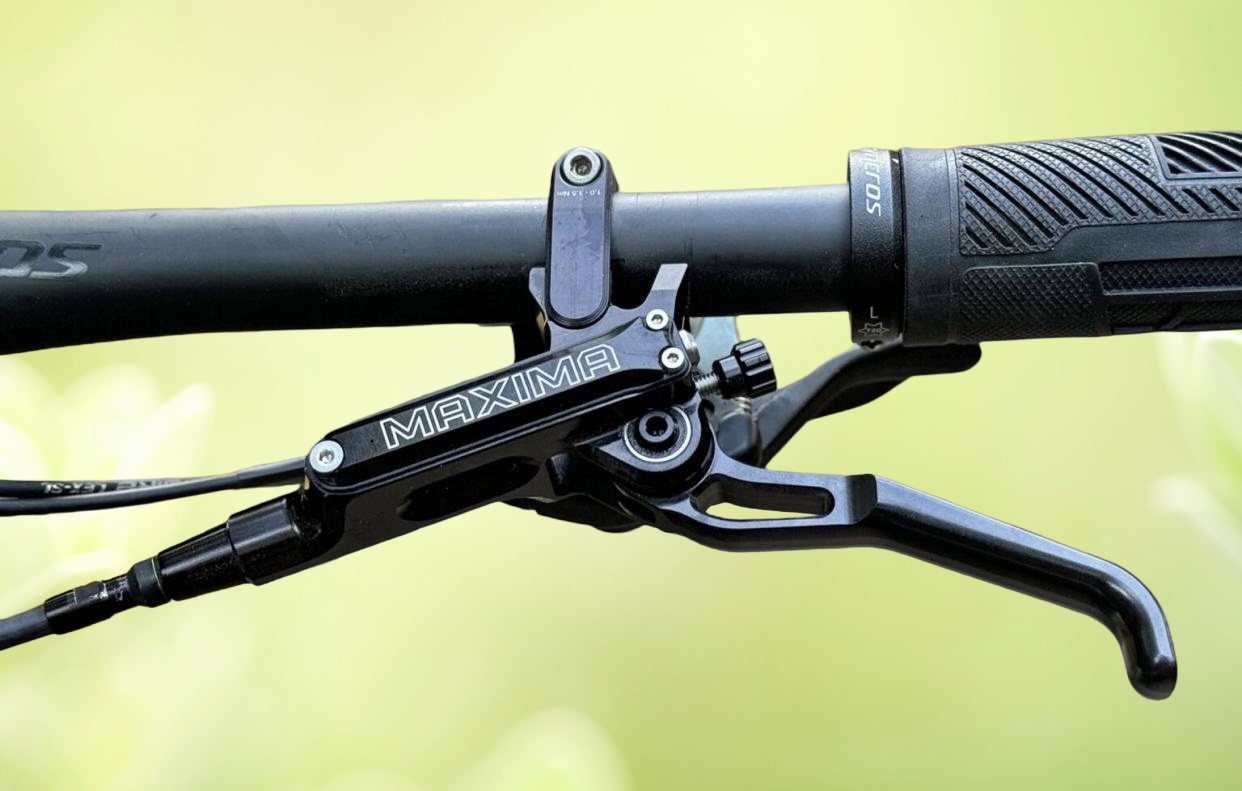
The Trickstuff Maxima is widely regarded as one of the most powerful and refined hydraulic disc brakes ever made. At around US$1,400 per set, it’s also one of the most expensive. However, independent testing supports Trickstuff’s reputation for producing some of the market’s most powerful brakes.
The Maxima is fully CNC-machined from 7075-T6 aluminium and uses stainless-steel pistons and four sealed cartridge bearings for exceptionally smooth lever action. The lever action is light and responsive. It’s not quite as light as Hayes, but comparable to Hope.
What makes the Maximas especially great, however, is the way it combines its power with excellent modulation. There’s little initial grabbiness; instead, the brake starts with a soft bite and builds force progressively through the lever stroke. While SRAM Maven and Shimano XTR brakes can feel more immediately powerful because they build braking force more aggressively earlier in the stroke, the Maxima offers a broader and more progressive range of control.
That characteristic makes the Maxima particularly impressive on steep, loose or high-speed terrain, where being able to precisely meter braking force can be just as important as having high peak power.
There are some quirks. Bleeding is more involved than with Shimano or SRAM, with different thread sizes and a specific procedure required to avoid leaks. The brakes also use Goodridge braided hoses and Bionol, a sunflower-oil-based hydraulic fluid.
For those who can justify the cost, the Maxima combines extraordinary braking power with exceptional modulation and a level of machining and craftsmanship that few other brakes can match. The deceleration lab tests suggest they are the real deal.
See the current Trickstuff Maxima price on Trickstuff.
Trickstuff Maxima
Brake Torque @ 40N: 269.7 Nm
Bite Point: Soft
Free Stroke: Light
Brake Fluid: Bionol
Price: US $1400 (set)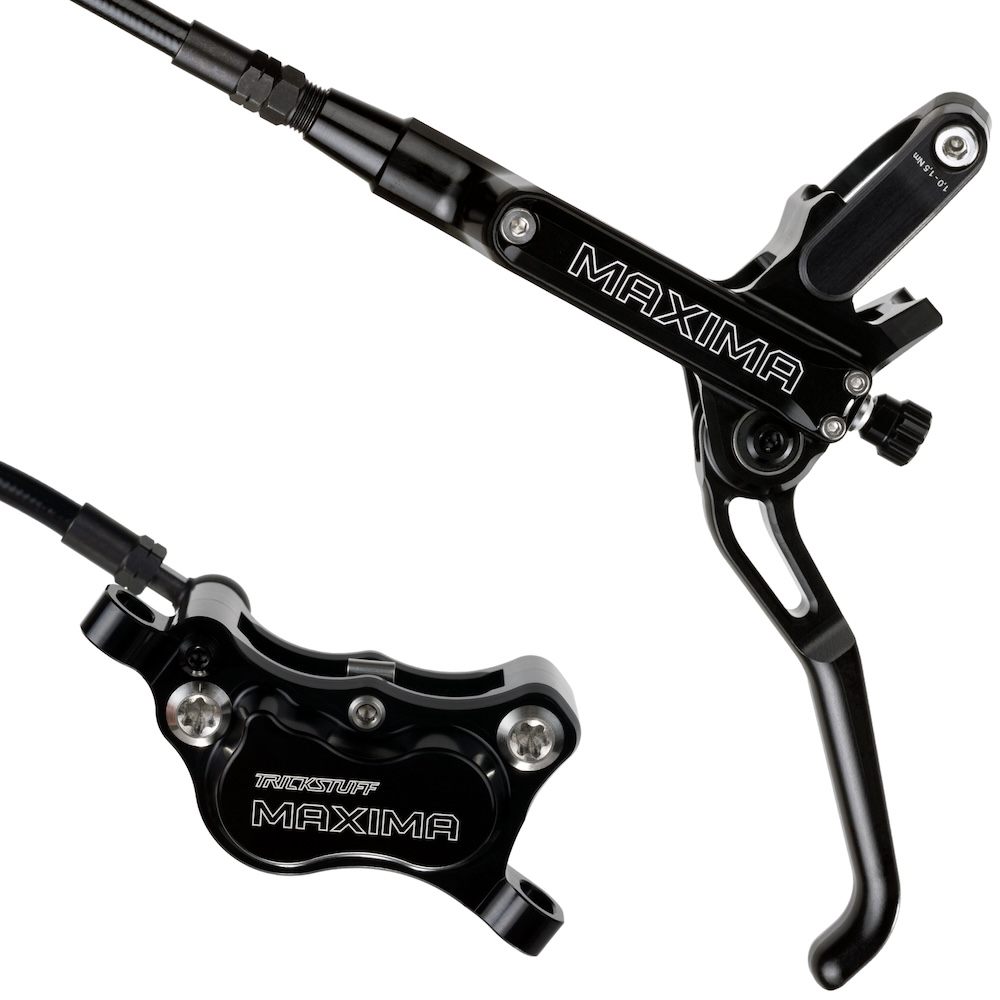
Hope EVO GR4
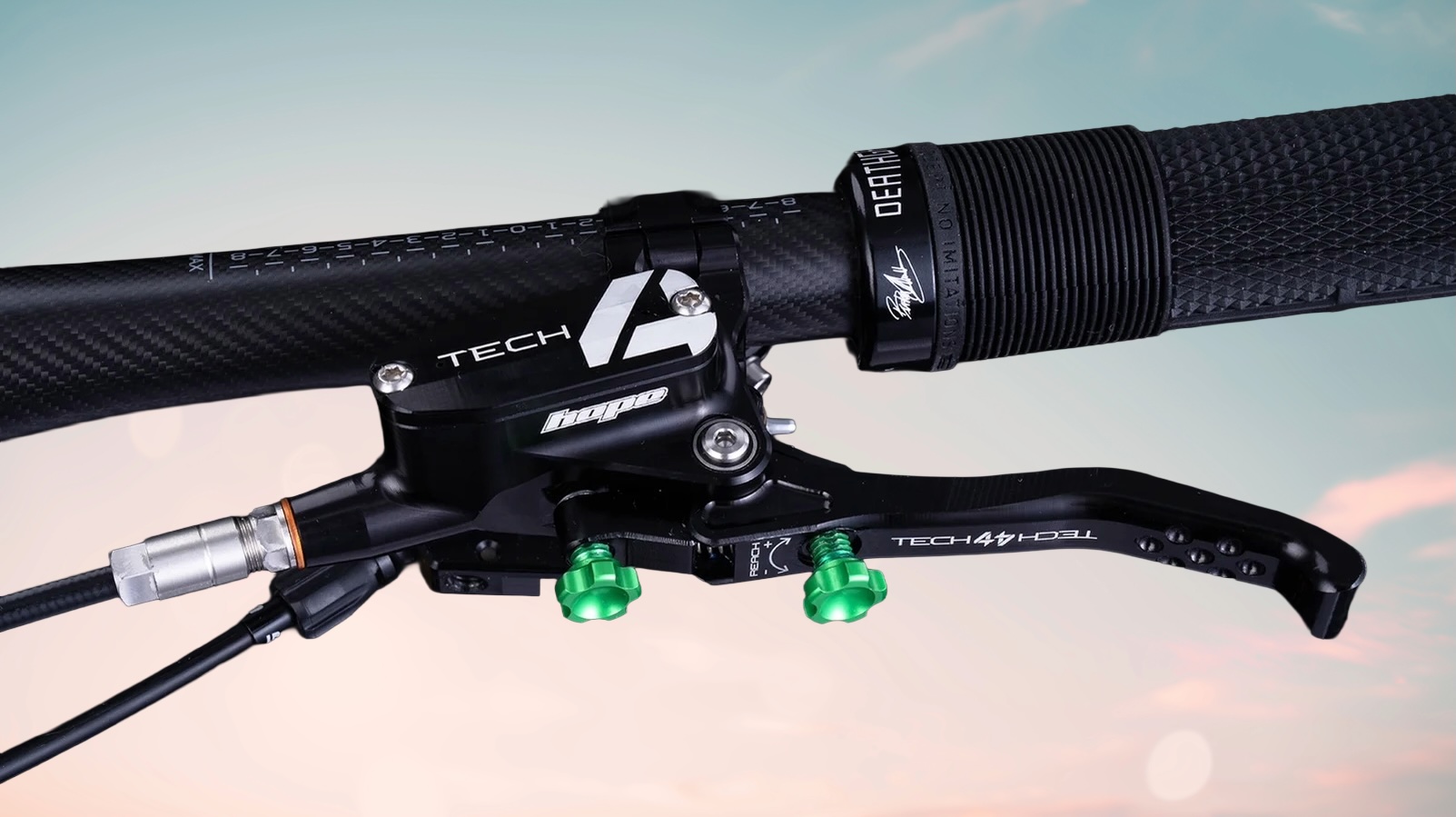
The Hope EVO GR4 brakes draw attention with their signature anodised finishes, intricate machining and wide range of colour options. That level of craftsmanship comes at a premium, with a price of around US $600 per set. Fortunately, the performance lives up to the price.
Hope redesigned the EVO lever with a revised cam profile that reduces free stroke and creates a firmer bite point compared with the previous Tech 4 lever. The result is immense stopping power with relatively little finger effort. Rather than delivering a sudden surge of power, the EVO GR4 builds braking force smoothly and progressively, making it highly predictable, just like the Trickstuff Maxima.
Lever action is light and exceptionally smooth (arguably among the best in the class), which makes it easy to modulate braking force. The initial bite is relatively soft, but power builds progressively. This gives the EVO GR4 an unusually refined level of control, matched by few brakes (TRP EVO Pro would be another).
Tool-free reach and bite-point adjustments are included, although the two adjustments are mechanically linked, meaning changing one also affects the other. Bleeding is also relatively straightforward compared with the previous generation, making it easier to achieve a consistent, air-free system.
The EVO GR4 uses DOT hydraulic fluid, which has excellent high-temperature performance and helps maintain consistent operation under demanding conditions. The trade-off is that DOT fluid absorbs moisture over time, so it requires periodic replacement. It also needs to be handled and disposed of appropriately.
In lab testing, the previous Tech 4 V4 model delivered best-in-class deceleration from 30 to 15 km/h. For riders who value immense stopping power, refined modulation and excellent craftsmanship, the Hope EVO GR4 is one of the most impressive brakes available.
See the current Hope EVO GR4 price on Amazon:
HERE for left-hand
HERE for right-hand
Hope EVO GR4
Brake Torque @ 40N: 253.7 Nm (V4)
Bite Point: Very Soft
Free Stroke: Very Light
Brake Fluid: DOT
Price: US $640 (set)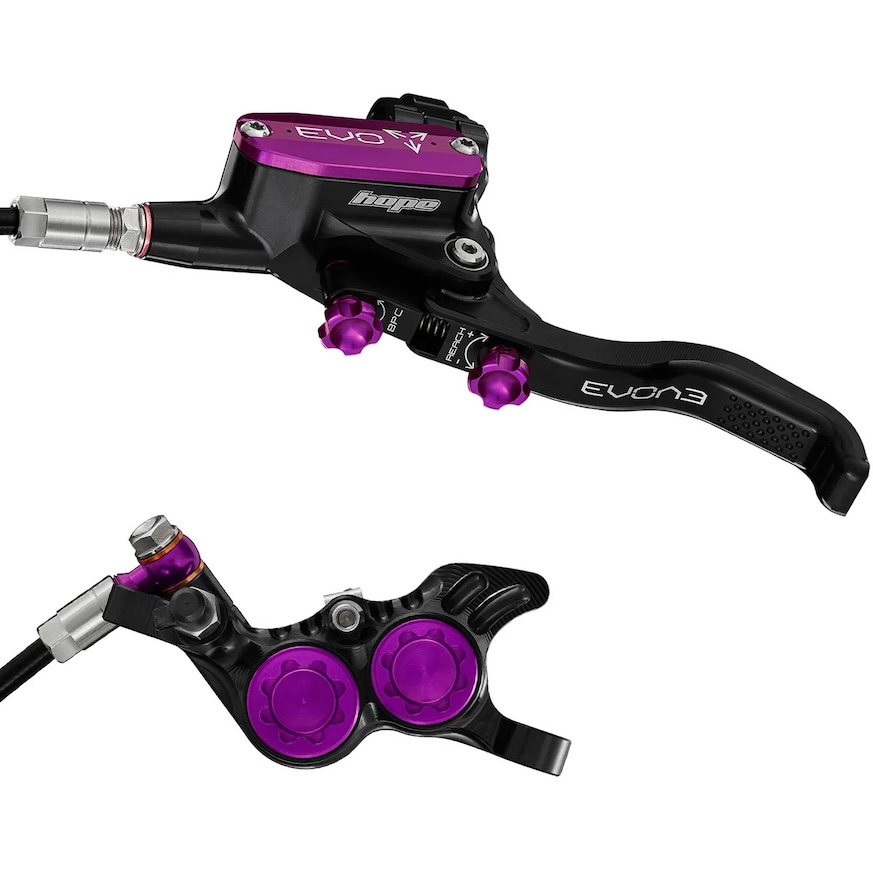
Shimano XTR M9220
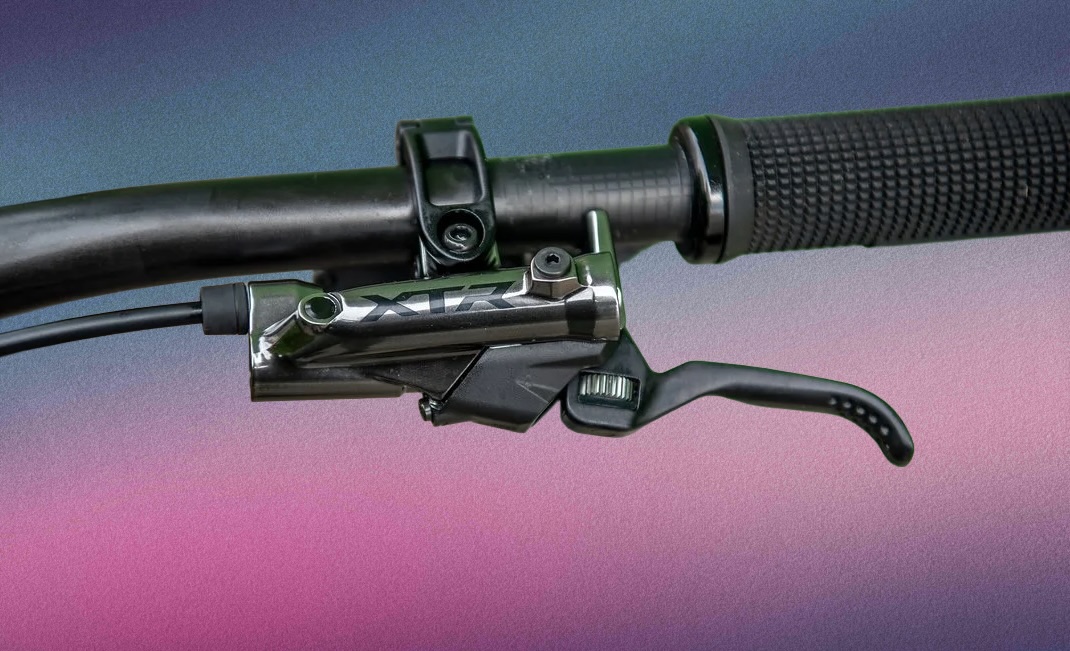
As Shimano’s most powerful four-piston brake, the XTR M9220 is designed to deliver high stopping power while keeping weight low enough for trail and XC applications. I’ve used these on several eBikes, and they’ve proven to be a reliable, set-and-forget option.
The XTR M9220 may not match the outright peak power of the most powerful brakes in this test, but it delivers more than enough stopping force for most trail and enduro riding. Braking power arrives very quickly as the pads contact the rotor, giving the M9220 a snappy and responsive feel. There’s slightly more initial lever friction than with some rivals, but the lever remains light and easy to control.
Much of this control comes from Shimano’s Servo Wave mechanism, which changes the lever’s mechanical advantage through the stroke. After the pads contact the rotor, the system provides a progressive increase in braking force, giving the M9220 a more controlled ramp-up than most of Shimano’s other brake models.
Ergonomics are also great. The lever blade has an excellent shape, while the integrated clamp design helps reduce clutter around the handlebar. Shimano’s mineral-oil hydraulic system is also straightforward to bleed and avoids some of the handling concerns associated with DOT fluid, making routine maintenance relatively easy.
Heat management is another area where XTR excels. When paired with Shimano’s ICE Tech rotors and finned brake pads, the system is designed to dissipate heat effectively. In testing, the XTR system also maintained relatively low operating temperatures; even with basic rotors, it ran at nearly half the temperature of some competing brakes.
At around US $670 per set, the XTR M9220 sits firmly in the high-end category, and the performance gains over Shimano’s XT brakes aren’t enormous. But for riders seeking low weight, excellent heat management and proven reliability in an easy-to-live-with package, you’re looking at Shimano’s best brake.
See the current Shimano XTR price on Amazon HERE
Shimano XTR
Brake Torque @ 40N: 251.4 Nm
Bite Point: Sharp
Free Stroke: Light
Brake Fluid: Mineral oil
Price: US $549 (set)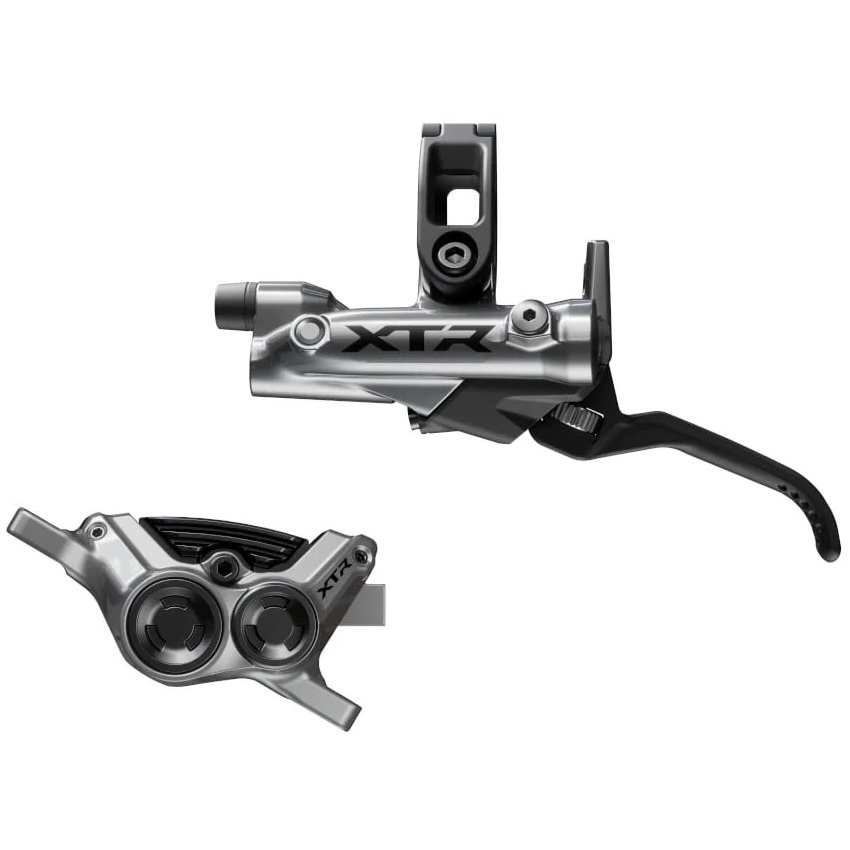
SRAM Maven Base
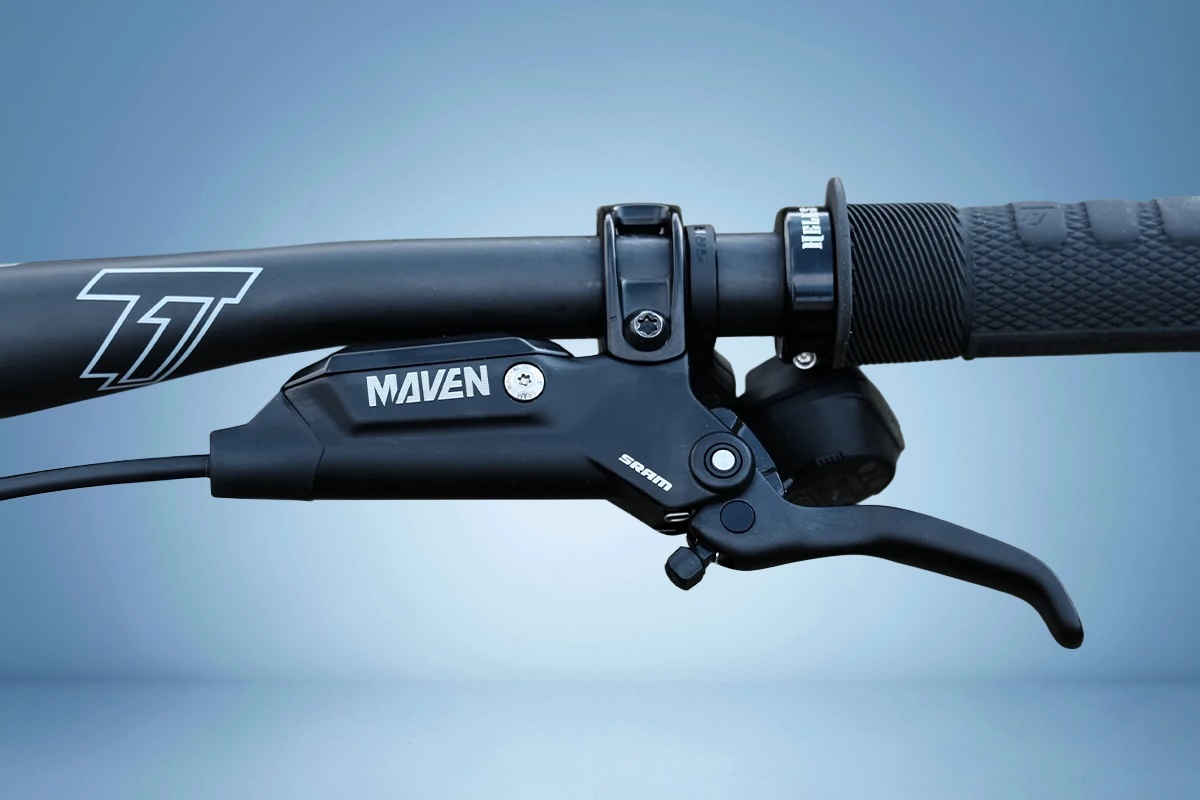
Designed as SRAM’s most powerful brake family to date, the affordable Maven Base combines a large master cylinder with four oversized 18 mm caliper pistons and seals at a relatively affordable price (US $400). SRAM claims around 50% more power than its Code brakes, and having tested both, I find that figure entirely believable.
SRAM also switched from DOT fluid to mineral oil with the Maven, contributing to consistent lever feel and allowing a different approach to piston retraction. An internal bladder helps manage the hydraulic system and minimise the effects of air and fluid expansion.
On the trail, the Maven Base’s primary characteristic is its enormous braking power. Braking force builds quickly, allowing the bike to shed a huge amount of speed with relatively little lever effort while maintaining consistent performance during long, steep descents. In my testing, there was very little evidence of performance loss as temperatures increased, and the lever remained firm throughout.
The amount of power available is genuinely impressive. You can shed a tonne of speed without needing to pull the lever particularly hard. The Maven Base also has a much lighter lever breakaway force than the Maven A1 models, requiring roughly half as much force to pull the lever (4 Nm vs 8 Nm). That makes the Base lever easy to operate with minimal finger effort.
Setup will be familiar to existing SRAM users, although getting the best performance from the Maven includes a specific piston-massage procedure during setup. The Base has tool-free reach adjustment, but it doesn’t include the contact-point adjustment found on the higher-spec Maven models.
In short, the SRAM Maven Base is an excellent choice for riders who want enormous braking force with minimal lever effort, particularly on eMTBs, enduro bikes and downhill bikes. The Base model gives up some of the adjustment and hardware of the more expensive Maven models, but its simpler design, lighter lever feel, and excellent power make it arguably the sweet spot in the range.
See the current SRAM Maven Base front/rear price on Amazon HERE and HERE
SRAM Maven Base
Brake Torque @ 40N: 245.4 Nm
Bite Point: Sharp
Free Stroke: Moderate
Brake Fluid: Mineral oil
Price: US $410 (set)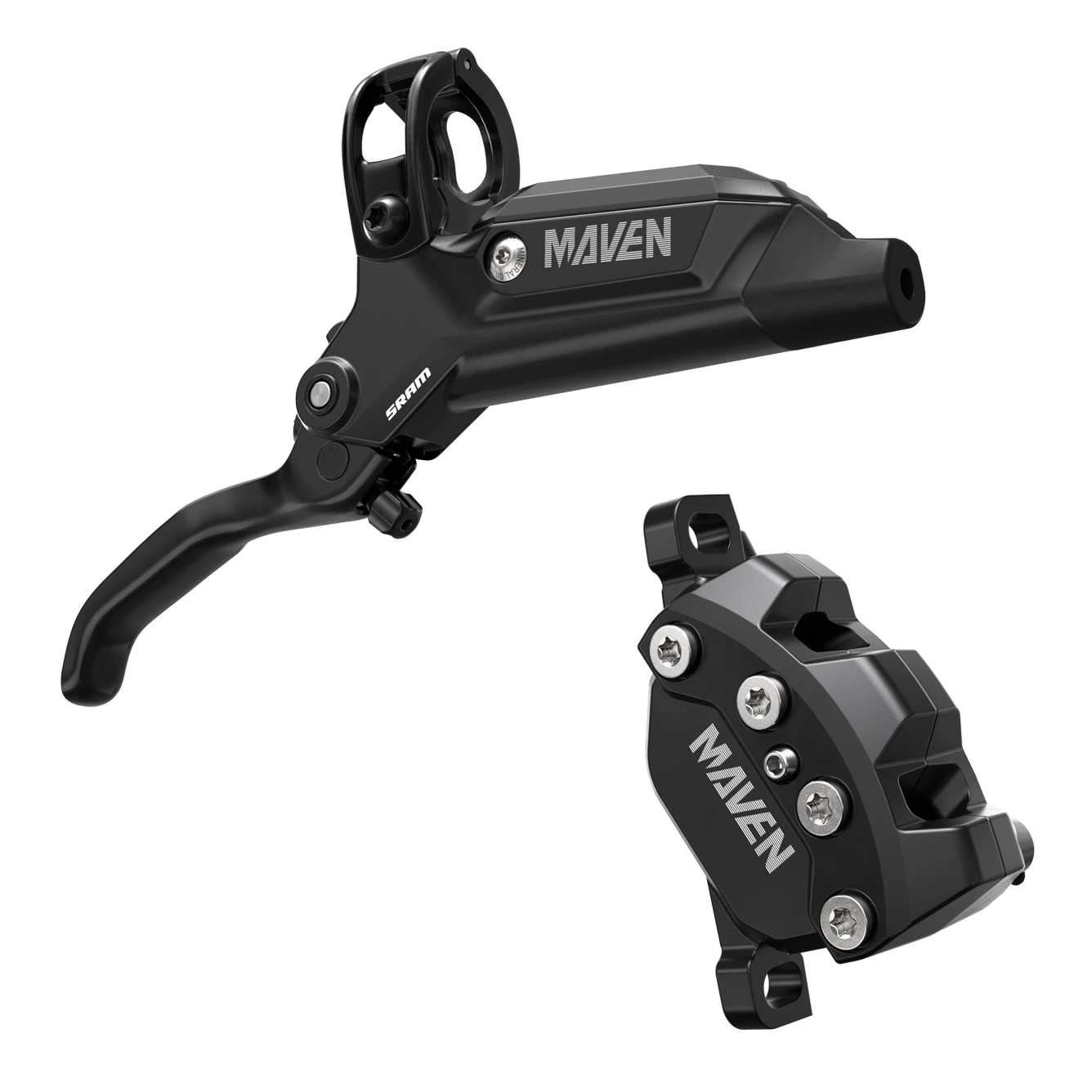
Hayes Dominion A4
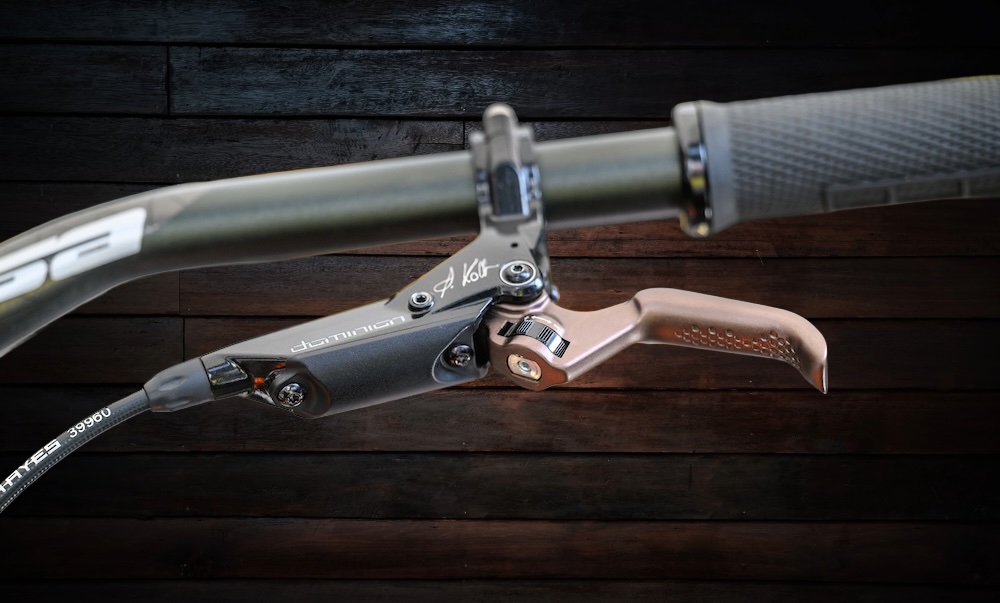
The Hayes Dominion A4 marks a strong return for the American brand, combining excellent braking power with refined modulation and control. Tool-free reach and bite-point adjustments make it easy to tune the lever to suit different riders and setups.
My partner Laura ran the Dominion A4s on her Priority 600X bikepacking bike, and even after selling the bike years ago, she still says they’re her favourite brakes ever.
The A4 has a moderate bite point, light free stroke and smooth, linear power delivery through the lever stroke. The initial bite isn’t as snappy as the Shimano XT, but it’s more immediate than the TRP EVO Pro. And while there’s slightly less punch at the very end of the stroke than the Hope EVO GR4, there’s still plenty of braking power available for aggressive riding.
One of the Dominion’s defining features is its exceptionally low lever resistance. The featherlight pull makes it easy to apply and modulate braking force with precision, which many riders will appreciate. However, that lack of resistance can also be a disadvantage on rough terrain, where it may be easier to apply unintended lever input.
Hayes uses DOT fluid, which offers excellent high-temperature performance and supports long-term seal durability. The trade-off is that DOT fluid absorbs moisture over time and therefore requires periodic replacement, while also requiring more care during handling.
The ultra-light lever feel won’t suit everyone, but the Dominion A4 combines high braking power with excellent control and thoughtful design. Those qualities helped it earn “Best in Test” in Enduro-MTB’s 2024 comparison of 13 brakes.
See the current Hayes Dominion price on Amazon HERE
Hayes Dominion A4
Brake Torque @ 40N: 239.0 Nm
Bite Point: Moderate
Free Stroke: Very light
Brake Fluid: DOT
Price: US $500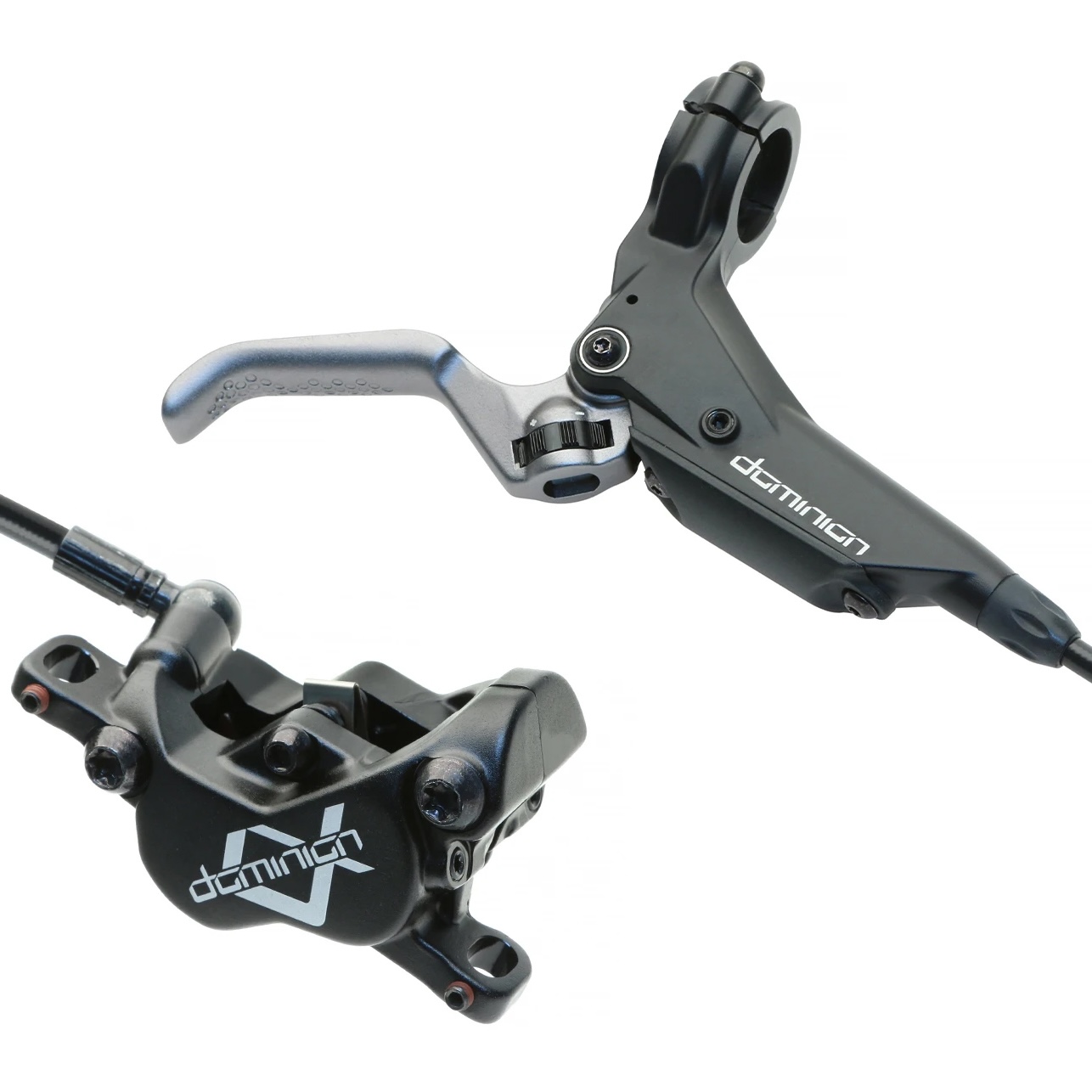
Shimano XT M8220

The Shimano XT brakes are what I’ve reliably used for more than a decade of global bike travel. They’re the definition of a set-and-forget brake: dependable, easy to service and widely supported. The latest four-piston M8220 brakes deliver serious stopping power at a relatively modest price, and my testing shows they perform surprisingly close to the flagship XTR model despite costing significantly less.
On the trail, the XT has a distinctly sharp bite and strong initial power. A large proportion of its braking force is available without needing to pull the lever very far. Modulation is ok, although the overall feel is noticeably snappier than brakes such as the Hope EVO GR4 or TRP EVO Pro, which build power more progressively through the lever stroke.
The XT features Shimano’s clean I-SPEC EV clamp, making cockpit setup clean as can be. Bleeding is also among the easiest of any brake thanks to Shimano’s one-way bleed system and mineral-oil fluid, which is less hazardous to handle than DOT fluid.
Ultimately, the XT’s biggest strength is its combination of power, reliability, serviceability and value. Parts are readily available through bike shops, the system is straightforward to maintain, and the braking performance is more than enough for most trail and enduro riding.
See the current Shimano XT price on Amazon HERE
Shimano XT
Brake Torque @ 40N: 230.4 Nm
Bite Point: Sharp
Free Stroke: Light
Brake Fluid: Mineral oil
Price: US $530 (set)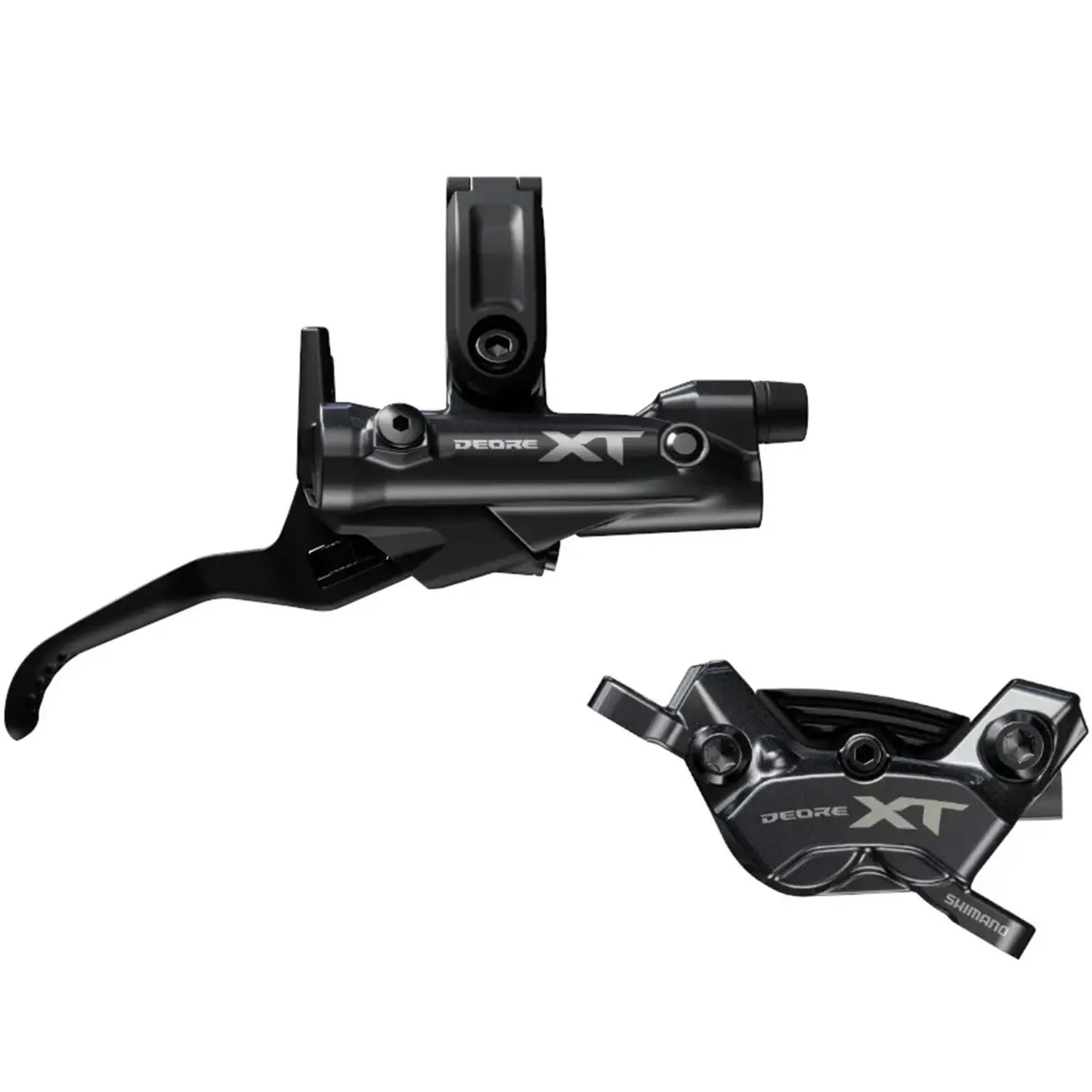
TRP EVO Pro
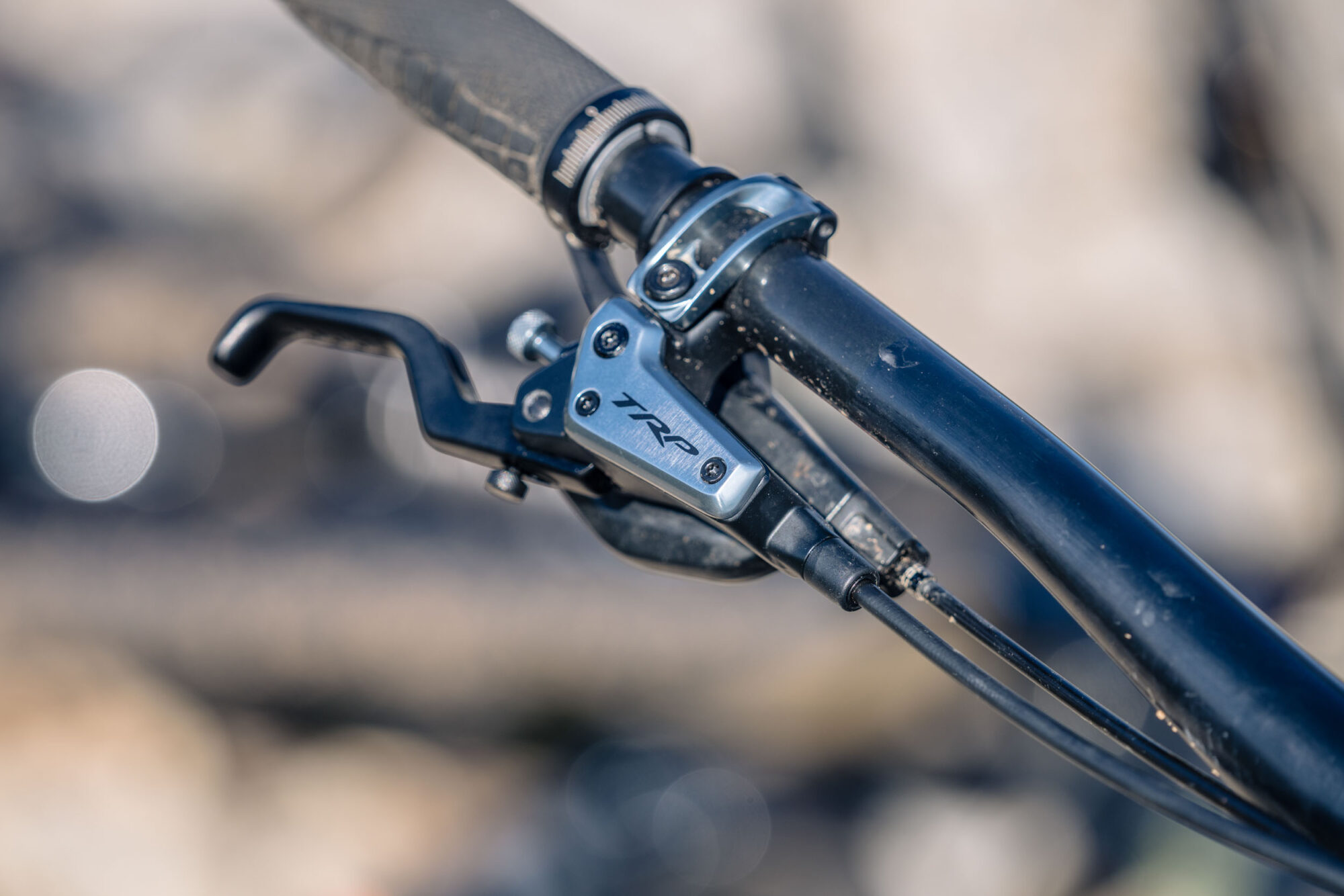
The TRP EVO Pro delivers the most linear brake feel in this group, prioritising modulation and control over outright braking force. It doesn’t have the sharp, hard-hitting initial bite of something like the SRAM Maven. Instead, braking force builds progressively through the lever stroke in a smooth and highly predictable manner. This makes the EVO Pro particularly easy to manage when controlling traction on steep, technical or loose terrain.
One of the TRP’s best features is the Pad Activation Dial, which allows you to tune the brake’s feel directly at the lever. You can retain its naturally linear character for maximum control, or adjust it for a firmer, more immediate bite if you prefer a more aggressive setup. Like the Hayes Dominion, the EVO Pro has a light lever action, but there’s enough resistance to prevent it from feeling overly sensitive or vague.
The system uses mineral oil and is designed around TRP’s thicker 2.3 mm rotors, which provide additional thermal mass for sustained braking on long descents. Setup and bleeding are also among the easiest in this group, while ongoing maintenance is minimal.
Although the EVO Pro doesn’t rank as highly for outright deceleration time as some of the brakes above it, that doesn’t tell the whole story. With incredible lever adjustability and arguably the most progressive modulation of any brake in this test, the TRP EVO Pro is an excellent choice for riders who are after a high level of control and predictable power delivery.
See the current TRP EVO Pro price on Amazon HERE
TRP EVO Pro
Brake Torque @ 40N: 221.4 Nm
Bite Point: Moderate
Free Stroke: Light
Brake Fluid: Mineral oil
Price: US $615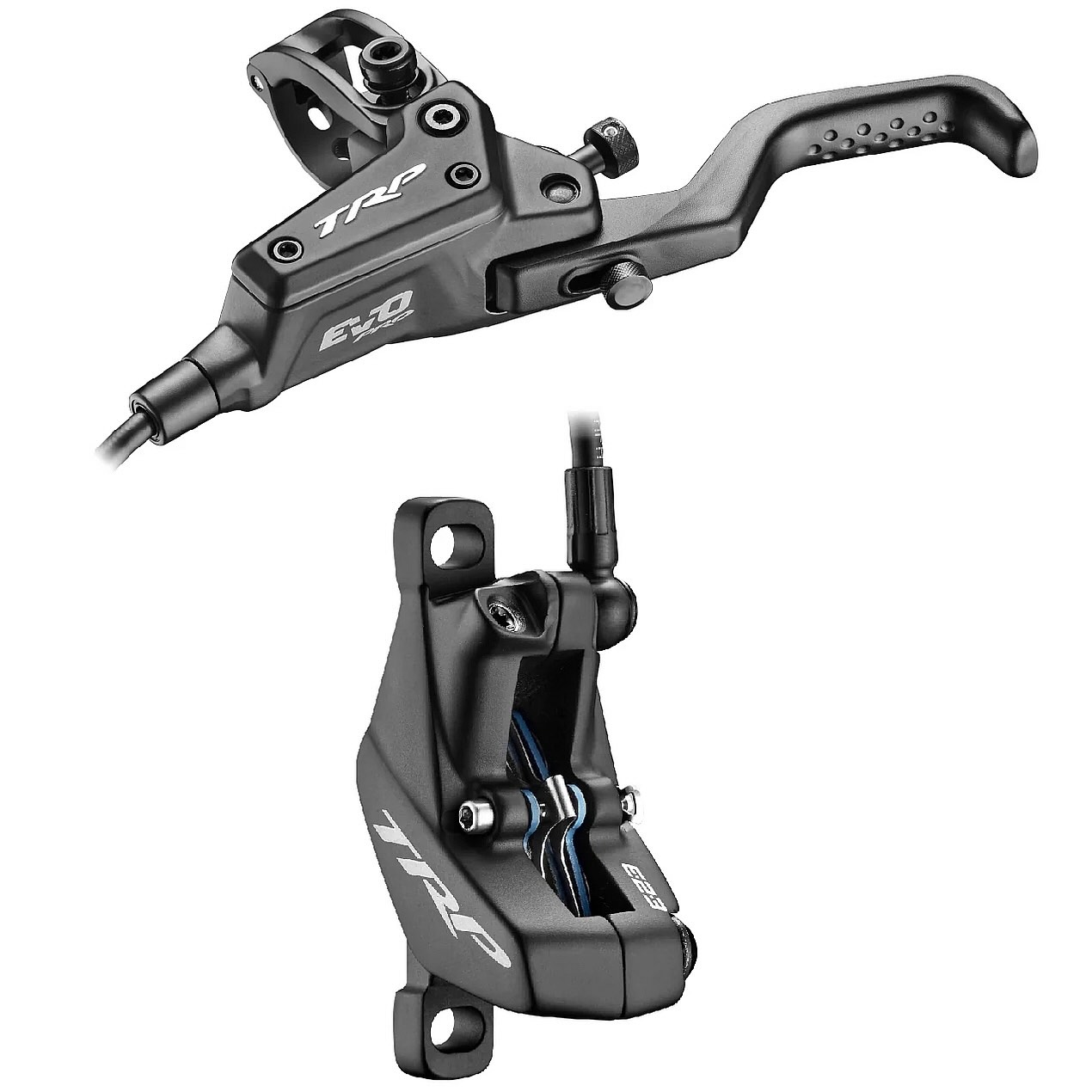
Summary
| Brake Torque (40N) | Bite Point | Free Stroke | Brake Fluid | |
|---|---|---|---|---|
| Trickstuff Maxima | 269.7 Nm | Soft | Light | Bionol |
| Hope EVO GR4 | 253.7 Nm | Soft | Very Light | DOT |
| Shimano XTR | 251.4 Nm | Moderate | Light | Mineral |
| SRAM Maven | 245.4 Nm | Sharp | Moderate | Mineral |
| Hayes Dominion | 239 Nm | Moderate | Very Light | DOT |
| Shimano XT | 230.4 Nm | Sharp | Light | Mineral |
| TRP EVO Pro | 221.4 Nm | Soft | Light | Mineral |
With so many excellent MTB brakes available, it’s difficult to pick a single overall winner. Ultimately, the best brake for you depends on which characteristics matter most:
- For maximum stopping power: You can’t go wrong with the Trickstuff Maxima, Hope EVO GR4, Shimano XTR or SRAM Maven. These are comfortably among the most powerful brakes in the deceleration tests.
- For a light lever feel and smooth modulation: The Hayes Dominion, Hope EVO GR4 and TRP EVO Pro are excellent choices. All three combine low lever effort with a highly controlled power delivery.
- For aggressive, immediate power delivery: If you like a brake that builds force rapidly as you squeeze the lever, the SRAM Maven and Shimano XT/XTR are hard to beat. They deliver substantial braking force early in the lever stroke.
- For reliability, simplicity and value: The four-piston Shimano XT is my pick. I’ve ridden more than 35,000 km across Africa on my current set without a single problem, with a yearly bleed being the only maintenance they’ve required. They’re powerful, easy to bleed, inexpensive to maintain and supported by virtually every bike shop.


