


I’ve been fascinated by the Cane Creek Visco steering stabilizer headset since it was first announced. However, most of my touring bikes over the past decade have been incompatible, so I’ve never had the opportunity to try one.
But with my new Idworx Rohler BLT touring bike, I was able to install one, and it turns out I like it more than I expected.
In this review, I’ll describe what it’s like to use a steering stabilizer headset, its advantages and disadvantages, how it works, and how it compares to other steering stabilization systems.
Let’s get into it.
How Does It Feel To Ride?
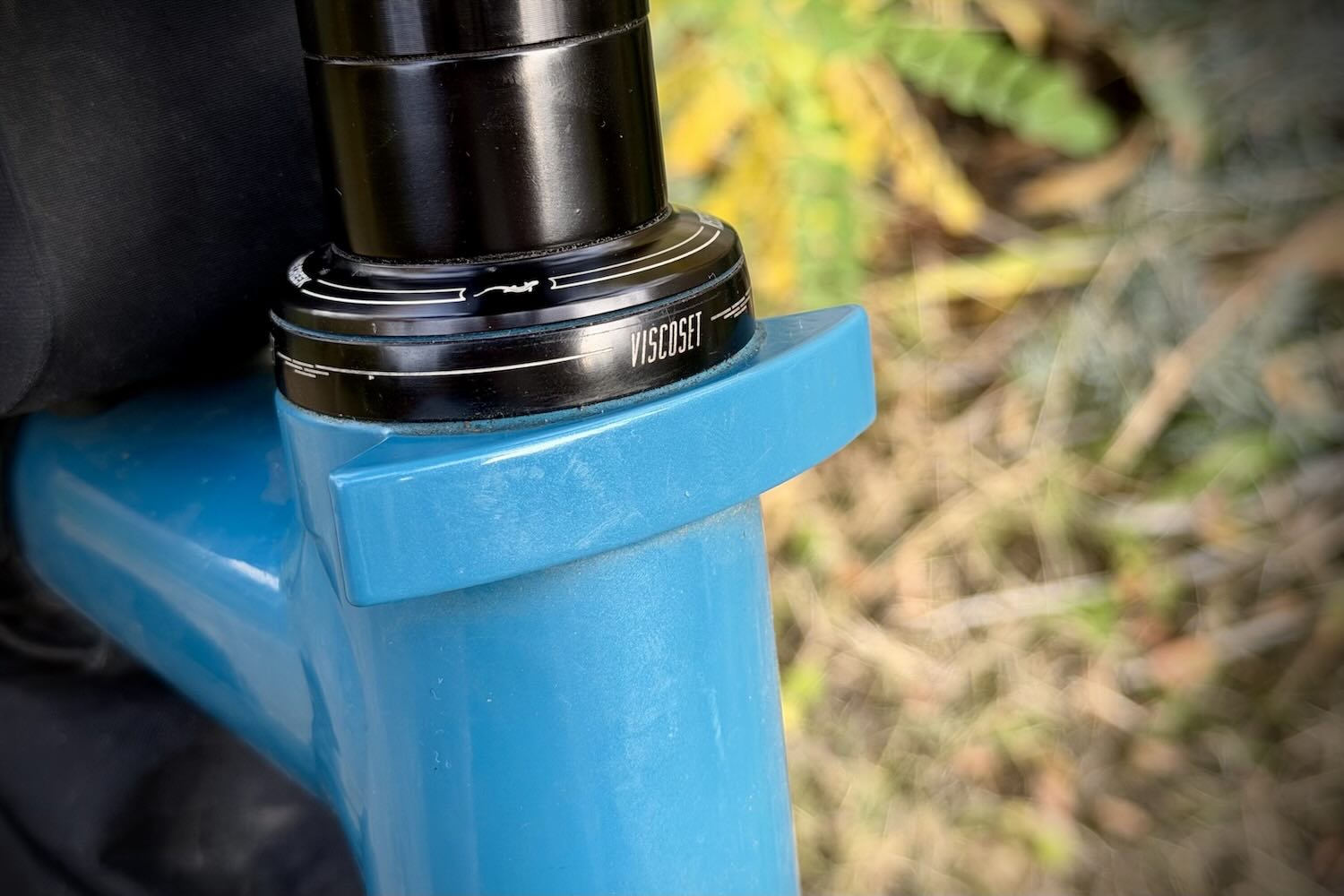
The first thing I noticed when I swung my leg over my new Idworx touring bike wasn’t the new tyres, the different handlebar shape, or the changes to the frame geometry. It was the Cane Creek Visco stabilizer headset.
The bike felt strange to ride at first, but I adapted to the new steering feel pretty quickly. It doesn’t feel like an overtightened headset that binds as it rotates. Instead, the steering moves smoothly, with a light resistance that reminds me of turning the volume dial on a high-end hi-fi system.
So, how does my bike feel to ride?
The best way to describe it is that it feels like carrying heavy front panniers when making small steering adjustments to keep your line, but light panniers when making larger steering inputs. The bike feels more stable when cruising along, yet can still respond quickly when you need to make a turn.
You might think a super-slack head tube angle would have a similar effect. However, I’ve found a stabilizer headset provides noticeably more resistance to small steering inputs. I also ride enduro mountain bikes, and when climbing, I’ve found that their 63-64 degree head tube angles simply don’t hold their line nearly as well as a bike with a steering stabilizer.
The resistance is only a touch higher than normal, so you won’t get tired from added resistance or require any extra upper-body strength. At least, that hasn’t been the case for me or my partner Laura, who happily admits her upper-body strength is lacking (she makes up for it with strong legs!).
One question people often ask is whether this means you can no longer ride no-handed. My experience is that it’s a little harder at first, but you quickly adapt by learning to adjust your body weight differently. I can now ride no-handed with ease.
Advantages of a Steering Stabilizer Headset

A steering stabilizer makes the biggest difference when climbing at low speeds. On a loaded touring bike, it can be quite difficult to keep the front wheel pointing straight when you’re moving slowly. This is where the stabilizer works its magic: it damps any small, unintentional steering movements, making it easier to maintain your balance.
Another advantage applies to users of aero bars. Small movements of your elbows can translate into surprisingly large steering inputs, making it harder to balance your bike. The stabilizer damps these movements, making your bike easier to control, especially at low speeds. I find it much easier to climb a hill in my lowest gear in my aero bars than previously, which allows me to recruit different muscle groups.
The headset is also specifically designed to reduce speed wobble, and it certainly seems to work. When I deliberately give my bike a hard sideways shove at speed, I can feel the stabilizer damping the resulting steering oscillations much faster than usual.
It can also help reduce weave. Sometimes, a touring or bikepacking bike develops a slow, side-to-side oscillation (video) with a front load. This often becomes apparent when you take your hands off the handlebars. A steering stabilizer can reduce the tendency to weave, although it won’t necessarily eliminate the underlying cause.
Some riders have reported less arm fatigue over a long day on rough roads. I haven’t noticed this benefit myself, but the Visco does reduce the number of small steering corrections needed to keep the bike on course, which should theoretically mean less effort over time.
Finally, the headset is great for parking. A heavily loaded touring bike can sometimes topple over when the front wheel suddenly swings around. By resisting that movement, the stabilizer helps keep the wheel pointing forward and reduces the likelihood of the bike tipping over.
Disadvantages of a Steering Stabilizer Headset
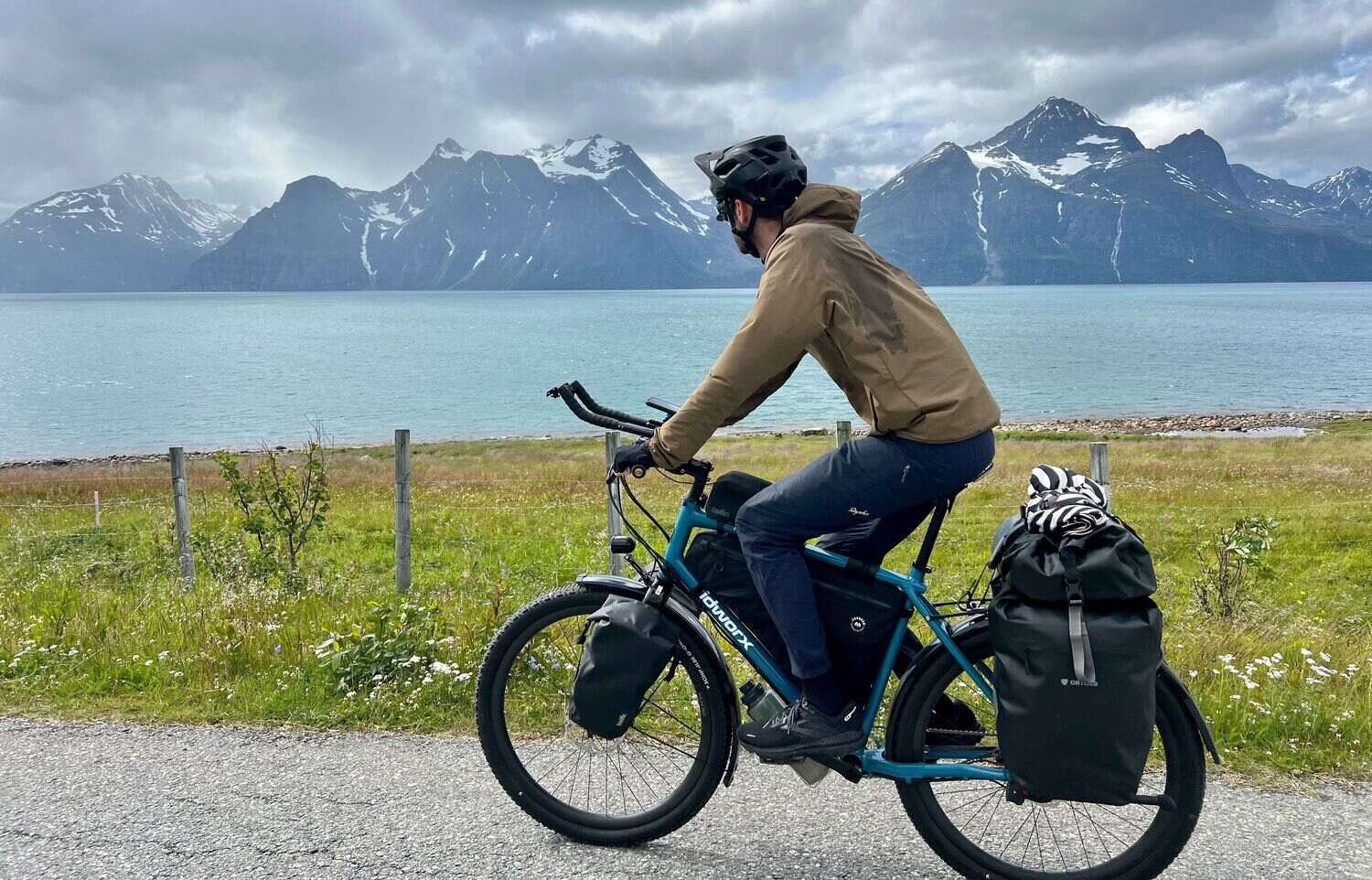
A steering stabilizer won’t suit every bike. It’s best suited to cargo bikes, touring bikes, and other bikes primarily ridden on pavement. If you’re looking for something to improve handling on technical mountain bike trails, you’ll need a hydraulic steering damper instead (more below).
I’d be cautious about fitting one to a bike with a heavy front load. Steering already feels heavier because you’re moving a lot of weight around the steering axis. A stabilizer headset adds damping on top of that, potentially making the steering feel heavier than you’d like. I’d only fit one if you need help tackling speed wobble or weave.
I’d also be cautious about fitting one to a bike with front luggage and narrow drop bars. Drop bars provide less steering leverage than wider flat handlebars, so manoeuvring a loaded front end can already require considerable effort. Adding steering resistance on top of that might make the bike feel unnecessarily heavy to steer.
How Does The Cane Creek Visco Work?
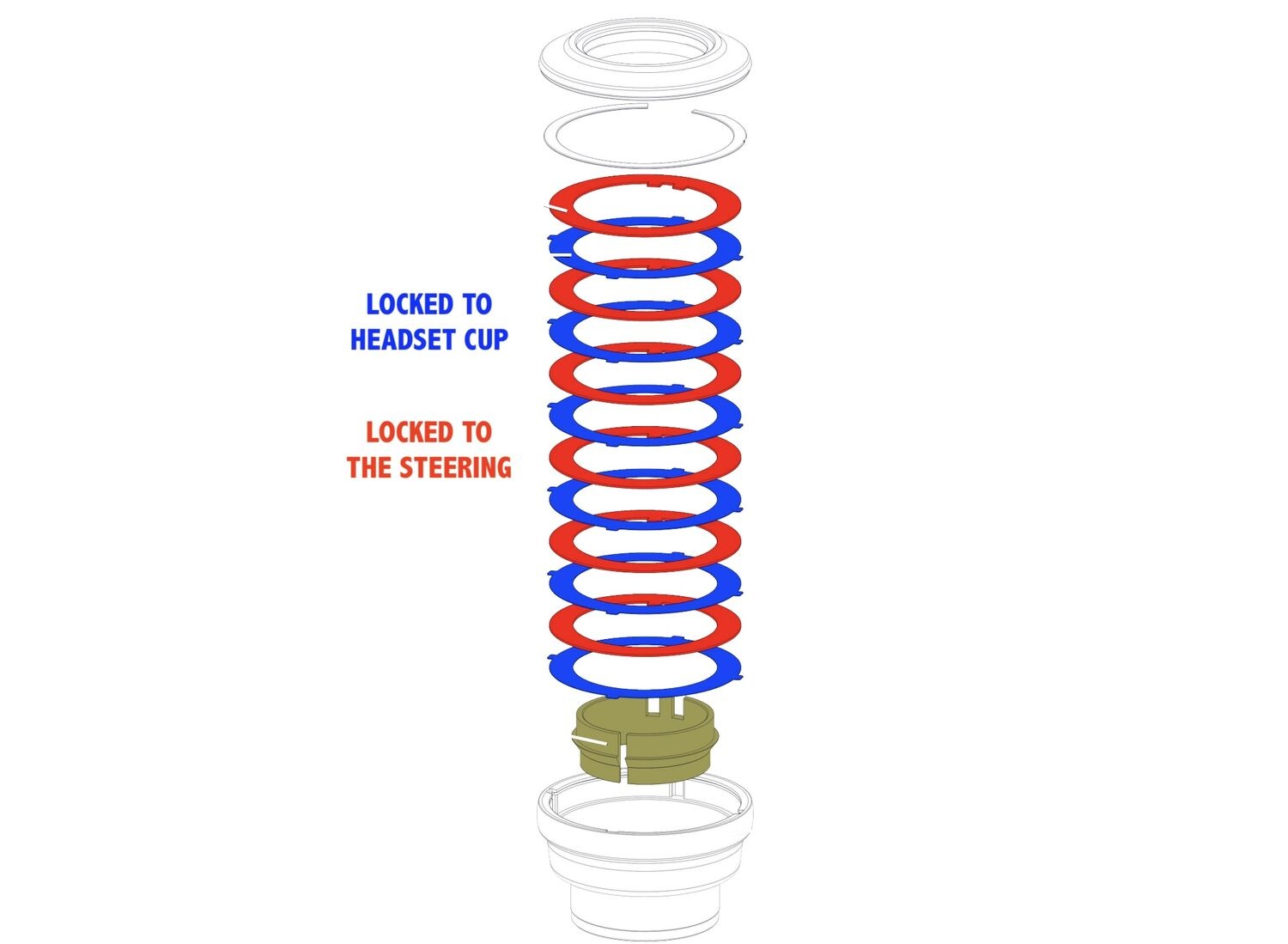
Inside the headset are 12 stacked friction plates, with a thick grease between them. Some of these plates rotate with the steering, while others are held stationary against the external headset cup. As the plates slide against one another, the grease creates friction, resisting steering movements and damping unwanted oscillations.
The clever part is that you can adjust the amount of damping by rearranging the plates inside the headset. Alternating between inner and outer plates creates more friction surfaces, increasing the damping effect. Stacking plates of the same type together reduces the number of friction surfaces, resulting in less damping.
The headset comes with the friction plates arranged from Cane Creek with about 50% of the resistance available. I played around with settings and found I liked it set up with 100% resistance (the arrangement seen above).
The grease will eventually work its way out of the friction plate assembly, reducing its effectiveness over time. Unfortunately, I don’t have any long-term durability data yet, but I’ll be reporting my findings over the next couple of years.
The good news is that you can get replacement friction plate stacks and install a fresh set when the original assembly loses its effectiveness.
How Does The Cane Creek Visco Compare?
Spring-Loaded Steering Stabilizers
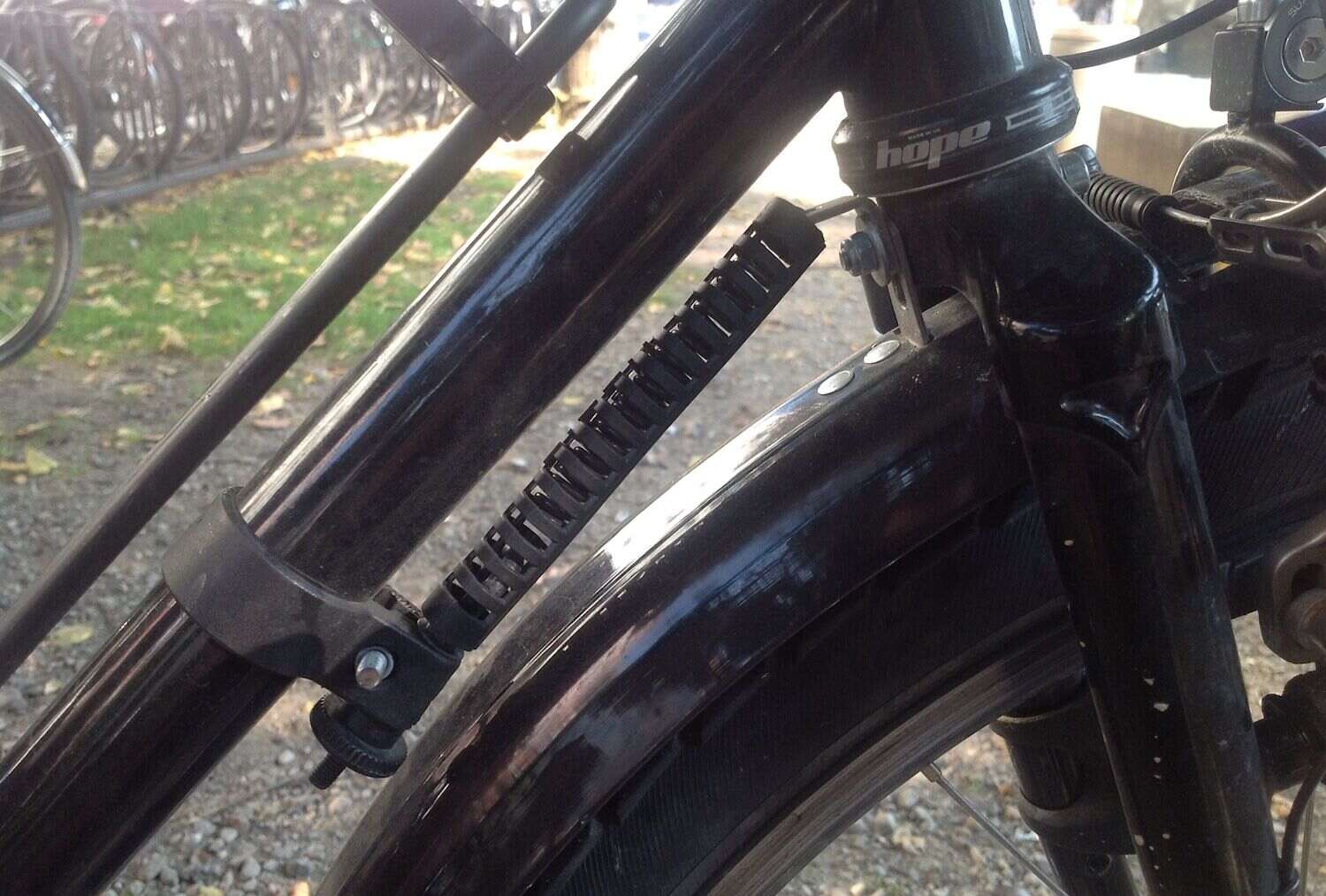
Spring-loaded steering stabilizers work quite differently from a stabilizer headset. They provide little resistance around the centre position, with resistance only increasing as you turn the handlebars further. This makes them particularly useful for helping the steering return to centre and preventing the front wheel from swinging around when parking a loaded bike.
A steering stabilizer headset, on the other hand, provides an even friction throughout the steering range. This means it will damp the small steering movements that occur when the handlebars are close to centre, rather than only resisting larger steering angles.
Hydraulic Steering Dampers
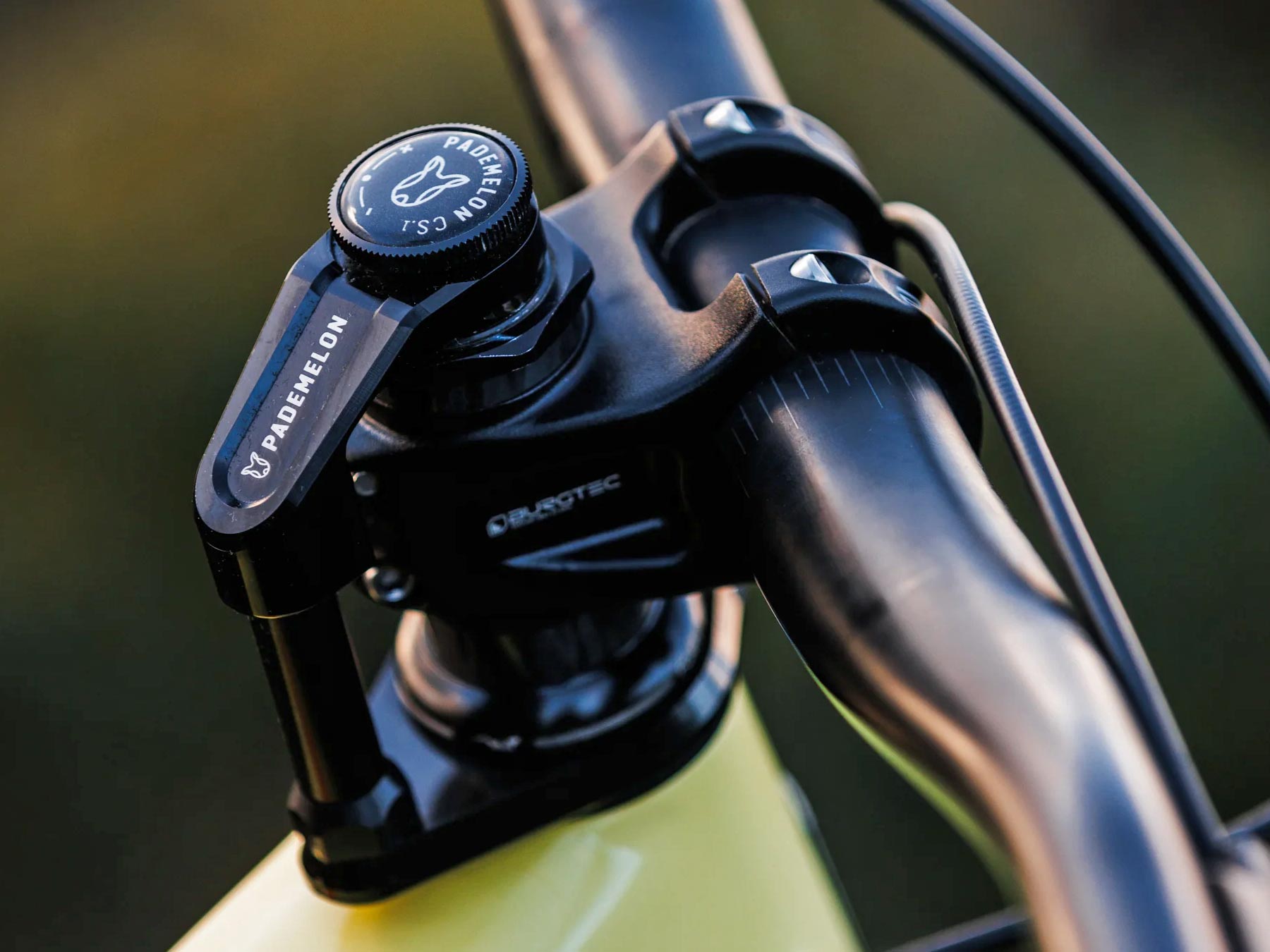
Hydraulic steering dampers are designed primarily for mountain biking. Unlike a steering stabilizer headset, which helps damp small steering movements, these systems are designed to resist sudden, sharp steering inputs caused by impacts or obstacles at the front wheel.
The Pademelon CS1 provides much greater resistance than a stabilizer headset, but only within the first 37.5 degrees of steering in either direction. Beyond that, up to 90 degrees, the damping effect is zero to preserve manoeuvrability during tight turns. It also provides no resistance as the handlebars return towards centre.
The main idea is to help keep the bike on course when the front wheel strikes an off-centre rock or root that would otherwise jerk the handlebars.
Bikes With Slacker Head Tube Angles
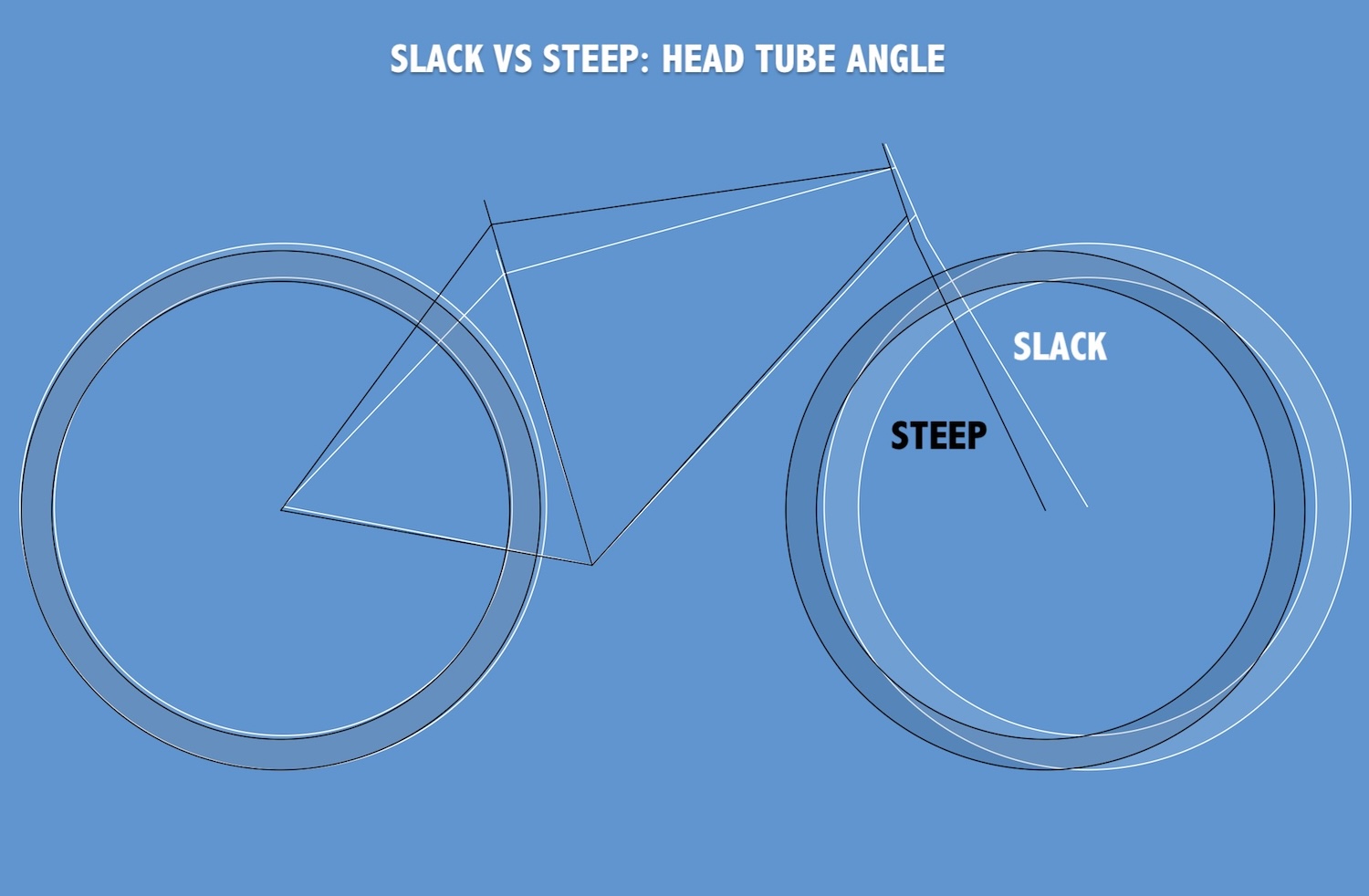
Frame geometry has a significant influence on steering behaviour. Head tube angle and fork offset are two key variables designers use to shape how a bike handles.
A slacker head tube angle, combined with an appropriate fork offset, can increase trail and strengthen the front wheel’s natural tendency to steer back into alignment. This effect is more noticeable at high speeds and much less pronounced at low speeds.
A steering stabilizer makes the biggest difference at low speeds, giving the steering a noticeably firmer feel. It damps small steering movements in a way that geometry alone can’t, making it easier to hold a straight line. This means you can pair a stabilizer headset with a bike that has a slack head angle and improve its low-speed stability.
Bikes With Heavy Front Loads

When making small steering inputs, a stabilizer headset feels a lot like carrying very heavy front panniers. Both make the steering feel more resistant to small adjustments, helping the bike feel steadier.
The difference becomes apparent when you’re carrying lighter front panniers. A stabilizer can give you that extra sense of stability during small steering movements without sacrificing much responsiveness when making sharper turns. Heavy front panniers, on the other hand, make the steering less responsive in every situation because you’re having to move more mass around the steering axis.
Ultimately, if you’re carrying a heavy load up front, I don’t think you’ll get much benefit from a steering stabilizer, since most of its benefits come from damping small steering inputs.
What Bikes Does The Cane Creek Visco Fit?
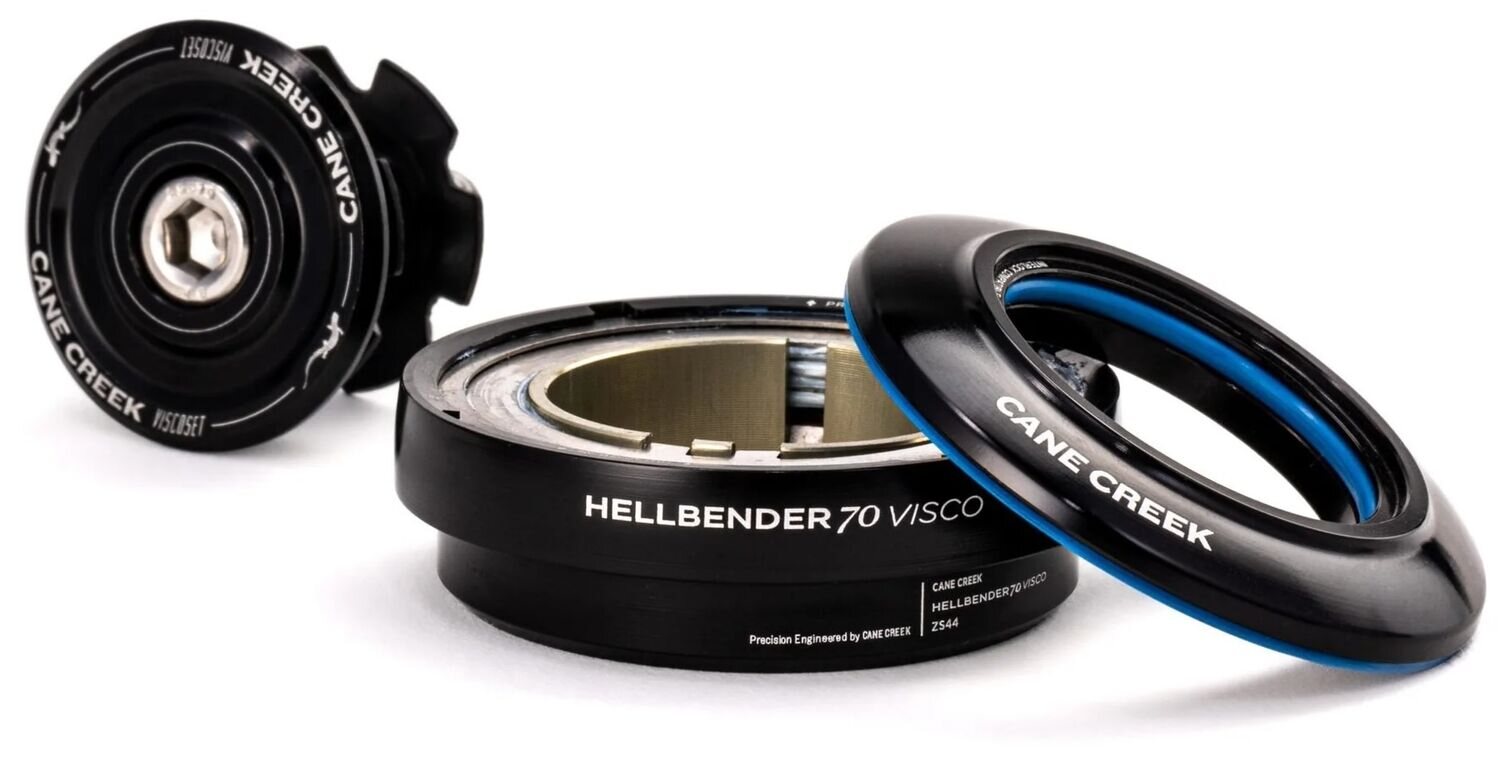
If your bike uses an external headset cup at either the top or bottom of the head tube, there’s a good chance you can fit a steering stabilizer headset. The Hellbender 70 Visco is available as either a ZS44 upper headset cup or a ZS56 lower headset cup.
The upper headset cup is designed for a 44 mm head tube bore and a 1⅛-inch (28.6 mm) straight fork steerer. This is a common size for upper headset cups on many touring, gravel, and mountain bikes.
If your bike won’t fit the upper headset cup, there’s also a lower headset cup available for tapered 1⅛-inch to 1½-inch fork steerers.
Installation requires removing the existing headset cup you’re replacing and pressing in the Visco cup. This can be done at home with the appropriate headset tools, but a bike shop can handle the job if you don’t have the equipment.
Summary
I wouldn’t consider a Cane Creek Visco an essential upgrade, as it hasn’t dramatically changed my touring experience. But having ridden with both no resistance and maximum resistance, I can say that I definitely prefer the latter.
For me, the biggest benefit is when using my aero bars. The difference in balance and control is night and day. I don’t feel like I need to make nearly as many little adjustments to keep the bike steady.
If you’re experiencing speed wobble or weave, a steering stabilizer will likely help. It might not eliminate the problem, but it should at least reduce the severity of the oscillations or increase the speed at which they begin.
Ultimately, a steering stabilizer headset is a relatively subtle upgrade, but one that made a noticeable difference on my touring bike.
You can get the Cane Creek Visco headset upper cup for US $107 on Amazon.


