


Eswatini (formerly Swaziland) may be one of Africa’s smallest countries, but this tiny kingdom delivers far more than its size suggests. One of our most memorable camping experiences of the past decade came from Hlane National Park, and we found Swazi culture genuinely fascinating throughout.
Despite its compact scale, Eswatini has enough infrastructure to keep logistics simple and riding comfortable. You’ll find well-stocked shops, good coffee spots, and great accommodation options.
Eswatini at a Glance
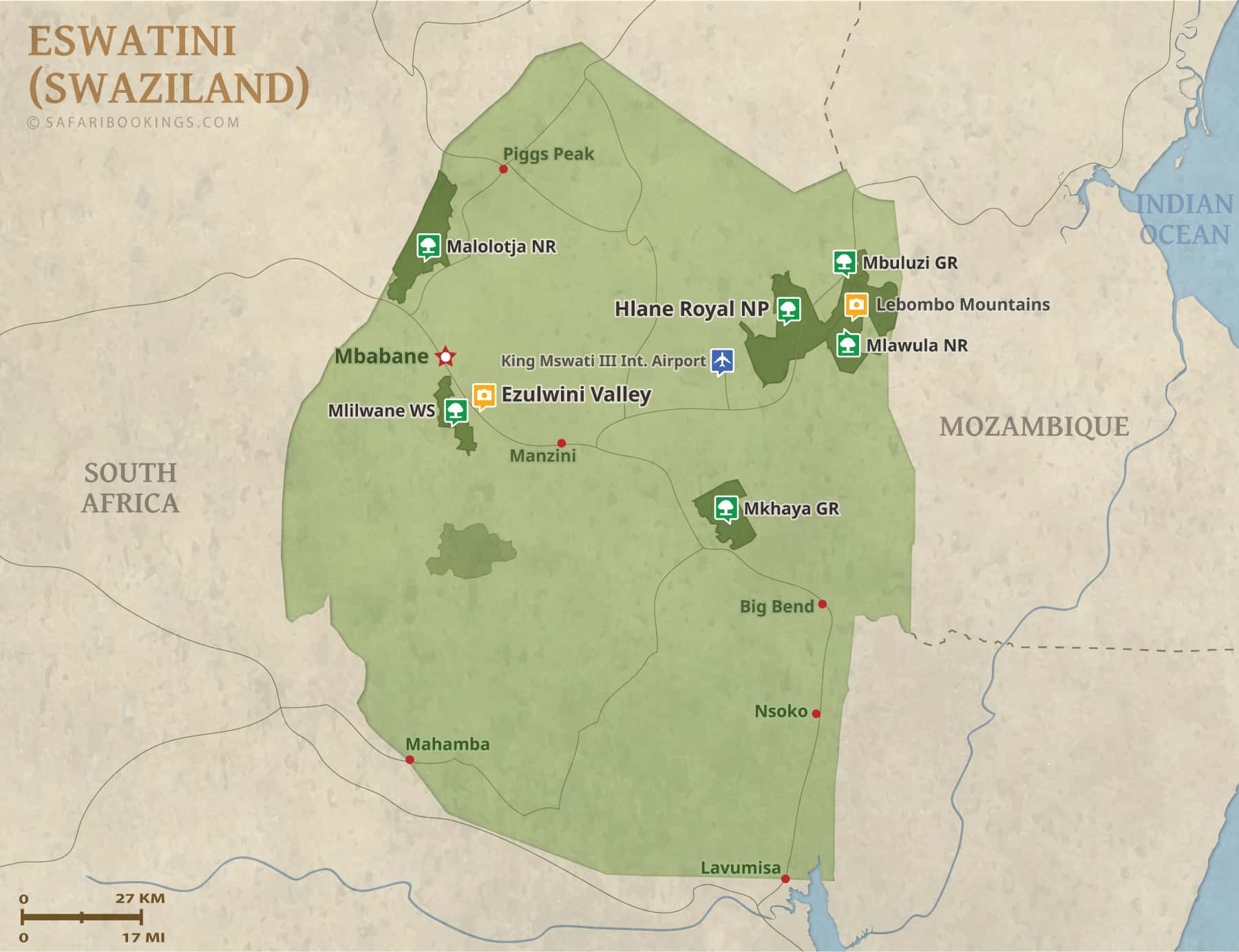
Eswatini, formerly known as Swaziland, is a landlocked nation bordered by South Africa to the west and Mozambique to the east. At just 200 km (120 mi) from north to south and 130 km (81 mi) from east to west, it is one of the smallest countries in Africa.
The country is ideal for cycling, as you can cross it in just a few days, experiencing a surprising diversity of landscapes without any long or demanding distances. The terrain shifts from the mountainous highveld in the west, through rocky outcrops and rolling hills, down into the lowveld with its bushlands and sugar cane plantations in the east, with national parks dotted in between.
A week or two is more than enough time to experience much of what the country has to offer.
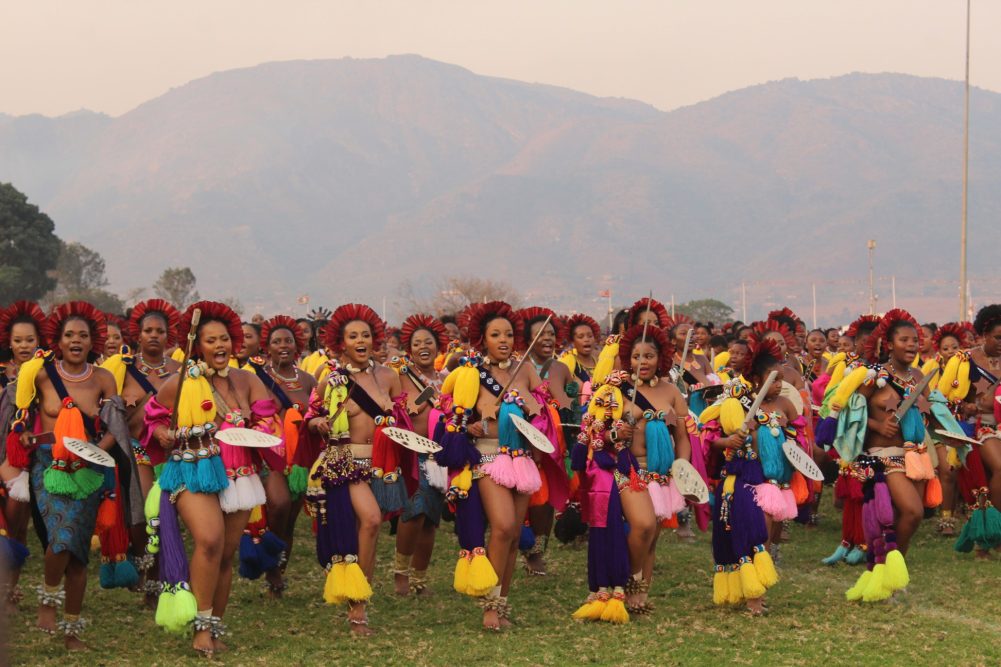
The Kingdom of Eswatini is also one of the world’s last remaining absolute monarchies. The king, currently Mswati III, holds significant authority across all branches of government, alongside a parliamentary system.
The monarchy plays a central role in national identity, with royal traditions and ceremonies such as the annual Umhlanga (Reed Dance) and Incwala (First Fruits Ceremony) remaining major cultural highlights that keep traditional practices very much alive.
Culturally, most of the population is of the Swazi ethnic group and speaks siSwati, which, alongside English, is one of the country’s two official languages. Rural life is still structured around a traditional chief system. While urbanisation is gradually expanding into rural areas, traditional ceremonies and community life remain deeply embedded in everyday Swazi society.
Top Places to Visit
Hlane National Park
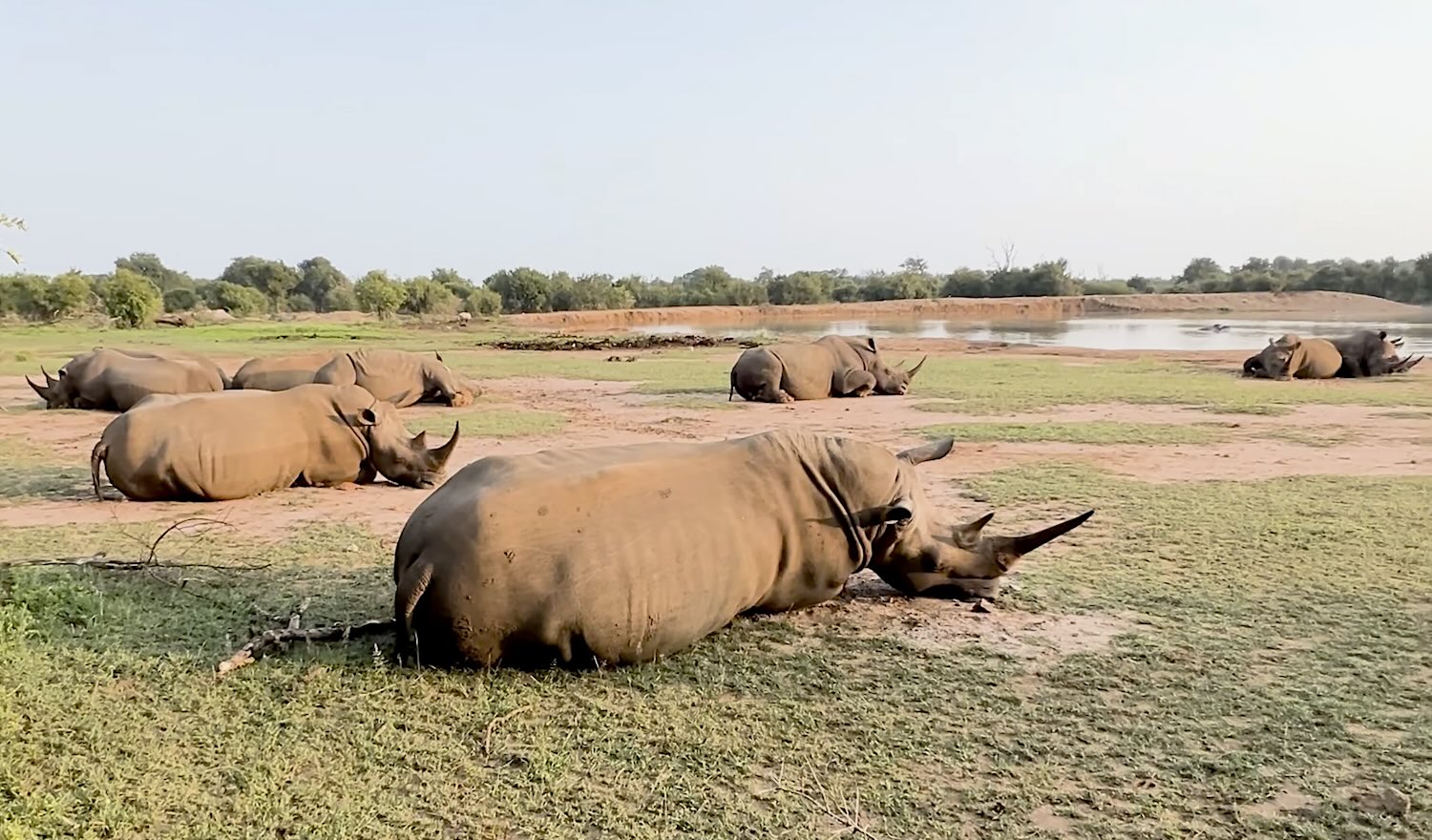
Waking up to ten rhinos sleeping next to your tent is, without doubt, one of the most amazing camping experiences you’ll ever have!
Hlane National Park supports a healthy population of white rhinos that regularly visit the watering hole in front of the campsite each night. There is a fence… but it’s little more than two strands of wire that separates you from a crash of two-tonne giants. It’s an experience that simultaneously raises your heart rate and leaves you in awe.
While cycling inside the park isn’t permitted, you can ride the short distance from the entrance gate to the campsite. Once there, a restaurant and bar overlook the main watering hole, offering front-row seats to the wildlife activity.
Ezulwini Valley
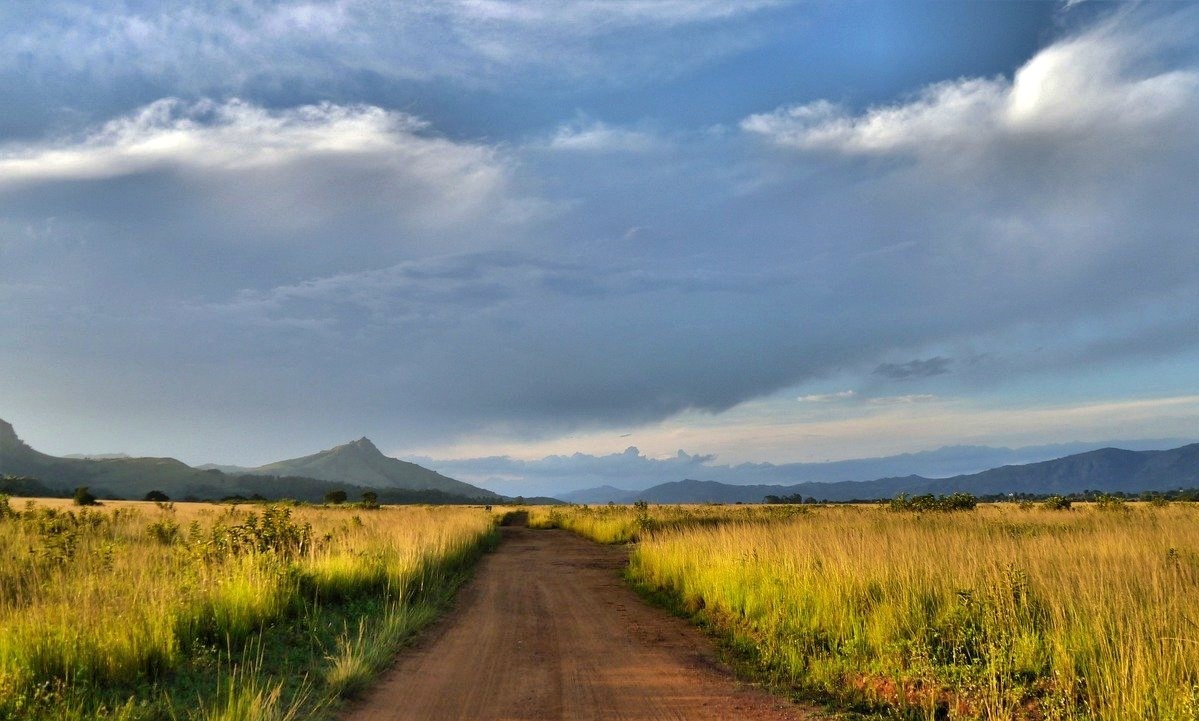
Meaning “place of heaven” in siSwati, any trip to Eswatini wouldn’t be complete without spending time in this scenic valley, which also serves as the country’s main hub of activity.
Surrounded by mountains on both sides, it offers a mix of attractions including hot springs, excellent restaurants and cafés, craft markets, and access to Mlilwane Nature Reserve.
Mlilwane Wildlife Sanctuary
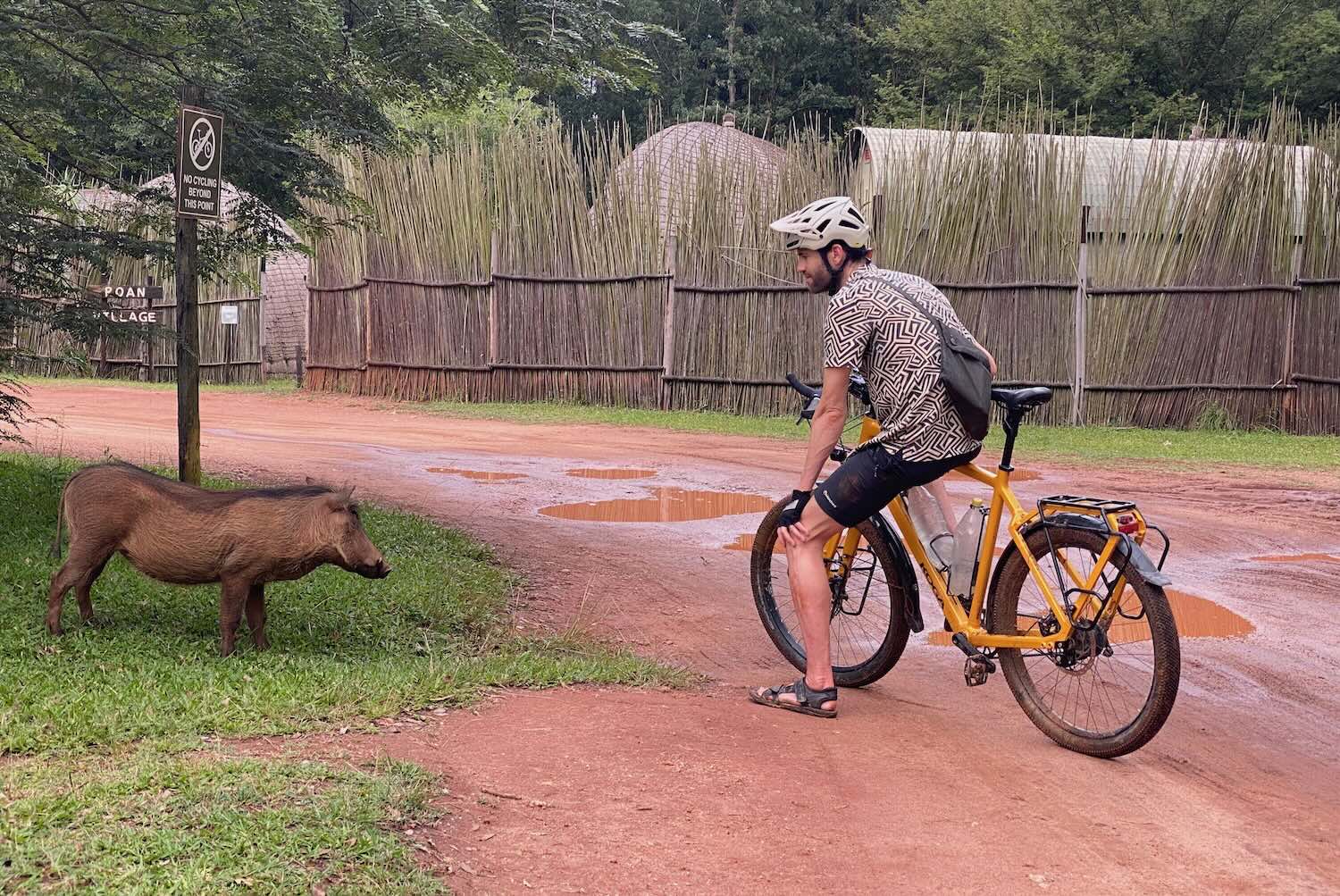
A safari by bike is one of the highlights of Eswatini. With no predators in Mlilwane Wildlife Sanctuary, you’re free to hike and cycle through the reserve, where you can encounter animals such as eland, zebra, warthogs, antelope, and a wide variety of birdlife (we loved the colourful bee eaters).
The hostel inside the sanctuary also makes it an ideal place for a relaxed rest day, and the restaurant overlooks some lovely wetlands.
Where Did We Go Bike Touring in Eswatini?
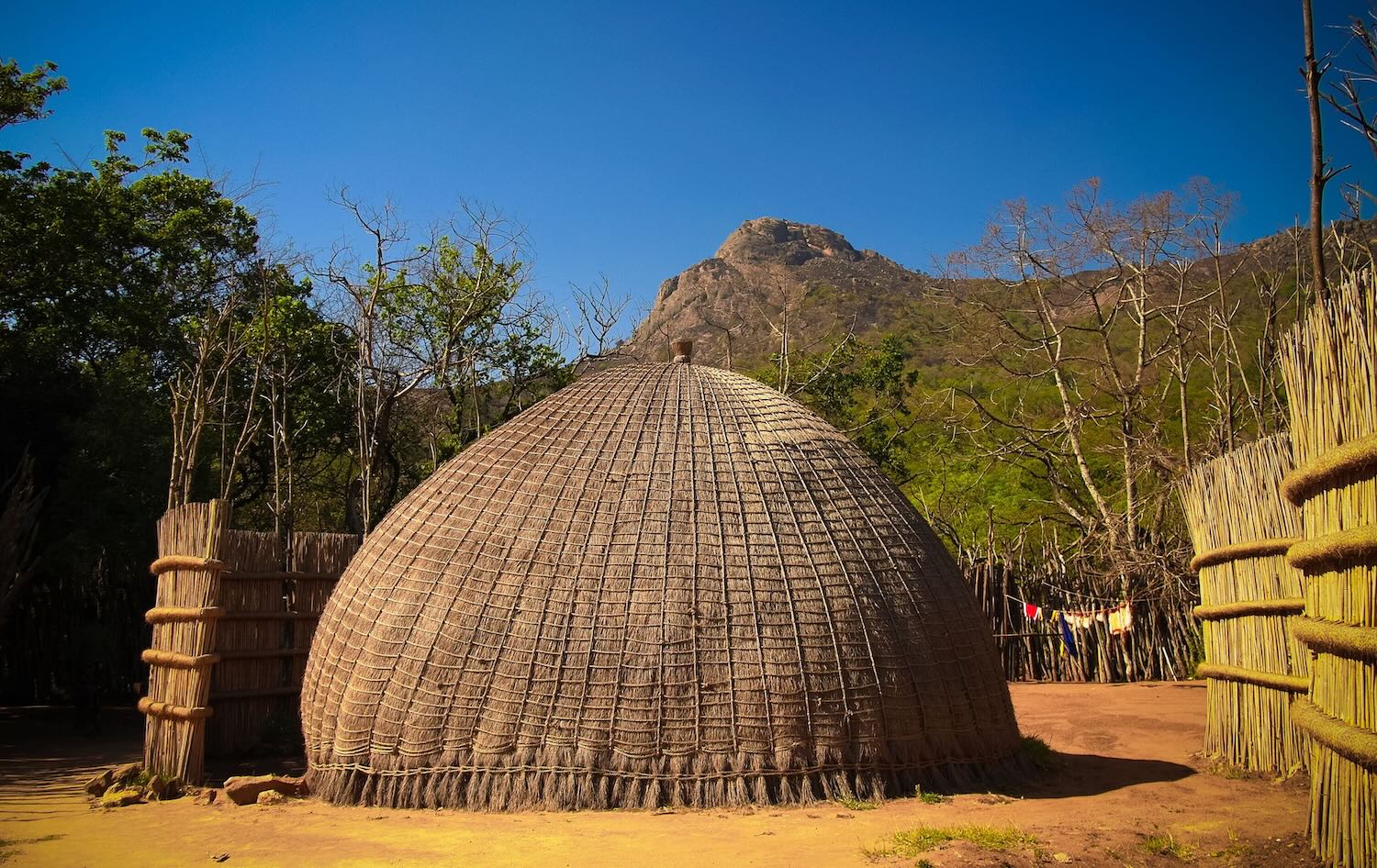
While we usually like to make the most of our visa durations, we only spent about seven days in Eswatini, covering roughly 250 km in total.
We entered from South Africa at the quiet Osheok border post, then descended along winding dirt roads that curled around massive rock formations and followed river valleys down into the Ezulwini Valley. Here, we were treated to wide panoramic views of the surrounding mountains.
Once in the valley, we rode into Mlilwane Nature Reserve, which has a great hostel and is perfect for a rest day or a relaxed loop ride through the park.
From there, we climbed out of the valley on steep, winding roads before descending again toward Hlane National Park. After taking about a million photos of the sleeping rhinos near our tent, we packed up and continued east through quiet sugar cane plantations on our way to the Mozambican border.
You can check out our route HERE.
What Touring Routes Do We Recommend in Eswatini?
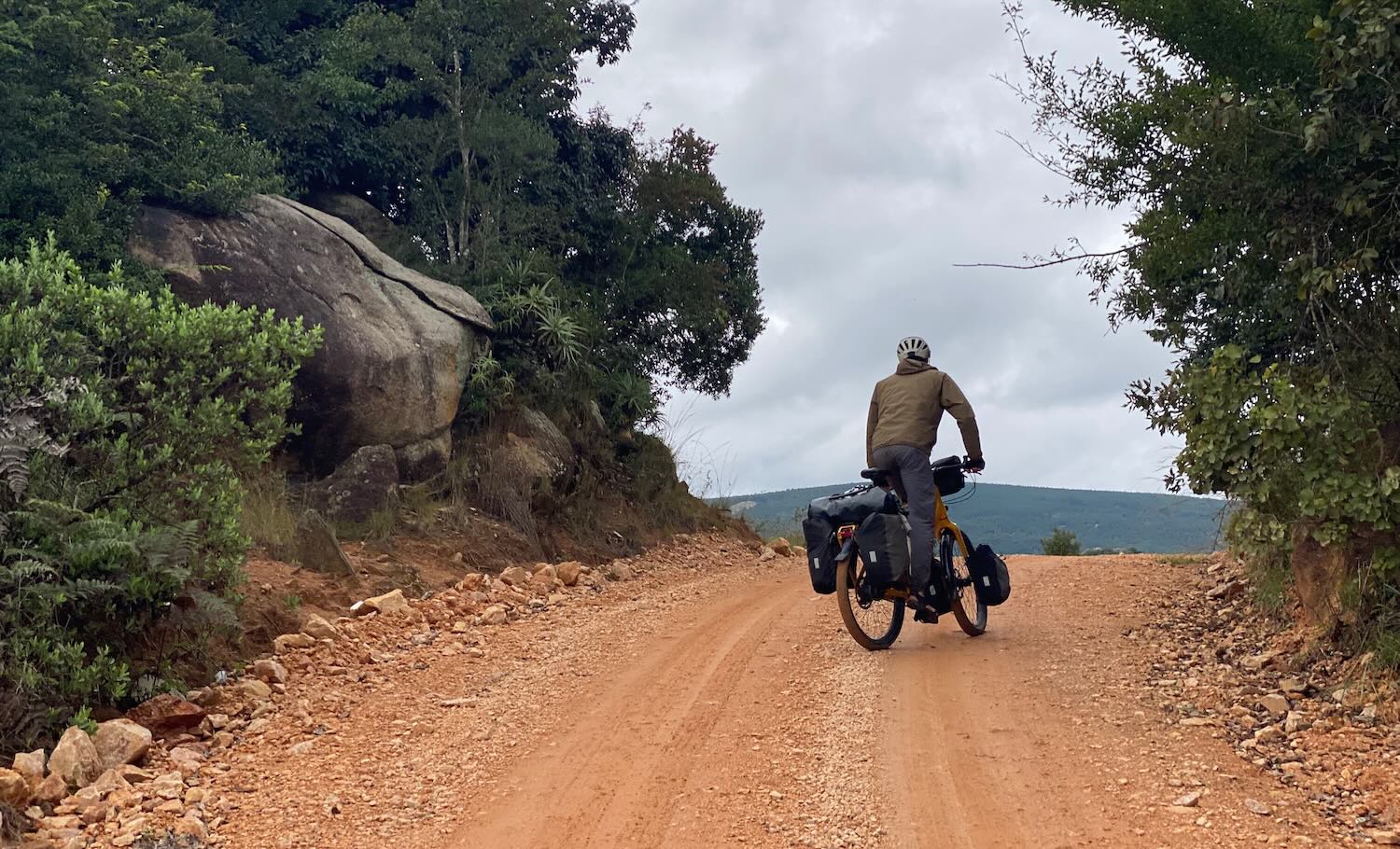
There’s really no single “correct” way to bike tour across Eswatini, since it’s such a small country. The best route mostly depends on your timing and where you need to enter and exit.
In our case, we left South Africa on the day our 180-day visa expired, which meant we couldn’t loop back or re-enter the country. Knowing we were heading to Mozambique next effectively determined our route. We stitched together a point-to-point crossing between the two borders, roughly 70% of it on unpaved roads, and called it good.
One area we didn’t manage to cycle, but would have loved to, is the Bulembu Mountain Pass in the northwest. This road connects Barberton (South Africa) with Bulembu (Eswatini) and is one of the most iconic mountain passes in the region. The road has 124 bends over 26 km – that’s a turn every 210 metres!
Accommodation & Camping in Eswatini
Hotels in Eswatini tend to lean toward the more upmarket side, especially compared to neighbouring countries. We stayed in a couple of hostels, including options in Mlilwane Wildlife Sanctuary and Lobamba, where a dorm bed cost around US $10 per night. We didn’t come across many budget hotel options, though we also weren’t actively searching for them throughout our trip.
In general, wild camping was fairly easy to find, although we often had to push our bikes at least 50 metres off the road, as there were usually people walking nearby. We spent one night camping in Hlane National Park, but otherwise didn’t encounter any formal campsites in the country.
Additional Considerations
- We had heard plenty of horror stories about difficult border crossings into Mozambique, but our experience at the Naamacha border post was the complete opposite. It was smooth, efficient, and completely bribe-free.
- Like Namibia and Lesotho, Eswatini also allows the South African Rand to be used interchangeably, which makes travelling simple. However, the Lilangeni (Eswatini’s own currency) cannot be used outside the country.


