


You might assume all power banks perform much the same, but there are major differences in charging speed, usable capacity, size, and weight. A big reason for this is how quickly battery technology has improved over the past decade.
I’ve been charging my phone from a front hub dynamo since around 2010, but these days it makes far less practical sense. The best power banks now cost less than $100, can recharge from empty in under an hour, and offer far more convenience for most trips.
In this guide, I’ll explain everything you need to know about charging your devices on the road, before diving into lab-tested data to identify the best power banks for bike touring and bikepacking.
Let’s dive in.
The Best Power Banks Available Today
- Anker 737: Fastest charging speeds by a long shot
- Baseus Blade: Thin form factor and ultra-fast charging speeds
- Nitecore NB20000: The highest energy density
- UGREEN 20000: Alternative option with very fast charging
- INIU P51 20000: Budget power bank that’s super lightweight
- Nitecore NB10000: Lightest power bank option here
- VRURC 10000: Integrated charging cables, so you always have them on hand
- Anker Nano 3-in-1: Integrated wall plug, so you never leave it behind
6 Reasons Fast Charging Is A Game Changer

- You can stop at a café or restaurant for just an hour and leave with enough energy to power your devices for the next few days. This gives you much more flexibility with where you go and where you sleep, as you no longer need to find a plug overnight.
- They are handy in campgrounds, where outlets are often limited or awkwardly located (sometimes in bathrooms). A fast-charging battery cuts the time you need to hover around a socket to just 30 or 45 minutes.
- You can get by with a single wall charger. Because the power bank recharges so quickly, you can then use it to top up your other devices without needing multiple wall adapters. My partner and I actually share a single charger between us when touring.
- Fast charging power banks are perfect for ultra-racing, where time off the bike is kept to an absolute minimum. After just 1 to 2 hours at a wall outlet, ultra racers can bank enough energy for two full smartphone charges and roughly 9.5 hours of runtime for a 600-lumen front light.
- In regions with frequent power cuts, such as parts of Africa, the ability to quickly store a large amount of energy is invaluable before the electricity inevitably drops again.
- Charging your devices via a battery rather than directly from the wall can also offer some protection from power surges where the grid flicks on and off in quick succession.
Battery Capacity Is Not What You Think

Before we get into the best power banks for bikepacking, it’s worth learning a bit about how batteries work and the numbers behind them.
Battery capacity for power banks is most commonly listed in milliamp hours (mAh). The problem is that your 20,000 mAh power bank doesn’t actually have 20,000 mAh of capacity available.
That’s because the advertised number is based on the battery’s internal voltage, not the voltage available at the USB port. So, when that energy is converted to USB voltage, the available capacity drops by roughly 25%. On top of that, voltage conversion isn’t perfectly efficient, so additional energy is lost in the process.
When we add up these losses, your power bank usually has only about 60 to 65% of its rated capacity.
Example: A power bank rated at 20,000 mAh at 3.7V converts to roughly 14,800 mAh at 5V. Assuming an 85% conversion efficiency, that comes out to around 12,580 mAh that can actually be delivered to your devices.
Variations in Available Capacity
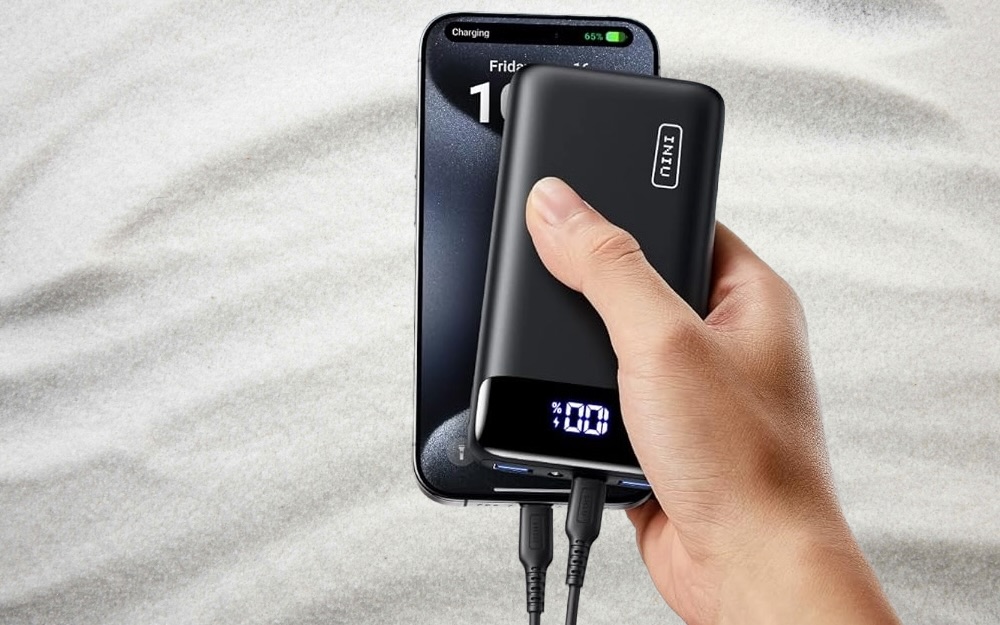
The efficiency of converting energy from the battery cells to the USB port can vary widely too. An 85% conversion efficiency is typical for most batteries, but depending on the brand and model, it can be much lower.
The worst case I’ve seen was a so-called 40,000 mAh power bank that only delivered 14,000 mAh at the USB port – just 34% of the rated capacity. Measurements like this are why you should not always trust manufacturer specs on batteries.
In this resource, I’m listing the measured available capacities for all the batteries I recommend, so you know exactly how much energy these power banks can deliver to your device.
Note: the battery capacities were measured in a lab environment in watt-hours (Wh) but have been converted to mAh at 5V for easier comparison.
Power Bank Charging Speeds
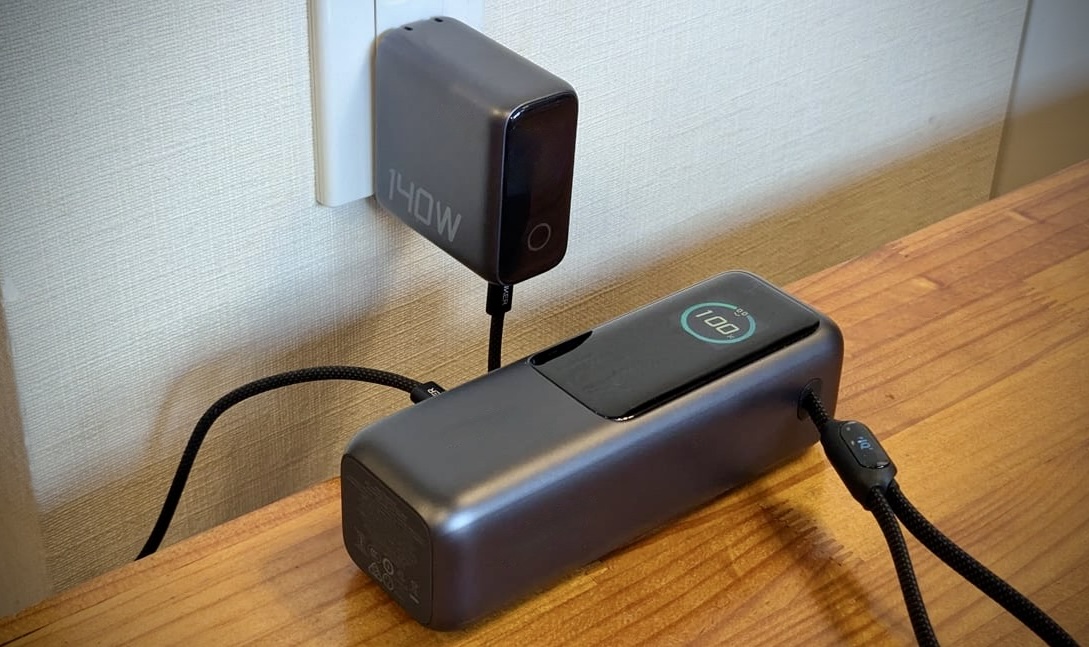
Another key term to understand is watts (W), which is used to describe charge and discharge speeds. Power banks vary dramatically in how quickly they recharge. Some small units trickle in at around 10W, while the fastest models can reach 140W, which means they fill around 14 times faster.
I recommend choosing a battery that can recharge at between 30 and 60W. At 60W, just an hour at a café is often enough to stock up on power for several days.
It’s important to remember that charging slows as the battery approaches full capacity. Most power banks reach 50% charge in roughly 40% of the total time, with the remaining 60% used to reach full capacity.
We can benchmark charging speed by calculating how many milliamp-hours (mAh) a power bank can gain per minute plugged into the wall. In my tests, the fastest power bank averaged around 300 mAh per minute, while the slowest managed only 34 mAh per minute.
As a general rule, larger batteries charge more than twice as fast as smaller batteries. Most 20,000 mAh models recharge at 80 to 130 mAh per minute, whereas 10,000 mAh units typically manage only 40 to 50 mAh per minute.
Power Bank Discharging Speeds
Discharge speeds are important too, as some power banks can charge your smartphone several times faster than others. That said, I’ll only recommend models in this resource that support the fastest charging speeds most smartphones can handle (roughly 20W).
But it’s worth noting that three of the power banks on my list can discharge fast enough to charge a laptop at full speed. That’s 100W or more!
Wall Chargers
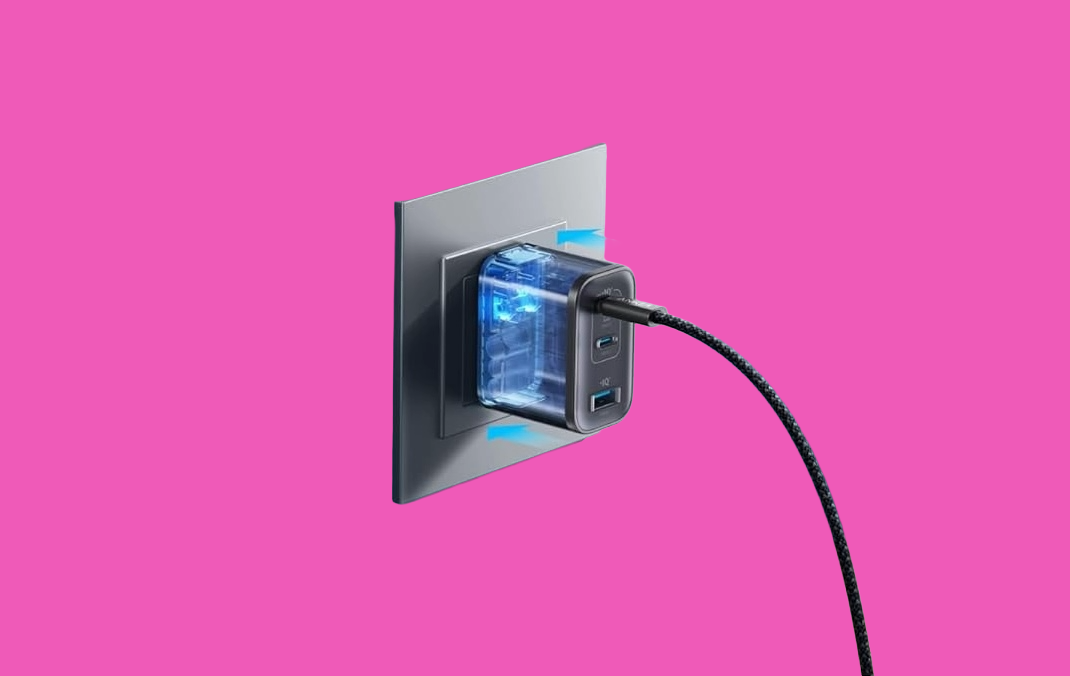
Your wall charger also needs to match your power bank. If your battery can charge at 140W but you’re using a 25W wall plug, you’re not making good use of the ultra-fast charging.
- If you’re selecting a battery that accepts 20W input, a Belkin charger block is just US $10 on Amazon and will do the job.
- For fast-charging, I recommend the Anker 70W wall charger. It has 3 USB ports, a foldout plug, and weighs just 120 grams (4.2 oz). It will charge most of the recommended power banks featured below in under two hours, and is fast enough for most laptops. You can find it for US $39 on Amazon.
- If you need a versatile charger that can power a laptop and other devices at the same time – or quickly top up a high-speed power bank, the Anker 140W wall charger is an excellent choice. It has four USB ports, a foldout plug, and an interactive screen that shows live charge rates. It’s a great bit of kit that I use personally, and it’s US $89 on Amazon.
Are 10,000 or 20,000 mAh Power Banks Better?
For bike touring and bikepacking, the sweet spot is typically a 20,000 mAh power bank. This size usually supports much faster charging, anywhere from 2 to 7 times faster than 10,000 mAh models.
A 20,000 mAh power bank can fully recharge a modern smartphone about 3 to 4 times. If you need even more power, I’d recommend carrying two 20,000 mAh units rather than looking for anything larger.
The 8 Best Power Banks With Fast Charging
Anker 737 (Fastest Charging)
- Usable capacity: 14,400 mAh 14% MORE THAN TYPICAL
- Max charge speed: 140W 7X FASTER THAN TYPICAL
- Full battery charge time: 48 mins 7.7X FASTER THAN TYPICAL
- Average capacity gained per minute: 300 mAh 7.7X FASTER THAN TYPICAL
- Max USB output: 140W 7X FASTER THAN TYPICAL
- Number of full iPhone 17 charges: 3.9 15% MORE THAN TYPICAL
- Weight: 628 grams 80% HEAVIER THAN TYPICAL
- Energy density: 22.9 mAh per gram 37% LOWER THAN TYPICAL
- Price: $94 on Amazon
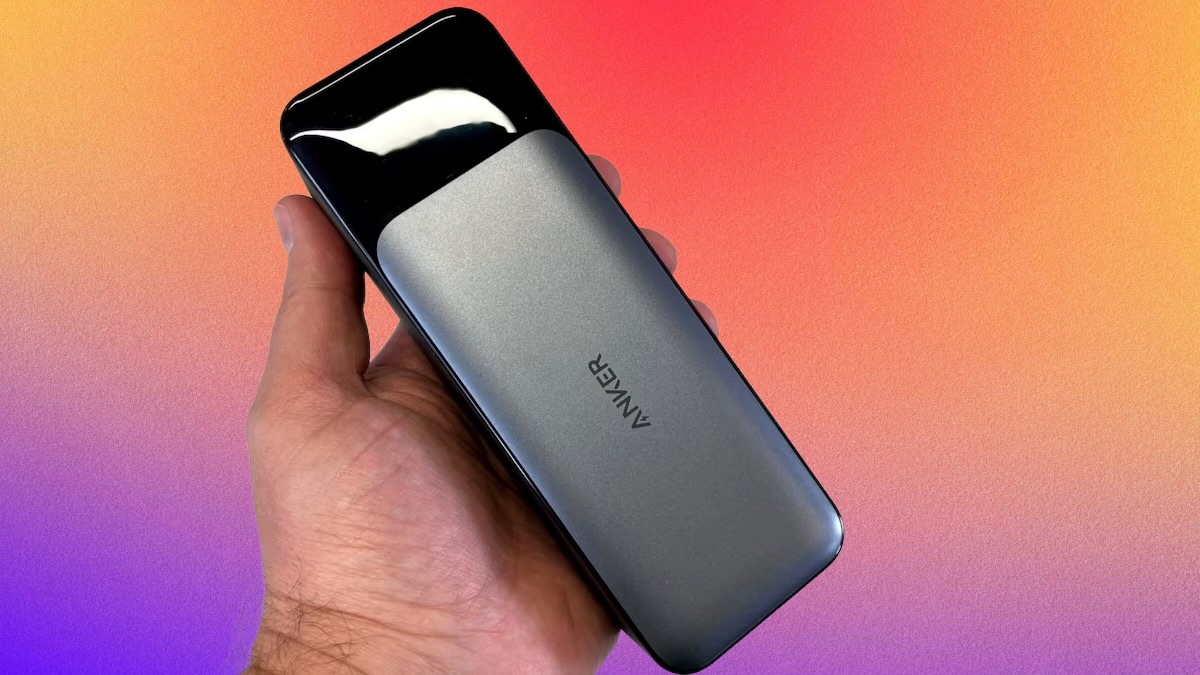
The Anker 737 is by far the fastest-charging power bank on this list, refilling itself 8× faster than a typical battery of its size. It’s the one I personally use for bike touring because it offers me the greatest charging flexibility.
It also has a slightly larger capacity than most of the others, putting you closer to four full smartphone charges rather than the more typical 3.5.
You get three ports in total – two USB-C and one USB-A. The LCD screen is a great feature. With a press of the side button, you can view real-time charge and discharge speeds in watts, which makes it easy to monitor performance.
On the output side, it can deliver up to 140W, making it ideal for charging laptops. In regions with frequent power cuts, I’ve used the 737 to keep my laptop running while also buffering it from potential power surges.
The trade-off for that blazing charge and discharge speed is size, weight, and cost. It’s one of the largest, heaviest, and most expensive options here, and its brick-like shape isn’t quite as pack-friendly as slimmer designs.
You can find the Anker 737 on Amazon HERE.
Baseus Blade 20000 (Fast and Compact)
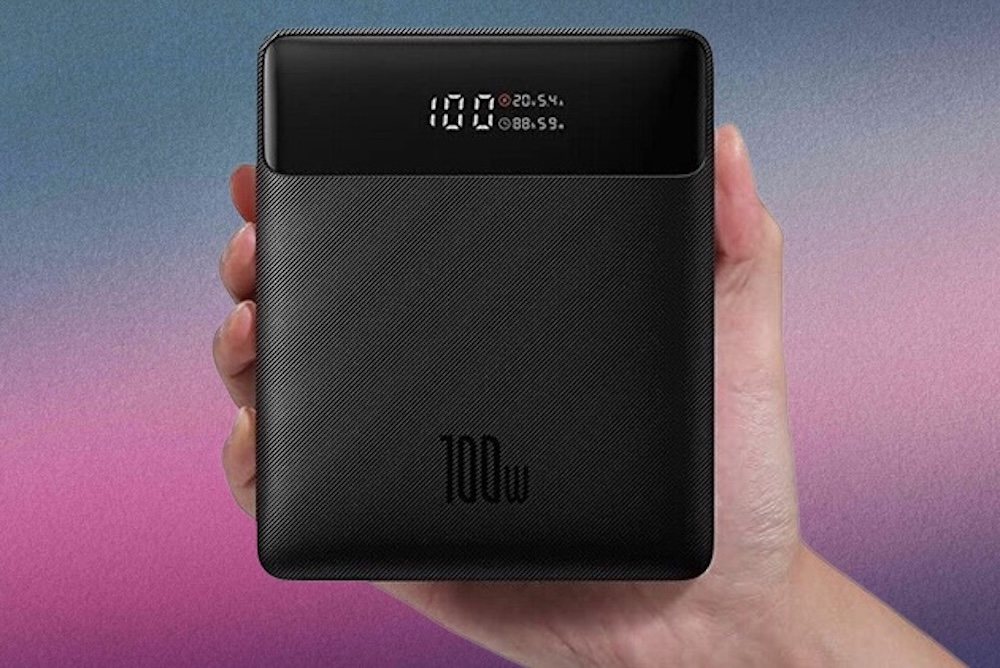
- Usable capacity: 13,400 mAh 6% MORE THAN TYPICAL
- Max charge speed: 60W 3X FASTER THAN TYPICAL
- Full battery charge time: 1h 45mins 3.5X FASTER THAN TYPICAL
- Average capacity gained per minute: 128 mAh 3.8X FASTER THAN TYPICAL
- Max USB output: 100W 5X FASTER THAN TYPICAL
- Number of full iPhone 17 charges: 3.6 5% MORE THAN TYPICAL
- Weight: 443 grams 21% HEAVIER THAN TYPICAL
- Energy density: 30.2 mAh per gram 17% LOWER THAN TYPICAL
- Price: $89 on Amazon
The Baseus Blade takes a very different approach from the Anker 737, using a wide, flat form factor that slips neatly into a backpack pocket or laptop sleeve. At just 18mm (0.7″) thick, it’s impressively slim for a high-capacity power bank.
This is the power bank I would choose if I didn’t already have a 140W wall charger for my laptop, as it’s lighter and much thinner than the Anker 737.
Don’t let the shape fool you; the charging performance is excellent. The Blade recharges around 3× faster than a typical power bank, going from empty to full in just 1 hour and 45 minutes. Plus, you can use a smaller and lighter 60W charging plug.
You get four ports in total (two USB-C and two USB-A), along with an LED display that shows real-time charging information. The data is presented in volts and amps rather than watts, but you can still monitor battery percentage and see the estimated time to full or empty while in use.
On the output side, it can deliver power at up to five times the speed of a typical battery, making it a good option for laptop charging. It also offers a slightly higher usable capacity than most power banks in this size category, helping you squeeze more charges from each refill.
You can find the Baseus Blade on Amazon HERE.
Nitecore NB20000 (Highest Energy Density)
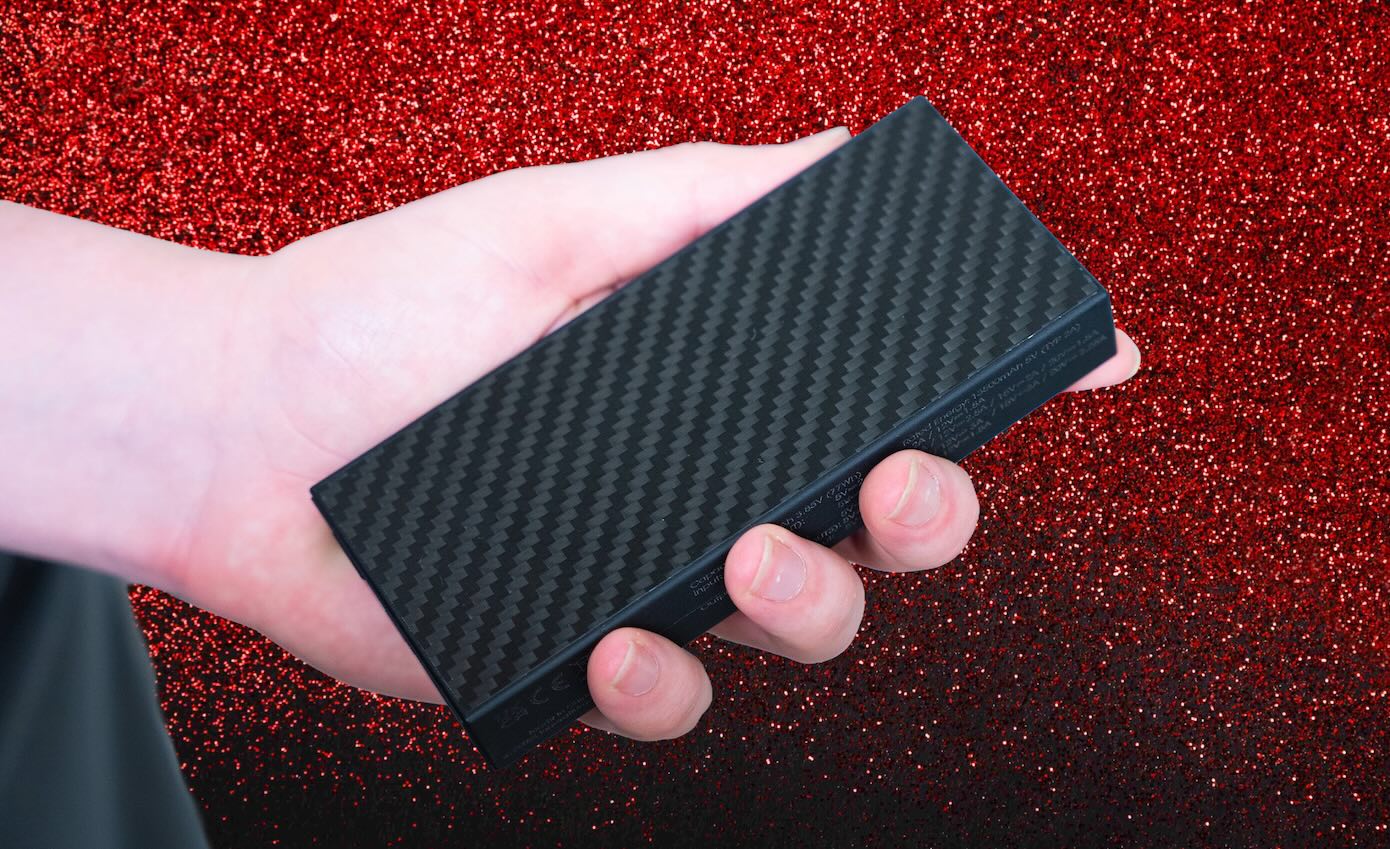
- Usable capacity: 12,940 mAh 2% MORE THAN TYPICAL
- Max charge speed: 30W 1.5X FASTER THAN TYPICAL
- Full battery charge time: 4h 21mins 1.4X FASTER THAN TYPICAL
- Average capacity gained per minute: 49.6 mAh 1.5X FASTER THAN TYPICAL
- Max USB output: 45W 2.3X FASTER THAN TYPICAL
- Number of full iPhone 17 charges: 3.5 3% MORE THAN TYPICAL
- Weight: 291 grams 7% LIGHTER THAN TYPICAL
- Energy density: 44.5 mAh per gram 9% HIGHER THAN TYPICAL
- Price: $99 on Amazon
If maximum energy density is your priority, the Nitecore NB20000 is the clear choice – it’s the most energy-dense battery on this list. Thanks to its high-density lithium cells and carbon-fibre reinforced polymer shell, it’s about 27% lighter than the Baseus Blade, while offering almost identical capacity.
The main trade-off is charging speed. The NB20000 refills at just 50 mAh per minute, making it roughly 2.5× slower than the Baseus Blade and 6× slower than the Anker 737. It also relies on simple indicator LEDs to show remaining charge, displayed in roughly 25% increments, rather than a detailed screen.
Port selection is another compromise. The power bank includes two USB-C ports and two USB-A ports, but one of the USB-C ports is input-only, meaning you can’t charge devices from it. As a result, dual USB-C output isn’t possible.
Ultimately, if you typically have around four hours to recharge and minimising weight is a top priority, this remains one of the best ultralight options available.
You can find the Nitecore NB20000 on Amazon HERE.
UGREEN 20000 100W (Alternate Fast Charge)
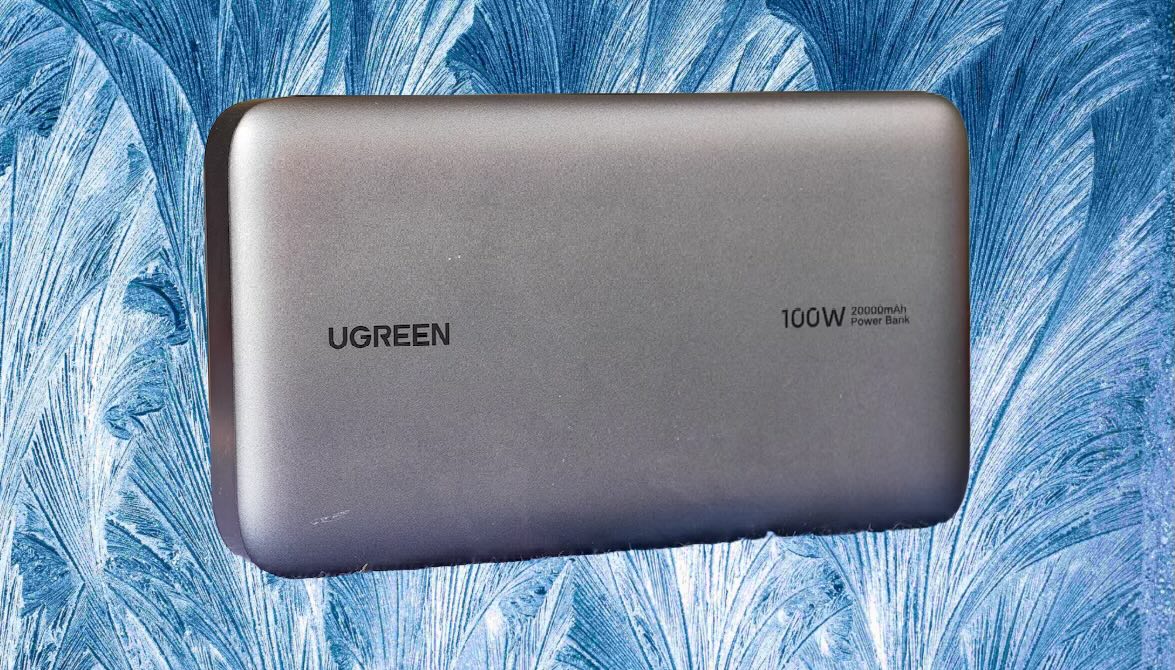
- Usable capacity: 11,820 mAh 6% LESS THAN TYPICAL
- Max charge speed: 65W 3.3X FASTER THAN TYPICAL
- Full battery charge time: 1h 36mins 3.4X FASTER THAN TYPICAL
- Average capacity gained per minute: 123.1 mAh 3.6X FASTER THAN TYPICAL
- Max USB output: 100W 5X FASTER THAN TYPICAL
- Number of full iPhone 17 charges: 3.2 5% LESS THAN TYPICAL
- Weight: 421 grams 17% HEAVIER THAN TYPICAL
- Energy density: 28.1 mAh per gram 23% LOWER THAN TYPICAL
- Price: $56 on Amazon
Another excellent fast-charging option is the UGREEN 20000. It’s faster to recharge, lighter, and cheaper than the Baseus Blade, making it a very appealing alternative. That said, its usable capacity is about 12% lower than the Blade’s, so you won’t have quite as much power on hand.
The UGREEN has two USB-C ports and one USB-A port, all of which can be used simultaneously. On the output side, it can deliver power at up to five times the speed of a typical battery, making it well-suited for laptop charging.
The main drawback is the display. Unlike more expensive models, it doesn’t provide detailed per-port input and output data, so you can’t see exactly how much power your devices are drawing. Instead, it has a minimalist screen that simply shows the remaining battery percentage.
You can find the UGREEN 20000 on Amazon HERE.
INIU P51 20000 (Budget Power Bank)
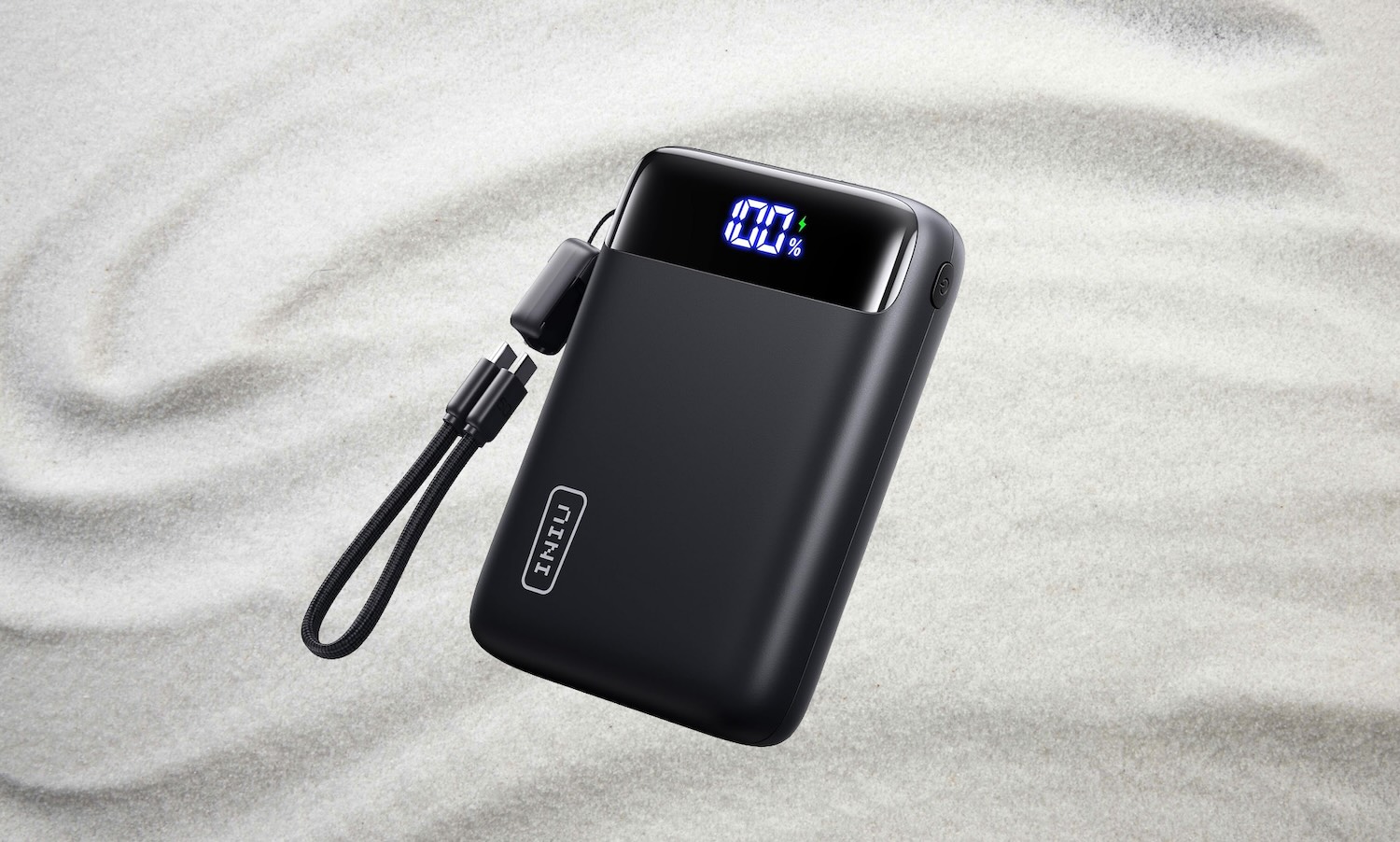
- Usable capacity: 12,660 mAh
- Max charge speed: 20W
- Full battery charge time: 6h 11mins
- Average capacity gained per minute: 34.1 mAh
- Max USB output: 22.5W
- Number of full iPhone 17 charges: 3.4
- Weight: 314 grams
- Energy density: 40.3 mAh per gram
- Price: $24 on Amazon
INIU may not be a brand many are familiar with, but it makes some of the best power accessories on the market for the price, and its power banks offer a lot of bang for the buck.
If you usually charge overnight and don’t need ultra-fast charging, the INIU 20000 20W is an excellent value battery. At just a third to a quarter of the price of most competing 20,000 mAh power banks, it’s one of the most cost-effective ways to carry this much storage capacity. And if you need even more capacity, buying two still keeps you ahead on cost.
These power banks are also very energy-dense, offering 40 mAh per gram, placing them just behind the Nitecore models. That’s impressive for the cheapest option on this list. On top of that, the INIU has a solid usable capacity, enough for roughly 3.4 full iPhone 17 charges.
The main downside is that there’s a single USB-C port (and two USB-A ports), which may limit how many devices you can charge at once.
You can find the INIU P51-E2 on Amazon HERE.
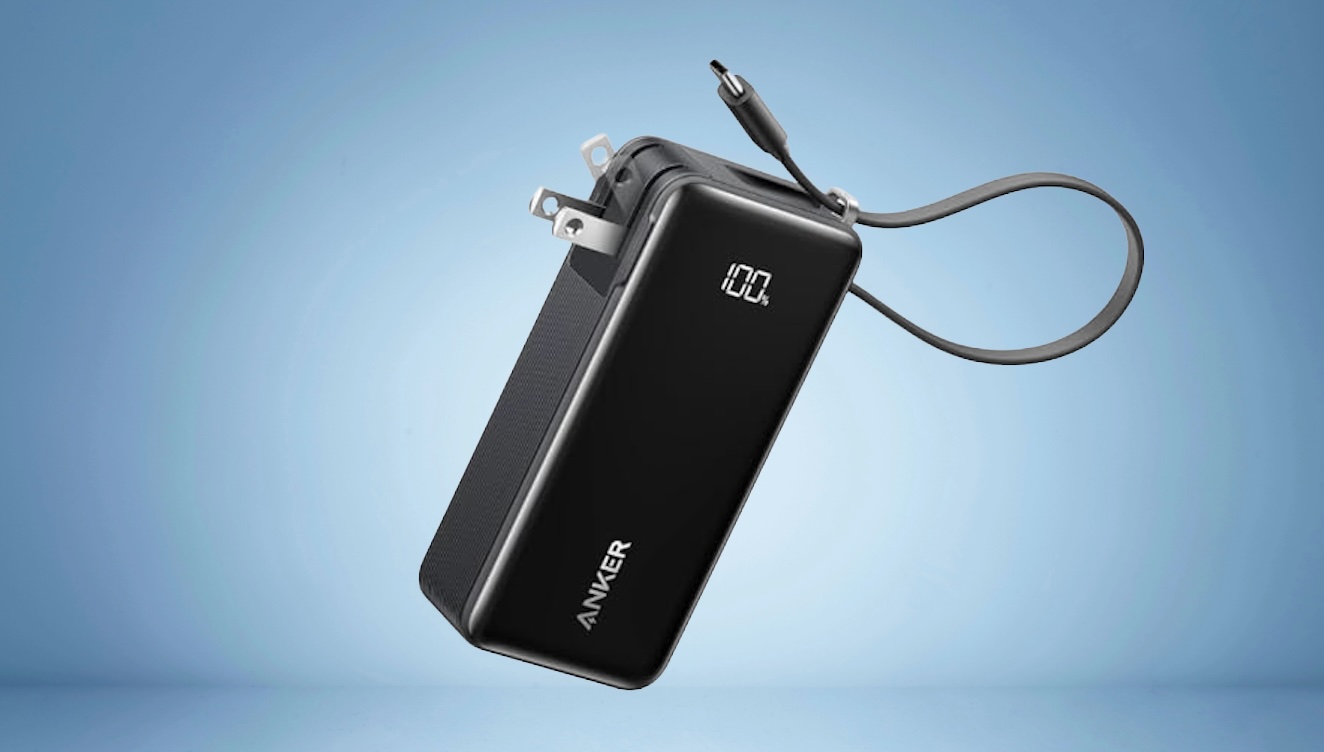
Anker Nano 3-in-1 (Power Bank With Wall Plug)
- Usable capacity: 5,400 mAh 8% LESS THAN TYPICAL
- Max charge speed: 30W 1.6X FASTER THAN TYPICAL
- Full battery charge time: 1h 20mins 1.9X FASTER THAN TYPICAL
- Average capacity gained per minute: 67.5 mAh 1.8X FASTER THAN TYPICAL
- Max USB output: 30W 1.5X FASTER THAN TYPICAL
- Number of full iPhone 17 charges: 1.5 7% LESS THAN TYPICAL
- Weight: 250 grams 28% HEAVIER THAN TYPICAL
- Energy density: 21.6 mAh per gram 28% LOWER THAN TYPICAL
- Price: $34 on Amazon
The Anker Nano packs a lot of convenience into a compact package. It features a built-in USB-C or Apple Lightning cable, a USB-C port, and a foldable wall plug for direct charging. The LED display is simple, showing only charge/discharge status and remaining percentage, but it gets the job done.
The price is on the higher side, but I haven’t found another 3-in-1 option that comes close in charging speed. It’s roughly 1.6× faster than our benchmark and more than twice as fast as most 10,000 mAh power banks.
With the combination of a wall plug, integrated cable, and excellent charging speeds, the Anker beats everything else in this size class.
You can find the Anker Nano 3-In-1 on Amazon HERE.
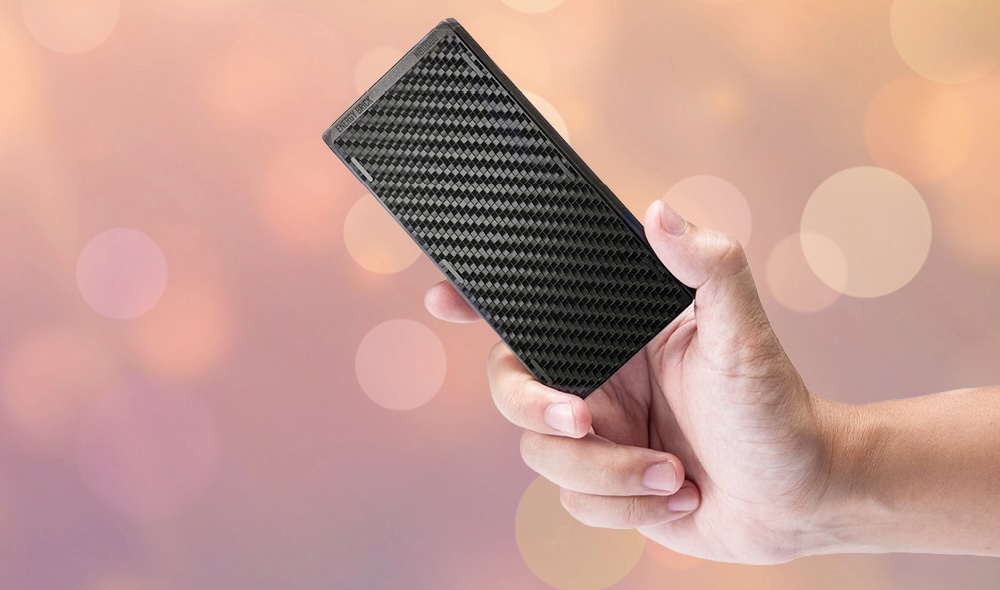
Nitecore NB10000 (Lightest Power Bank)
- Usable capacity: 5,840 mAh SAME AS TYPICAL
- Max charge speed: 18W SAME AS TYPICAL
- Full battery charge time: 2h 36mins SAME AS TYPICAL
- Average capacity gained per minute: 37.4 mAh SAME AS TYPICAL
- Max USB output: 18W 9% SLOWER THAN TYPICAL
- Number of full iPhone 17 charges: 1.6 SAME AS TYPICAL
- Weight: 153 grams 22% LIGHTER THAN TYPICAL
- Energy density: 38.2 mAh per gram 27% HIGHER THAN TYPICAL
- Price: $59 on Amazon
If your top priority is carrying the lightest power bank, the Nitecore NB10000 is hard to beat. Designed for low weight and compact size (smaller than an iPhone), it’s a favourite among thru-hikers and bikepackers.
It weighs just 153 grams, it delivers roughly 1.6 full iPhone charges, and the discharge speed is fast enough to charge most smartphones at full rate.
The Nitecore uses simple charging lights to indicate battery level. Press the on button to see the charge in 25% increments, and the lights turn off automatically after about 10 seconds.
With two ports and a 10,000 mAh capacity, the Nitecore can charge two devices at once or provide pass-through charging (charging a device while the power bank itself is charging).
You can find the Nitecore NB10000 on Amazon HERE.
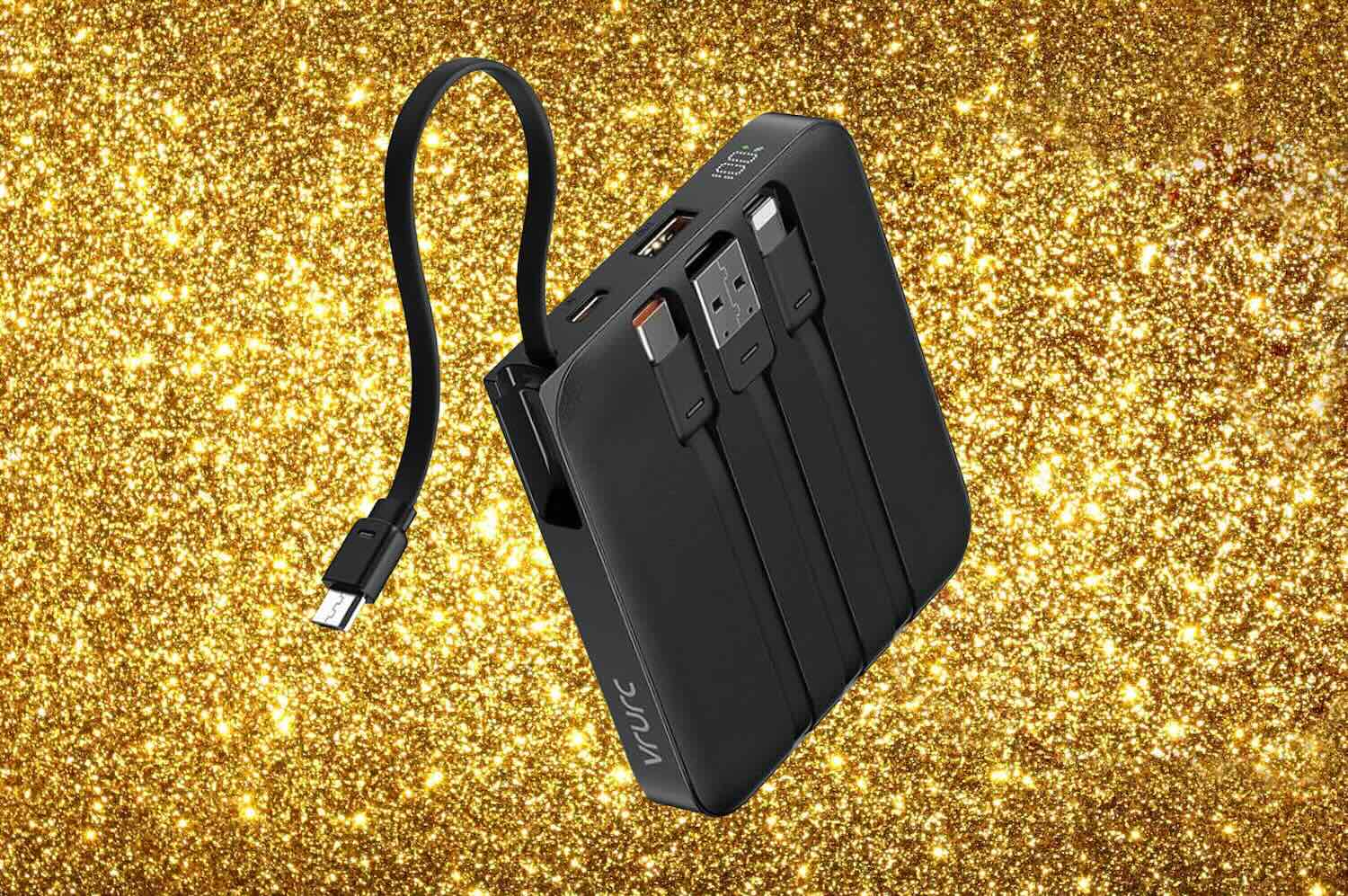
VRURC Square (Power Bank With Cables)
- Usable capacity: 5,860 mAh
- Max charge speed: 18.6W
- Full battery charge time: 2h 31mins
- Average capacity gained per minute: 48.8 mAh
- Max USB output: 19.9W
- Number of full iPhone 17 charges: 1.6
- Weight: 195 grams
- Energy density: 30.1 mAh per gram
- Price: $21 on Amazon
Finally, if you want to skip carrying extra charging cables, the VRURC Square is a solid choice. It comes with all the common cables built in (USB-A, USB-C, Micro-USB, and Lightning) along with the standard USB-C and USB-A ports.
The VRURC is inexpensive, recharges from the wall at a decent pace, and provides enough output to fast-charge a smartphone about 1.5 times.
Its design is slim, compact, and lightweight, with a textured grip to prevent slipping, and the digital LED screen shows the remaining battery percentage at the press of a button.
Overall, it’s an affordable choice for anyone who just needs a little extra pocket power to get through the day.
You can find the VRURC Square on Amazon HERE.
Summary: Best Power Banks Table
| Charge Time (Min) | Capacity Gained Per Minute (mAh) | Weight (g) | Price (USD) | |
| Anker 737: 24000 mAh | 48 | 300 | 628 | $94 on Amazon |
| Baseus Blade: 20000 mAh | 105 | 128 | 443 | $89 on Amazon |
| Nitecore NB: 20000 mAh | 261 | 49.6 | 327 | $99 on Amazon |
| UGREEN 100W: 20000 mAh | 96 | 123.1 | 421 | $56 on Amazon |
| INIU P51: 20000 mAh | 371 | 34.1 | 349 | $24 on Amazon |
| Anker Nano 3in1: 10000 mAh | 80 | 67.5 | 250 | $34 on Amazon |
| Nitecore NB: 10000 mAh | 156 | 37.4 | 153 | $59 on Amazon |
| VRURC Square: 10000 mAh | 151 | 48.8 | 182 | $21 on Amazon |


