


Frame stiffness has a big impact on how your bike feels beneath you.
Riders often describe overly stiff bikes as feeling ‘dead’, overly flexible bikes as ‘noodly’, and bikes with just the right amount of give as ‘lively’.
After riding everything from ultra-stiff to super-flexy frames, I’m convinced there’s a Goldilocks zone – a sweet spot where subtle frame flex adds to that smooth, responsive ride we all crave.
In this deep dive, we’ll explore what frame stiffness really means, when it matters, how it relates to different materials, whether flex affects speed, and how you can dial in the ideal stiffness for your own bikes.
What Is Frame Stiffness?

We can assess frame stiffness in a few key areas.
Steering stiffness refers to how much the frame twists at the head tube. You’ll feel this most when pushing hard on the pedals while pulling on the bars. A frame with high steering stiffness feels sharp and responsive to your inputs. That said, overall front-end stiffness also depends on your fork, front wheel, and handlebars.
Pedalling stiffness is the amount of flex around the bottom bracket area when you apply power through the pedals. More stiffness here generally translates to better power transfer.
Then there’s vertical stiffness, which relates to how much the frame deflects up and down – a factor I’ve already explored earlier in this article when discussing comfort.
To put it into perspective: the stiffest mass-produced frames are about twice as rigid as the most flexible ones.
Describing Stiffness

I like to think of frame stiffness as a spectrum with two extremes.
At one end of the spectrum, a stiff or responsive frame offers a snappy, direct ride. It feels sharp under acceleration and delivers that unmistakable “up-and-go” sensation. But it can also feel harsh or even dead, transmitting more chatter through the bike when going over bumps. There’s also evidence that excessive stiffness can compromise cornering traction and braking performance – so stiffer isn’t always better.
On the other end, a flexy or forgiving frame mutes feedback from the road or trail, offering a smoother, more compliant ride. However, it can feel slower to respond under power and may flex more with your movements. This can be pleasant – again, up to a point.
What Factors Affect Frame Stiffness?

What feels stiff to one rider might feel flexy to another because several factors influence how much a bike moves beneath you.
First, there are rider factors: your power output, body weight, and riding style all play a role. A rider sprinting out of the saddle will flex a frame more than someone casually spinning along.
Next, the bike itself: different riding disciplines demand different levels of stiffness. A burly hardtail built for aggressive trails needs to be stiffer than a featherweight XC race bike, simply due to the greater forces involved.
And finally, luggage: frames designed for load carrying need extra stiffness. Without it, a fully loaded touring bike can feel vague or “noodly” when ridden.
Frame Stiffness For Touring and Bikepacking

Touring and bikepacking bikes are designed to carry luggage at both ends, and the frame acts as the structural bridge resisting the twisting forces between the front and rear loads. To maintain stable handling and predictable ride feel under heavy load, these frames are built significantly stiffer than typical bikes.
The trade-off? A frame designed to resist torsional flex under luggage often feels overly rigid when ridden unloaded. That “lively” ride sensation – created by just a touch of frame flex – is generally only achieved once the bike is fully packed.
It’s also worth noting that belt-drive touring bikes require exceptionally high pedalling stiffness. Because belts have very little tolerance for lateral movement, these bikes are built with especially rigid rear frame triangles to prevent belt slippage under load.
You can read a more comprehensive article about frame stiffness for touring bikes HERE.
Finding The Goldilocks Zone

Let’s run through a few rider scenarios to better understand when a rider might benefit from that ideal, subtle amount of frame flex:
Heavier rider with higher power output
Greater frame stiffness is needed to counteract the larger forces from hard pedalling and aggressive cornering.
Lighter rider with lower power output
On the other end of the scale, a less stiff frame allows lighter riders to achieve a similar ride feel without the bike feeling overly rigid.
Cruising casually
If your riding style is relaxed and low-intensity, a more compliant frame will feel more responsive to lighter inputs and offer a smoother, more engaging ride.
Aggressive riding style
If you’re out of the saddle sprinting, hammering corners, and generally pushing the limits, a stiffer frame will provide the control and responsiveness you need.
Flat bars or wide drop bars
Wider handlebars give you more leverage over the front end, making it easier to twist the frame torsionally. As a result, bikes designed around wide bars typically require higher steering stiffness to maintain balanced handling.
Are Stiffer Bikes Faster?
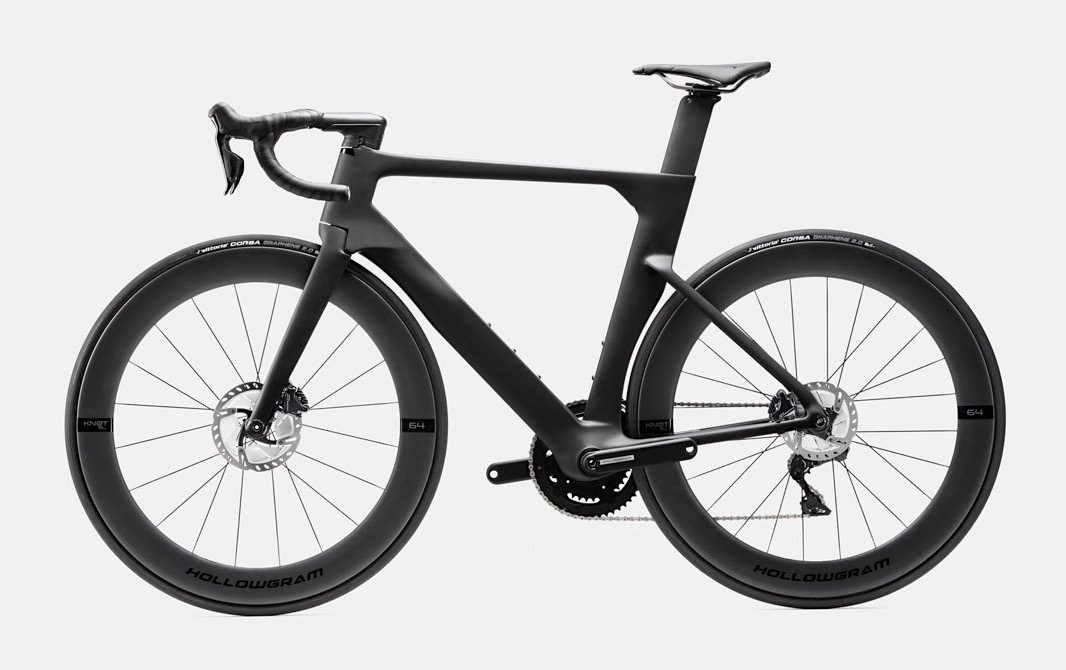
It’s commonly assumed that a stiffer frame is faster because less energy is lost to flex. But unless you’re sprinting for the finish line, a frame with half the bottom bracket stiffness is unlikely to impact your speed in a meaningful way—simply because the amount of deflection is so small.
In reality, aerodynamics and tyre rolling resistance have a far greater effect on performance.
Some have suggested, through hypothesis and field testing, that much of the energy lost to frame flex is returned to the drivetrain. But I find that unlikely. Here’s why: frame deflection builds gradually during the downstroke (from about 1 to 3 o’clock) and releases slowly afterwards – not in a single, clean rebound as some tests assume.
Out on real roads, where dozens of variables are simultaneously storing and releasing energy, it’s improbable that frame flex accounts for most of it. More realistically, some energy might return to the drivetrain, but plenty is lost elsewhere – through your wheels, tyres, crankset, pedals, shoes, and even your body.
What’s The Stiffest Frame Material?
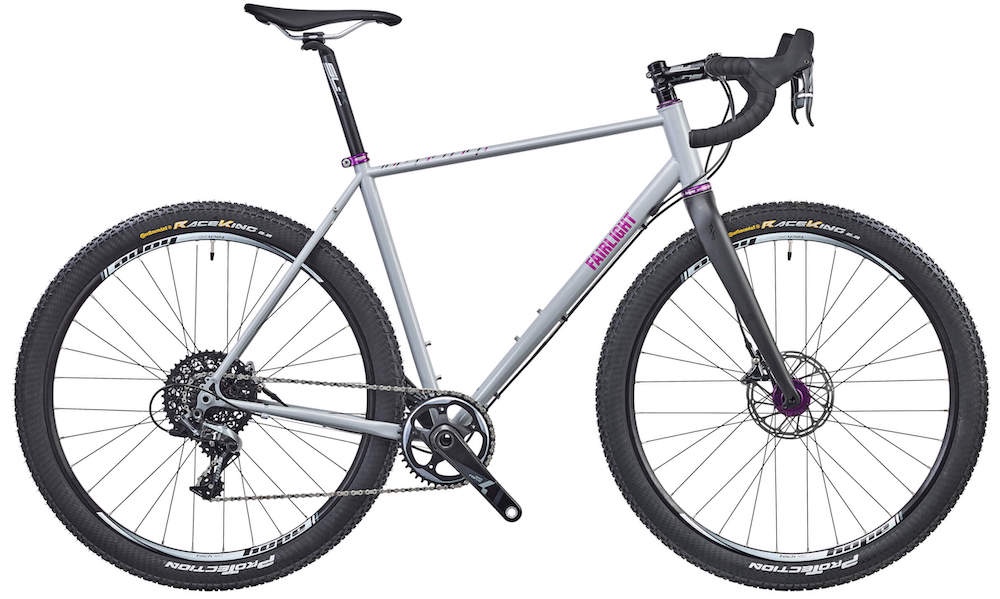
The data we’re looking at today comes from the legends at Tour Magazin in Germany.
They’ve developed a standardised static deflection test and have measured over 1,500 road and gravel bikes (all around the same size), giving us an excellent basis for comparing frame stiffness by material. I’ve kept a detailed record of almost every bike ever tested, which allows us to examine stiffness trends across different frame materials.
The test measures how much force in newtons (N) is needed to deflect the head tube or bottom bracket by one millimetre, recorded as N/mm. While static tests don’t fully capture how a frame behaves under a moving rider, the values do broadly align with how bikes are designed for different riding purposes.
For example, Tour de France-style aero race bikes typically show minimal frame deflection, while purpose-built touring bikes often test even stiffer.
Steering Stiffness – Head Tube Deflection Test (Average)
Aluminium – 105 N/mm
Carbon – 97 N/mm
Steel – 88 N/mm
Titanium – 86 N/mm
This shows that steel and titanium frames generally have lower steering stiffness. Aluminium frames are about 20% stiffer than titanium and steel, while carbon frames are about 10% stiffer.
Pedalling Stiffness – Bottom Bracket Deflection Test (Average)
Aluminium – 63 N/mm
Carbon – 62 N/mm
Steel – 53 N/mm
Titanium – 53 N/mm
Carbon and aluminium again show higher stiffness, requiring around 20% more force to deflect the bottom bracket by one millimetre compared to steel or titanium.
These lower stiffness values for steel and titanium could help explain their reputation for a distinct ride feel. But that’s not the whole picture – let’s explore the full range of stiffness values by material.
Steering Stiffness – Full Range of Values
Aluminium – 69 to 145 N/mm
Carbon – 63 to 131 N/mm
Steel – 69 to 115 N/mm
Titanium – 75 to 106 N/mm
Pedalling Stiffness – Full Range of Values
Aluminium – 45 to 87 N/mm
Carbon – 39 to 84 N/mm
Steel – 42 to 77 N/mm
Titanium – 44 to 68 N/mm
Looking at these deflection value ranges, it’s clear that frame designers can build either a stiff and responsive or soft and compliant bike from any frame material. The material may influence average trends, but it’s the engineering and design that ultimately define how a bike feels.
Small Bike Sizes
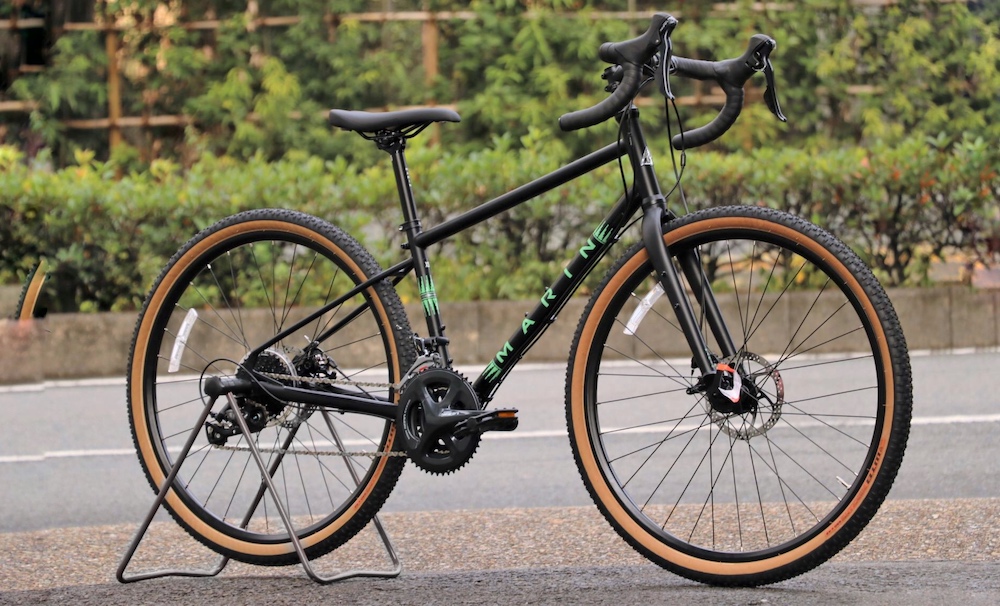
So, how do small frames compare to large ones? Fortunately, Tour Magazin has data on that too.
Steering Stiffness – Head Tube Deflection (Average)
Aluminium (50cm) – 101 N/mm
Aluminium (56cm) – 105 N/mm
Carbon (50cm) – 95 N/mm
Carbon (56cm) – 97 N/mm
Pedalling Stiffness – Bottom Bracket Deflection (Average)
Aluminium (50cm) – 66 N/mm
Aluminium (56cm) – 63 N/mm
Carbon (50cm) – 62 N/mm
Carbon (56cm) – 62 N/mm
The good news? Smaller frames aren’t wildly stiffer than larger ones, even though smaller triangles are naturally more resistant to deflection. The data suggests that engineers are doing a decent job of tuning ride quality across sizes.
That said, there’s still room for improvement. Smaller riders tend to be lighter and produce less power, meaning they’d likely benefit from more frame flex to achieve the same ride feel as a heavier, more powerful rider on a larger frame.
Here’s the challenge: bike frames need to be strong enough for the most powerful riders in any given size. Take Caleb Ewan, for example—an elite sprinter riding an XS frame. His power output is significantly higher than that of an average rider his size. Designing for him means overbuilding for many.
The Custom Bike Advantage
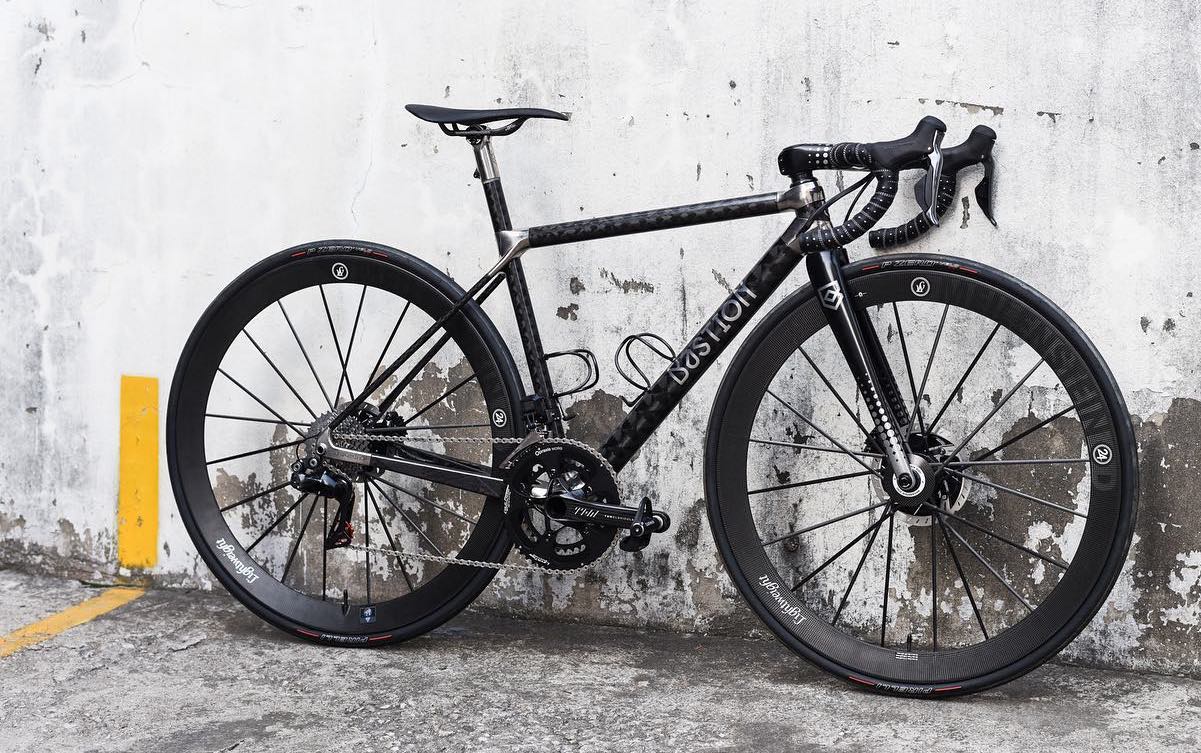
While many people choose custom bikes primarily to perfect their fit, an even better reason might be to fine-tune the ride feel.
Since most bikes are designed to accommodate the heaviest and most powerful riders, those who are lighter and produce less power stand to gain the most from a frame tailored to their needs.
Shoutout to Bastion Cycles for letting customers specify their desired frame stiffness – both torsional and vertical – during the ordering process. They can offer this because they 3D-print their own titanium lugs and build their own filament-wound carbon tubes, which is seriously impressive.
What’s more, Bastion’s order form includes stiffness data from several popular bikes, helping riders get a clear idea of how their custom frame will feel under them before it’s even built.
Aluminium and Carbon Bikes With Similar Stiffness Values To Steel/Ti
We now know that steel and titanium frames tend to be less stiff on average than carbon and aluminium frames.
However, since there’s a wide range of deflection values across all materials, let’s say you want to match the flex characteristics of a typical titanium or steel bike – or maybe you’re lighter and prefer a bit more compliance.
Bikes with Lower Stiffness (More Compliance)
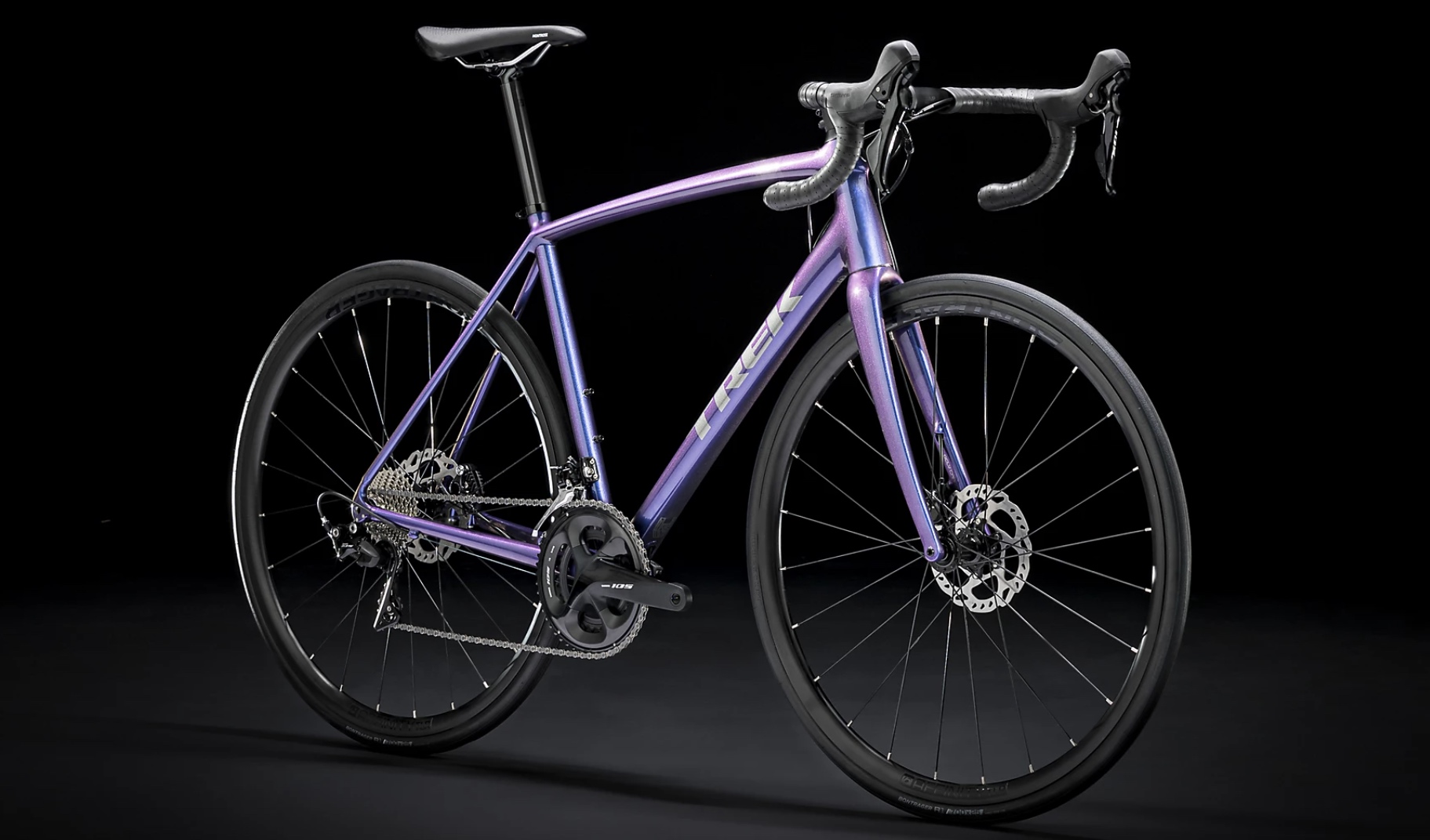
Aluminium: Trek Emonda ALR5 (road), Giant Contend (endurance), Giant Revolt (gravel)
Carbon: Trek Emonda (road), Trek Madone (road), Felt AR (road), Trek Domane (endurance), Giant Defy (endurance), Look (all models)
Most Trek and Look road bikes are designed with more torsional flex built in. Specialized’s latest Tarmac SL7 and Aethos road bikes are trending toward a softer frame feel as well. Giant’s endurance and gravel models also rank among the more forgiving options.
Bikes with Higher Stiffness (Less Compliance)
Cannondale System Six (road), Specialized Allez Sprint (road), Specialized Venge (road), Cannondale CAAD Optimo (road), Specialized Sequoia (gravel), Merida Silex Carbon (gravel), Felt Broam (gravel), Cube (all models)
Aero race bikes and budget aluminium frames tend to be the stiffest overall. Data also shows that Cube builds its bikes with particularly high stiffness.
For bikepacking and touring, the Specialized Sequoia, Merida Silex, and Felt Broam perform best when loaded with luggage, thanks to their robust frames.
DIY Frame Stiffness Tests

A great way to gauge the stiffness of different bike frames is by comparing them side-by-side.
Here are two simple static tests I do before taking a new bike for a ride:
Front End Wiggle Test: Hold the seat firmly between your legs and push and pull on the handlebars. You’ll be able to see and feel how much the frame twists.
Bottom Bracket Deflection Test: With both brakes engaged, apply pressure to the forward pedal and observe the frame flexing sideways.
Keep in mind these static tests only offer a snapshot of frame stiffness – they don’t fully capture how the bike will feel on the road. So, be sure to take the bike out for a test ride as well.
I recommend jotting down your impressions of stiffness from both the static tests and the actual ride. Trying multiple bikes this way will help you identify the ride characteristics you prefer.
And if you’re test riding a touring or bikepacking bike, try to do it with luggage loaded to get a more realistic feel.
Other Ways To Determine Frame Stiffness
If you don’t have access to test bikes, it’s much trickier to gauge how a bike will feel beneath you.
A good starting point is the bike’s intended use: racing road bikes are generally stiffer than endurance road bikes, and touring bikes tend to be stiffer than bikepacking bikes.
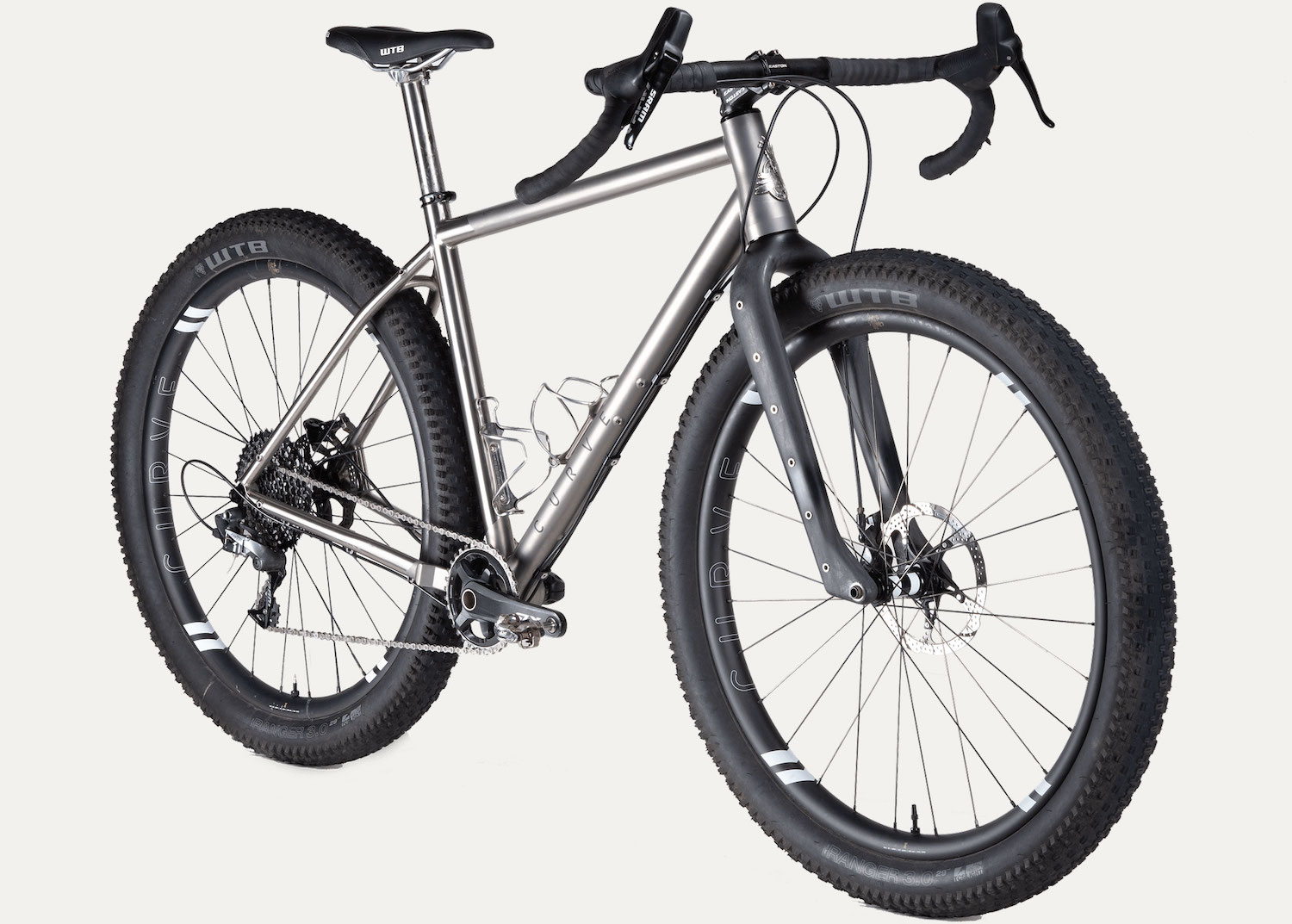
With steel and titanium frames, predicting ride characteristics is easier because the largest-diameter tubes typically determine stiffness. That’s due to the fact that doubling a tube’s diameter and wall thickness can increase stiffness by up to 16 times.
Carbon and aluminium frames are less predictable since their stiffness depends on many design variables. In those cases, it’s worth reading reviews from trusted journalists – ideally ones who share a similar height and weight as you – to get a better sense of how the bike might ride.
Summary
Finding the ideal “Goldilocks zone” for frame stiffness involves considering your body type, riding style, bike setup, and how you plan to use the bike.
The data shows that bikes made from any frame material can be designed to feel either forgiving or responsive. While titanium and steel frames tend to have lower average stiffness – potentially making them a better fit for lighter riders – this isn’t always the case. Some of the stiffest steel and titanium frames exceed the stiffness of many aluminium or carbon models.
Ultimately, I recommend trying out a variety of bikes to discover the ride qualities that suit you best, then making your choice from there.
You can read about frame comfort HERE and different frame materials HERE


