


Aero gravel bikes seem to be the latest frontier in cycling’s fastest-growing bike category.
With brands increasingly developing bikes in wind tunnels, we’re now seeing some remarkably sophisticated (and occasionally radical) designs emerge. Streamlined frames, deep carbon wheels, and narrow integrated cockpits are all being used in an effort to bring road-bike speed to gravel riding.
There’s a good reason for this. As a rule of thumb, aerodynamic drag becomes the largest force resisting a cyclist at around 18 km/h. This is a speed that most riders can comfortably exceed, even on gravel roads. As speed increases, aerodynamic drag rises dramatically, making it one of the biggest factors influencing performance.
So, how much faster is an aero gravel bike than a regular gravel bike? And how does it compare to a modern road bike?
In this article, we’ll examine the differences between typical and aero-optimised gravel bikes, analyse the available wind tunnel data, and reveal the 20 fastest aero gravel bikes out there today.
Let’s get into it!
Why Are Gravel Bikes Becoming More Aerodynamic?

There are several reasons bike brands are moving toward aero gravel bikes.
Firstly, riders increasingly want one bike for both road and gravel riding. The challenge is that typical gravel bikes, with their rounded frame tubes and slower-rolling tyres, can require 40 watts more power than road bikes to maintain 30 km/h. In practical terms, that means pushing your pedals roughly 20–30% harder just to ride at the same speed.
To close this gap, manufacturers are investing heavily in improving both aerodynamics and rolling efficiency. The result is a new generation of gravel bikes that are substantially faster on the road than their predecessors. And when combined with fast tyres and wheels, the best aero gravel bikes can cut the performance deficit to a road bike by more than half.
Secondly, racing speeds are rising. At events like Unbound 200, average speeds have increased from around 32 km/h in 2021 to roughly 38 km/h today. Because aerodynamic drag increases sharply with speed, this makes aero gains significantly more important than they used to be.
And by the way, aero savings still matter for slower riders completing long events. While faster riders may see larger absolute watt savings, slower riders spend more time on course, meaning even modest watt savings can translate into big time differences by the finish line.
Categories of Gravel Bikes


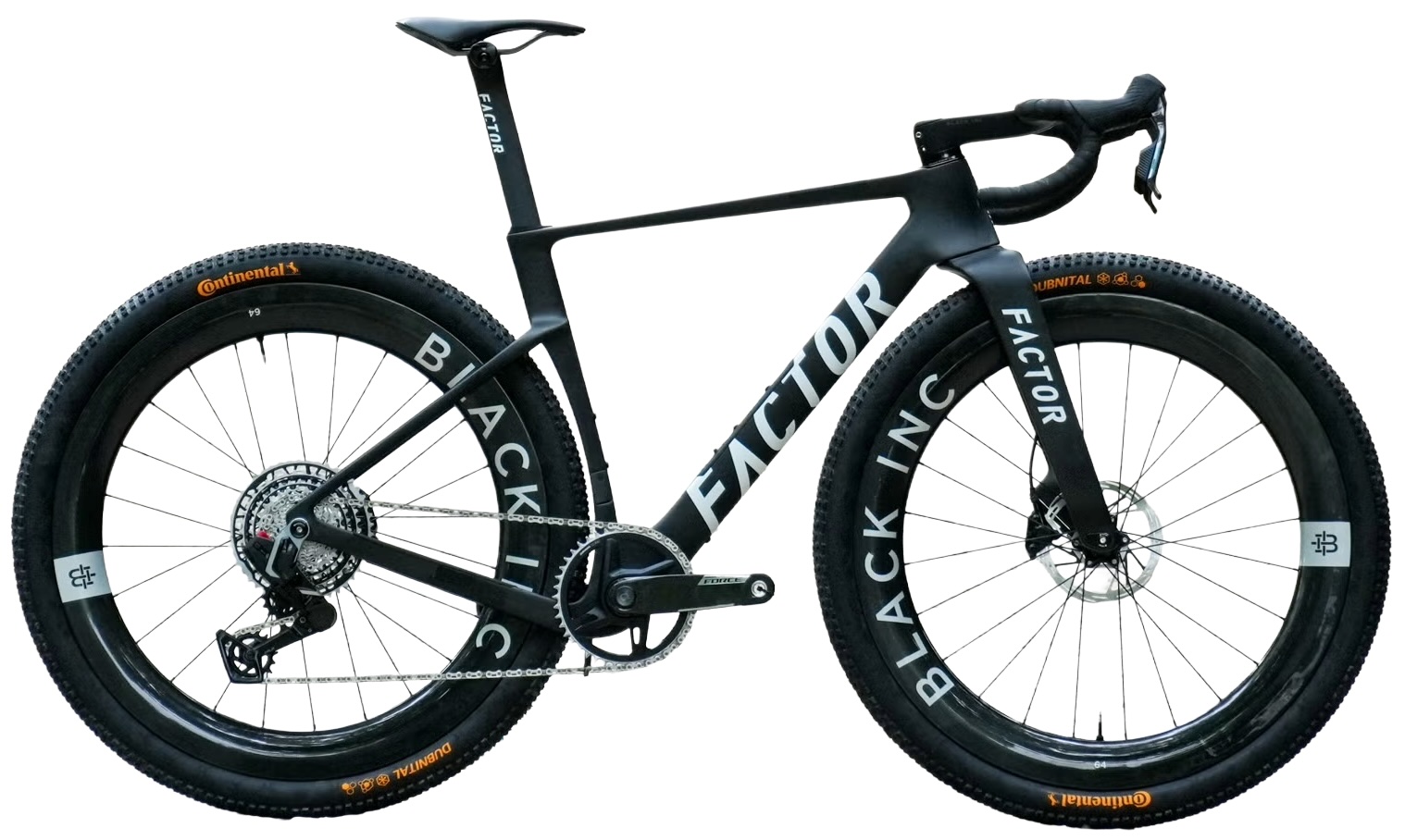
Before looking at the wind tunnel results below, it helps to first break gravel bikes into three broad aerodynamic categories based on their frame and component design. This makes it easier to understand what actually defines an aero gravel bike in practice.
Non-Aero Gravel Bikes:
These bikes make little to no attempt to reduce aerodynamic drag. They typically feature shallow-depth wheels, round frame tubes, round handlebars, and exposed brake and shift cables. The overall design prioritises simplicity and practicality over aero efficiency.
Semi-Aero Gravel Bikes:
Bikes in this category introduce more shaping and integration. Frames often use slightly deeper tube profiles, forks and handlebars may be more aero-shaped, and cables are usually fully or partially hidden. These bikes are often paired with moderately deep wheels (eg. 35-45 mm rim depths).
Fully-Aero Gravel Bikes:
These bikes are extensively developed using wind tunnel testing and/or CFD analysis to optimise the entire system for minimum drag. You’ll find deep aero shapes on the frame, fork, cockpit, and wheels, in particular. The goal is maximum speed, especially at higher velocities where aerodynamic resistance dominates performance.
Ok, let’s now find out how much faster an aero gravel bike is than a regular gravel bike.
CyclingNews Wind Tunnel Test

| Bike Category | Rim Depth | Watts Saved vs Baseline | |
|---|---|---|---|
| Lauf Seigla | Non-aero | 31 mm | Baseline |
| Basso Palta III | Semi-aero | 48 mm | 8.2 watts |
| 3T Racemax 2 Italia | Fully-aero | 45 mm | 10.5 watts |
| Trek Checkmate SLR | Semi-aero | 35 mm | 11.4 watts |
| Giant Revolt Advanced SL | Semi-aero | 50 mm | 11.9 watts |
| REAP Type 300 | Fully-aero | 54 mm | 16.6 watts |
| Pinarello Dogma GR | Fully-aero | 45 mm | 17.9 watts |
| Argon 18 Anti Matter | Fully-aero | 54 mm | 18.3 watts |
| Factor Elara | Fully-aero | 64 mm | 20.9 watts |
| Wilier Rave SLR ID2 | Fully-aero | 48 mm | 21.5 watts |
| Specialized Crux 5 | Fully-aero | 50 mm | 21.6 watts |
Our first wind tunnel test is by CyclingNews, which took a range of gravel bikes to compare the aerodynamic performance of non-aero, semi-aero, and fully aero designs. With a test rider included in the measurements, they found a spread of approximately 22 watts between the fastest and slowest bikes at 40 km/h.
At the slow end of the spectrum was the Lauf Seigla, which uses external brake hoses, a conventional round handlebar, and shallow-depth wheels. As this configuration closely resembles that of many mainstream gravel bikes, it provides a useful baseline.
The fastest bikes in the test were the Specialized Crux and Wilier Rave SLR, with the Factor Elara not far behind. Given the margin of error (1.6 to 2.8 watts) inherent in wind tunnel testing, any of the top-5 fastest bikes in the table could claim to be the fastest aero gravel bikes in the test.

In this test, the 3T Racemax appears to have underperformed for a fully-aero bike with fast wheels. But as it was a last-minute addition, this bike was configured with much wider bars and a taller stack than the rest, which slowed it down in the wind tunnel. It also had a 2X drivetrain, which could be another aero penalty to the tune of 2 watts at these speeds.
One particularly interesting result was the 13-watt gap between the Basso Palta and Wilier Rave SLR. These bikes both used the same wheelset, suggesting that the advantage of a fully-aero gravel frame over a semi-aero design likely exceeds 10 watts at 40 km/h.
Please note that this is just a tiny portion of the data from the CyclingNews wind tunnel. You can see bike-only drag testing, testing with standardised wheels, and aero drag at different speeds HERE.
TOUR Magazine Wind Tunnel Test

| Bike Category | Drag at 45 km/h | Watts Saved vs Baseline | |
|---|---|---|---|
| Canyon Grail | Non-aero | 247 watts | Baseline |
| 3T Exploro | Semi-aero | 238 watts | 9 watts |
| Ridley Kanzo Fast | Fully-aero | 223* watts | 24 watts* |
TOUR Magazine has also taken a few gravel bikes to the wind tunnel, and its data clearly show that aero frames, cockpits, and wheels make a meaningful difference on gravel bikes, especially at higher speeds.
At 45 km/h and with the same 50 mm deep wheels and 40 mm wide tyres, the semi-aero 3T Exploro required roughly 9 watts less power than the non-aero Canyon Grail. And the fully aero Ridley Kanzo Fast pushed that advantage even further, requiring approximately 24 watts less power than the Canyon. That’s broadly consistent with the CyclingNews findings once differences in testing speed are taken into account.
TOUR also repeated the tests using completely slick Challenge Strada Bianca 40 mm tyres. These reduced aerodynamic drag even further, lowering power requirements by an additional 3 to 4 watts across all bikes.
Even at a slower speed of 35 km/h, the testing showed the 3T Exploro was 4.5 watts faster than the Canyon Grail, and the Ridley Kanzo Fast was 12 watts faster than the Canyon Grail.
| Bike Category | Drag at 45 km/h | Watts Saved vs Baseline | |
|---|---|---|---|
| Canyon Grail | Non-aero | 237* watts | Baseline |
| 3T Exploro | Semi-aero | 230 watts | 7 watts |
| Ridley Kanzo Fast | Fully-aero | 216 watts | 21 watts |
Another interesting finding was what happened when TOUR fitted Schwalbe Pro One 34 mm road bike tyres to these gravel bikes to see how they’d compare to a modern road bike.
A common drag figure in the GST wind tunnel for a road bike using this protocol is between 210 and 220 watts. That means the Canyon Grail and 3T Exploro still trail modern road bikes by a good 10-15 watts, even with tyres of a similar width.
The Ridley Kanzo Fast, however, is in road-bike territory. It delivers wind tunnel numbers that are genuinely competitive with many road bikes (216W). That said, while the Ridley is very fast, it still falls over 20 watts short of the fastest aero road bikes ever tested by TOUR in the wind tunnel!
You can see the TOUR Magazine wind tunnel data HERE.
Fastest Aero Gravel Bikes (Confirmed)
Specialized Crux 5
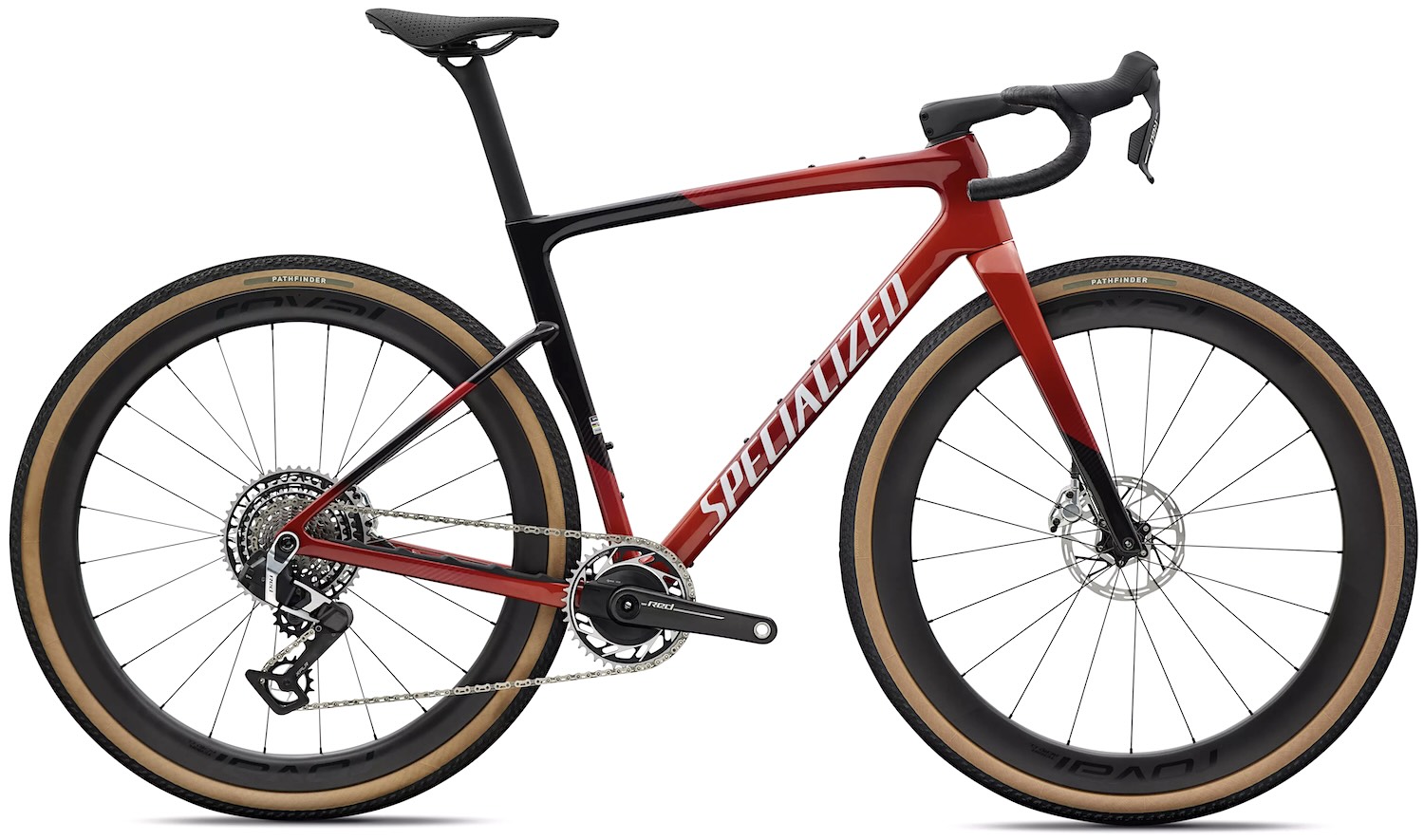
The Specialized Crux 5 proves that a gravel bike doesn’t have to sacrifice weight to be aerodynamically competitive. Not only does it feature one of the lightest gravel framesets available (1,189 grams), but wind tunnel testing suggests it’s also among the fastest gravel bikes on the market.
Add 55 mm tyre clearance and complete bike weights starting at around 7 kg (15 lb), and the Crux offers a compelling blend of low weight, aerodynamic efficiency, and gravel road versatility. Just don’t look too closely at the price tag of the flagship model…
Unlike some of the more overtly aero bikes in this guide, the Crux takes a subtler approach to reducing drag. Specialized has the advantage of operating its own wind tunnel, allowing the company to test and refine designs more extensively and cost-effectively than most competitors.
According to Specialized, approximately half of the aerodynamic gains compared to the previous-generation Crux came from the frameset itself. The wheelset accounted for roughly 30% of the improvement, while the handlebar contributed the remaining 20%. Based on the wind tunnel data available, those figures appear entirely plausible.
Wilier Rave SLR ID2

Wilier has clearly invested heavily in aero development in recent years. Its latest road and gravel race bikes (the Filante SLR and Rave SLR) have both delivered impressive wind tunnel performances in the Silverstone wind tunnel.
The Rave SLR incorporates many of the features now associated with leading aero race bikes. The head tube is deep and projects prominently ahead of the frame, while the downtube transitions from a narrow leading edge near the head tube to a broader midsection before flaring towards the bottom bracket. This shaping improves airflow around the water bottles while remaining aero and stiff.
Other aerodynamic details include dropped seat stays, a rear-wheel cutout in the seat tube, and a slim integrated cockpit. The relatively narrow 370 mm or 390 mm handlebar width is likely a significant contributor to the bike’s aerodynamic performance, as reducing rider frontal area often yields larger gains than frame design alone.
Despite its race-focused design, the Rave SLR remains thoroughly modern, offering clearance for tyres up to 52 mm wide.
Factor Elara
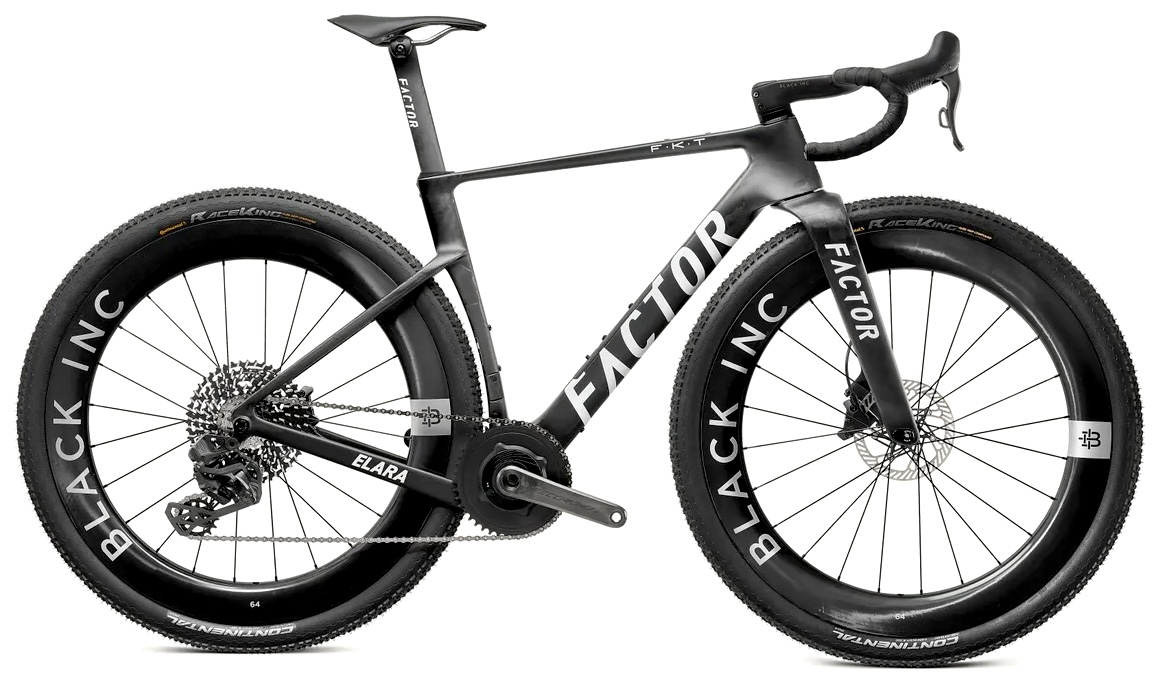
The Factor Elara is another radical gravel bike that pushes the limits of speed in the wind tunnel. In CyclingNews’ testing, it was actually the fastest bike when measured without a rider. Once a rider was added, it slipped back a touch, remaining well within the test’s margin of error and effectively tied with the fastest bikes on test.
The most striking feature of the bike is the ultra-wide fork. The fork blades are positioned unusually far apart, not only to accommodate large tyres but also as part of the bike’s aerodynamic strategy. Interestingly, wind tunnel testing has shown that both very narrow and very wide fork designs can manage airflow effectively, depending on how they interact with the front wheel and the rider’s legs.
The Elara offers clearance for tyres up to 57 mm wide, placing it among the most capable aero gravel bikes yet seen. Those tyres are paired with a new generation of wide, 64 mm-deep Black Inc wheels. Combined, the tyre and rim likely create a wheel profile more than 115 mm tall – far deeper than anything we’ve previously seen on a gravel race bike.
Argon 18 Anti Matter
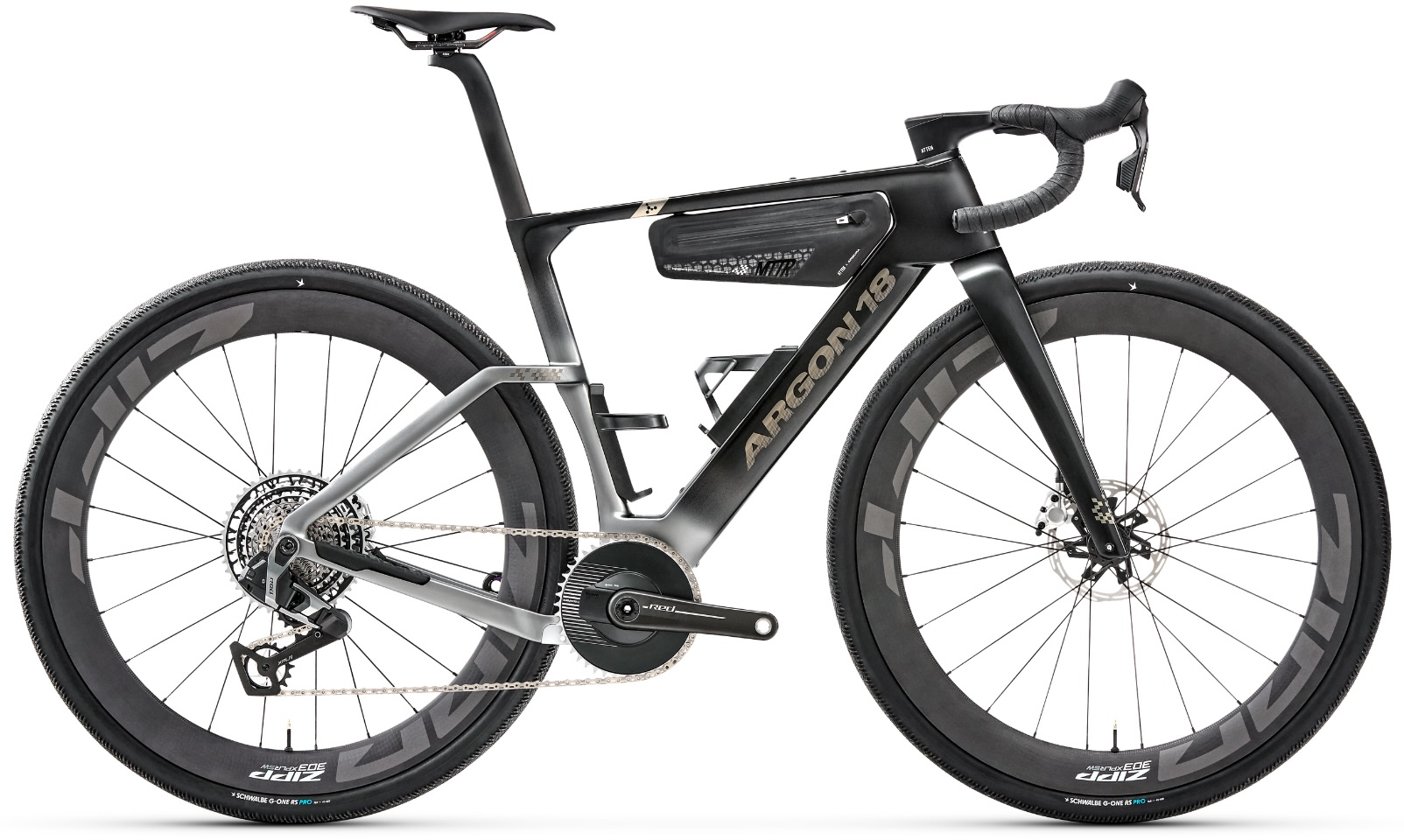
The Argon 18 Anti Matter doesn’t just have one of the boldest names in cycling; it also backs it up with impressive aerodynamic performance in independent wind tunnel tests.
According to Argon 18, the Anti Matter’s development involved more than 800 hours of CFD analysis and 45 hours of wind tunnel testing. The result is a frame featuring a deep head tube, a large truncated downtube, and narrow dropped seat stays. Even the bottle cages received aerodynamic attention, sitting flush against the frame and partially shielded by the downtube to improve airflow. Argon 18 also claims the dedicated frame bag shown above adds no aerodynamic penalty.
The aerodynamic focus continues with a fully integrated cockpit designed to reduce frontal area and clean up airflow around the rider, helping the bike achieve its impressive wind tunnel results.
The Anti Matter offers a generous 55 mm tyre clearance. And the low-mounted seat stays and their horizontal junction with the seat tube are also intended to provide some vertical compliance.
Pinarello Dogma GR

Pinarello has a long history of developing exceptionally fast bicycles. The company has produced some of the quickest time trial and track bikes ever made, with riders such as Filippo Ganna using them to regularly win at the highest level, including setting the Hour Record.
The Dogma GR brings that same aerodynamic focus to gravel racing. True to Pinarello’s design language, the frame features the brand’s distinctive wavy tube profiles and asymmetric shaping. While the aesthetics may divide opinion, the wind tunnel results are difficult to argue with. Like the Anti Matter, the Dogma GR finished within the margin of error of being the fastest gravel bike tested by CyclingNews.
The main compromise is tyre clearance. With room for tyres up to 45 mm wide, the Dogma GR is better suited to a mix of tarmac and smoother gravel roads.
Ridley Kanzo Fast
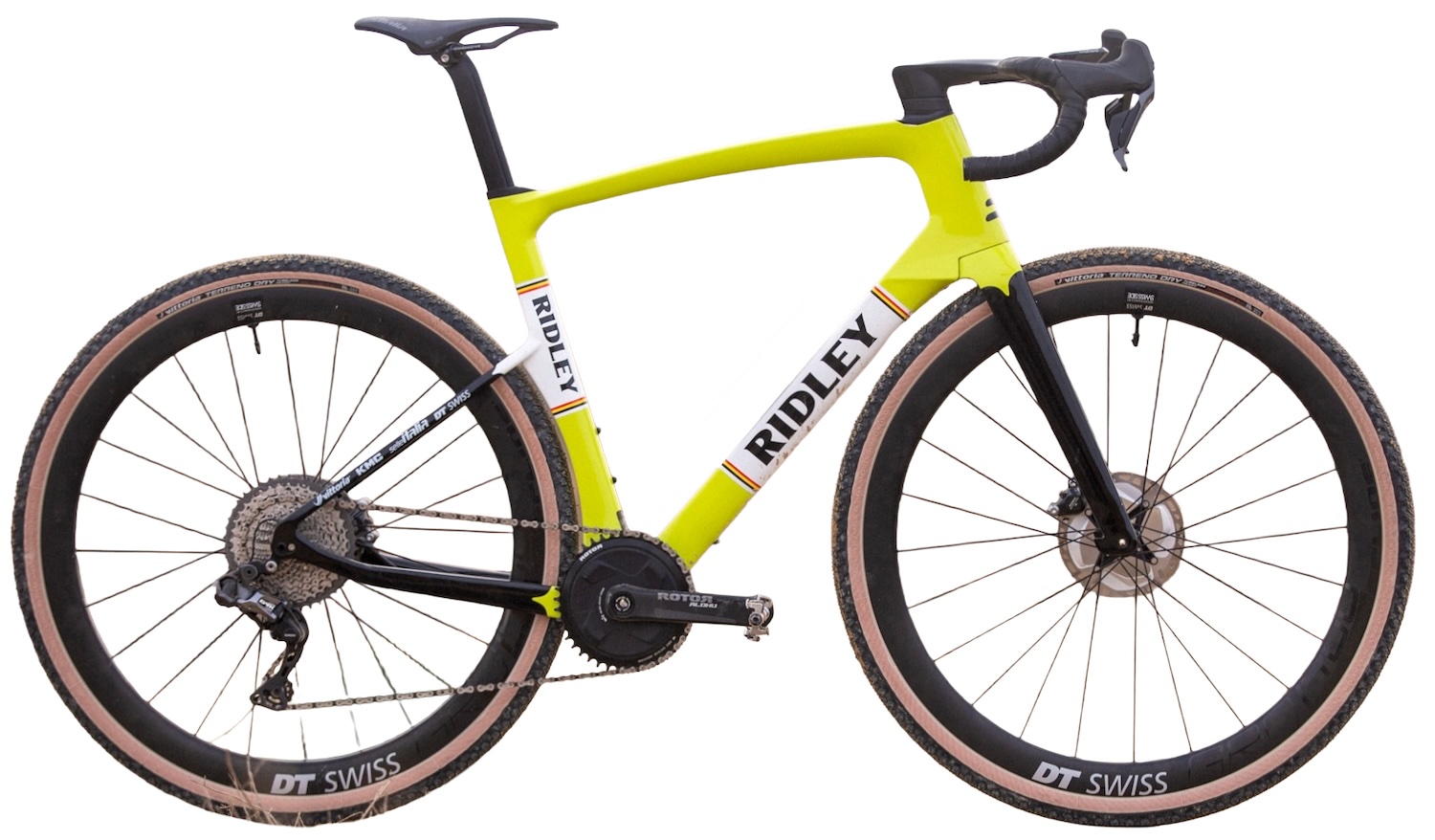
Ridley was one of the earliest brands to take gravel-bike aerodynamics seriously, and its long-term focus on the category is reflected by the fact that no fewer than three Ridley models feature in this article!
The Kanzo Fast was Ridley’s original aero gravel race bike, developed with events such as Unbound firmly in mind. At the time (2020), it represented one of the most comprehensive attempts to apply road-bike aerodynamic principles to gravel racing.
The frame features deep, narrow tube profiles, smooth integration between the fork, frame, and cockpit, heavily dropped seat stays, and a seat tube shaped to shield the rear wheel from the airflow. Combined, these features helped make the Kanzo Fast the fastest gravel bike in TOUR Magazine’s GST wind tunnel testing.
Its main limitation today is tyre clearance. As the oldest bike in this guide, the Kanzo Fast is restricted to 42 mm tyres, leaving it well behind the latest generation of gravel race bikes. As a result, it’s best suited to mixed-surface riding, smoother gravel roads, and races with a significant amount of pavement rather than the roughest modern gravel courses.
REAP Type 300
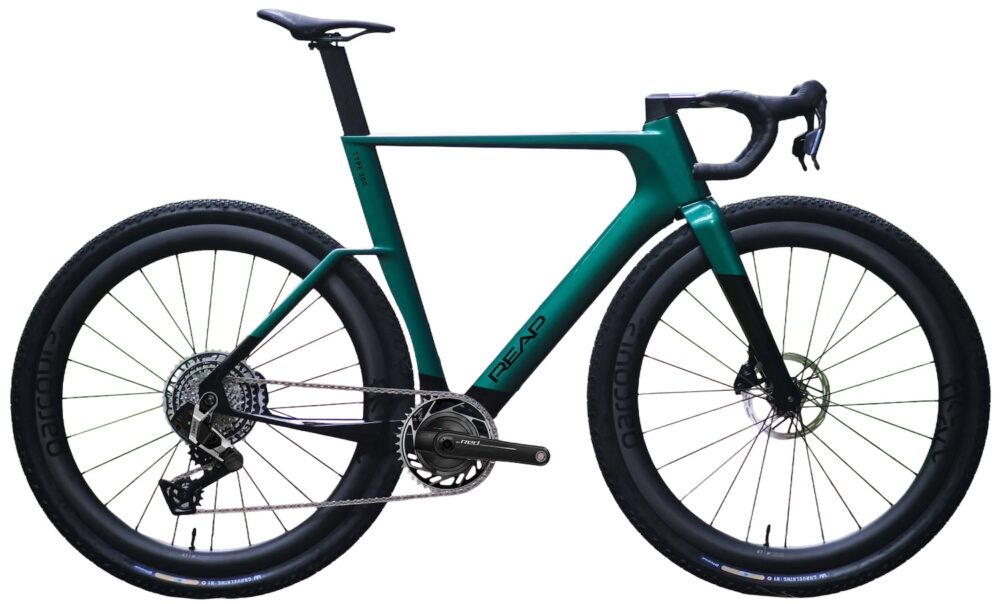
The REAP Type 300 features one of the most aggressive aerodynamic designs of any gravel bike currently available. Deep tube sections, sharp transitions, and tightly radiused edges make its intentions immediately obvious. Based on the available wind tunnel data, those design choices appear to be paying off.
Much of the aerodynamic thinking behind the Type 300 has been carried over from REAP’s Vekta road bike, helping to explain its strong performance. The frame employs many of the same principles seen on modern aero road bikes, including truncated tube profiles, carefully managed airflow around key frame junctions, and a highly integrated overall design.
For those unfamiliar with the brand, REAP specialises in high-performance, made-to-order bicycles that are designed and manufactured in the UK. The company uses carbon fibre reinforced with natural fibres, combining advanced composite engineering with a distinctive manufacturing approach.
Despite its aerodynamic focus, the Type 300 offers clearance for tyres up to 53 mm wide, putting it firmly in line with the requirements of modern gravel racing. It’s also one of the few bikes here to retain road Q-factor dimensions, with a narrower distance between the crank arms than most gravel bikes. That’s particularly impressive given the combination of short chainstays and generous tyre clearance, two design requirements that typically push gravel bikes toward wider crank spacing.
3T RaceMax 2 Italia

3T was one of the pioneers of aero gravel bike design, so it’s no surprise to see its bikes perform above average in wind tunnel testing. The RaceMax 2 incorporates a number of aerodynamic features, including a notably wide 75 mm downtube designed to shield a water bottle and cage from the airflow. The downtube also features a subtle front-wheel cutout, a design element more commonly seen on time trial bikes.
At the rear, the seat tube closely follows the contour of the wheel to reduce drag while helping keep the chainstays short. The RaceMax 2 offers clearance for tyres up to 51 mm wide, which should be sufficient for the vast majority of gravel riders and race courses.
The RaceMax 2 Italia frameset is handmade in Italy using resin transfer moulding (RTM), a manufacturing process that differs from conventional carbon frame production. Dry-woven, filament-wound carbon fibre is placed into the mould before resin is injected and cured. Proponents of RTM claim it allows for more consistent resin distribution, a lower likelihood of internal defects, and reduced manufacturing waste.
3T has also been ahead of the curve in gravel wheel aerodynamics. Since 2020, the company has offered wheelsets with a 29 mm internal rim width, a dimension specifically optimised for modern high-volume gravel tyres. The wider rim helps maintain smoother airflow around the tyre-wheel interface, improving aerodynamic efficiency compared to narrower designs. The CyclingNews wind tunnel data lends support to this approach, showing that 3T’s wheels remain highly competitive aerodynamically when paired with 50 mm tyres, despite being several years old and facing competition from the latest generation of gravel-specific wheelsets.
Fastest Aero Gravel Bikes (Unconfirmed)
BMC Kaius 01
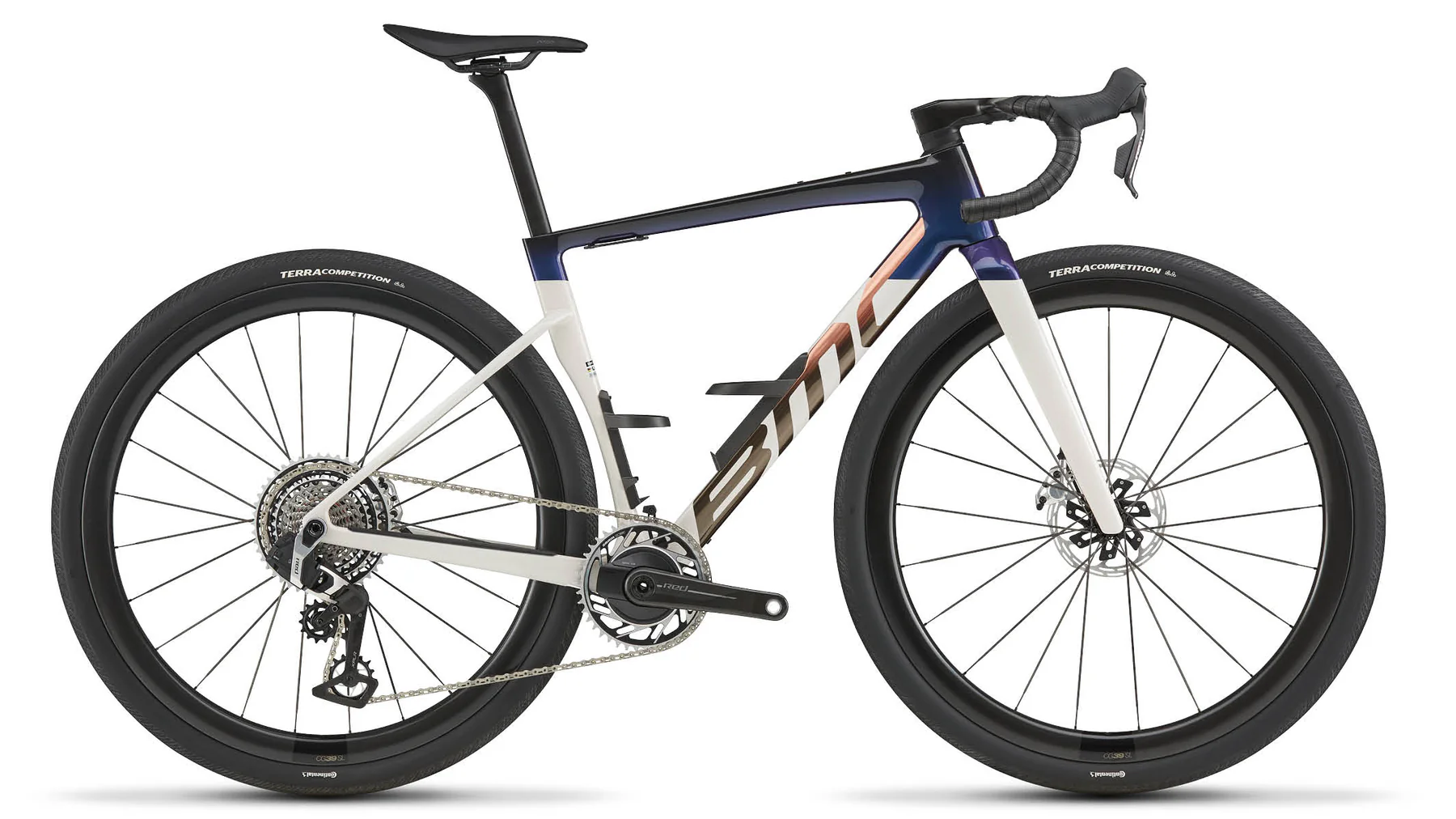
The BMC Kaius 01 combines a low frame weight with a high aerodynamic efficiency. And despite being one of the lightest framesets here, TOUR Magazine’s testing also found it to be among the stiffest both laterally and torsionally.
The frame incorporates many of the features now common on top-tier aero gravel bikes: truncated aero tube profiles, dropped seat stays, and a seat tube cutout that partially shields the rear wheel. Up front, the integrated cockpit uses a narrow frontal profile and aero shaping to save additional watts. This bike should be quick in the wind tunnel.
A recent update has also brought the Kaius 01 in line with modern gravel racing trends by increasing tyre clearance to 52 mm. That gives riders the option to run the larger-volume tyres that are becoming increasingly common at the highest levels of gravel competition.
Cannondale Super X

The Cannondale SuperX is another potentially fast aero gravel bike. Much of its design appears to draw inspiration from the surprisingly aero SuperSix EVO road bike, a model that has consistently performed well in independent wind tunnel testing.
While Cannondale hasn’t published specific aerodynamic figures beyond describing the bike as “super aero”, several design features point to its commitment to reducing drag. Most notable are the bike’s leading-edge surfaces, which are the head tube, fork, and cockpit. These have all been carefully shaped to improve airflow around the front of the bike, where aerodynamic gains are often easiest to achieve.
Like many of Cannondale’s performance bikes, the SuperX also places a strong emphasis on comfort. The seat tube, rear triangle, and D-shaped seatpost are engineered to provide controlled vertical flex, helping the bike absorb vibrations and impacts. This is important on gravel surfaces, where improved system compliance may not only increase comfort but also help maintain speed while reducing rider fatigue and energy expenditure.
Tyre clearance is good, although slightly behind the newest generation of gravel race bikes. The SuperX accommodates tyres up to 48 mm wide at the rear and 51 mm at the front, which should still be more than adequate for the vast majority of gravel surface conditions.
Canyon Grail
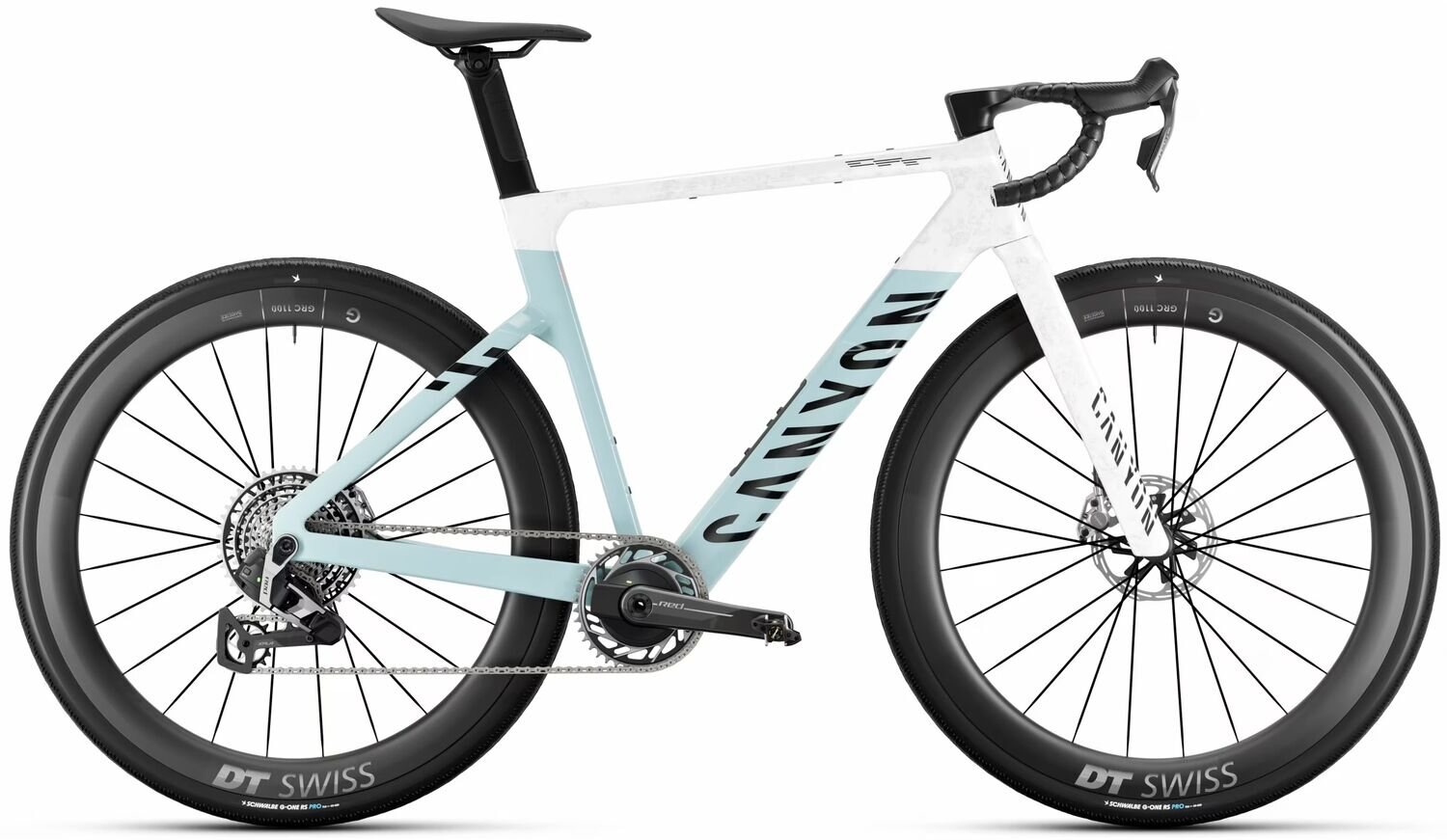
With a notably deep head tube, downtube, and fork, the latest-generation Canyon Grail clearly draws inspiration from Canyon’s Aeroad and Endurace road bikes, both of which have proven exceptionally fast in independent wind tunnel testing.
Canyon has now confirmed the Grail’s aero performance, with wind-tunnel testing showing the new bike is 5.7 watts faster than the previous-generation Grail at 35 km/h when both are fitted with 40 mm tyres. Remarkably, the new Grail is still claimed to be faster when fitted with a 55 mm tyre.
The frame officially clears tyres up to 57 mm (2.25″) front and rear, with Canyon specifying more than 4 mm of clearance to the tyre under ISO standards. This gives the new Grail the magic combination of aerodynamic optimisation and generous tyre clearance, which appear to be the two biggest trends in modern gravel racing.
Cervelo Aspero 5

Cervélo has long been one of the industry’s leaders in aerodynamic development, with much of the brand’s reputation built on extensive wind tunnel testing. Drawing inspiration from the highly aerodynamic S5 road bike, the Áspero-5 brings many of those same speed-focused design principles to gravel racing.
The frame has a range of aerodynamic features, including deep profiles on the head tube and downtube, a seat tube that closely follows the curvature of the rear wheel, slender fork blades, an hourglass-shaped head tube, and a narrow wing-shaped handlebar. Combined, these elements create one of the more overtly aero-focused gravel bikes on the market.
The main limitation of the Áspero-5 by modern standards is tyre clearance. With room for tyres up to 45 mm wide, it gives away as much as 12 mm to some of the latest gravel race bikes. As a result, it’s likely best suited to smoother gravel roads, where its aero advantages can be fully exploited without the need for the largest tyre sizes.
Factor Ostro Gravel

The Factor Ostro Gravel incorporates significantly more aero shaping than a typical gravel bike, and given Factor’s strong track record in wind tunnel development, it’s reasonable to expect it to be faster than most gravel bikes on the market.
The frame features a deeper, truncated head tube profile, tight integration between the fork crown and frame, dropped seat stays, an aero seatpost, and a subtle rear-wheel cutout in the seat tube. Individually, these features may offer modest gains, but together they create a bike clearly designed with aerodynamic efficiency in mind.
Like the Cervélo Áspero-5, however, the Ostro Gravel’s 45 mm tyre clearance is beginning to look a little conservative compared to the latest generation of gravel race bikes, many of which now accommodate tyres exceeding 50 mm. That said, for riders spending significant time on tarmac, hardpack gravel, and smoother race courses, 45 mm remains more than adequate and may even be the sweet spot for many applications.
Felt Breed
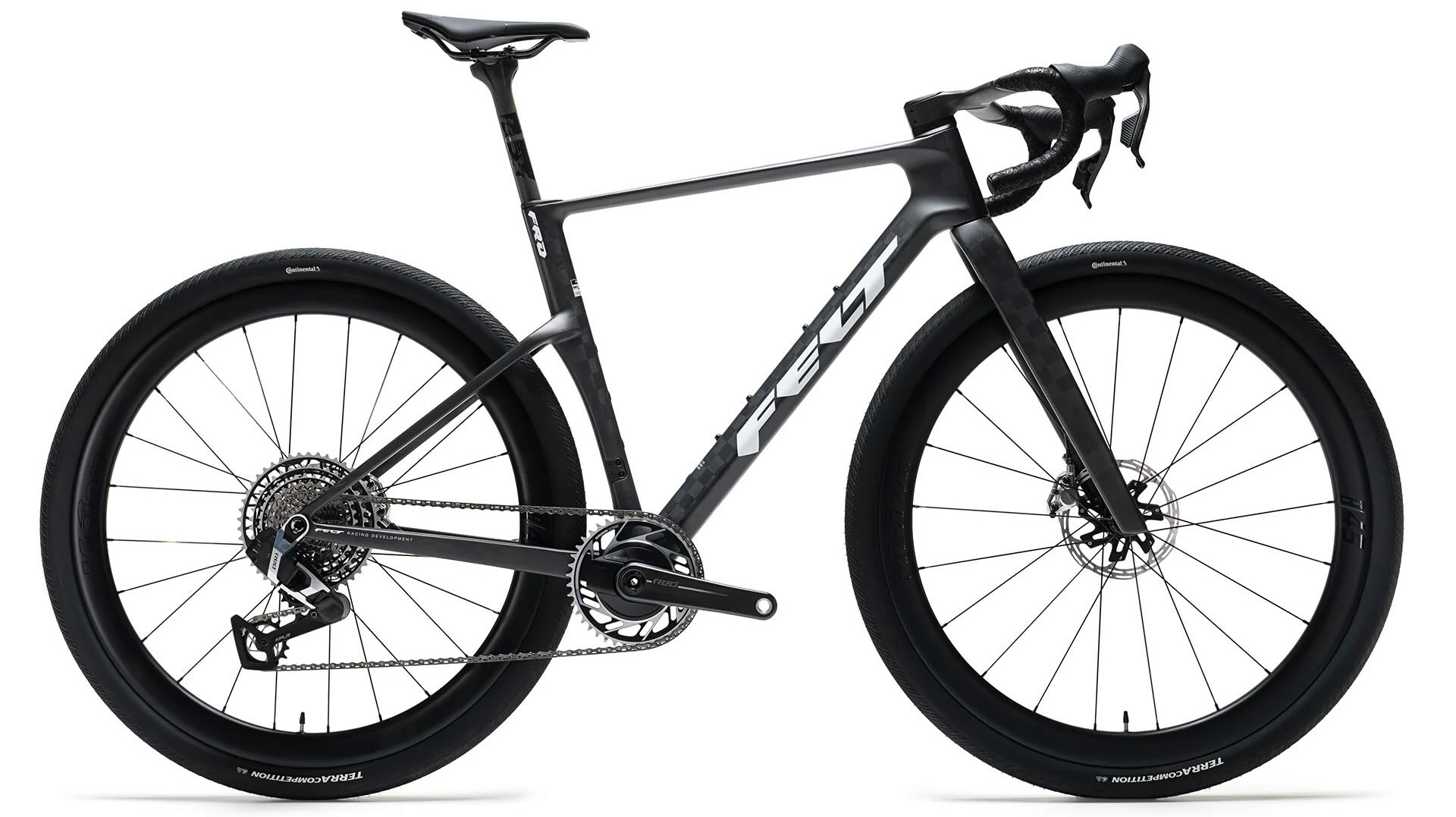
Felt has been spending plenty of time in the wind tunnel lately. The company recently launched its highly aerodynamic FRD Nexar road bike, and many of the lessons learned there appear to have influenced the latest Breed gravel bike. Given Felt’s long history in aero development, this focus on speed comes as little surprise.
Rather than applying aggressive aero shaping throughout the frame, Felt appears to have concentrated its efforts on the bike’s leading-edge surfaces. The cockpit, fork, and head tube are all notably slender, helping to minimise the frontal area exposed to the wind. This targeted approach allows the Breed to balance aerodynamic efficiency with exceptionally low weight. In fact, at just over 7 kg (15 lb) in its top specification, it’s one of the lightest complete gravel bikes available, second only to the S-Works Crux.
The new Breed also embraces the trend toward wider gravel tyres, offering clearance for up to 54 mm at the front and 52 mm at the rear. Combined with a standard 27.2 mm round seatpost (typically one of the more compliant seatpost designs), the bike should deliver excellent comfort on rough surfaces.
Ridley ASTR RS

Ridley leaves little doubt about the purpose of the ASTR RS. This is a dedicated aero gravel race bike, with the frameset, cockpit, and wheels all designed to minimise drag and maximise speed.
The ASTR RS effectively replaces the Kanzo Fast, retaining its aerodynamic focus while bringing the bike up to modern gravel standards with 52 mm tyre clearance. This allows riders to take advantage of the larger tyre sizes that are increasingly proving faster on rough and demanding race courses.
One of the fastest aspects of the ASTR RS is the cockpit. The handlebar measures just 360 mm wide at the hoods to reduce frontal area and aerodynamic drag, while a pronounced flare creates a much wider stance in the drops, improving control when the speeds are high and the terrain is rough.
Ridley Kanzo Fast 2.0
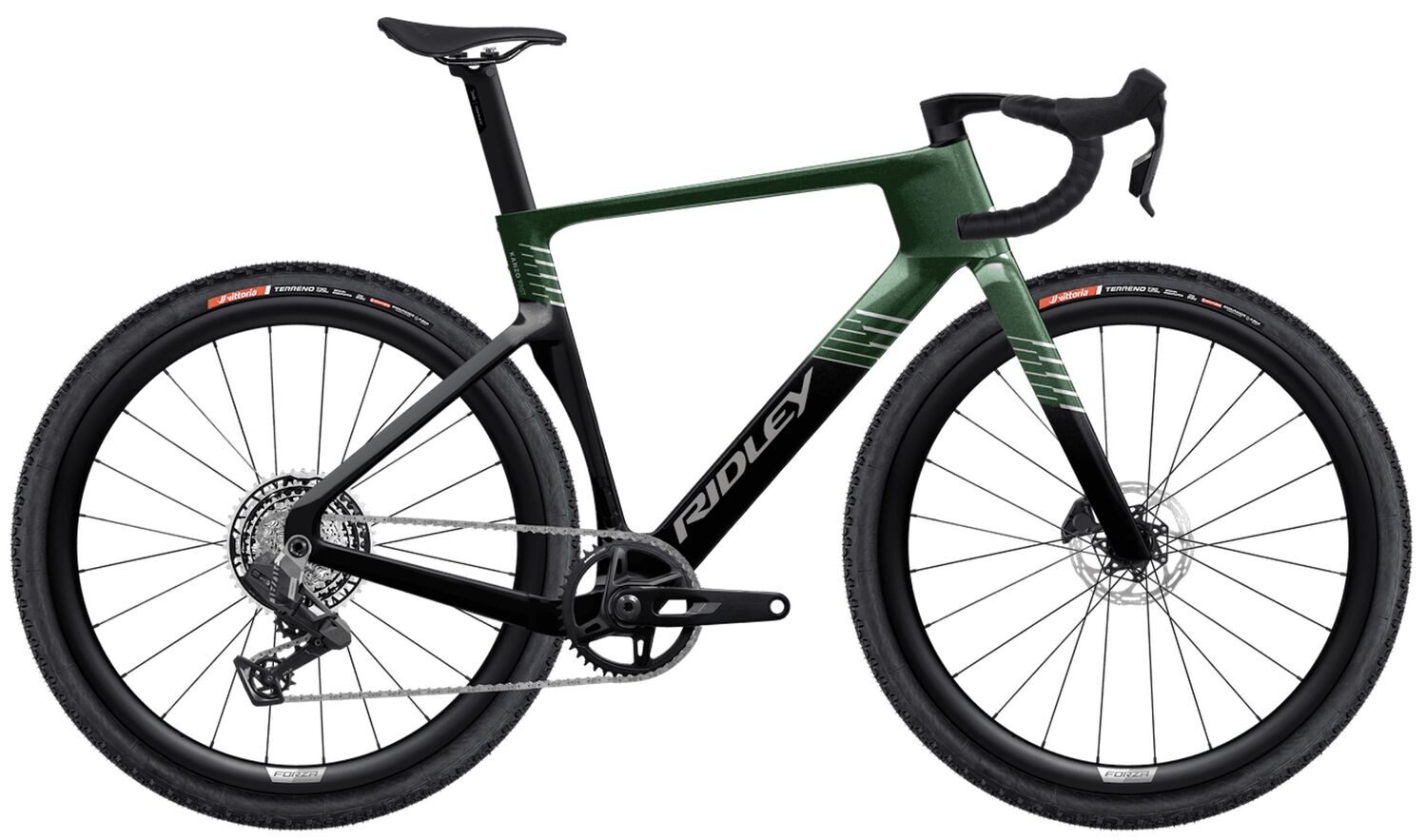
The Ridley Kanzo Fast 2.0 has been appearing beneath pro riders at some of the world’s biggest gravel races, and the bike’s design leaves little doubt about its priorities.
With extremely deep tube profiles throughout the frame and a narrow integrated cockpit similar to that of the ASTR RS, the Kanzo Fast 2.0 is Ridley’s most aerodynamically focused gravel bike yet.
This bike also embraces the latest trend in gravel race bike design, offering clearance for tyres up to 58 mm wide. That’s a figure increasingly adopted by forward-thinking brands as larger-volume tyres continue to prove faster and more efficient on rough gravel courses.
My only reservation concerns the deep aero seatpost. A similarly shaped seatpost on the Ridley Noah Fast road bike was measured to require roughly three times more force to flex than many competing designs. If the Kanzo Fast 2.0 follows a similar path, comfort could become extra dependent on wide, supple tyres and lower tyre pressures to absorb vibrations and impacts from rough terrain.
SEKA ExAero GR
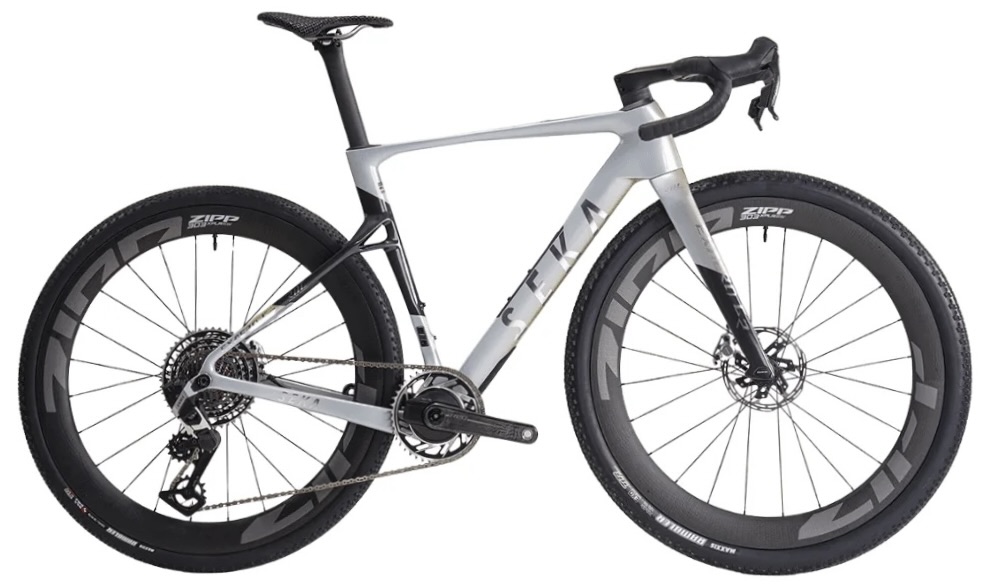
SEKA may not yet be a widely recognised name in gravel cycling, but the brand has clearly invested heavily in aerodynamic development. Its Spear road bike has undergone extensive wind tunnel testing, placing it among the top tier of aero road bikes, just behind some of the fastest designs ever produced.
Based on those same design principles, the SEKA ExAero GR is expected to deliver impressive aerodynamic efficiency. According to the company’s white paper, an ExAero GR fitted with 45 mm tyres requires approximately 10 watts more power to maintain 40 km/h than a Spear running 28 mm tyres. If accurate, that would make it an exceptionally fast gravel bike given the much larger tyre volume.
One of the more distinctive design elements is the “Wind Eye”, located where the seat stays meet the seat tube. This opening is intended to manage airflow in a turbulent region of the frame. On the Spear road bike, SEKA claims it reduces aerodynamic drag by approximately 3 watts at 40 km/h.
The frame itself is a one-piece monocoque construction, which is relatively uncommon in gravel bikes, where multi-piece layups are more typical. This approach is technically challenging and expensive to manufacture, but SEKA claims that, for a given frame weight, it improves load-path continuity and results in greater stiffness.
SEKA also states that its carbon seatpost allows up to 16 mm of vertical movement, with a stiffness of 106 N/mm. That makes it around 25% more compliant than a typical round alloy seatpost, making it similar in comfort to D-shaped seatposts commonly used by brands such as Giant, Cannondale, and BMC.
Finally, the ExAero GR offers tyre clearance up to 56 mm at the front and 52 mm at the rear. This places it firmly among the most progressive gravel race bikes, making it suitable for a wide range of course conditions.
Storck Fascenario X
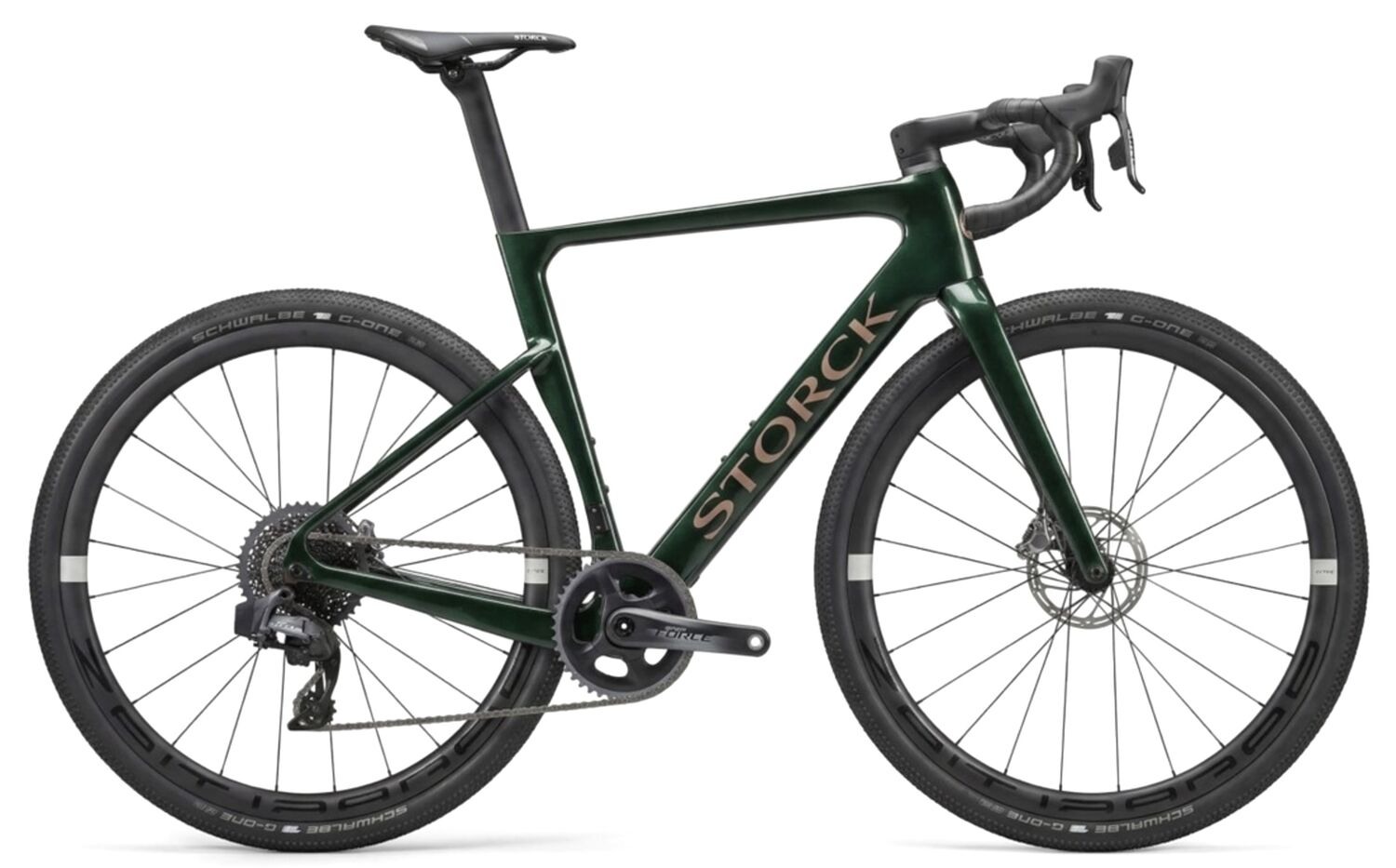
The Storck Fascenario X is the latest gravel bike from the German brand Storck, and it arrives at a surprisingly competitive price point, starting at €5,699. Even the entry-level build comes equipped with a premium 1,299 g carbon wheelset featuring 45 mm deep rims and carbon spokes. These are specifications that are often reserved for much more expensive bikes.
With the Fascenario X, Storck has effectively transplanted the aerodynamic design features and race-focused character of its road bikes into a gravel platform. The frame has a host of aero features, including a deep head tube and fork blades, concealed fork dropouts, a large truncated down tube, dropped seatstays, and a rear-wheel cutout designed to reduce drag.
The Fascenario X is also one of the few gravel bikes that combines clearance for tyres up to 55 mm with compatibility for a 2X drivetrain. That said, fitting a front derailleur reduces the available tyre clearance somewhat. 45 mm tyres fit comfortably, while 50 mm tyres leave relatively little room.
Despite its generous tyre clearance, aerodynamic frame design, and deep wheels, complete bike weights start from an impressively low 7.1 kg. That puts the Fascenario in the same weight class as leading aero gravel bikes from brands such as Specialized, Felt, BMC, and Pinarello.
Van Rysel RCR-G
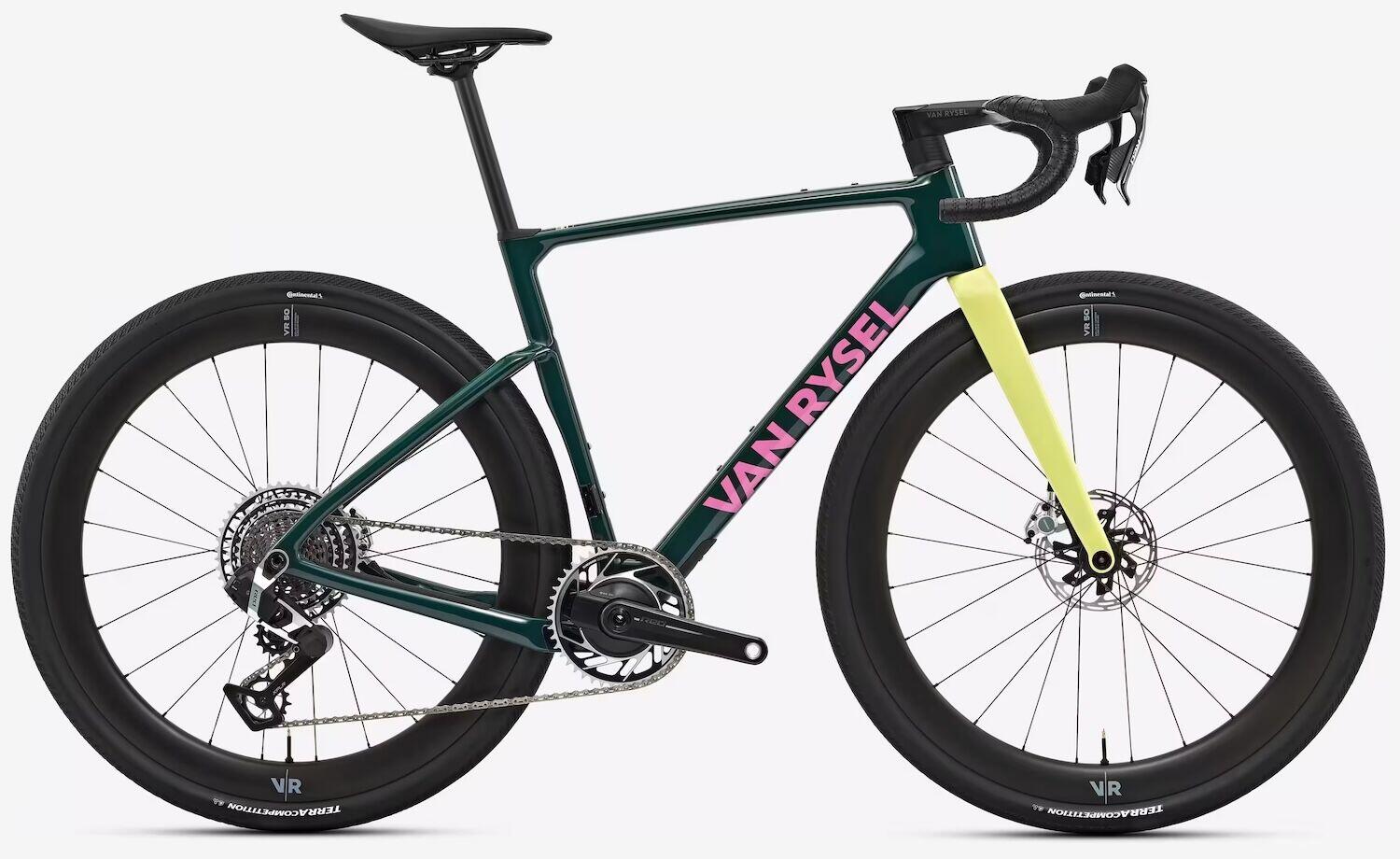
The Van Rysel RCR-G borrows its tube shapes, head tube and fork design from the Van Rysel RCR-R aero road bike. Van Rysel says the gravel frame was developed using extensive CFD analysis, virtual prototyping and wind-tunnel testing.
The head tube, seat tube and wheel clearances were all shaped with aerodynamic efficiency in mind, while still allowing clearance for modern gravel tyres up to 50 mm wide. Higher-spec versions also feature an integrated one-piece handlebar and stem, further reducing drag around the cockpit.
The RCR-G also uses relatively low-stack, long-reach geometry to encourage a low, stretched-out riding position. In essence, it aims to bring much of the aerodynamic efficiency of an aero road bike to gravel, while accommodating wider tyres and the demands of fast gravel racing.
Winspace G5

The Winspace G5 is a new gravel race bike, combining aerodynamic tube shaping with dropped seat stays, fully internal cable routing and a one-piece bar-stem to reduce drag. Winspace tests and validates its bike designs in partnership with Japan’s Fuji Aero Performance Centre and the UK’s Silverstone Sports Engineering Hub wind-tunnel facilities, suggesting that aerodynamic performance was a significant focus during the G5’s development.
This aero focus hasn’t come at the expense of tyre clearance. Winspace claims clearance for tyres up to 58 mm at the front and 53 mm at the rear, allowing the G5 to accommodate the high-volume tyres increasingly used in gravel racing.


