


We really enjoyed our time bike touring Zimbabwe, thanks largely to the warmth of the people and the country’s mix of iconic attractions such as Victoria Falls and Great Zimbabwe.
Years of political and monetary instability have seen Zimbabwe slip from the ranks of a major tourist destination. While it doesn’t have the white-sand beaches of Mozambique or the luxury safaris of Botswana, it has a strong sense of character and a lot to offer those willing to look beyond the usual highlights.
The combination of peaceful backroads and a handful of amazing sights makes Zimbabwe a great bikepacking destination, whether for a multi-week journey or as part of a longer ride across Africa.
Zimbabwe: At a Glance
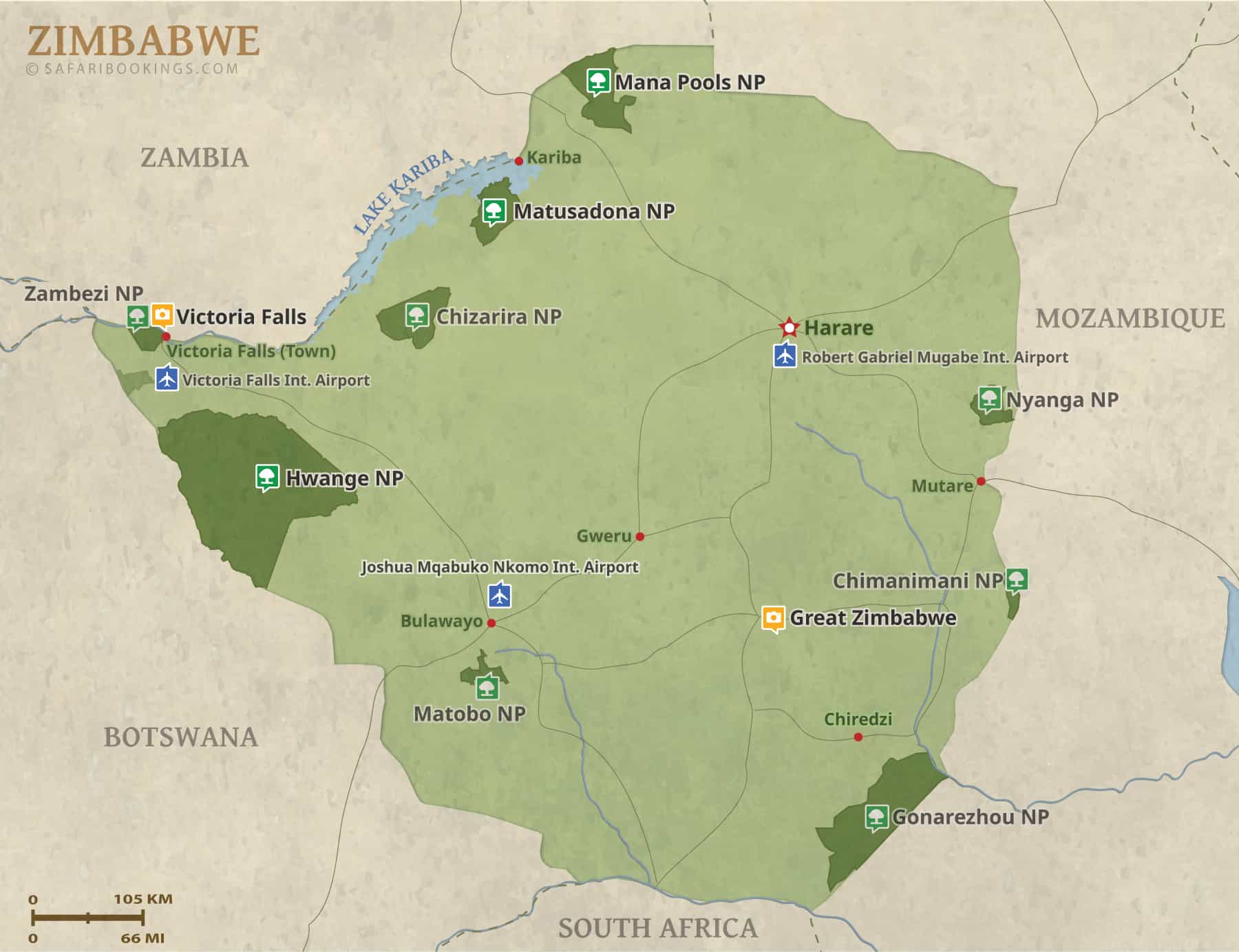
Located in southeastern Africa, Zimbabwe is a landlocked country bordered by South Africa, Botswana, Zambia, and Mozambique. Along its northern border with Zambia lies Lake Kariba, one of the world’s largest man-made lakes, much of which is surrounded by a national park. In terms of size, Zimbabwe is roughly comparable to Germany.
The country’s landscape is divided into four distinct regions. The Highveld plateau forms Zimbabwe’s central spine, stretching from Botswana to Mozambique. On either side, the land falls away into the hotter, drier Middleveld. To the north, it descends toward the Zambezi River, while to the south it slopes toward the Limpopo River. Along the border with Mozambique, the Eastern Highlands are lush and mountainous, with cool, misty forests, waterfalls, and scenic hiking trails. This region offers a dramatic contrast to the savanna interior.
Zimbabwe is one of the most educated countries in Africa, with a literacy rate above 90%. This partly explains why we loved travelling here so much. Even in rural villages, many people spoke excellent English and warmly welcomed us. We often found ourselves in thoughtful conversations covering everything from our motivations for travelling by bicycle to philosophy of life, politics, and how Zimbabwe compares with the rest of the continent.
Zimbabwe also has a young and widely dispersed population. Of its roughly 12 million inhabitants, around 42% are under the age of 15, and about two-thirds live outside the major cities in rural areas. Despite this spread-out population, we still found it easy to wild camp each night, as population density is generally low.
A Country Shaped by Economic Change
Zimbabwe’s recent history continues to shape daily life, from conversations with locals to what you’ll find on supermarket shelves.
In the early 2000s, under Robert Mugabe, the government launched a controversial land reform program that forcibly redistributed land from white commercial farmers to Black Zimbabweans. While intended to address deep historical inequalities, the process was often chaotic and accompanied by violence, with much agricultural expertise and productivity lost along the way. This contributed to a sharp decline in farming output and wider economic contraction.
The years that followed brought international sanctions, political turmoil, and severe economic hardship. Despite Zimbabwe’s rich natural resources and highly educated population, instability has continued to weigh heavily on the country.
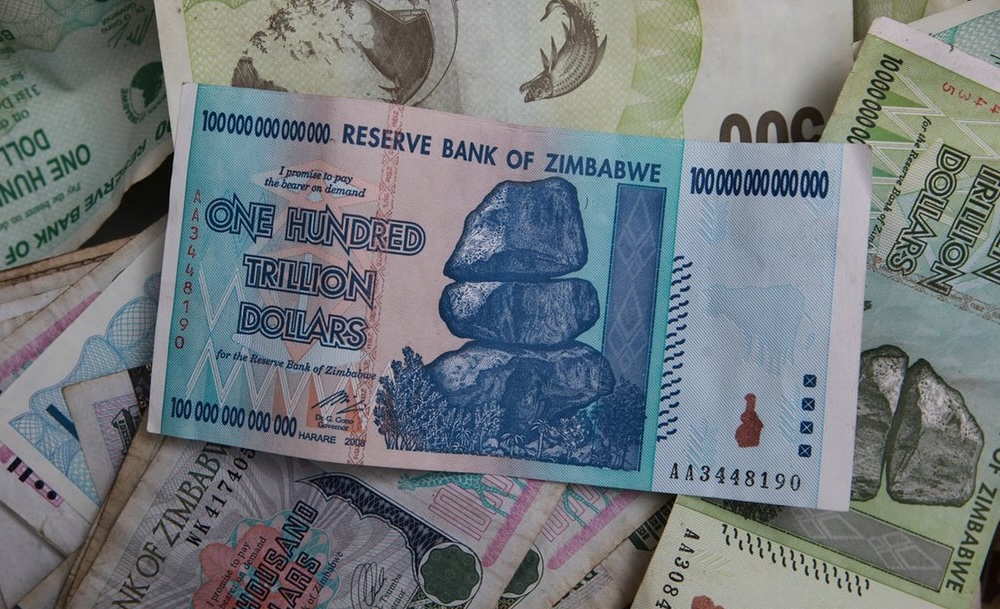
As government deficits grew, authorities printed money to fund spending, triggering one of the worst hyperinflation crises in modern history. At its peak, inflation reached extraordinary levels, with 100 trillion-dollar banknotes eventually issued. In 2009, the Zimbabwean dollar was abandoned after effectively collapsing.
When we visited in 2024, Zimbabwe had introduced the ZiG (Zimbabwe Gold, also abbreviated ZWG), its sixth currency attempt since 2009. Prices in shops were listed in ZiG, but due to long-standing distrust of local currencies, many people still preferred cash payments in US dollars or South African rand (ZAR). The good news is that two years on, the ZiG is showing relative stability.
The ability to pay with a credit card was very uncommon, and ATM withdrawal fees could be as high as US $20 on a $200 withdrawal. We also found that most ATMs would not accept our card, despite it working almost everywhere else in Africa.
If you’re visiting, make sure to carry some extra US dollars or South African rand, which will make transactions easier, help you avoid unnecessary fees, and save you the frustration of unreliable ATMs.
Highlights of Zimbabwe
Great Zimbabwe
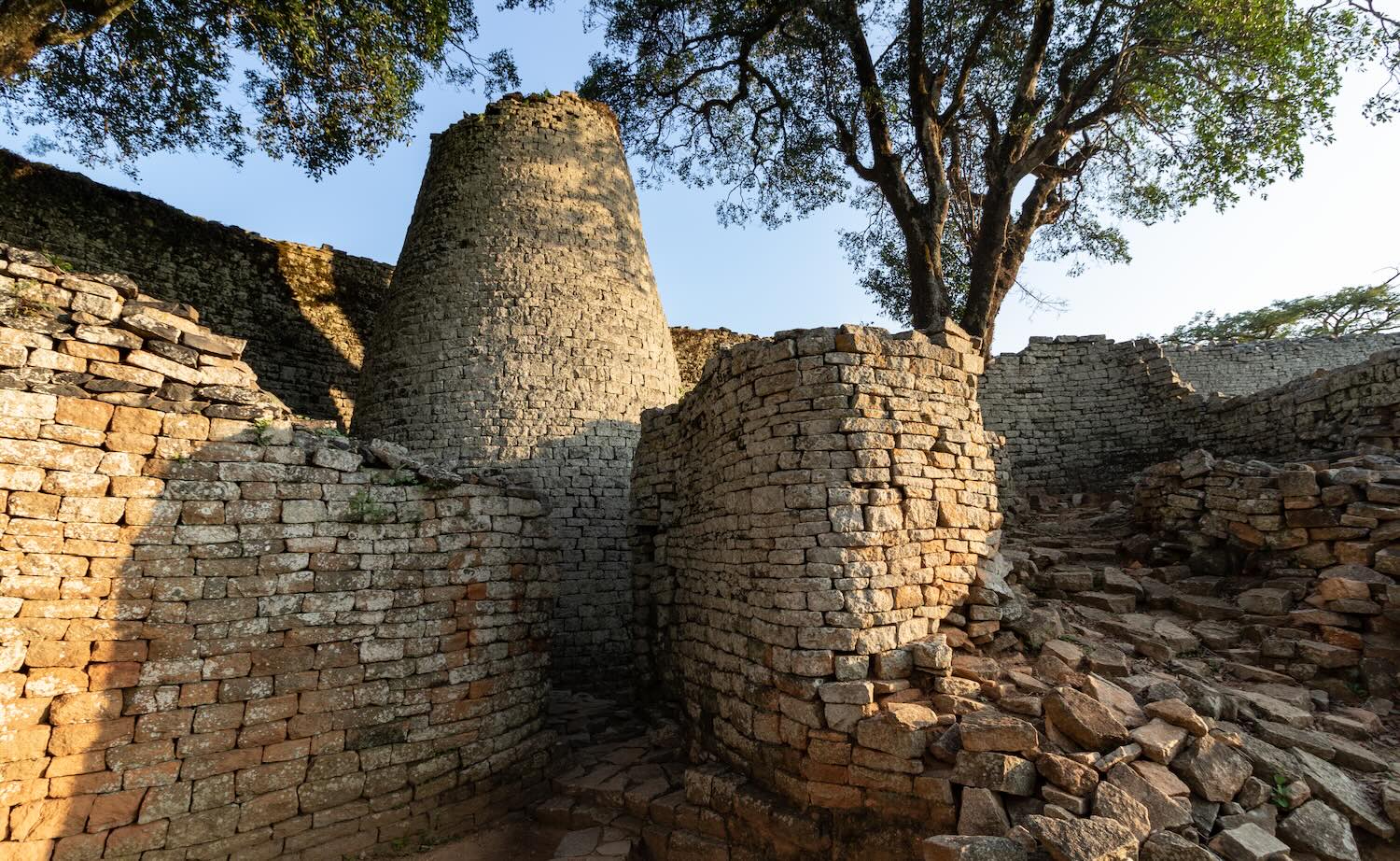
Built between the 11th and 15th centuries AD, Great Zimbabwe is one of Africa’s most remarkable archaeological sites. Its massive dry-stone walls and intricate masonry once formed the heart of a powerful kingdom that controlled trade routes linking southern Africa with the East African coast and beyond.
The wider Lake Mutirikwi area is also well worth exploring, with ancient rock art sites, scenic viewpoints, and several striking churches nearby, including an interesting Italian chapel near Masvingo that was built during World War II.
Victoria Falls
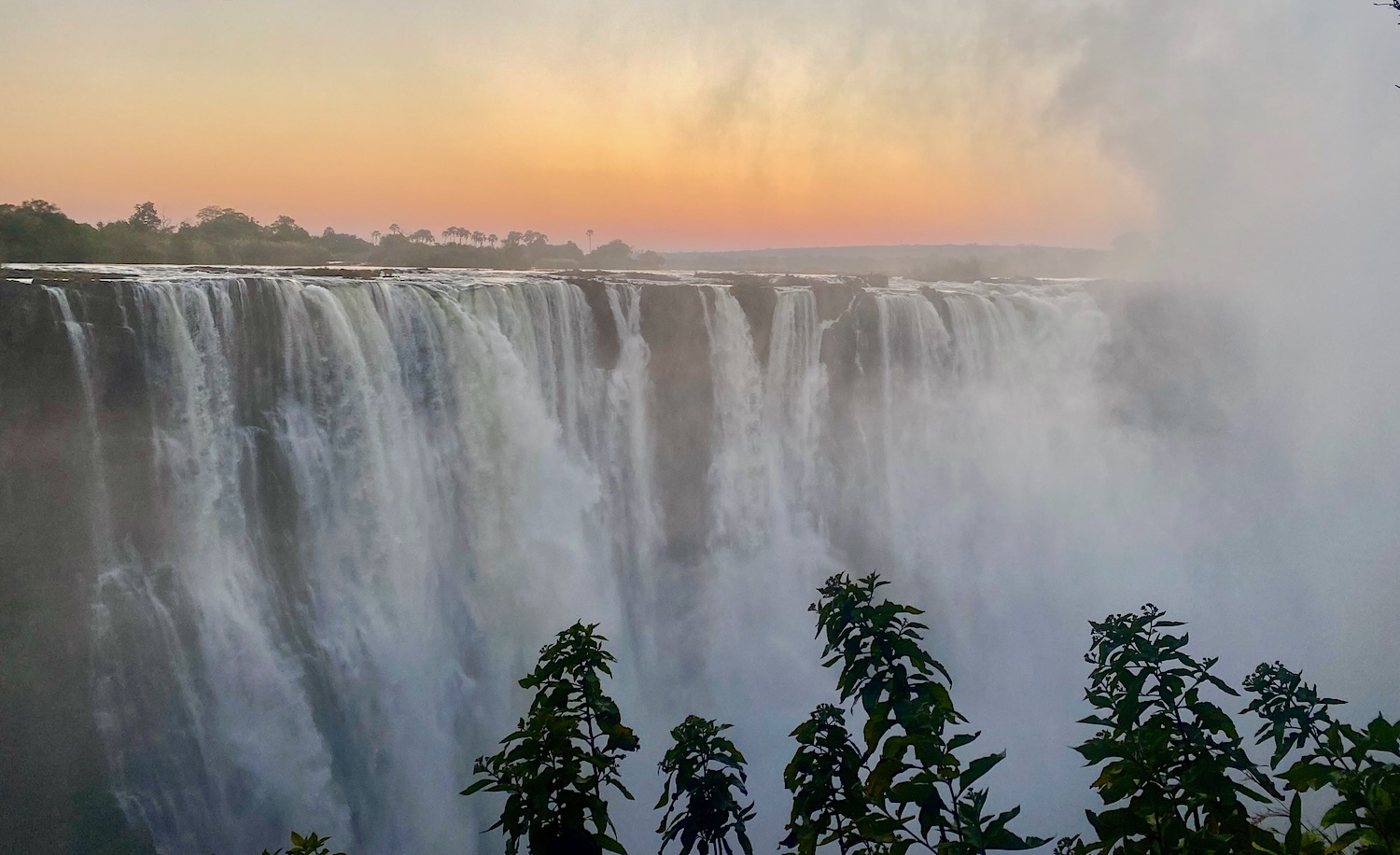
Victoria Falls, on the border of Zimbabwe and Zambia, is the largest waterfall in the world by combined width and height. While both sides are worth visiting, the most dramatic panoramic views are generally from the Zimbabwean side. Entrance fees are higher there, but we found it well worth the cost.
The falls are usually at their most spectacular between February and May, shortly after the wet season. Zimbabwe also offers a more developed tourist hub, with excellent restaurants, bars, and viewpoints above and below the gorge. The Zambian side is quieter, more affordable, and offers a different perspective, though facilities are more basic.
Hwange National Park
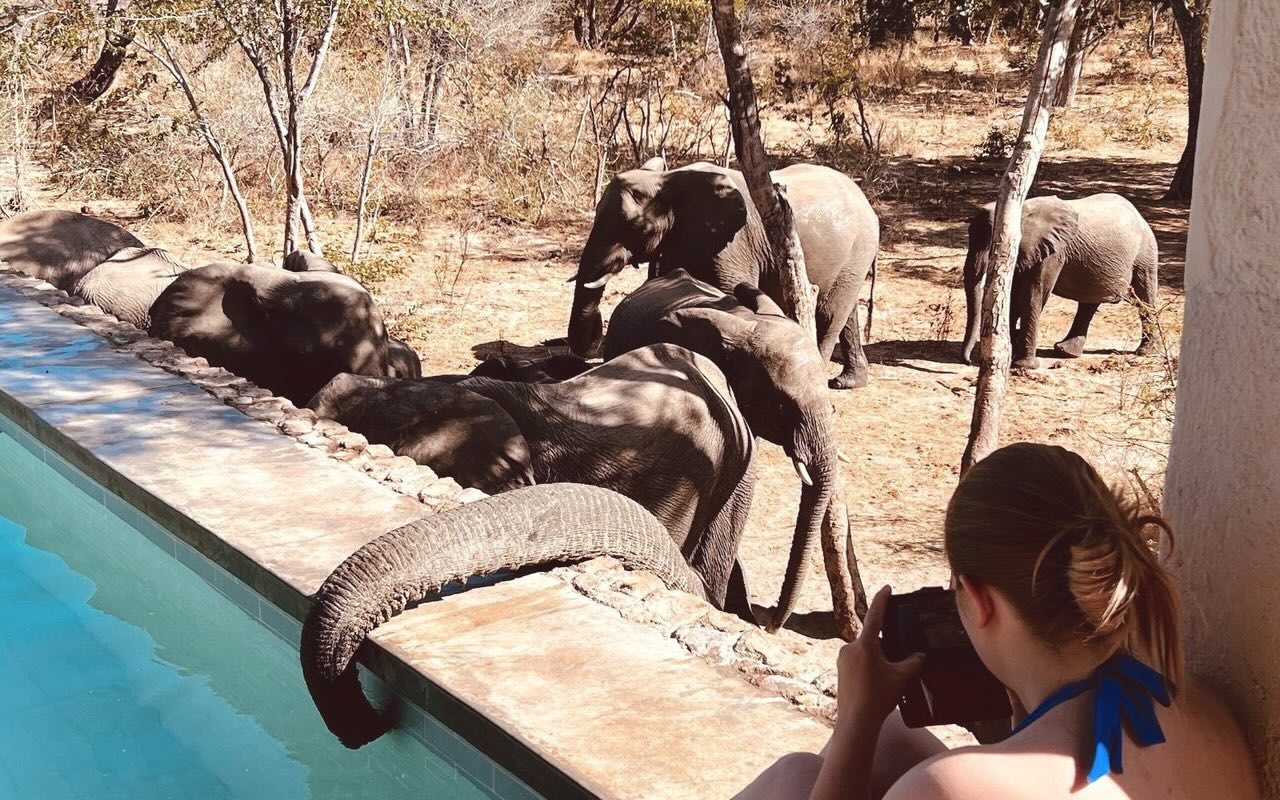
If you’d like to experience a safari, Hwange National Park is one of Zimbabwe’s best options. It’s the country’s largest reserve and lies near the edge of the Kalahari Desert, where sparse vegetation and seasonal wetlands create open grasslands that attract wildlife.
Hwange is especially famous for its large elephant herds and abundant grazing animals. It is also one of the best places in Africa to spot endangered African wild dogs. Lions are regularly seen, and you can usually hear them roaring at night. Leopards and cheetahs are present too, though much harder to find.
One of our most memorable moments in Zimbabwe was staying at Gwango Heritage Resort campground, where elephants came to drink from the second-storey pool. Watching their trunks flop over the edge for a long drink was both surreal and kinda funny.
Chiremba Balancing Rocks
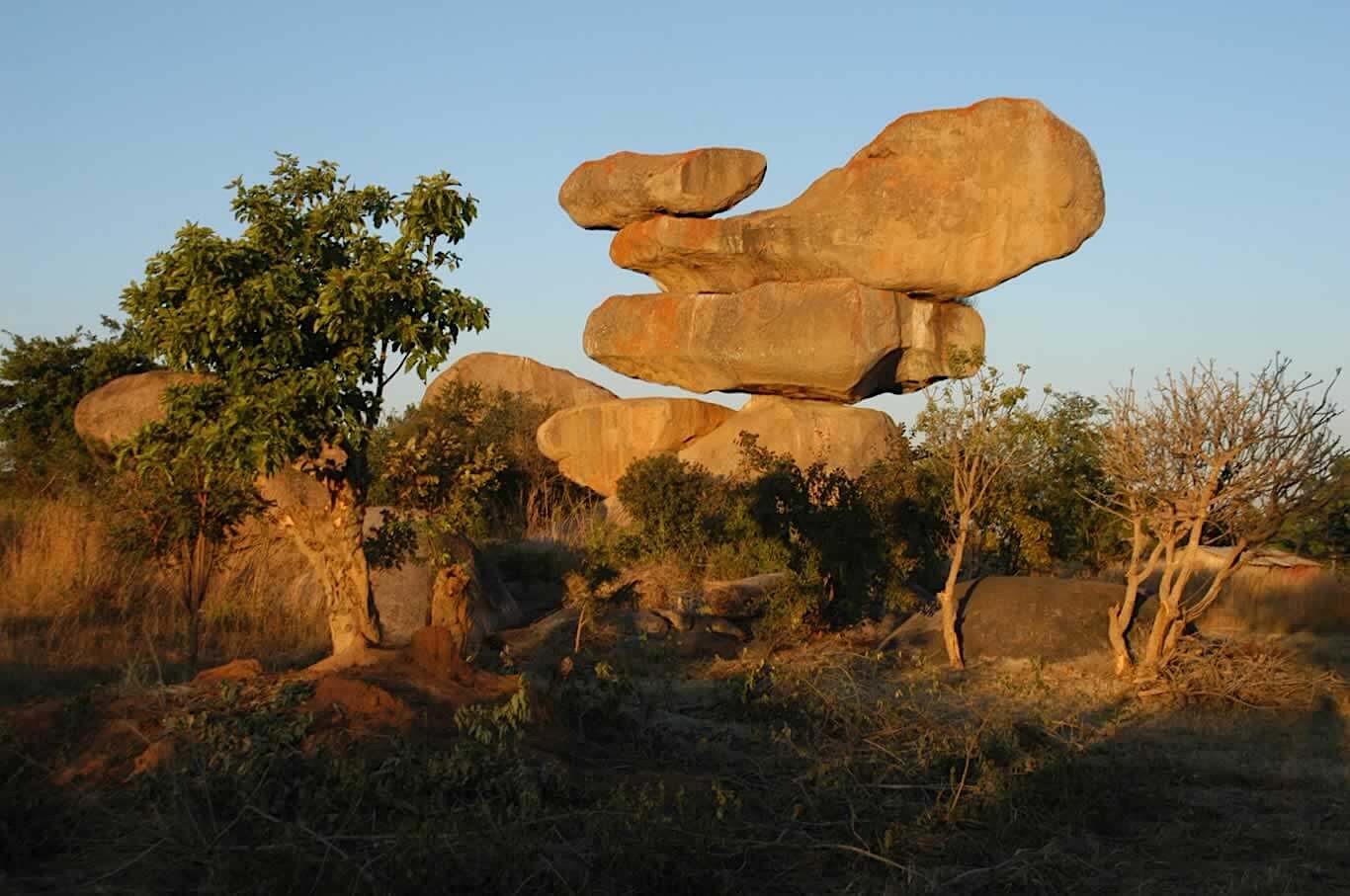
Zimbabwe has several balancing rock formations, but the Chiremba Balancing Rocks are among the most famous and easiest to visit. Their seemingly impossible shapes make you wonder what geological forces placed them so perfectly.
They became internationally recognisable after appearing on Zimbabwean banknotes, including the infamous 100 trillion-dollar note issued during the hyperinflation era. The rocks are located just 13 km south of Harare.
Our Bike Touring Route Through Zimbabwe
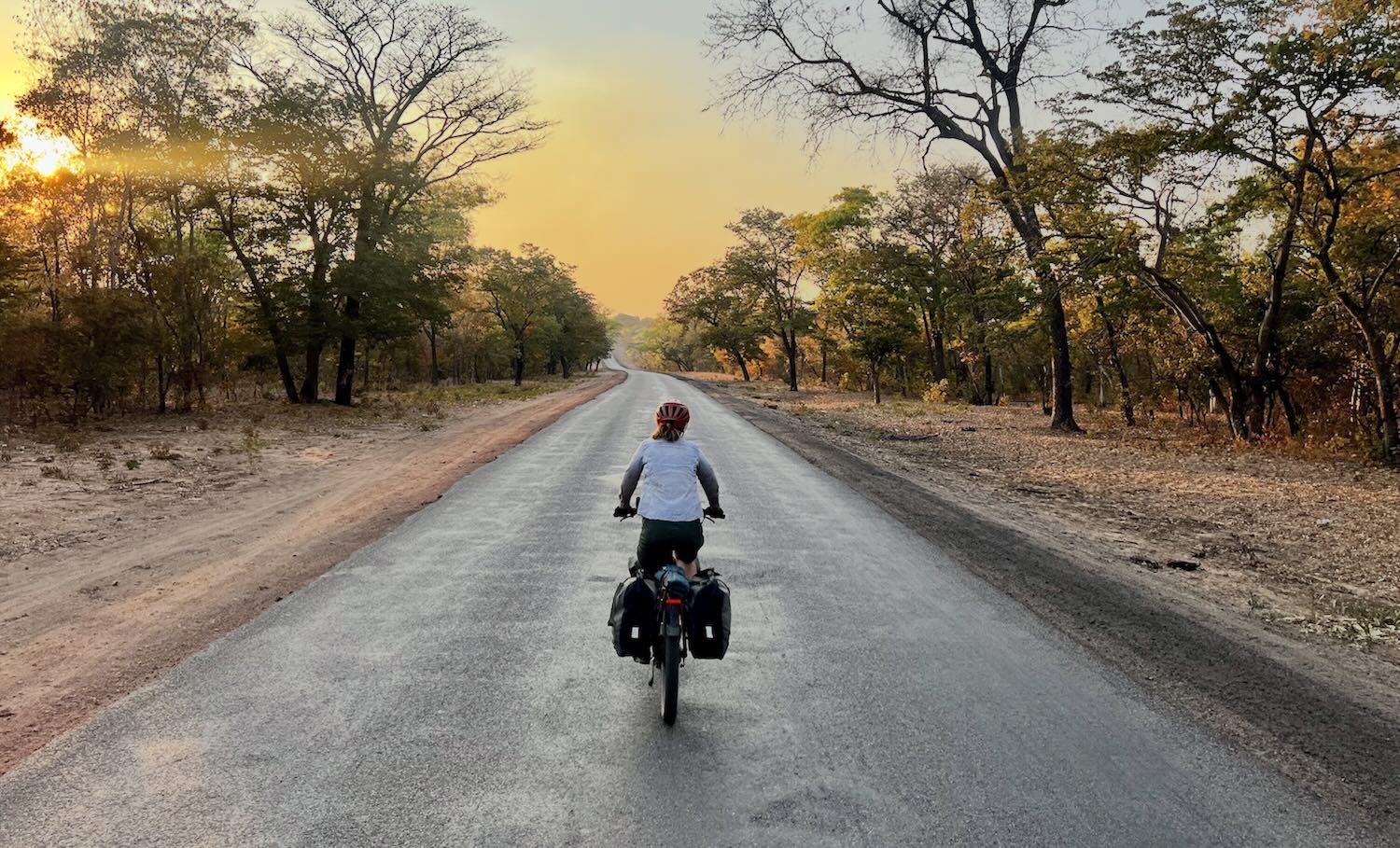
Zimbabwe’s tourist visa is relatively short, allowing only 30 days. We would have happily spent longer exploring this fascinating country, but even within that time, we managed to ride nearly 1,500 km, with around 70% of the route on smaller dirt roads.
We entered from Mozambique at Mutare and began in the lush Eastern Highlands, where coffee plantations and cooler mountain air offered a beautiful introduction to the country. From there, we continued to the hectic capital, Harare, before turning south toward Great Zimbabwe via a network of quiet backroads.
From Great Zimbabwe, we crossed the country toward Hwange National Park, wild camping easily each night and enjoying long stretches of peaceful dirt roads with very little traffic.
Our final push brought us to Victoria Falls. We visited at sunrise to watch the gorge fill with mist and golden light, then celebrated with a gin and tonic on a deck overlooking the Zambezi River, feeling a little like David Livingstone.
We ended our journey in style with one of the most scenic border crossings. The bridge spanning the Zambezi Gorge has sweeping views toward Victoria Falls and beyond.
You can get the GPX file of our tour HERE.
Our Favourite Road in Zimbabwe
The 130 km dirt road between Nkayi and Lupane was one of our favourite rides in Zimbabwe. It passes through an area with almost no villages. It’s quiet, remote, and wonderfully peaceful.
For most of the route, you’re surrounded by lush woodland, with only the occasional farm breaking the scenery. It’s the kind of road where hours can pass with little more than birdsong and the sound of your tyres on the track.
Water can be found in villages a kilometre or so off the route, but you’ll need to carry all the food you’ll need before setting out. While the scenery is beautiful, the surface can also be heavily corrugated, so be prepared to embrace the rattle.
The Best Bike For Zimbabwe
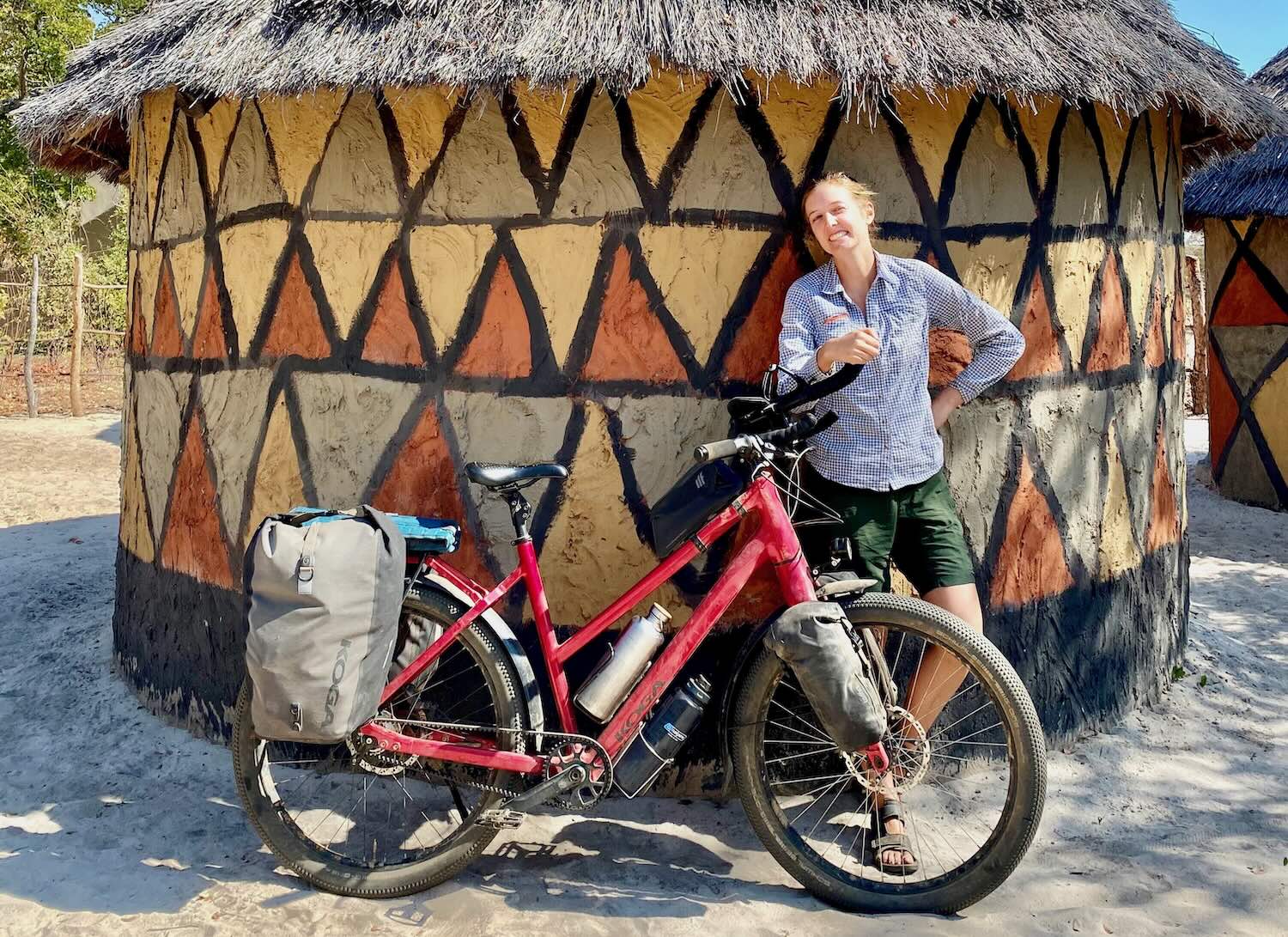
Zimbabwe is relatively flat overall and not especially sandy, so you don’t need an extreme off-road setup. However, dirt roads can be heavily corrugated, while paved roads can be riddled with large potholes.
A gravel bike works for much of the country and is more than capable of handling most routes. Wider tyres will make a noticeable difference to comfort and control, helping smooth out the constant vibration from rough surfaces, as well as allowing you to float over some of the sandier stretches.
Traffic on major roads can be surprisingly intense, as Zimbabwe has some of the busiest roads in sub-Saharan Africa, largely because of heavy truck traffic (especially the A1 in the north). Staying off the tarmac is not only far more enjoyable, but often significantly safer as well.
When To Visit Zimbabwe
Zimbabwe has a generally mild climate, with temperatures rarely rising above 30°C (85°F), making it a good destination for much of the year. October is typically the warmest month, while June is usually the coolest.
If you’re travelling in the middle of the year, don’t underestimate the overnight temperatures. They can become surprisingly cold, especially at higher elevations. During one night of camping, the temperature dropped to -5°C (23°F), and we woke to find our water bottles frozen solid.
The rainy season usually runs from December to March, with the heaviest rainfall in January. If travelling during this period, paved roads are often the easier option, as dirt backroads can become muddy, slow, and difficult to ride when wet.
Food and Water in Zimbabwe
Large towns and cities often have chain supermarkets, but their size can be misleading. While some stores are spacious, product variety can be surprisingly limited. Years of economic instability and sanctions have affected supply chains, so shelves are not always well stocked. One positive, however, is that many of the products available are made locally in Zimbabwe.
In smaller towns, we often found it harder to buy a wide range of fruit and vegetables, along with items such as sauces or other convenience foods. Because of that, we stocked up whenever we had the chance. If you stay closer to the main roads and larger centres, you’ll likely have more options than we did on our backroad route.
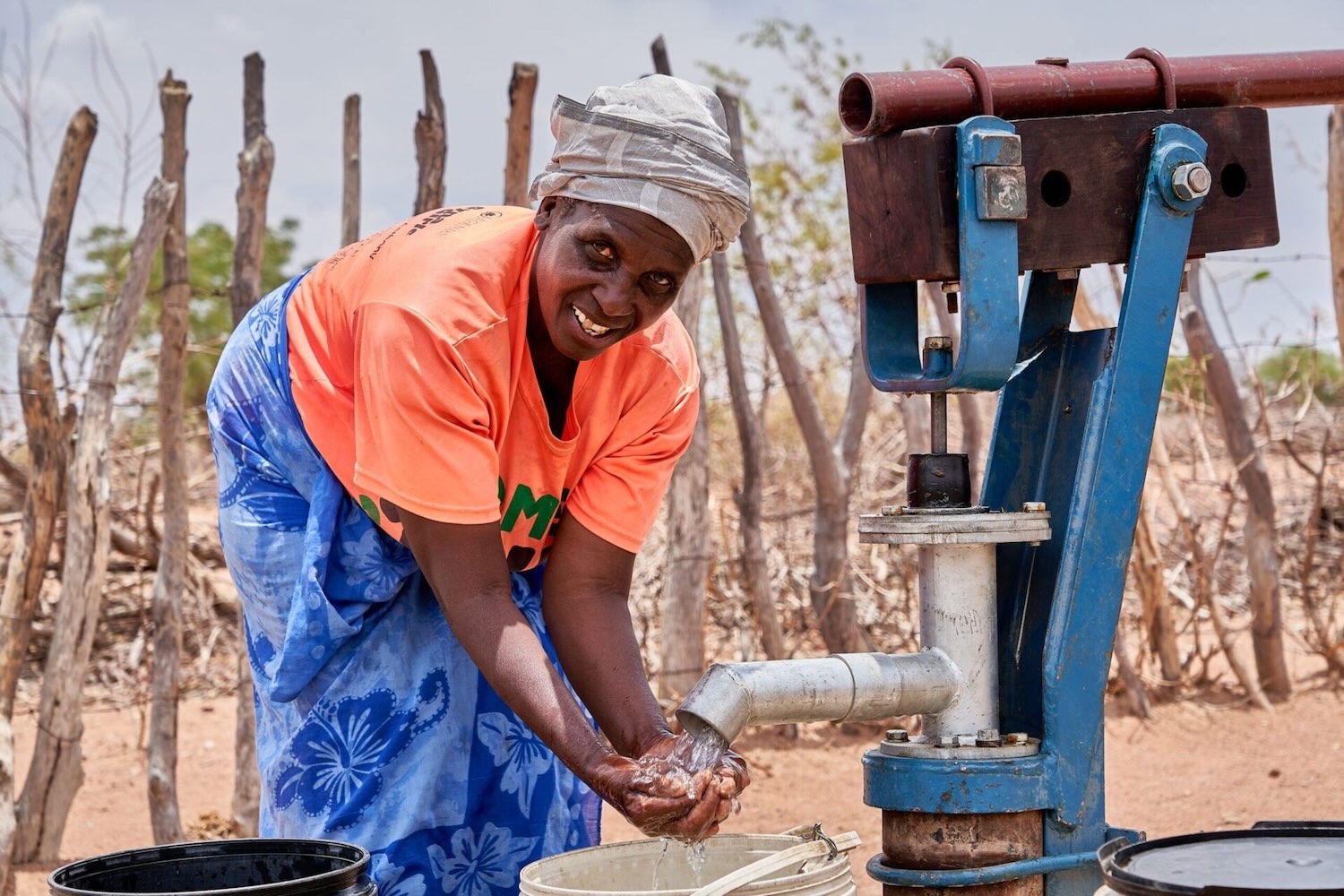
Water was generally easy to find and seemed safe to drink. Hand-pumped boreholes (deep covered wells) are common in villages and often serve as the centre of community life. Locals drank the water directly, and we did the same throughout our trip without any issues.
Accommodation in Zimbabwe
There’s no way around it: Zimbabwe is an expensive country to travel in terms of accommodation. Hotels typically start at around US $40 per night, which can quickly stretch the budget for bike travellers.
The good news is that wild camping in rural areas was generally straightforward, so we rarely needed to rely on paid accommodation.
There are a small number of hostels in the country. We stayed in one in Mutare (in the Eastern Highlands) and another in Victoria Falls, both of which were more affordable than hotels and offered a good, comfortable stopover.
In major safari areas, campsites are available and usually cost around US $10 per person per night. While not especially cheap, they are often well located. One standout for us was Gwango Heritage Resort on the edge of Hwange National Park. This is easily one of the coolest campsites we’ve ever stayed at, thanks to regular wildlife encounters.
Important Notes
- Zimbabwe is generally a safe country to travel in, particularly outside major cities and towns like Harare and Victoria Falls. As with any large urban area, petty theft can occur, so normal travel awareness is advised in busier environments.
- Visas are paid for at the border in US dollar cash, but officials can be very strict about the condition of banknotes. Bills must typically be from 2017 or newer, with no tears, marks, or writing of any kind. It’s worth carrying a few extra $20 notes in case some are rejected.
- ATMs that accept foreign cards are limited, and fees can be extremely high. For example, it can be US $20 for a $200 withdrawal. We will arrive with much more cash next time to avoid these fees. Western Union is also an option for sending/receiving money if needed.
- For mobile coverage, Econet is generally regarded as having the most reliable network in the country.


