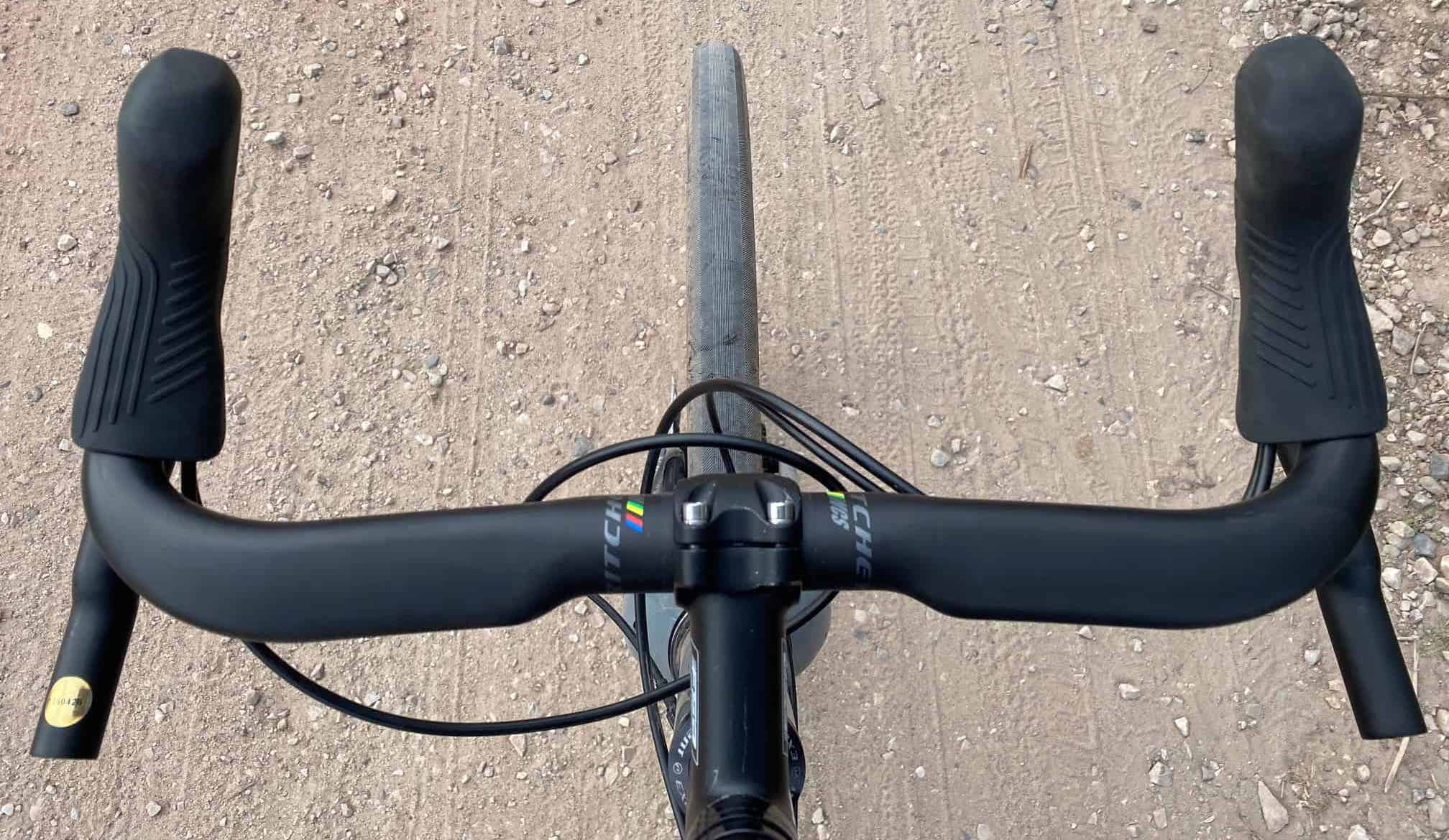
Tag: handlebars

  • Why More Handlebar Flex Doesn’t Always Mean More Comfort (Lab Test)

    Why More Handlebar Flex Doesn’t Always Mean More Comfort (Lab Test)

    It’s easy to assume that more handlebar flex should lead to a smoother, more comfortable ride. After all, many brands have spent recent years engineering bars that flex just enough vertically to soften sharp hits and trail chatter.

    However, recent testing from Pinkbike suggests the link between handlebar flex and vibration damping is weaker than many riders (and manufacturers) expect.

    By measuring both vertical deflection under load and the change in vibration levels from the stem to the grips, Pinkbike’s lab results shed light on what truly influences comfort in a mountain bike handlebar, and it’s not as simple as “more flex equals more comfort”.

    Let’s jump into the lab tests, results, and discussion to understand more.

    Handlebar Flex Lab Test

    This handlebar deflection test was conducted in a bench vice. Image: Pinkbike

    For the handlebar flex test, Pinkbike teamed up with Adrian Bedford, a former aerospace engineer and owner of Swarf Cycles. Bedford mounted a bench vice onto a horizontal milling machine to securely lock the stem in place.

    Each handlebar was installed on the stem with the faceplate bolts torqued to 5 Nm. The bars were rotated so that their 5-degree rise was perfectly vertical, verified using a digital angle finder, and centred in the stem using a measuring tape.

    A Vernier height gauge was then used to measure bar deflection under a 24 kg load, with both ends of the bar loaded at the same time. Each handlebar was measured for deflection four times, and the results were averaged to obtain the final deflection values.

    Handlebar Vibration Damping Lab Test

    Inboard Accelerometer. Image: Pinkbike
    Outboard Accelerometer. Image: Pinkbike

    To test how much vibration different handlebars can absorb, Pinkbike collaborated with Louis Moore, an engineer at Edinburgh Napier University, to evaluate eight bars.

    Moore equipped each handlebar with two 3-axis accelerometers: one was clamped a set distance from the stem, and the other was taped to the end of the bar beyond the grip. By comparing the vibration readings at these two points, he could quantify how much vibration the handlebars attenuated between the bike connection and the rider’s hands.

    For the tests, Moore used a set of indoor rollers modified with sticks taped to each roller to simulate bumps. The size and placement of the sticks were informed by his outdoor testing on a black-graded mountain bike trail. On the trail, the average vibration frequency was around 30 Hz, which he aimed to replicate indoors.

    This vibration test was conducted on a set of rollers. Image: Pinkbike

    The results were reported as a vibration transmissibility ratio, comparing the vibration measured near the stem to the vibration at the grips. In simple terms, this shows how much vibration the handlebar absorbs along its length.

    The ratio is calculated by dividing the grip accelerometer reading (output) by the stem reading (input), so a lower value means better damping. For example, the input vibration could be an average acceleration of 1.9 g at the stem and 1.6 g at the grips. When we divide the output by the input, we get a ratio of 0.840.

    In this test, the top-performing handlebar reduced vibrations up to four times more than the worst-performing one, a significant difference that riders would clearly notice on the trail.

    How Relevant Are Vibration Damping Lab Tests?

    Indoor testing shows consistent results. Image: Pinkbike
    Frequencies and intensity on an MTB trail. Image: Pinkbike

    Comparing Moore’s indoor and outdoor vibration data reveals that outdoor trail testing exhibits a much wider frequency range and roughly double the vibration intensity compared to the indoor roller setup.

    It’s important to note that the roller test doesn’t replicate the large impacts found on fast, rough mountain bike trails. Instead, it’s more representative of the small, continuous bumps you encounter on mellow trails or rough dirt roads.

    Keep this in mind when interpreting the results: the data is most relevant for riders tackling smoother trails or rough dirt roads, rather than aggressive, high-speed trails with big hits.

    Lab Test Results

    Handlebar Flex (mm)Vibration Transmissibility Ratio
    OneUp Carbon V13.90 (7th)0.840 (1st)
    Renthal Fat Bar Lite Carbon4.01 (5th)0.849 (2nd)
    Forge+Bond FusionFiber3.49 (8th)0.875 (3rd)
    Renthal Fat Bar Carbon4.01 (5th)0.880 (4th)
    Raceface Turbine Alloy4.37 (2nd)0.908 (5th)
    OneUp Alloy4.13 (3rd)0.912 (6th)
    Raceface ERA Carbon4.39 (1st)0.935 (7th)
    Renthal Fat Bar Alloy4.12 (4th)0.961 (8th)

    The OneUp Carbon bar delivered the best vibration performance, posting a transmissibility ratio of 0.840, meaning it should feel the smoothest (at least, around the 30 Hz frequency range). Interestingly, despite leading in vibration reduction, it had the second-lowest vertical flex under a 24 kg load.

    The product with the most handlebar flex was the RaceFace ERA Carbon, which deflected 4.39 mm under a 24 kg load. But despite having the most flex, it transmitted far more vibration than most other bars – around 2.5 times more vibration at the grips than the OneUp Carbon.

    And at the opposite end, the Forge+Bond FusionFiber showed the least handlebar flex at 3.49 mm. Yet, despite its lower compliance, it’s still able to filter 3x more vibration than the Renthal Fatbar Alloy, offering a relatively smooth feel around 30 Hz.

    Handlebar Flex vs Vibration Damping

    Pinkbike plotted the handlebar flex against the vibration damping. Image: Pinkbike

    When you graph handlebar flex against vibration damping, it becomes clear that the two are not strongly correlated, at least within the small selection of handlebars tested here. The data has an R² of 0.25, meaning roughly 75% of the variation in vibration damping is driven by factors other than handlebar flex.

    The results we do have indicate that carbon handlebars tend to damp vibrations more effectively, with an average transmissibility ratio of 0.876, compared to 0.927 for aluminium handlebars. This aligns with findings from the University of Zaragoza and Newcastle University, where carbon handlebars produced about 12 to 15% lower hand accelerations than steel handlebars under similar test conditions.

    This data also suggests that aluminium handlebars exhibit greater vertical flex – approximately 6% more than carbon bars on average. The recent handlebar deflection tests on BikeRumor support this, showing aluminium bars had 9 to 14% more flex than carbon.

    However, it’s important to remember that not all carbon handlebars are equally effective at damping vibrations, and not all aluminium bars perform poorly. For example, the Raceface ERA Carbon stands out as an outlier, transmitting more vibration than both the OneUp and Raceface aluminium handlebars.

    Given the limited sample size and the fact that the vibration testing was conducted on just one surface type, more extensive testing would provide a clearer picture of the relationship between handlebar flex and vibration damping.

    The MTB Handlebars With The Best Vibration Damping

    OneUp Components Carbon

    • Width: 760, 800 mm
    • Rise: 20, 35, 50 mm
    • Upsweep: 5 degrees
    • Backsweep: 8 degrees
    • Clamp Diameter: 35 mm
    • Weight: 235 grams
    • Price: US $159 on Amazon

    The OneUp Carbon handlebar consistently proves to be a top performer in both rider feel and lab tests. On mellow trails and rough dirt roads, it can reduce vibrations by up to four times compared to some other bars. If you’re upgrading from a stock alloy handlebar, the difference is immediately noticeable.

    The V2’s oval profile actively reduces vibration and improves comfort. Many riders say it helps reduce arm pump, hand fatigue, and wrist pain, and it’s especially appreciated by those dealing with CTS or tendonitis.

    Importantly, that comfort doesn’t come at the expense of control. The bar feels compliant without feeling vague, and it passed EFBE’s demanding Tri-Test, so it’s rated for use on enduro and downhill bikes.

    If 800mm is too wide for your preferences, the 800mm versions can be trimmed to 740mm, and the 760mm version can be cut down to 720mm.

    Renthal Fatbar Lite Carbon

    • Width: 760 mm
    • Rise: 10, 20, 30, 40 mm
    • Upsweep: 5 degrees
    • Backsweep: 7 degrees
    • Clamp Diameter: 35 mm
    • Weight: 191 grams
    • Price: US $153 on Amazon

    Coming in just behind the OneUp Carbon, the Renthal Fatbar Lite Carbon is another standout performer for mellow trails and rough dirt roads. It’s 44 grams lighter, has slightly less backsweep, and is tuned for trail and XC riders who don’t need full downhill-level stiffness.

    Despite being tested at a 40 mm narrower width than most other bars, it still delivered vibration results nearly identical to the wider OneUp, which is a true testament to Renthal’s engineering. With cut marks down to 680 mm, it’s also easy to fine-tune the width for your ideal setup, from wide trail stability to nimble XC responsiveness.

    In short, if you want a lighter or narrower handlebar without sacrificing comfort, the Renthal Fatbar Lite Carbon is the smarter pick over the OneUp Carbon.

    Race Face Turbine Alloy

    • Width: 760, 780, 800 mm
    • Rise: 10, 20, 40 mm
    • Upsweep: 5 degrees
    • Backsweep: 8 degrees
    • Clamp Diameter: 35 mm
    • Weight: 304 grams
    • Price: US $92 on Amazon

    The most affordable handlebar that still delivers a noticeably smoother ride on mellow trails and rough dirt roads is the Race Face Turbine Alloy. Aluminium bars like this are generally tougher and less likely to get damaged in minor crashes, while only adding around 60 to 100 grams over carbon.

    Despite its alloy construction, the Turbine performed impressively well in vibration tests, offering real comfort gains compared to the stock handlebars found on most bikes.

    Race Face invested significant R&D into what they call the Goldilocks Tune. Their engineers found that 85% of riders preferred a very specific flex range – neither too stiff nor too soft. Interestingly, the independent lab test here shows that Race Face landed on a noticeably higher handlebar flex value than most models on the market.

    Race Face also fine-tuned the flex characteristics for each available bar width. Most brands simply produce 800mm-wide handlebars and expect riders to trim them down to fit. The problem is, cutting an 800mm bar to 760mm increases stiffness by around 24% (according to Race Face), and that difference is definitely noticeable on the trail. To address this, they manufacture the Turbine Alloy in three dedicated widths, ensuring you get optimal flex and the smoothest possible ride, no matter how wide you prefer your bars.

    The Turbine Alloy is built tough enough for all-mountain and enduro riding, and it’s backed by a lifetime warranty that even includes crash coverage. Plus, with seven colour options available, it’s easy to match your cockpit and add a bit of personal flair.

    More Ways To Damp Vibrations On Your Bike

    Handlebar vibration damping can noticeably affect ride feel, but it’s often lower on the list of factors that improve hand and upper body comfort. Consider addressing these changes first:

    Lower your front tyre pressure. Tires with supple sidewalls and lower pressure make a big difference in terms of vibration damping. For example, we found on a gravel bike that reducing pressure from 40 to 30 psi cut handlebar vibrations by around 20%. We’ve also found that there is a 5 to 10% variation in vibration damping between different tyre models at the same tyre pressure.

    Tyre inserts make a noticeable difference. On a gravel bike, we measured a 14% reduction in vibration levels with Cushcore tyre inserts at 30 km/h on a fast gravel road. And on a slower mountain bike trail, Cushcore still reduced vibration by around 8%.

    Tune your suspension fork. Softer compression damping and quicker rebound can improve comfort, though these settings may compromise overall traction and performance on bigger hits.

    Use more powerful brakes. Riders often grip the bars tightly when braking with weaker brakes. Upgrading to strong, responsive brakes (like SRAM Maven) allows a looser grip, reducing the vibrations transmitted to your hands.

    Choose comfortable grips (or bar tape). Some grips and bar tapes are designed to absorb vibration. Skip hard lock-on grips and opt for silicone options like ESI or elastomer-based grips like RevGrips, which excel at damping vibrations.

    Wear padded gloves. Gloves with palm padding help absorb vibration before it reaches your hands, adding another layer of comfort.

    Summary

    It’s often assumed that more handlebar flex equals more comfort, but Pinkbike’s lab tests show the relationship between flex and vibration damping is likely quite weak.

    Using precise measurements of handlebar deflection under load and vibration transmissibility from stem to grips, they found an R² value of just 0.25, meaning only 25% of vibration damping can be explained by flex alone. Material properties, handlebar design, and damping characteristics matter far more.

    The OneUp Components Carbon handlebar emerged as the top performer in the lab, filtering up to four times more vibration than some other bars at frequencies typical of mellow trails or rough dirt roads. Interestingly, it achieved this while being among the least flexible in the deflection test.

    In contrast, the Race Face ERA Carbon transmitted far more vibration than most other bars despite showing the highest handlebar flex.

    When looking at the data, carbon handlebars generally damp vibrations better than aluminium. The exception here was the Race Face Turbine Alloy handlebar, which offers strong damping and three width-specific designs to optimise the vertical compliance.

  • I Went On A Quest To Find The Most Comfortable Bar Tape

    I Went On A Quest To Find The Most Comfortable Bar Tape

    I have tested different handlebars, suspension stems, and carbon forks to find the best possible front-end comfort. But there’s another key component that can boost front-end comfort – bar tape!

    For this field test, I installed eight high-performance bar tapes on my bike to evaluate their grip, comfort, durability, and value. Now, it’s time to reveal which one came out on top for comfort.

    Note: This article was originally published in June 2023 but has been updated in May 2025.

    My Comfortable Bar Tape Criteria

    Comfort

    Comfort is my top priority when it comes to gravel bikes, so I tend to look for bar tapes that include vibration-damping foam and are slightly thicker than average. The tapes I’ve tested all fall within the 2.5 to 3.75 mm thickness range. Ideally, you want to get the best possible comfort from whatever thickness you choose.

    The highest comfort ratings consistently go to tapes that are 3 mm+. In my experience, thinner tapes, while they might feel nice in hand, simply can’t compete in overall comfort. That’s regardless of any claims manufacturers make about their advanced laminated foams.

    Grip and Feel

    The grip or tackiness of bar tape plays a big role in performance, especially for those who ride without gloves. A tacky tape will provide solid control even in wet and muddy conditions or when your hands are sweaty.

    That said, some brands can push the stickiness to the extreme, which can lead to an overly tacky feel that’s not only uncomfortable but also tends to attract dirt.

    Durability

    Since bar tape is particularly prone to wear and damage, it’s important to consider its abrasion resistance and overall durability. This is especially the case for off-road riding, where minor spills are far more common than on pavement.

    Some tapes use a soft-touch surface to enhance grip and feel, but in my experience, these materials often wear down more quickly over time. Check out my durability ratings below to see which bar tapes offer the best long-term toughness.

    Price

    Price is a key factor when choosing any bike component and should be balanced against the product’s performance. For context, the eight bar tapes reviewed here come in at an average price of US $42.

    Along with the value, you will need to consider the bar tape’s durability and whether it can be reused on multiple handlebars. Higher-priced bar tapes that last longer and can be rewrapped on different bikes may actually offer better value in the long term.

    Gel Pads For Comfort

    Before we look at the best bar tapes, it’s important to understand the role of gel pads.

    My first gravel bike originally came with Fizik bar tape, which I found surprisingly comfortable. What I didn’t realise at the time was that hidden beneath the tape were gel pads – quietly doing most of the work when it came to comfort!

    No matter how thick or premium your bar tape is, I’ve found that nothing enhances comfort quite like a quality set of gel pads.

    You can find the Fizik Gel Handlebar Pads on Amazon HERE.

    The Most Comfortable Bar Tape

    ComfortGrip & FeelDurabilityPrice
    Silca9.59.56$50
    SQLab997$65
    Ergon96.57$40
    Lizard DSP8.58.58$45
    Cinelli887.5$20
    Supercaz876$45
    Fizik685$30
    Deda58.57$40

    Supacaz Super Sticky Kush

    Grip & Feel – 7
    Comfort – 8
    Durability – 6
    Price – 7
    TOTAL: 28 (5th)

    Let’s kick things off with the Supacaz Super Sticky Kush, a bar tape that’s often praised as one of the most comfortable options out there. It’s a relatively thin tape at 2.5 mm and includes a layer of foam designed to absorb vibrations and boost comfort.

    While many riders love its super sticky outer layer, I’m personally not a fan. It feels overly tacky to me and tends to attract a lot of dirt. That said, it performs well without gloves, offering excellent grip and control even in wet conditions or with sweaty hands.

    Another downside is how it wraps. This tape is quite stiff and doesn’t offer much stretch, which makes clean wrapping a bit tricky. For a bar tape that costs around $45, the edges don’t look especially tidy once installed.

    That being said, this is the only 2.5 mm thick bar tape to earn an 8/10 comfort rating in my tests. If you want a thin tape with excellent grip, this is the one to choose!

    You can find the Supercaz Super Sticky Kush bar tape on Amazon HERE.

    Cinelli Cork Gel Bar Tape

    Grip & Feel – 8
    Comfort – 8
    Durability – 7.5
    Price – 9
    TOTAL: 32.5 (1st)

    The Cinelli Cork Gel tape was a revelation! At 3 mm thick and featuring Vibra Absorb foam, it offers impressive comfort, on par with Supacaz, but with a more refined, tactile grip and feel. That said, its wet-weather grip doesn’t quite match the stickiness of the Supacaz.

    Wrapping the Cinelli tape is effortless, and its clean edges give it a tidy, polished look. It holds up well even after multiple rewraps, and its abrasion resistance is impressive – definitely among the best I encountered during testing.

    What rocketed this bar tape to the top of my list is the budget-friendly price of just $20. It’s a great example of how you don’t have to spend a fortune to get top-notch performance.

    You can find the Cinelli Cork Gel bar tape on Amazon HERE.

    SQLab 714 Gravel Bar Tape

    comfortable bar tape

    Grip & Feel – 9
    Comfort – 9
    Durability – 7
    Price – 5
    TOTAL: 30 (4th)

    SQLab is well-known for its emphasis on ride comfort, and that same philosophy is reflected in their bar tape lineup. I had quite high expectations for this product as I’ve been impressed by the brand’s saddles in the past.

    Luckily, the SQLab 714 not only met those expectations but exceeded them! It easily ranks as one of the best handlebar tapes I’ve ever tested.

    Measuring 3 mm thick with its ‘buffer material’ hidden below, it offers excellent cushioning. If you want an even plusher feel, the extra-long length lets you wrap it tighter, simulating the comfort of double-wrapping.

    The grip is exceptional, and with a generous 250 cm length, it’s perfect for wider or ergonomically shaped handlebars. It feels great in the hand and can be rewrapped without any problems.

    The only downsides are the price (US $65), and its stiffness during installation, which requires extra pressure for a clean, smooth finish. But if you’re after one of the grippiest, best feeling and most comfortable tapes available, you’ll love the SQLab 714 Gravel.

    You can find the SQLab 714 Gravel bar tape on SQLab HERE.

    Lizard Skins DSP 3.2

    Grip & Feel – 8
    Comfort – 8.5
    Durability – 8
    Price – 6
    TOTAL: 30.5 (3rd)

    Another high-grip, high-comfort option is the Lizard Skins DSP 3.2.

    This one certainly delivers on looks and tactile feel. The surface is smooth and pleasant to the touch in all weather conditions. I found it to be noticeably less sticky than the Supacaz, but not quite as grippy as the SQLab. It’s also probably the only tape you could keep looking fresh in any colour – even white.

    At 3.2 mm thick, it offers a very comfortable ride, though I’d say it falls just short of the plushness provided by top-performing models. That said, you can find a thicker 4.6 mm model, but note that some find this simply too thick, especially if you have smaller hands.

    Wrapping isn’t overly challenging with the DSP, but it’s not quite as effortless as with Cinelli. A good thing is that it’s forgiving enough to be rewrapped once or twice if needed.

    Ultimately, I can see why so many riders are drawn to the Lizard Skins DSP 3.2. With its sleek look, easy cleaning, and premium feel, it’s a high-quality product that lasts the distance.

    You can find the Lizard Skins DSP 3.2 bar tape on Amazon HERE.

    Fizik Vento Solocush Tacky

    Comfortable drop bars

    Grip & Feel – 8
    Comfort – 6
    Durability – 5
    Price – 8
    TOTAL: 27 (7th)

    At 2.7 mm thick, the Fizik Vento Solocush Tacky is one of the thinnest bar tapes I tested. The Fizik Solocush proprietary material has a slightly rubbery, tacky feel that offers a secure and comfortable grip.

    Due to its thinner profile, the outright comfort doesn’t quite match that of thicker tapes. However, the generous length makes it possible to wrap more tightly, which helps enhance the cushioning.

    Wrapping this tape can be a bit tricky. It requires steady tension and careful handling to achieve a clean, even finish. That said, it’s forgiving enough to be rewrapped if needed.

    The main downside is its durability; the tape tends to wear out relatively quickly, and lighter colours (like the orange I tested) show dirt almost immediately.

    Still, for riders who prioritise grip and want reasonable comfort from a thinner tape, it’s a solid option. And at US $28, it’s reasonably priced too.

    You can find the Fizik Solocush Tacky bar tape on Amazon HERE.

    Ergon BT Gravel

    Grip & Feel – 6.5
    Comfort – 9
    Durability – 7
    Price – 7
    TOTAL: 29.5 (4th)

    Ergon is well-known for its comfort-focused products, so I had high expectations for its gravel-specific bar tape. In terms of cushioning, this 3.5 mm thick tape definitely delivers!

    The comfort is excellent and easily on par with the best tapes I’ve tested. Plus, its generous width and 230 cm length make it a great match for wider handlebars.

    However, my experience with it was somewhat mixed. While the grip is great, the surface texture isn’t particularly pleasant to the touch. The material felt quite stiff and hard in my hands, which detracts from the overall feel.

    It’s this same stiffness that makes wrapping more demanding – you’ll need to apply a fair bit of pressure to achieve a clean finish. It’s not a tape I’d recommend for rewrapping.

    Still, it could be a suitable choice for riders who place comfort above all else.

    You can find the Ergon BT Gravel bar tape on Amazon HERE.

    Deda Elementi Loop

    Grip & Feel – 8.5
    Comfort – 5
    Durability – 7
    Price – 7
    TOTAL: 27.5 (6th)

    With its striking two-tone design, the Deda Elementi Loop stands out as one of the most visually distinctive bar tapes available.

    It has a premium feel and delivers a secure, confidence-boosting grip. Wrapping it is straightforward, requiring little effort to achieve a smooth, clean finish.

    At 2.5 mm thick, the comfort is decent, though it doesn’t quite reach the plushness of thicker alternatives. To bring it closer to my preferred comfort level, I’d recommend either adding gel pads underneath or layering it over an existing wrap.

    The main drawback is the tape’s soft material, which seems to compromise long-term durability. It also tends to trap dirt, making it difficult to keep clean once it starts to show wear.

    You can find the Deda Elementi Loop bar tape on Amazon HERE.

    Silca Nastro Cuscino

    Grip & Feel – 9.5
    Comfort – 9.5
    Durability – 6
    Price – 6
    TOTAL: 31 (2nd)

    The Silca Nastro Cuscino bar tape incorporates the same high-performance foam used in the running shoes that helped break the 2-hour marathon barrier.

    Designed with comfort in mind, it offers a generous 3.75 mm of cushioning. In my testing, it ranks among the most comfortable bar tapes I’ve ever fitted.

    Beyond comfort, the Nastro Cuscino delivers an outstanding tactile experience with a secure grip that feels great in hand. The tape retained its tackiness and performance even in wet conditions, after repeated washes, or when riding with sweaty hands.

    The main drawbacks are its high price and the tricky installation. Wrapping requires significant tension and precision to avoid creasing, and it’s not very forgiving if you need to rewrap.

    Still, if you’re seeking a bar tape that combines exceptional comfort, grip, and feel, the Nastro Cuscino is probably top of the list.

    You can find the Silca Nastro Cuscino bar tape on Amazon HERE.

    What’s the Most Comfortable Bar Tape?

    ComfortGrip & FeelDurabilityPrice
    Silca9.59.56$50
    SQLab997$65
    Ergon96.57$40
    Lizard DSP8.58.58$45
    Cinelli887.5$20
    Supercaz876$45
    Fizik685$30
    Deda58.57$40

    For pure comfort, grip, and feel, the Silca Nastro Cuscino stands out as the clear leader. It topped my comfort tests, with the Silca delivering the most refined tactile experience overall. That said, this level of performance comes at a premium – this is one of the most expensive bar tapes in the lineup.

    When you take price into account, the Cinelli Gel Cork tape clearly stands out. It proves that you don’t have to spend a fortune to achieve excellent comfort. This tape strikes a great balance of cushioning, tactile feel, and reliable grip. It’s also easy to install and impressively tough, with strong tear resistance adding to its durability.

    For a more durable option that does well in terms of grip and comfort, check out the Lizard Skins DSP. It holds up well to wear and can be rewrapped once or twice without issue. Cleaning is simple, and it likely remains the best-looking option even after extended use.

    You can support the CyclingAbout Comfort Lab by purchasing your bar tape on Amazon. Simply click HERE for the Cinelli Cork Gel tape, HERE for the Silca Nastro Cuscino tape, and HERE for the Lizard Skins tape – and a small commission will come our way.

  • The 13 Best Alt Bars For Bikepacking and Touring (Comfortable MTB Handlebars)

    The 13 Best Alt Bars For Bikepacking and Touring (Comfortable MTB Handlebars)

    The best alt bars will not only take your comfort and control to the next level, but they’ll offer more hand positions and riding postures too.

    If you aren’t familiar with alt bars, they’re a unique mountain bike handlebar type designed for long-distance riding. These comfortable handlebars offer a broad variety of hand positions, riding postures, and accessory mounting points. Most of these bars will provide some extra steering leverage for better control over your loaded bike too.

    To properly understand upright riding positions, backsweep angles, backward reach, grip design, handlebar material and much more – start by reading my complete guide to finding the most comfortable alt bars HERE.

    Right, let’s dive straight into the best alt bars currently available.

    The Best Alt Bars For Bikepacking and Touring

    The Soma Dream Lowdown alt bars are my pick for new alt bar users.

    The alt bars listed below are in order from largest to smallest backsweep.

    • Best For Varied Hand Positions: Velo Orange Crazy Bars
    • Best For Comfort and Speed: KOGA Denham Bars
    • Best For Frames With A Short Reach: Surly Moloko
    • Best For Maximum Control: Tumbleweed Persuader
    • Best For High Rise: Ritchey Comp Buzzard
    • Best For Value For Money: Ritchey Kyote
    • Best For Most Mountain Bikers: Salsa Bend Deluxe
    • Best For Shock Absorption: Passchier Gump 760
    • Best For New Alt Bar Users: Soma Dream Lowdown
    • Best For Lightweight Design: SQlab 311 FL-X Carbon
    • Best For Aero Loop: Satori Falcon Aero
    • Best For High Rise & Small Backsweep: Cannondale Cruise Control
    • Best For Drop Bar Conversions: Curve Remlaw

    Velo Orange Crazy Bars V2

    Backsweep: 35-degrees
    Width: 780 mm
    Rise: 40mm (1.6″)
    Stem Clamp: 31.8mm
    Material: Aluminium
    Weight: 532g (18.8 oz)

    PROS

    1. Many usable hand positions
    2. 40mm rise for comfort
    3. Wide AF

    CONS

    1. 35% heavier than Denham Bars


    The Velo Orange Crazy Bars use a 35-degree backsweep angle and a long backward reach. This means it will best suit the most upright of riding positions.

    Velo Orange touts their second version of the Crazy Bars as “intended for touring on paved and unpaved roads, single and double track, gravel and crushed limestone, and everything in between”. As this handlebar is almost identical to the handlebar I designed myself (KOGA Denham Bars), I have to say – I agree with this assessment!

    The 780mm width provides excellent control and leverage on rough surfaces, while the bullhorn section offers an aerodynamic position for smoother roads and headwinds.

    If you don’t feel the need for the bullhorns, the Velo Orange Seine Bar is the same design, minus the bullhorns.

    KOGA Denham Bars

    Backsweep: 34-degrees
    Width: 711 mm
    Rise: None
    Stem Clamp: 31.8mm
    Material: Aluminium
    Weight: 400g (14.1oz)

    PROS

    1. Varied hand positions
    2. Narrow enough for urban areas
    3. Lighter than the Crazy Bars

    CONS

    1. Short grip sections
    2. Only ships from Europe


    I designed the KOGA Denham Bars for world bicycle travellers. The shape was inspired by the Crazy Bars V1, and I suspect the KOGA Denham Bars then informed the later-released Crazy Bars V2.

    The KOGA Denham Bars offer lots of control over a loaded bike; there are many hand positions for comfort, and the bullhorns allow you to be more aerodynamic in headwinds. The bullhorns essentially mimic the hoods of a drop bar, making them a nice spot to hold on faster rides.

    A great thing about these bars is that they fit bikepacking bags, large handlebar bags, randonneur bags and baskets.

    While this handlebar is certainly similar to the Crazy Bars, it features less rise, less width, shorter grip sections, and a slightly smaller backsweep angle. This makes it a bit better in urban areas. I typically recommend fitting these bars to bikes with the handlebars level with the stem (at a minimum).

    While I use and love these handlebars, they are unfortunately the most difficult to purchase on this list due to the small-scale manufacturing and international shipping costs. Don’t worry, I won’t be offended if you choose the Velo Orange Crazy Bars instead!

    You can read my in-depth article about the KOGA Denham Bars and their design HERE.

    Surly Moloko

    Backsweep: 34-degrees
    Width: 735 mm
    Rise: None
    Stem Clamp: 31.8mm
    Material: Steel
    Weight: 709g (25oz)

      PROS

      1. Rare large backsweep / short backward reach
      2. Great width for urban areas
      3. Lots of space for accessories

      CONS

      1. Heavy AF
      2. Incompatible with some front bags
      3. No rise


      The Surly Moloko might look similar to the above handlebars, but in terms of backward reach, it couldn’t be more different. This handlebar swoops a long way forward before starting its backsweep, resulting in almost no backward reach.

      This design quirk makes the Moloko especially suitable for drop bar conversions, and for those who are seeking a large backsweep without making their ride position more upright. It also means you can ride mountain bike trails without risking your bars slipping.

      The Moloko features a loop that gives you some more hand positions and additional space for mounting accessories. You can even get handlebar bags that nest perfectly inside the loop; I have a bunch listed in this resource. That said, when you install a bag you lose some hand positions and possibly even some accessory mounting points.

      Tumbleweed Persuader 30

      Backsweep: 31-degrees
      Width: 800/840mm
      Rise: 50mm (2″)
      Stem Clamp: 31.8mm
      Material: Aluminium
      Weight: 411g (14.5oz)

      PROS

      1. Ultra wide for maximum control
      2. Flat front section for luggage
      3. Ample rise for most people

      CONS

      1. Very wide for urban areas


      The Tumbleweed Persuader is the widest alt bar featured in this resource, and this provides maximum control over your loaded bike. They have a lot of backward reach and slightly less backsweep than the previous bars we’ve seen. The 50mm rise should make the Persuador especially well-suited to low front-end bikes.

      You can get these bars in aluminium or steel. I think the aluminium ones are the pick as they’re quite lightweight for a tough adventure bar, plus the 160mm wide, 31.8mm clamp area is a great space for bikepacking gadgets.

      You can also get the Persuader with a 20-degree backsweep. This will be ideal if your bars are not super upright, or you’re not ready to commit to a large backsweep angle just yet.

      Ritchey Comp Buzzard

      Backsweep: 27.5-degrees
      Width: 820mm
      Rise: 70mm (2.8″)
      Stem Clamp: 31.8mm
      Material: Aluminium
      Weight: 367g (13.0oz)

      PROS

      1. Short backward reach for drop bar frames
      2. Huge rise for low front-end bikes
      3. Wallet-friendly

      CONS

      1. It’s a wide one


      If you want a more upright ride position without the long backward reach of the Tumbleweed Persuader, you cannot beat the Ritchey Comp Buzzard. This bar is wide like the Persuader, but thanks to its short backward reach, it won’t make your bike feel any smaller.

      This bar can turn old mountain bikes (with a low front end) into mile-munching touring or bikepacking machines.

      The Ritchey Comp Buzzard has a nice, wide centre section to accommodate various bags and accessories. It’s built lightweight thanks to the double-butted aluminium, and it even comes in at a great price.

      Ritchey Kyote

      Backsweep: 27.5-degrees
      Width: 800mm
      Rise: 35mm (1.4″)
      Stem Clamp: 31.8mm
      Material: Aluminium
      Weight: 355g (12.5oz)

      PROS

      1. Short backward reach compared to most
      2. A modest amount of rise
      3. Cheap for such a high-quality bar

      CONS

      1. A bit wide for the city


      Ritchey also has other great comfort MTB handlebars, such as this one – the Ritchey Kyote. This alt bar is essentially a low-rise version of the Comp Buzzard, so it offers a short backward reach too.

      The Kyote is perfect for those who are looking to maintain a lower ride position and will be great for drop bar bike conversions too. The best bit is that it’s only US $44.

      Whisky Scully

      Backsweep: 23-degrees
      Width: 820mm
      Rise: 20mm (0.8″)
      Stem Clamp: 31.8mm
      Material: Carbon
      Weight: 237g (8.4oz)

      REASONS TO BUY

      1. Very lightweight
      2. Moderate backsweep
      3. Super wide!

      REASONS NOT TO BUY

      1. A bit pricy


      If you’re a bit of a gram counter, but still want some backsweep, you’ll love the Whisky Scully. This handlebar is one-third of the weight of the Surly Moloko, thanks to its carbon construction.

      It’s still ISO tested for bumpy terrain and would be a great upgrade for paved commutes and whatever off-road riding you’re into — gravel, XC, singletrack, and beyond.

      The 23-degree backsweep is now getting closer to the common shape of a city bike handlebar. It has a moderate backward reach and a moderate rise too.

      Passchier Gump 760

      Backsweep: 22-degrees
      Width: 650/760mm
      Rise: None
      Stem Clamp: 31.8mm
      Material: Bamboo
      Weight: 330g (11.6 oz)

      PROS

      1. In-built shock absorption
      2. Rather lightweight
      3. Available in two widths

      CONS

      1. The flex can be disconcerting
      2. They are expensive


      Bamboo offers greater natural flex than traditional handlebar materials. These are the most flexible handlebars I’ve ever ridden. They flex so much up and down that you can actually see them moving underneath you (check out this video).

      This flex isolates your upper body from shock and vibration coming up from the road or trail and helps your eyeballs to rattle a bit less in your skull. The great thing is that despite all this flex, they still pass ISO fatigue and strength testing.

      The Passchiers are made from laminated bamboo with a carbon fibre sleeve in the middle for the stem clamp. You can get them in two different widths, and they offer a modest 22-degree backsweep angle.

      Soma Dream Lowdown

      Backsweep: 20-degrees
      Width: 780mm
      Rise: 25mm (1″)
      Stem Clamp: 31.8mm
      Material: Aluminium
      Weight: 425g (15oz)

      PROS

      1. Wide enough for off-road terrain
      2. Some backward reach
      3. Backsweep not extreme

      CONS

      1. Quite wide for urban areas


      The Soma Dream Lowdown is an alt bar with less backsweep and backward reach than most. As this bar has moderate dimensions all around, I think it’s a really good starting point for those who are alt bar curious!

      The bar is still quite wide, giving you a whole lot of control over your loaded bike. And the 25mm rise makes it suitable for those chasing a slightly higher bar height than what they currently have.

      These aluminium alt bars are lightweight for a tough adventure bar, plus the wide section at the front of the bar provides ample space for lights, smartphones, and GPS devices.

      Salsa Bend Deluxe

      Backsweep: 17/23-degrees
      Width: 710/740mm
      Rise: None
      Stem Clamp: 31.8mm
      Material: Aluminium
      Weight: 309g (10.9 oz)

      PROS

      1. The backsweep should suit most riders
      2. Pretty darn light
      3. Great price

      CONS

      1. No rise


      The Salsa Bend Deluxe is an MTB-specific flat bar that’s available with a moderate 17 or 23-degree backsweep angle. They’re tough, strong and durable, and great for long days of bikepacking, touring, or shredding singletrack.

      The Bend Deluxe offers a very short backward reach to preserve your stem length, meaning that when you fit these comfortable MTB handlebars to your bike, the reach to the bars will likely end up in the right ballpark.

      Go for the 17-degree model if your bars are lower than your saddle, or you want to give alt bars a try without committing to a large backsweep. Try the 23-degree model if your bars sit a bit taller.

      SQlab 311 FL-X Carbon

      Backsweep: 12/16-degrees
      Width: 740 mm
      Rise: 15, 30mm
      Stem Clamp: 31.8mm
      Material: Carbon
      Weight: 198g (6.9 oz)

      PROS

      1. A proper lightweight alt bar
      2. 16° backsweep for comfort
      3. It will flex more than most

      CONS

      1. Super pricey


      SQlab has built its name on comfort. Their research suggests that a cyclist’s wrists are overstretched on any flat bar with less than a 9-degree backsweep angle…

      That’s why the SQlab 311 FL-X handlebars offer a generous 12 or 16-degree backsweep angle, and with a longer backward reach than most bars in the MTB category, they provide a more upright riding position too.

      The 311 FL-X bars have been designed to flex more than most handlebars, and this will result in a super comfortable ride on both rough roads and trails.

      And at under 200 grams, the SQlab 311 FL-X handlebars are also the lightest on this list.

      Satori Falcon Aero

      Backsweep: 15-degrees
      Width: 740mm
      Rise: None
      Stem Clamp: 31.8mm
      Material: Aluminium
      Weight: 504g (1.1lb)

      PROS

      1. Loop acts as a mini luggage rack
      2. 15° backsweep angle for a performance fit
      3. Excellent value for money

      CONS

      1. None


      The Satori Falcon Aero combines the loop design of other alt bars with one of the more conservative backsweep angles on this list. As a result, it shouldn’t feel too different from a standard mountain bike bar. While it doesn’t have any rise, there are ample hand positions for comfort.

      The loop adds space for luggage storage, and accessories (phone, GPS, lights etc), as well as an aero hand position. The loop is a similar size to other alt handlebars, allowing it to fit bags made for Jones and Surly bars.

      Cannondale Cruise Control

      Backsweep: 15-degrees
      Width: 740mm
      Rise: 100mm (4″)
      Stem Clamp: 31.8mm
      Material: Aluminium
      Weight: 433g (1.7lb)

      PROS

      1. Super high rise with small backsweep
      2. Lightweight for a bar of this design
      3. Quite inexpensive

      CONS

      1. None, this bar is awesome


      If you’re after a whole bunch of rise with a more familiar backsweep angle, you’ll be best off with handlebars that feature a reinforcing crossbar. The Cannondale Cruise Control is a retro-inspired cruiser bar, trail bar, comfort bar, and BMX bar all rolled into one!

      The best bit about the Cannondale Cruise Control is that it’s lightweight aluminium (rather than steel) and uses a regular 31.8mm stem clamp, unlike many handlebars of this moto design.

      Curve Remlaw

      Backsweep: 12-degrees
      Width: 800mm
      Rise: None
      Stem Clamp: 31.8mm
      Material: Aluminium
      Weight: 400g (14.1 oz)

      PROS

      1. Unique forward reach design
      2. Lightweight
      3. Double butted

      CONS

      1. No rise and only a 12-degree backsweep


      The Remlaw Bar is the only handlebar here with a forward reach design!

      Curve essentially wanted to create a flat bar that could be used in place of a drop bar, yet still have comparable reach without compromising handling.

      When converting from a drop bar to the Remlaw Bar, the same length stem can be used, as it puts your hands in a very similar position in space.

      Best Alt Bars Summary

      WidthRiseBacksweepWeightLink
      Velo Orange Crazy Bars7804035°532gHERE
      KOGA Denham Bars711034°400gHERE
      Surly Moloko735034°709gHERE
      Tumbleweed Persuader 308405031°424gHERE
      Ritchey Kyote8003527.5°355gHERE
      Ritchey Comp Buzzard8207027.5°367gHERE
      Whisky Scully8202023°237gHERE
      Passchier Gump 760760022°330gHERE
      Soma Dream Lowdown7802520°425gHERE
      Salsa Bend Deluxe740017/23°309gHERE
      Cannondale Cruise Control74010015°433gHERE
      SQlab 311 FL-X78015/30/4512/16°235gHERE
      Satori Falcon Aero760015°500gHERE
      Curve Remlaw800012°400gHERE

    • How To Choose The Most Comfortable Alt Bars For Bikepacking & Touring

      How To Choose The Most Comfortable Alt Bars For Bikepacking & Touring

        Alt bars are a type of handlebars that are designed specifically for long-distance cycling. They typically offer a broad variety of hand positions, riding postures, and accessory mounts. In addition, you’ll gain extra steering leverage for better control over your loaded bike.

        Alt bars are suitable for those who are touring on paved and dirt roads, along 4×4 tracks, down singletrack trails, through unkept fields, and across everything in between.

        With the varied hand positions of these handlebars, you’ll not only get to change the pressure points in your hands throughout the day, but you’ll activate different muscles in your arms and back too. Alt bars ultimately help you to look after your body on long rides.

        A comfortable alt bar setup might even give you the power to cycle more miles, recover quicker, and enjoy more of the scenery while riding.

        Many of the alt bars I recommend in this article HERE will help you achieve a more upright riding position. This is usually accomplished by reducing the distance between your saddle and the grips via large backsweep angles, a long backward reach, and a tall handlebar rise – you’ll learn about these terms in a moment!

        Alright, let’s find out how to choose the most comfortable alt bars for bikepacking and touring.

        The Best Riding Position For Alt Bars

        I’m currently cycling around 40+ countries in Africa using a rather upright riding position.

        The first thing you need to consider is how upright your riding posture is, and whether it would be beneficial to set your grips even higher.

        Your core muscles fatigue on long rides, so most people end up putting more weight onto their hands as the hours go on. By increasing your handlebar height, you can keep the load on your hands at an acceptable level.

        In addition, a more upright riding posture usually reduces strain on the neck, shoulders and back, and you tend to look around more at your surroundings.

        The primary downside of an upright posture is a less aerodynamic riding position, but you can still rocket along if you fit some aero bars onto your alt bars (highly recommended).

        A great starting point for a comfortable alt bar setup is setting your handlebar level with your saddle. You can do this by selecting a bar with a tall rise. If a tall bar setup is new to you, make sure to give it some time for your body to adapt as it might feel a bit strange at the start.

        It’s worth noting taller riders will often tolerate a lower handlebar compared to shorter riders as they have longer limbs relative to their torso length. Riders with a strong core tend to also tolerate a lower bar. That said, individual variations exist, and not everyone fits these general patterns.

        And a downstream effect of fitting taller bars is that you might also need to swap to a more padded saddle (as you now have more weight on your butt!).

        Ok, you should now have a good idea about handlebar height, so let’s discuss the ideal backsweep angle.

        The Best Backsweep Angle For Alt Bars

        Alt bars use larger backsweep angles than typical MTB handlebars. This helps to preserve the natural wrist position of a more upright riding position, reducing finger numbness (which often arises from overstretching your wrist).

        I consider:
        Small backsweep angles to be 5 to 12 degrees <- almost all MTB bars
        Moderate backsweep angles to be 12 to 25 degrees
        Large backsweep angles to be 25 to 35 degrees

        It’s instantly noticeable going from a flat MTB bar with a 5-12 degree backsweep angle to the 20+ degree backsweep angles of most alt bars.

        The perfect backsweep is determined primarily by your ride posture, but also core strength, grip choice, and glove choice. There’s a healthy dose of personal preference in there too.

        The more upright and relaxed your body posture, the more backsweep angle you will likely find comfortable. This is because your elbows will naturally pull in closer to your body, changing both your wrist angle and the interaction between your hands and grips.

        This animation shows how larger backsweep angles should be employed with upright riding positions.

        Conversely, smaller backsweep angles generally suit lower, performance-oriented body postures as your elbows naturally sit wider (see animation above).

        If you were to use a large backsweep angle with a low riding posture you’ll likely find your hands naturally want to rest diagonally over your grips, creating pressure points on your palms.

        Here are my backsweep angle starting points:

        • 5 to 15° will feel most comfortable if your handlebar is lower than your saddle
        • 15 to 25° will feel most comfortable if your handlebar is around the same height as your saddle
        • 25 to 35° will feel most comfortable if your handlebar is significantly higher than your saddle

        If you’re not sure where to land, I’d recommend starting with a bit less backsweep angle, rather than more. The 15 to 25° range is a great start.

        The Best Rise For Alt Bars

        The Ritchey Comp Buzzard offers 70mm (2.8″) of rise, taking pressure off your palms for long-distance riding.

        To achieve a comfortable setup for long-distance riding, you should also consider using alt bars with extra rise, which will allow you to sit a bit more upright.

        Handlebar rise is measured from the centre of the handlebar to the bar end. Some bars in this resource have zero millimetres of rise and others have over 100mm of rise (4″).

        Additional bar height can also be achieved via your stem or by using a steerer extender.

        Keep in mind that the ideal backsweep angle will likely need to increase along with the bar height.

        The Best Width For Alt Bars

        koga denham bars
        The KOGA Denham Bars are wide but they are over 100mm narrower than many alt bars.

        Wider handlebars provide additional steering leverage. This results in better control over heavy-loaded bikes on rough trails.

        But wide bars also make splitting traffic, getting through doorways, and riding in tight singletrack more difficult. I’ve found that 700 to 730mm is my sweet spot between bike control and travel practicality. But if I spent less time in urban areas, I would likely prefer something closer to 800mm.

        Please note that you can cut down all handlebars to size; manufacturers will usually have a minimum recommended width. Just make sure there is enough space on the grip sections to install your shifter(s) and brakes where you like them first – 200mm is about as short as you can practically go.

        Also, keep in mind that wider alt bars increase the effective distance to the bars from the saddle. This means you might need to compensate by using a shorter stem or fitting a bar with a long backward reach…

        Alt Bars With Backward Reach

        A handlebar with a large backsweep angle usually brings your handlebars closer to your body, putting you in a more upright ride position. But it isn’t always the case!

        You also need to look at the handlebar’s overall design to determine whether it has a long or short backward reach. Does it swoop forward before starting its backsweep like the Surly Moloko, or swoop backward right from the stem clamp like the KOGA Denham Bars?

        KOGA Denham Bar
        A comparison between the Surly Moloko and the KOGA Denham Bars shows how different the grip location can be. Both have a 34-degree backsweep angle.

        Handlebars with a long backward reach (eg. KOGA Denham) will put you in a more upright position by reducing the distance from your saddle to your grips. Conversely, handlebars with a short backward reach (eg. Surly Moloko) will allow you to maintain a body position similar to a flat bar.

        One important thing to note about long backward reach handlebars: they are not suitable for all mountain bike trails. This is because they can slip and rotate in the stem clamp after a big impact (eg. rock drop). That said, I regularly ride on singletrack; I just make sure to avoid jumps or drops that could cause my bars to slip.

        The Best Stem Length For Alt Bars

        A 40mm vs 100mm stem comparison. Both bars put your hands in a similar place due to the handlebar’s different backward reach lengths. Image: Offtrail.guru

        The length of the backward reach also needs to be considered along with your stem length.

        To a large degree, you can use stem length to place your grips in the perfect location. But this might require changing your stem length by 30 to 60mm, depending on what riding position you’re looking to achieve.

        In some circumstances, you might need to use an especially long stem to get your grips in the ideal position. For example, if you want to fit a handlebar with a long backward reach to a drop bar frame, a 130 or 140mm stem might be required.

        Alt Bars and Frame Design

        When we overlay a drop bar frame on a flat bar frame, we can see the latter has a significantly longer top tube.

        Another thing to consider is the handlebar design that will best pair with your frame.

        A flat bar frame (like a mountain bike) is usually the best option for a handlebar with a long backward reach. This is because flat bar frames are usually longer than drop bar frames (by ~50mm), so they will likely accommodate a handlebar with a large backsweep angle and long backward reach.

        A drop bar frame (like a road bike) is usually the best candidate for a handlebar with additional forward reach. This is because drop bar frames are usually shorter than flat bar frames, so you’ll want some forward reach to make sure the grips aren’t too close to your body.

        Alt Bars For Drop Bar Frames

        The most suitable alt bars for a drop bar frame either have a small backward reach or none at at.

        There are also alt bars that have been designed specifically for drop bar conversions. These unique handlebars have a large forward reach, allowing you to place your hands slightly in front of the stem clamp.

        The Curve Remlaw preserves the hand position of a drop bar without requiring a different length stem. They might even save you a bit of money as you might not need to buy a longer stem.

        WhatBars Comparison Tool


        A cool tool for comparing alt bars is WhatBars.

        You’ll find many handlebar options in there. Simply select a few bars and the tool will allow you to visualise and compare their geometry and grip locations.

        Fitting Inner Bar Ends To Alt Bars

        If you like the idea of the ‘bullhorn’ hand position found on the Crazy Bars or Denham Bars, you can find component manufacturers that create clip-on versions.

        This hand position is not only more aerodynamic, but it puts different pressure through your hands, and changes the load through your wrists, arms, back and neck.

        An internal study by SQlab showed that these inner bar ends can save 14 watts of power output at a speed of 36 km/h (280 watts). This is simply because these inner hand holds put your body in a more aerodynamic riding position.

        alt bars
        Soma Bar Ins Extensions can be attached to any alt bar for an additional hand position.

        The Soma Bar Ins Extensions are a great choice as you can choose your clamp location, extension length, and even the inward and upward tilt angles. There is a short (95mm) and long (150mm) bullhorn available.

        The Bar Ins clamps angle the extensions inward about 25°, so the extensions would stick straight out on a 25° backsweep alt bar. If you wanted to match the 7° inward bullhorn angle of the Denham Bars, you would need to find an alt bar with an 18° backsweep angle.

        The Scott Scale Gravel comes with Spirgrips+ as standard.

        Spirgrips are a more performance-oriented product that’s designed to sit next to your grips. They are much shorter and lighter than Soma Bar Ins and are shaped to cup your hands well. They are angled inward to ensure your wrists engage with your bars at a suitable angle.

        The SQlab Innerbarends 410 2.0 are another great option, and these best fit right next to your grips. A cool feature is that you can integrate them directly with the lock-on SQlab grips, removing one of the grip clamps. The only downside is that compared to the Bar Ins, you’ll have less ability to tune the angles.

        You can, of course, use any regular bar ends too. The only downside is that they’re not usually designed for sweptback handlebars so you might find they angle outwards rather than inwards.

        Alt Bar Materials

        The Whisky Scully is one of very few carbon alt bars.

        Alt bar manufacturers offer a broad range of materials including aluminium, steel, titanium, carbon and even bamboo.

        The best alt bars for most riders are made from aluminium, which balances cost, weight, comfort, and durability in equal measure. However, other materials are becoming increasingly common in alt bars for various reasons.

        To generalise:
        – Steel alt bars are known for their durability but they’re heavy
        – Carbon handlebars are strong and lightweight but they’re less forgiving to crashes and rough transit
        – Titanium handlebars are durable and lightweight but also quite expensive

        I’ve listed a bamboo model in my best alt bars article as I found it to have a shocking amount of compliance built in. You can see it deflect a couple of centimetres just by pushing down on it – there is a video of this flex in my article.

        Alt Bar Grips

        The Wolf Tooth Fat Paw lock-on grips are popular with alt bars.

        Your grip choice is arguably just as important as the alt bar itself.

        One of my top recommendations for alt bar grips is thick silicone grips. These super soft grips will not only damp vibration coming up from the road or trail but conform nicely to your hands.

        My two favourite silicone grips are the Wolf Tooth Fat Paw lock-on and ESI Extra Chunky.

        My other recommendation is grips with a shaped design. These grips have been optimised for large backsweep angles, which allows your hands and wrists to sit at a very natural angle. These grip designs also often have a ridge in the middle that cups inside your palm, and a rearward wing that distributes hand pressure across a larger surface area.

        Look out for the Ergon GC1, XLC GR-S22 or SQlab 710 for an extra comfortable design on a handlebar with lots of backsweep angle.

        Handlebars and Bags For Alt Bars

        And lastly, make sure to think about how your luggage will integrate with the bars you choose.

        A wide straight section next to the stem is ideal for mounting bikepacking handlebar packs (eg. Revelate) and touring handlebar bags (eg. Ortlieb). Alt bars with shapes that sweep forward before starting their backsweep can especially create clearance issues with wider bags.

        You’ll notice that some of these handlebars feature a loop. This provides more hand positions and space for accessories, and can also serve as a small front rack.

        Summary

        Now that you have a good idea about everything alt bars, it’s time to head over to my article that features the 13 Best Alt Bars For Bikepacking and Touring.

        I’ve narrowed down the best alt bar picks with varying backsweep angles, rises, and more. With multiple options at the US $50 price point, you should find something in your budget and for your needs.

      • The Best Gravel Handlebars Compared For Comfort: Deda Gera vs Lauf Smoothie

        The Best Gravel Handlebars Compared For Comfort: Deda Gera vs Lauf Smoothie

        If you’re after the best gravel handlebars with a high degree of comfort, you’ve come to the right place.

        I’ve been on a quest to find the best gravel handlebars for a long time, and have gleaned many insights from testing different models for their shape, material, and vibration-damping qualities.

        In my most recent handlebar test, I directly compared carbon and aluminium handlebars to see if there was a difference in terms of vibration absorption.

        This time, I’m comparing two highly unique gravel handlebars:
        – The Deda Gera Carbon with its unusual bar shape, and
        – The Lauf Smoothie with added glass fibre for greater vibration absorption

        So, will the glass fibre of the Smoothie yield more comfort, or will the bar shape of the Gera win out? Let’s find out.

        Deda Gera Carbon Gravel Handlebars

        I’ve wrapped the Deda Gera Carbon with Fizik Solocush bar tape.

        Material: Carbon
        Reach: 40 mm
        Flare: 16 degrees
        Backsweep: 12 Degrees

        Width (Levers): 440, 460 or 480 mm
        Width (Drops): 520, 540 or 560 mm
        Weight: 220 grams (7.8 oz)
        Price: US $301 on Amazon

        The Deda Gera is a handlebar designed specifically for gravel, and it has a very distinctive look. Most notable are the bar tops that sweep forward and up (7mm rise) from the stem, and then gently flow back down to level at a 12-degree angle.

        To inform this design, Deda took inspiration from the natural posture of the hands and wrists and how they naturally extend onto the bar tops. This shape is said to provide a more ergonomic wrist angle for all-day comfort. The bar tops also help bring your elbows in closer to your sides, which might improve your aerodynamics.

        I’m actually quite familiar with this shape as it closely resembles the Coefficient Wave handlebar I’ve previously tested (and found to be very comfortable).

        In addition to the unique bar tops, these bars have a very short reach (40 mm) and a compact drop (100 mm). With such short distances between hand positions, it makes moving your hands about the bars very quick.

        The Deda Gera Carbon also features 16-degrees of flare (outsweep) down to the drops. This increases the width of the bars at the drops by 80 mm, providing additional steering leverage to take on rougher terrain. Your handling confidence can be enhanced further thanks to the notably wide widths available (440 to 480 mm).

        You can get the Deda Gera in carbon fibre or a comparatively affordable aluminium version (US $126). If you so desire, aero bars can be installed next to the stem or on the 7mm high raised bar tops. The latter achieves a taller ride position for your elbow pads, however, it will also render the bar tops unusable.

        Lauf Smoothie Gravel Handlebars

        I’ve wrapped the Lauf Smoothie with Ergon bar tape.

        Material: Carbon & Glass Fibre
        Reach: 80 mm
        Flare: 16 degrees
        Backsweep: 3 Degrees

        Width (Levers): 400, 420 or 440 mm
        Width (Drops): 470, 490 or 510 mm
        Weight: 250 grams (8.8 oz)
        Price: US $290

        The Lauf Smoothie features a much more classic shape than the Gera making it great for a mix of road and gravel riding.

        The key selling point of the Lauf Smoothie is the addition of glass fibre to the carbon layout. According to Lauf, this helps damp vibrations and gives the handlebar “almost double the compliance” of a normal carbon handlebar.

        More vibration attenuation should make the Smoothie ideal for road and gravel riding, so does the glass fibre actually improve comfort?

        I’ll be answering that shortly, but let’s first discuss the handlebar shape.

        The Smoothie features flattened bar tops with a moderate three-degree back sweep. These flattened bar tops create a bit more surface area for your palms, which can both increase comfort and provide additional grip.

        The Smoothie is available in 400, 420 and 440 mm wide variants. Like the Gera, there is a 16-degree flare down to the drops, and this adds 70 mm of additional width in the drops for extra control over your bike.

        The reach (80mm) is twice as long as the Gera and the bar drop is bigger too (125 mm vs 100mm). The Smoothie’s design much closer resembles the geometry we see on road bike handlebars.

        Installing These Comfortable Gravel Handlebars

        The Lauf Smoothie was a breeze to install.

        The Lauf Smoothie is the most straightforward handlebar to install as you cannot route your cables inside the handlebar, perhaps as a result of the added glass fibre. Instead, the cables flow underneath the bar tops.

        When it comes to cable routing, the Deda Gera is much trickier as a result of its shape. You can route the cables internally, but it’s a tough challenge to get around the bend and requires a lot of patience.

        I found that adjusting the bar tilt is somewhat limiting on the Smoothie as the flattened bar tops only feel comfortable within a very short tilt range.

        In comparison, the Deda Gera allows for quite a broad range of tilt and brake hood placement. This allowed me to tinker with bar ergonomics and get the height of the brake hoods in a location that worked perfectly for me.

        Gravel Handlebars With Short or Long Reach?

        The Deda Gera Carbon has a shorter reach than most gravel handlebars (40 mm).

        Bar reach is the distance that the brake levers attach forward of the stem. A road or gravel bike handlebar will usually have a reach of between 70 and 80 mm.

        The Lauf Smoothie falls within this reach range (80mm), however, the Deda Gera is significantly shorter (40 mm). This is a big difference should you be swapping between these two specific bars like I did – it’s the equivalent of changing your stem length by 40mm.

        The difference in reach translated to my hands being closer to my body while using the Gera.

        It’s possible to increase your stem length to accommodate this difference in bar reach. However, if you currently use a stem longer than 100 mm, the Gera might not suit your needs. This is because stems that exceed 140 mm in length are exceedingly rare.

        I ended up fitting a 20mm longer stem with the Gera. I also removed 25mm of headset spacers (as the bar drop is shallow), and I mounted the brake hoods a touch lower than usual. These interventions changed the effective bar reach enough for me to get super comfortable.

        Another option is that you can move your saddle backward on the rails to achieve a longer distance to the handlebar. However, I’d only recommend this if you’ve been wanting to adjust your saddle position anyway.

        But keep in mind that when you fit wider handlebars, you need a shorter bar reach (or shorter stem) to maintain your position. This is because the brake hoods get further away from your torso as the bars get wider. I suspect that Deda opted for so little bar reach because they expect their customers will be upgrading to wider gravel handlebars (which is a growing trend).

        What Are These Gravel Handlebars Like To Ride?

        The Deda Gera has some quirks but is ultimately very comfortable. Image: Deda Elementi

        The Lauf Smoothie is a rock-solid, confidence-inspiring handlebar. In terms of handling, I liked it the most. With its longer reach and bigger drop, it allowed me to put more of my body weight on the front wheel. This helped gain additional front tyre traction in fast corners.

        In comparison, the Deda Gera, with its short reach and moderate drop, made my front tyre feel a bit more vague when cornering. I found it demanded a bit more attention on looser gravel road surfaces. To get my bike handling well, it became clear that I needed to increase my stem length to accommodate for the shorter reach of the Gera.

        Where the Deda Gera Carbon handlebar shines is the shape of the bar tops. The additional rise and back sweep translate into a very comfortable hand position, and the pressure across my palms feels perfectly distributed. I’ve now completed multiple 200 km (120 mi) rides on the Deda Gera handlebar and have experienced no hand pain or numbness whatsoever.

        The bar tops on the Lauf Smoothie are simply not as comfortable. I noticed they introduced a bit of pressure on my palms, causing minor pain and discomfort. This was most apparent after an hour or two of cycling.

        In terms of ride comfort, the Gera is the clear winner for me.

        What About Vertical Compliance?

        Both the Deda Gera and Lauf Smoothie offer little perceptible flex in the hoods or drops.

        There will be enough flex to mitigate some of the energy coming from a big hit. But when it comes to a simple weighted test, these handlebars are not in the same league as other handlebars I’ve tested. In fact, both the Ritchey WCS Carbon Venturemax and Coefficient Wave handlebars offered noticeable flex in the drops.

        If the Gera and Smoothie are not super compliant after bigger hits, perhaps we will see an improvement over road and gravel chatter…

        My Test Bike and Vibration Measurement Procedure

        The comfortable gravel handlebars were tested on my Mondraker Dusty gravel bike.

        I conducted my vibration tests on a Mondraker Dusty gravel bike with a 70 mm rigid stem and Challenge Gravine 40 mm tyres. The air pressure was set to 45 PSI (3.1 Bar). The HiRide Sterra suspension fork was hydraulically locked and didn’t play any major role in this test.

        My vibration measurement procedure was modified for this test. I mounted my accelerometer closer to the brake hoods, right at the curve between the bar tops and the hoods. This location gives us the most accurate vibration reading from the bar itself. I also took these measurements without any bar tape wrapped underneath.

        I had two test scenarios: a smooth asphalt road test, and a high-frequency chatter test that simulates riding on a bumpy gravel road. Both tests were conducted at 25 kph (15 mph).

        Vibration Test Results

        Smooth Asphalt Road Test

        Average Acceleration (g)Vibration Difference
        Lauf Smoothie Handlebar 0.1625.3% Fewer Vibrations
        Deda Gera Carbon Handlebar0.171

        In the fast asphalt road test, the results showed the Lauf Smoothie was consistently 5.3% more effective at damping vibrations than the Deda Gera Carbon. This is a surprisingly large difference and one that suggests that the glass fibre is effective at mitigating vibrations.

        High-Frequency Chatter Test

        Average Acceleration (g)Vibration Difference
        Lauf Smoothie Handlebar1.742.3% Fewer Vibrations
        Deda Gera Carbon Handlebar1.78

        In the high-frequency chatter test, the Lauf Smoothie again showed a reduction in vibrations. However, for this test with larger bumps, the vibration difference had more than halved (2.3%).

        Vibration Test Discussion

        The interesting thing about these tests is that I did not perceive any reduction in vibrations, and was even surprised that my accelerometer showed some disparity.

        I suspect you too won’t notice an appreciatable comfort difference between handlebars with such a small vibration difference. This will especially be the case should you use the appropriate tyre pressure for your body weight, and any of the comfortable bar tapes I recommend.

        The Best Gravel Handlebars For Comfort

        The glass fibre inside the Lauf Smoothie bars damps more vibration than the Deda Gera Carbon.

        Both the Lauf Smoothie and Deda Gera are examples of comfortable gravel handlebars, yet they go about executing comfort using different approaches.

        The Lauf Smoothie, with its added glass fibre, has been verified by my testing to damp more vibrations than the Deda Gera Carbon. However, I don’t think the vibration reduction will be enough for you to notice.

        That means this test really comes down to your preferred bar shape.

        If you like a more classic gravel handlebar shape, the Lauf Smoothie is an excellent product. It’s light, stiff, and responsive, and has an edge over other carbon handlebars in terms of vibration damping. The reach is also similar to most road handlebars so it’s unlikely you will need to change your stem length.

        The Deda Gera is my pick for the best gravel handlebar! Image: Deda Elementi

        That said, if you’ve previously experienced pain, numbness or tingling in your hands, I think you should try the Deda Gera.

        The Gera bar tops are the perfect ergonomics for me and might be for you too. This handlebar is compact and easy to move around, and most importantly – still wonderfully comfortable after six or seven hours of riding.

        The Deda Gera Aluminium is under half the price of the Gera Carbon and would be a great option if the carbon model was out of your price range. It could also be a better way to test if the bar top shape works for you.

        Where Can You Buy The Deda Gera?

        Note: We may earn a commission when you purchase Deda Gera handlebars through our links. This directly supports CYCLINGABOUT.com and allows us to continue to provide high-quality cycling information to you.

      • Are Carbon or Aluminium Handlebars More Comfortable? Let’s Find Out

        Are Carbon or Aluminium Handlebars More Comfortable? Let’s Find Out

        Carbon or Aluminium Handlebars: which material really makes a difference in comfort and vibration damping? Carbon handlebars are often praised for being lightweight and compliant in certain directions, while aluminium bars are typically stiffer, more durable, and less expensive.

        But in real-world riding, does the material really matter, or are ergonomics more important? To find out, I tested a selection of popular gravel handlebars, both carbon and aluminium, across bumpy forest trails and fast gravel roads.

        By measuring vibrations in the hoods, drops, and bar tops, I aimed to separate myth from reality and see which bars truly make riding more comfortable.

        Carbon vs Aluminium Handlebars

        Carbon handlebars are special because their construction allows engineers to make them stiff in certain directions while remaining compliant in others. They’re also impressively lightweight – many drop bars come in well under 200 grams.

        However, if you’re running carbon bars, there’s one crucial thing to keep in mind: installation requires care. It’s surprisingly easy for a stem to crush a carbon handlebar at the clamp area if the bolts are overtightened. To avoid this, always follow the manufacturer’s torque specifications and use a torque wrench when tightening everything down.

        If that sounds like too much hassle, an aluminium handlebar might be the safer choice, but are you willing to give up that extra comfort?

        I had to find out for myself.

        The Handlebars On Test

        First up is the Coefficient Wave handlebar, easily recognised by its distinctive, sculpted shape. Some reviewers claim it delivers exceptional vibration damping, particularly when riding in the drops.

        Also in the lineup is a more well-known carbon option, the Ritchey WCS VentureMax. This handlebar features uniquely flared drops and broad, comfortable tops, making it a popular choice among endurance and gravel riders alike.

        I’m also measuring the vibrations of the Spank Wing 12 Vibrocore aluminium handlebar. This bar features a special foam core designed to damp road buzz and reduce vibration transfer to the rider.

        I’ll also be testing a long-time bike fitter favourite, the Zipp Service Course SL-70 Ergo. This aluminium handlebar is renowned for its stiffness, refined ergonomics, and low weight.

        Key Differences Between The Handlebars

        The Spank Wing 12 handlebar was slightly wider than the others at 440 mm, while the rest measured 420 mm.

        Two of the tested handlebars, the Spank and Ritchey, feature a noticeable flare of 12° and 24°, respectively. In contrast, the Zipp has just 4° of flare, and the Coefficient Wave even less.

        Both the Zipp and Coefficient bars use ovalized tops, whereas the Spank and Ritchey have broader, flatter top sections. This difference in shape could influence the vibration readings, especially when riding on the bar tops.

        My Subjective Experience With These Handlebars

        Before diving into the vibration test results, I want to share some subjective impressions.

        The first noticeable difference was in overall flex. The aluminium handlebars felt extremely stiff; I had to put in serious effort to get them to bend at all. In contrast, the carbon bars flexed much more easily. Between the two carbon models, the Coefficient Wave felt slightly more compliant than the Ritchey. This flex was most pronounced when riding in the drops, though still noticeable when on the hoods.

        As for the much-touted vibration-damping qualities of carbon, I honestly couldn’t feel a significant difference. Likewise, the Vibrocore foam inside the Spank aluminium bar didn’t produce any perceptible reduction in road buzz during the ride.

        The Test Bike

        To make the differences between handlebars as visible as possible, I used my Jamis Renegade benchmark bike, fitted with a rigid Open U-Turn carbon fork and a 90 mm rigid stem (with 25 mm of spacers below).

        Up front, I ran a Rene Herse Barlow Pass 38 mm tyre inflated to 40 psi. The rear tyre was the same model but inflated to 30 psi, paired with a Redshift ShockStop suspension seatpost and an SQlab 612 saddle. This setup ensured that any vibration from the rear wouldn’t affect the measurements at the front end.

        I deliberately left the handlebars unwrapped, no bar tape, to avoid altering the test results, though I did wear my usual Giro gloves.

        As usual, I first measured vibrations while riding in the hoods, then added additional tests on the bar tops and in the drops. For the bar-top measurements on the fast gravel road, I reduced the speed to 20 km/h instead of 35 km/h to better replicate my “cruise mode,” where I naturally spend more time holding that position.

        Vibration Test Results

        You can see my vibration measurement procedure & outdoor test courses HERE.

        Bumpy Forest Trail Test

        Let’s start with the bumpy forest trail test.

        The most striking finding here is how small the difference actually was between aluminium and carbon handlebars. I expected to see around a 10% improvement in vibration damping from carbon, but in reality, the gap was closer to just 5 to 6% in the best cases.

        When riding in the hoods, there were some variations between individual handlebars, though not specifically between materials. Interestingly, the flatter and more flared designs, like the Spank and Ritchey, performed slightly better, suggesting that handlebar shape may play a bigger role than material when it comes to absorbing larger impacts.

        In the drops, the Ritchey came out on top, but again, the overall spread was minor – only about a 6% difference between the best and worst performers.

        What really stood out, however, were the differences observed when riding on the bar tops. In this position, you naturally place less weight on the front wheel and allow your arms to move more freely. But the higher the tops sit, as with the Coefficient Wave, the less front-end load there is, which made the bike feel noticeably “bouncier.” In fact, the Wave registered 9% more vibration than the Spank in this position.

        Objectively, the measurements showed more vibration on the bar tops overall, yet subjectively, this position still felt more comfortable. With my arms more relaxed and less tension through the shoulders, the extra vibration didn’t translate into additional fatigue.

        Fast Gravel Road Test

        Moving on to the fast gravel road test.

        I was quite surprised to find no measurable difference between the handlebars when riding in the hoods. The vibration levels were so high that I ended up running five test repetitions per handlebar instead of the usual three, just to confirm the results. Even after averaging all five runs, the vibration readings remained remarkably similar across every bar.

        The drops, however, revealed a bit more variation. Both carbon handlebars performed slightly better, though the improvement was modest – around 1 to 3% at most.

        When riding on the bar tops at 20 km/h, the Ritchey once again came out on top, measuring 5% lower vibrations than the worst performer. Interestingly, the Spank placed second, showing a 3% improvement, which might suggest that the Vibrocore foam does offer some small benefit after all.

        That said, a more likely explanation is the shape of the bar tops. Flat sections, like those on the Spank and Ritchey, probably allow the rider’s weight to spread more evenly across the hands, improving comfort and reducing pressure points.

        Once again, the Coefficient Wave, with its taller tops, was the worst performer in this position. Still, it’s worth noting that this bar also allows for a more upright, relaxed posture, so the higher measured vibration levels may not actually translate into greater fatigue in real-world riding.

        Summary

        Given how small the differences in vibration attenuation were between these handlebars, it’s clear that ergonomics matter far more than material choice.

        In this test, the Ritchey WCS Carbon VentureMax showed slightly better compliance than the others, particularly in the drops, and to a lesser extent on the bar tops. Still, the improvement was subtle, nowhere near the level you might expect just from riding impressions.

        Overall, you shouldn’t worry too much about whether your gravel handlebar is carbon or aluminium. The cheaper aluminium options deliver nearly the same level of comfort and compliance, with the added bonus of being more durable and less prone to damage from overtightening or crashes.

        You can support the CYCLINGABOUT Comfort Lab by purchasing Ritchey WCS Carbon Venturemax handlebars on Amazon. Simply click HERE for 420mm width, HERE for 440mm width, HERE for 460mm width and HERE for 480mm width – and a small commission will come our way.

      • Flat Bars Are Better Than Drop Bars For Most People (Objective Analysis)

        Flat Bars Are Better Than Drop Bars For Most People (Objective Analysis)

        Drop bars or flat bars may be the best option for you, depending on your use case.

        But when we take a look at both designs objectively, the best option for the most people is a flat handlebar – and it’s not even close.

        In this article, we will analyse the differences between these two handlebar designs, covering everything from performance to frame geometry, product design to safety.

        As rider comfort is a subjective experience, egonomics is not part of my analysis – some of you will find drop bars comfier, others will find flat bars comfier.

        Let’s start with when flat bars are objectively better than drop bars, and later, we’ll flip the script.

        The Case For Flat Bars

        koga denham bars
        The KOGA Denham Bar on my touring bike.
        Flat Bars Offer Better Bike Handling

        The wider your hands sit from the steering axis, the more leverage you have to steer your bike.

        With a wide flat bar, you can expect better bike control at high speeds, as the additional leverage helps to counter the ground forces that are constantly nudging your handlebar, and at low speeds, as you can make small adjustments to help keep your balance.

        A high steering leverage is also particularly important if you use front luggage, as any weight at the front of the bike requires additional effort to steer. Even with a very heavy front load, wide handlebars can provide a light steering response.

        You can expect to ride with more confidence and more control with a flat handlebar, especially on rougher terrain.

        But note: there are drop bar exceptions to the rule that make the most of a high steering leverage. The Curve Walmer is 600mm wide at the hoods, which is getting mighty close to offering flat bar levels of control.

        More Stable Frame Design
        When we overlay a drop bar frame on a flat bar frame, we can see the latter has a significantly longer front centre.

        As the grips are closer to your body when you use a flat bar, manufacturers need to increase the front centre of their flat bar frames by approximately 50-60mm to ensure rider hip, back and arm angles can be maintained.

        This has multiple indirect benefits:
        1. You get a longer wheelbase, which makes your bike more stable at speed.
        2. You get a larger front endo angle, which makes it harder for a bump, pothole or rock to send you over the bars.
        3. When you stand up, your centre of mass is better centred between your tyres, which maximises both front and rear tyre grip.

        As a result, flat bar bikes are more stable and confidence-inspiring to ride – in particular, on steeper or rougher sections of trail.

        Again, there are drop bar exceptions to the rule that design-in long front centre lengths. I made a frame geometry masterclass around one such bike (Evil Chamois Hagar), which you can watch up here.

        No Toe Overlap

        You have toe overlap when you turn your handlebar and your front wheel makes contact with your forward foot. This is usually a problem on drop bar bikes in the small to medium sizes, but can be a problem on bigger bikes with fenders too.

        With the longer front centre lengths of most flat bar frames, we can virtually eliminate toe overlap for riders of all heights, which improves low speed riding safety, in particular.

        The Brake Performance
        The Formula Cura 4 brakes use four pistons and large brake pads to provide some of the highest stopping power available. Image: RideFormula

        One finger braking is easy on a flat handlebar, which leaves your thumb and three other fingers to get a firm hold on the small-diameter grips.

        In comparison, drop bars typically require more fingers on the brake levers (especially in the hoods) which results in a less firm hold. This is particularly noticeable if you try to brake into bumpy corners.

        In addition, flat bar brakes offer more stopping power with the same lever force. This is thanks to mountain bike brakes being available with more pistons and larger pad surface areas, as well as larger-diameter rotors.

        Lower Gear Ratios Are More Common
        Bombtrack Beyond 2017

        Low gear ratios are absolutely essential if you want to make riding in the hills nice and easy.

        If we compare the lowest gear ratios on bikes in the “off-road touring” category in my buyer’s guides, the flat bar bikes have a 20% lower average climbing gear than the drop bar bikes!

        This is because flat bar shifters are easily paired with mountain bike drivetrain components. As these parts are intended for the steepest terrain, they come with the gear ratios to match.

        There are many ways to hack drop bar drivetrains, but ultimately, low gear ratios are more commonly found on, and are easier to retrofit to flat bar bikes.

        The Price Is Often Lower

        If we take a look at the Marin bike range, we can see that the drop bar Gestalt X10 and flat bar DSX 1 share a very similar aluminium frame, carbon fork and specification (in fact, the spec on the flat bar bike is a touch better).

        The extra cost for the drop bar model? $400.

        We see similar price differences with Specialized bikes. The Sirrus X 5.0 carbon is $550 cheaper than the Diverge Base Carbon. Again, the flat bar spec is undoubtedly better, but the price does not at all reflect this.

        The price discrepancy could be attributed to the shifters of drop bar bikes being more expensive to manufacture. For example, a set of Shimano Ultegra road shifters is three times the cost of the equivalent flat bar shifters (I know, you get brake levers too – but still).

        Another explanation could be that the drop bar market will simply pay more for the same thing. Whatever the reason, flat bar bikes almost always represent the best value-for-money.

        A Broader Range of Handlebar Designs and Hand Positions
        Overlaying flat handlebar designs in WhatBars is fun!

        While drop bar handlebar designs do vary, especially in terms of width and flare, it’s nothing compared to flat bar designs!

        It’s a bit of a myth that drop bars offer more hand positions. These days, you can find flat bars in a crazy number of configurations!

        Bar-ends fitted inboard? Sure. Outer bar-ends? Of course! How about a nice loop? Yep. Butterfly wings? They make that. Backsweep? Get it in whatever angle you want.

        It’s hard to imagine there isn’t something for everybody. I’d recommend playing around with the website WhatBars to get a sense of your flat bar options.

        More Bikepacking Bag Capacity + Better Access
        Bikepacking handlebar packs are not only volume-restricted but the ability to open and close the roll closures is hampered.

        Handlebar pack volume is much less restricted on a flat handlebar, as the bar and levers do not interrupt the width of the bag at all. The bag volume is often twice as large on a flat bar!

        In addition, the roll closures are much easier to access as the drops don’t get in the way.

        Bar Grips > Bar Tape

        Bar tape is susceptible to tearing, moving about or unwrapping itself with use. On a long bike trip, this just means more bike maintenance.

        In comparison, flat bar grips are tough enough for mountain biking, long-lasting and super easy to replace given they often slide straight on and are fastened down with bolts.

        Additionally, it’s MUCH easier to replace and maintain brake and shift cables on a flat bar bike, as you can do so without unwrapping and rewrapping any bar tape.

        Low Risk Of Sweat Corrosion

        If you’ve ever worked in a bicycle repair shop, you’ll know all about sweat corrosion!

        This is a chemical reaction that occurs between your sweat and aluminium handlebars, in particular, and the corrosion is often eating away at your handlebar without your knowledge.

        This is a good reminder to periodically peel back your bar tape if you use aluminium handlebars.

        While sweat can destroy a flat handlebar too, it turns out that bar tape is the ultimate sweat sponge, which results in corrosion almost exclusively being a drop bar problem.

        Better For Gearbox Shifters
        The KOGA Denham Bar is a great alternative to a drop bar. You’ll be able to keep your aerodynamic position by using the bullhorn section, you’ll get extra steering leverage for managing front luggage and there’s even a location for a handlebar bag mount!

        If you like the idea of a gearbox drivetrain, a flat handlebar holds the advantage.

        While there are many workarounds for getting a Rohloff or Pinion gearbox shifter onto a drop bar, the twist shifter is easier to access on a flat bar as it sits right under your hand at all times. It also allows you to dump at least eight gears at once, which is surprisingly useful when touring or bikepacking.

        Flat Bars Often Come Down To Safety

        Most European touring bikes, like this Falkenjagd, come with flat handlebars.

        There’s a strong safety argument for using flat bars.

        Think about it – better handling and control, better braking, a more stable frame design, no toe overlap and less risk of handlebar corrosion. All of these factors ultimately help to keep you upright.

        This is important to note for riders who aren’t yet super confident with their bike handling skills. If you’re new to bike travel or are spending a lot of your time off-road, I’d recommend honing in on flat bar bikes.

        Right, it’s now time to find out when drop bars are objectively better.

        The Case For Drop Bars

        More Aerodynamic

        By the time you’re cycling at 30KPH, as much as 90% of the resistive force experienced comes from aerodynamic drag. For those who intend to travel further or faster, there is a strong case for drop bars.

        Drop bars are faster at higher speeds because the hand positions on offer will help you to tuck your elbows in and lean forward, putting your body in a more aerodynamic shape. Additionally, you’ll get a reduction in your body’s frontal area thanks to the narrower width.

        This allows you to ride further with the same effort, or the same distance with less effort. Drop bars are great in headwinds too!

        That said, some flat bars (KOGA Denham, Velo Orange Crazy Bar, Surly Moloko) are designed with aerodynamic handholds in mind. Alternatively, you can add bar-ends on the inside of your grips for a speedy ride position, or better yet, fit some aero bars to your bike.

        Often Better In Busy Inner City Areas
        I use some super narrow Nitto RB-021 handlebars on my commuter bike.

        Drop bars are often best in urban environments where you need to squeeze tight gaps.

        This is due to their 15 to 30cm narrower width, making splitting traffic, riding near close-passing cars, negotiating pedestrian areas, and riding through narrow alleyways much easier.

        The Drops

        A unique hand position on a drop bar is the… drops!

        In this position, you can lower your hands to adjust your hip angle, stretch out your back and take some weight from your backside. These adjustments may keep you feeling fresher on a long ride.

        That said, butterfly bars are a flat bar option that provides a similar high and low ride position, and aero bars fitted to any bike allow for similar body tweaks to the drops.

        Brake Access In Multiple Hand Positions
        Drop bars allow you to have brake access in up to three hand positions – the drops, hoods or tops.

        While you can get multiple handholds using flat bars, you don’t have brake lever access from all of those hand positions.

        In comparison, drop bars provide brake access in the hoods or drops, and you can even get additional “inline” brake levers for your bar tops too! This can be a confidence booster, as you will not need to quickly move your hands to hit the anchors.

        Inline brake levers (aka cross, crosstop, bartop or sub-brake) can be fitted to any mechanical brake set, and Shimano makes some nice levers for hydraulic brakes too (pictured above).

        Why Are Drop Bars Popular?

        A Salsa Fargo decked out with flared drop bars.

        I said this would be an objective analysis, but perhaps there’s a subjective reason why drop bars are popular. Could it be that drop bar bikes simply look better? After all, it’s a FACT that you’ll get more Instagram likes with drop bars!

        It’s worth noting that drop bars aren’t popular everywhere.

        There is a clear cultural divide between drop bar and flat bar touring bike manufacturers. Continental European brands will almost always spec a flat bar on their touring bikes, while North American and British brands cling dearly to drop bars.

        If everyone around you, and every shop is selling bikes with one particular bar type, it’s very easy to assume that that handlebar will be the best option for you too.

        Summary

        While drop bars do excel on faster and longer rides, as well as in urban areas, when we take an objective look at both handlebar designs, it’s clear that flat bars are the best option for most people.

        The higher steering leverage allows for better bike control, both at high and low speeds. We can also use this steering leverage to better overcome the slowing effect of any front luggage, and the leverage also better resists the forces coming from the ground on rougher terrain.

        The frames themselves work out to be more stable thanks to the long front centres, and this helps to eliminate toe overlap almost entirely as well.

        Flat bar bikes often brake better and offer a firmer handhold at the grips. The cables are easier to access, the grips aren’t delicate like bar tape, and there is almost no risk of handlebar corrosion.

        If this list isn’t exhaustive enough for you yet, there’s also more space for handlebar packs with larger volumes. The cherry on the top of all of this is the lower cost.

      • Comparing The KOGA Denham Bar Shape With Similar Alt Bars

        Comparing The KOGA Denham Bar Shape With Similar Alt Bars

        The KOGA Denham Bar has recently been added to the WhatBars database, so today we’ll be using this handy web tool to lay different handlebar shapes over each other. This will help you to visualise how the KOGA Denham Bar compares to other popular alt handlebar designs.

        My signature handlebar has been super popular, in fact, production hasn’t even been able to keep up with demand! I’m really glad to hear that people are enjoying the shape as much as me. If you haven’t read the considerations that went into their design, it’s worth getting your head around everything HERE.

        Right, let’s look at some comparisons!

        KOGA Denham Bar vs Velo Orange Crazy Bar

        KOGA Denham Bar

        The KOGA Denham Bar was essentially born from my experience using the Crazy Bar, so there are many similarities. As a result of playing around with my hand positions on the Crazy Bar:
        – I halved the length of the ‘bullhorns’ as I rarely had my hands at the end.
        – I gave the bullhorns a tilt inwards by 15 degrees for better ergonomics.
        – I curved the bar ‘tops’ by 8-degrees from straight, again, for better ergonomics.
        – I reduced the back sweep to 34-degrees, rather than the Crazy Bar’s 45-degrees which put my hands diagonally across the grips (causing numbness).
        – I increased the width by about 2cm on each side as a result of the reduced back sweep.

        KOGA Denham Bar vs Jones Loop Bar

        KOGA Denham Bar

        The Jones Loop actually offers a very similar ride position and bike handling to the Denham Bar. The most substantial differences include:
        – A 45-degree sweep to the grips on the Loop Bar compared to 34-degrees (which is much more agreeable with my hands).
        – Bar-tops that bend forward on the Loop Bar rather than backwards.
        – An extra forward hand positioning at the front of the ‘loop’, but no bullhorn equivalent.
        – No handlebar bag compatibility on the Loop Bar.

        KOGA Denham Bar vs Surly Moloko

        KOGA Denham Bar

        Surprisingly, there is almost ZERO overlap between the KOGA Denham Bar and Surly Moloko! While the sweep angle is the same between bars (34-degrees), that’s pretty much where the similarity ends. The only sections that overlap are next to the stem, and at the inner part of the grip section on the Moloko. The Moloko offers a very long forward reach, so it’s best paired with short stems. It’s also made of steel rather than aluminium, so expect it to add around 300g/11oz to your bike weight.

        KOGA Denham Bar vs Flat Bar vs Wide Drop Bar

        KOGA Denham Bar

        Here I’ve laid a bikepacking drop bar (Salsa Woodchipper), mountain bike flat bar (Salsa Salt) and the KOGA Denham Bar. This helps us to visualise the very close alignment between the Denham Bar ‘bullhorns’ and drop bar ‘brake hoods’ positioning of a drop bar. It also shows us the degree to which the sweptback design will bring the grips closer to your body, relative to a flat bar.

        If you were coming from a drop bar, you wouldn’t need to change your stem. On the other hand, you might consider swapping your stem to something longer if coming from a flat handlebar (although this will also make the bullhorn position more of a stretch).

        Play With Handlebar Overlays HERE And Read About My Signature Handlebar Design HERE

      • Designing The Ultimate Touring & Bikepacking Handlebars, the KOGA Denham Bars!

        Designing The Ultimate Touring & Bikepacking Handlebars, the KOGA Denham Bars!

        It was 2017 and I was in the final stages of planning my three-year bike adventure from Argentina to Alaska. I was chatting to Aloys from KOGA who asked me to imagine the ultimate touring handlebar. My initial thoughts were that these bars should be optimised around the three most important characteristics for touring: bike control, comfort and speed – but we left it at that.

        With lots of ideas buzzing around my head, I started sketching. I was notably inspired by the Velo Orange Crazy Bars that I’d been using for the two years before this trip – in particular, I liked the combination of the drop bar and flat bar features.

        I was sure the Crazy Bar design was on the right track, but the angles and widths didn’t quite gel with me. The 45° rearward bar sweep put my hands diagonally across the grips, which resulted in hand numbness if I didn’t wear my gel-padded gloves. And the bullhorns worked out to be too long for comfort and not optimised in terms of ergonomics.

        After a few weeks of thinking about and testing various handlebar styles, I was ready to unleash the ultimate handlebar design. I submitted my drawings to KOGA and waited for them to do their magic.

        The KOGA Denham Bars

        koga denham bar
        KEY INFORMATION:
        • 34° sweep at the grips
        • 15° inward bend at the bullhorns
        • 8° sweep at the bar tops
        • 711mm width
        • 31.8mm bar diameter
        • Barend shifter compatible
        • Black colourway
        • Aluminium
        • 400-450 grams
        • $100 / €95 / £99 RRP

        Creating The Perfect Handlebar

        KOGA Denham Bars

        Steering Leverage & Optimal Bike Control

        Fitting a wide handlebar to my touring bikes is the most important modification I’ve ever made. That’s because wide bars increase the steering leverage, which allows you to maintain a light steering feel, even with a front load.

        You can expect better bike control at high speeds (thanks to the quicker steering inputs) and low speeds (thanks to the micro-adjustments you can make to help with your balance). This is most noticeable when you’re climbing slowly up a hill, or when you need to quickly avoid something on the road while travelling at speed.

        The bar width I’ve selected (711mm) suits smaller riders just fine. For comparison, standard bars fitted to extra-small women’s mountain bikes are even wider (720mm).

        Maximising Aerodynamics

        If you’ve been following this site for a while, you’ll know I have a keen interest in aerodynamics; in fact, I once spent a whole day riding around a velodrome to determine the precise speed differences between various luggage setups.

        The key aero feature of the Denham Bars is the 40cm wide ‘bullhorn’ section which mimics the brake hoods of a drop handlebar (see pic below). When using this position your elbows will naturally tuck in to reduce your body’s frontal area, granting you the ability to go faster with the same pedalling effort.

        I haven’t measured the speed difference between the hand positions on the Denham Bars, but given your body is a big windsail – the difference is certainly noticeable. And even if you don’t intend to cycle anywhere fast, by putting your body in a more aerodynamic position you’ll be able to better tackle those pesky headwinds.

        Denham Bar

        Optimising Comfort

        These handlebars not only increase your bike control and aerodynamics, but they’re also supremely comfortable for a few reasons.

        Firstly, three distinct hand positions allow you to change the pressure points on your hands – you can see the positions I use HERE. As the positions are quite varied, you will also make use of different muscles in your arms, back and neck with each position change – resulting in less muscle loading throughout the day.

        The bullhorns are super short and have been angled inwards by 15° to give you a snug fit, and the ‘bar tops’ offer a gentle 8° back sweep to pull your shoulders in on the open road.

        The 34° rearward sweep at the grips is nice for any bike setup where the handlebars are approximately level with the saddle or higher. My handlebars are about 3cm/1″ lower than my saddle, which I would consider the limit for this amount of sweep – any lower and you’ll be better off with a bar with less sweep, in my experience.

        Handlebar Reach

        A very important aspect of these handlebars is the usability of each of the hand positions. By cleverly optimising the widths and angles, I’ve been able to create a handlebar that offers a very similar effective ‘reach’ from saddle to bullhorn, bar top or grips.

        This means your body won’t be excessively stretched when using any hand position, allowing you to comfortably ride for long periods wherever your hands prefer.

        Trans Ecuador Mountain Bike Route

        Suitable For Drop Bar Frames

        The bullhorn section is designed to mimic the brake hoods of a drop bar. The Denham Bars have the equivalent ‘reach’ of a 60-70mm drop bar, so if you want to match your current drop bars, check for the reach numbers on the bar manufacturer’s website.

        For example, the Easton EA70 AX bars have a ‘reach’ of 80mm, so if you were switching from them, you would want to go 10-20mm longer with your stem to get the bullhorns in the same place as your hoods.

        Suitable For Mountain Bike Frames

        These bars are also a nice upgrade to an off-road touring bike like the Surly Troll or Ogre, but they will make your riding position a bit more upright in the grips. There’s a bit of a trade-off here: if you go longer with the stem, you will get the grips location closer to a flat bar, but you will at the same time make the bullhorns less accessible.

        Appropriate Stiffness

        KOGA have minimum standards when it comes to handlebar stiffness and strength. A high degree of handlebar stiffness is important for safety, but it’s also about getting the right steering ‘feel’ – make them too stiff and you reduce rider comfort. In my opinion, the Denham Bars are spot on in terms of stiffness, comfort and feel.

        Handlebar Bag, Bikepacking Bag, and Rolltop Compatible

        One of the biggest differences between the Denham Bar and other similar bars (Jones Loop, Surly Moloko) is that it fits a handlebar bag. I like to keep my DSLR camera in a handlebar bag because it best protects my camera from shock and vibrations.

        I also keep other valuables in this bag (passport, money etc), allowing me to take my important belongings off my bike and run into the supermarket in a second. I have also successfully fitted a Ron’s Bikes Fabio’s Chest in size large to my bike, which can still open between the bullhorns.

        How Does The KOGA Denham Bar Compare To Other Bars?

        KOGA Denham Bars
        I’ve used WhatBars to compare a flat handlebar, drop handlebar and the KOGA Denham Bar.

        There’s a great tool for comparing all kinds of touring handlebars: it’s called WhatBars and you can choose between more than 100 handlebars to lay over the KOGA Denham Bar. As you can see in the diagram above, the Denham Bar can be a great fit for a bike with drop handlebars or flat handlebars.

        If you’re coming from a Surly Moloko you’ll want to add quite a few centimetres to your stem length. This is because the ‘reach’ is longer in all hand positions on the Moloko. In comparison, the Denham Bar grip location will make your ride more upright, but you will have much better access to the inner section of the bar.

        For a more in-depth comparison between the Denham Bar and similar handlebars click HERE.

        Recommendations: Stems, Grips, Bar Tape, Shifters

        koga denham bars

        In terms of stem length, the minimum I recommend is 75mm. This is because the sweptback nature of this handlebar puts your hands ~75mm behind the steering axis.

        By using a stem that is longer than 75mm, you will be able to steer in the upper steering arc, allowing your steering to self-centre. If you want to learn more about this concept head over to my steering masterclass.

        The grips I recommend are Ergon GC1, Velo Attune, Contec Tour Deluxe, Ergotec Frisco 2, Humpbert AKS-08, or XLC GR-S22 (the last five grips are the same grips re-branded). They have been optimised for rearward-swept handlebars, which allow your hands and wrists to sit at a very natural angle. These grip designs have a ridge in the middle that cups inside your palm nicely and the rearward wings distribute the hand pressure across a larger surface area.

        For the bullhorns and bar tops, I’d recommend a nice thick bar tape (I use a double-layer wrap) as it will damp more vibrations and provide a larger diameter handhold. Check out the gel cork bar tape from Cinelli ($16 on Amazon) for something nice and comfortable; you can use any old bar tape you can find for the lower layer.

        These bars can use bar-end shifters on the bullhorns, but I don’t think that’s the best setup. You have the most control at the grips, so that’s the best place for both brakes and shifters. The most ideal shifters for the Denham Bars are trigger shifters.

        As much as I like thumb shifters (eg. Microshift or Paul) the cable routing prevents you from being able to use the bullhorn section of the bars effectively, so please don’t fit them if you want all hand positions.

        Video Preview Of The Denham Bars

        I discuss every frame detail and component on my bike in this video. But if you skip to 3:22, you can hear all about how I set up my KOGA Denham Bars, including my five hand positions and the mod I’ve made to my right-hand Rohloff grip.

        Buying The KOGA Denham Bars

        2020 Koga WorldTraveller-S
        For a €2500 upgrade, you get a KOGA WTS 2.0 touring bike with your Denham Bars!

        As KOGA is a bicycle company first, their components are exclusively available through their dealer network only (much like Giant or Specialized parts and accessories). I know that Vakantiefietser (NL) sells them and ships internationally, and so do CycleSense (UK) and JustPedal (NL).

        Alternatively, you can spec a KOGA Denham Bar with your WorldTraveller-S custom build! You can read all about the recently released KOGA WTS HERE or in my in-depth video about my bike HERE.

      • 9 Reasons Why We Should Drop The Drop Bars On Touring Bikes

        9 Reasons Why We Should Drop The Drop Bars On Touring Bikes

        For those who follow my bike trips around the world, you’ll know that over the last couple of years I’ve made the switch away from drop bars. This all started because I wanted to test some of the new handlebar shapes on the market and let you know whether they’re awesome or not. It turns out they really are…

        Let’s discuss!

        9 Reasons To Drop The Drop Bars

        Descending is a pleasure with a wide handlebar and good access to your brake levers.

        1. Better Bike Handling
        The handlebar grips are two-out-of-five attachment points between your body and the bike, and arguably, they’re also the two most important. It’s these points which largely determine how well you can balance and manoeuvre your bike. Working against your bike manoeuvrability and balance is any style of front luggage (panniers, bikepacking bags, handlebar bag, cargo cages) which increases the amount of ‘steering effort’ required to change your bike’s direction.

        The best possible way to combat heavier steering is by fitting a wider handlebar to your bike. Wide bars increase the steering leverage up front, which allows you to maintain a light steering feel, even with a front load. As a result, you can expect better bike control at high speeds (thanks to the quicker steering inputs) and low speeds (thanks to the micro-adjustments you can make to help with your balance). This is most noticeable when you’re climbing slowly up a hill, or when you need to quickly avoid something on the road while travelling at speed. By dropping the narrow drop bars, not only will you have more control over your bike, but you’ll also find you can ride even more confidently on any road or trail.

        2. The Brake Levers Are Just Better
        Firstly, it’s easier to replace and maintain your cables because you can do so without having to remove any bar tape. This is a godsend if you’re maintaining cable-operated brakes, as you can pop out your stainless steel inner cables in seconds and give them a good lube. Secondly, the ergonomics of a flat bar allow you to wrap your thumb and three fingers around your grip for a better hold (it’s often a thumb and two fingers on a drop bar). Try braking into a rough corner with a flat bar and drop bar and you’ll immediately notice which brake levers you have the most control over…

        Want to compare handlebars? You want WhatBars.com. Click to create visual overlays of the most popular alt handlebar shapes.

        3. It’s Often Cheaper For The Equivalent Quality
        By and large, MTB-style shifters are way cheaper to manufacturer than a set of road shifters. A set of Shimano Ultegra road shifters work out at 3x the cost of the equivalent quality MTB shifters (I know, you get brake levers too – but still). All handlebar styles can be both cheap and expensive, but consider that three of the most popular alt bars are just $60 (Crazy Bars), $79 (Jones Loop) and €70 (Denham Bars).

        4. There Are Dozens of Alternative Handlebar Shapes For Touring
        Don’t like a typical flat/riser handlebar because of the lack of hand positions? Not to worry. There are literally dozens of new bar styles that offer a unique geometry to change it up. You can view most of your options at WhatBars.com.

        5. More Bikepacking Handlebar Pack Options
        Handlebar packs are often interrupted by drop bar levers unless you succumb to quite a low volume bag. The Ortlieb Handlebar Pack S fits nicely between a set of drop bar levers, but its volume works out at 9L compared to the 15L you can accommodate on a flat bar. In addition, you have the option to run unique handlebar packs like the Revelate Sweetroll which mount to a Jones Loop bar at four locations, rather than the standard two, for a more secure fit.

        6. Bar Tape Kinda Sucks
        Granted a good-quality wrap can last years provided it has the right amount of stretch and grip, bar tape is still quite susceptible to tearing, moving or unwrapping itself. On a long bike trip, this just means more bike maintenance. You don’t want more bike maintenance.

        The KOGA Denham Bar is a great alternative to a drop bar. You’ll be able to keep your aerodynamic position by using the bullhorn section, you’ll get extra steering leverage for managing front luggage and there’s even a location for a handlebar bag mount!

        7. Ergonomic Grips Rock
        Never used Ergon grips? Well, you’re missing out. The unique shape of these grips offers a more comfortable hand fit than any bar tape I’ve ever come across. For a sweptback handlebar, check out the Ergon GC1!

        8. MTB Shifters And Derailleurs Work Flawlessly Together (Obvs 🙄)
        I’ve written countless resources about how to mate road shifters with MTB derailleurs (they’re mostly incompatible). The aim of this pursuit is to get low climbing gears on a bike with road shifters. But you know what? If you skip on the drop bars, this becomes a non-issue as component manufacturers have designed MTB shifters to work flawlessly with… MTB derailleurs and wide-range cassettes.

        9. Rohloff/Pinion Shifter Compatibility
        There are heaps of workarounds for getting a Rohloff/Pinion twist shifter onto a drop bar. But what if you could just use the stock twist shifter on a flat handlebar like it was intended? 👌🏻

        DW… There Are Reasons To Keep Ya Drop Bars Too

        1. To Reduce Your Frontal Area
        There’s an aero advantage to fitting drop bars to your bike. In the hoods or drops you can tuck your elbows in and reduce your body’s frontal area. Given you don’t move that fast on a touring bike, this feature is most useful for whenever you’re riding into headwinds. That said, an alt bar like the Denham Bar actually provides the best of both worlds – a narrow bullhorn section and a wide, sweptback grip location.

        2. They Look Rad
        I’ll admit it. Drop bars are cooler. There’s something about those classic lines…

        3. Dude, Ultra-Wide Drops Exist!
        Is the ultimate solution for you a set of wide drop bars? You’re in luck. The Crust Towel Rack bars are ~700mm wide at the ends which is the equivalent of most flat bars. The Salsa Woodchipper and Soma Gator are also pretty wide; but note that when your fingers are on the brake levers, the equivalent width works out closer to 600mm.

        4. When You Don’t Have Any Weight Up Front
        If you don’t have more than 2-3 kilos up front, you’ll find a standard drop bar offers more than enough leverage to steer confidently.

        The Salsa Woodchipper handlebars will give you some extra steering leverage thanks to their relatively wide width.

        Summary

        My experience with alt handlebars has, errr… altered my perception of touring handlebars entirely.

        I used to prefer drops on touring bikes because:
        – I wasn’t a huge fan of butterfly bars (they lacked the width I desired)
        – I wasn’t a huge fan of flat bars (they offered fewer hand positions than my drop bars)

        The latest generation of handlebar designs has given me lots of width, lots of hand positions and a nice aero location so I can tuck in my elbows for headwinds. I’ve found my Denham Bars work better at both high and low speed, better on dirt roads and better on the steep climbs. I honestly can’t find any downsides for the majority of the bike travel I do.

        I’m not planning on going back to drops unless my bike is set up to be light, fast and intended for smoother surfaces. Think ultralight carbon touring bike with bikepacking bag ensemble. Otherwise, wide alt bars all the way! Yewww! 🤘🏼