


It’s easy to assume that more handlebar flex should lead to a smoother, more comfortable ride. After all, many brands have spent recent years engineering bars that flex just enough vertically to soften sharp hits and trail chatter.
However, recent testing from Pinkbike suggests the link between handlebar flex and vibration damping is weaker than many riders (and manufacturers) expect.
By measuring both vertical deflection under load and the change in vibration levels from the stem to the grips, Pinkbike’s lab results shed light on what truly influences comfort in a mountain bike handlebar, and it’s not as simple as “more flex equals more comfort”.
Let’s jump into the lab tests, results, and discussion to understand more.
Handlebar Flex Lab Test

For the handlebar flex test, Pinkbike teamed up with Adrian Bedford, a former aerospace engineer and owner of Swarf Cycles. Bedford mounted a bench vice onto a horizontal milling machine to securely lock the stem in place.
Each handlebar was installed on the stem with the faceplate bolts torqued to 5 Nm. The bars were rotated so that their 5-degree rise was perfectly vertical, verified using a digital angle finder, and centred in the stem using a measuring tape.
A Vernier height gauge was then used to measure bar deflection under a 24 kg load, with both ends of the bar loaded at the same time. Each handlebar was measured for deflection four times, and the results were averaged to obtain the final deflection values.
Handlebar Vibration Damping Lab Test


To test how much vibration different handlebars can absorb, Pinkbike collaborated with Louis Moore, an engineer at Edinburgh Napier University, to evaluate eight bars.
Moore equipped each handlebar with two 3-axis accelerometers: one was clamped a set distance from the stem, and the other was taped to the end of the bar beyond the grip. By comparing the vibration readings at these two points, he could quantify how much vibration the handlebars attenuated between the bike connection and the rider’s hands.
For the tests, Moore used a set of indoor rollers modified with sticks taped to each roller to simulate bumps. The size and placement of the sticks were informed by his outdoor testing on a black-graded mountain bike trail. On the trail, the average vibration frequency was around 30 Hz, which he aimed to replicate indoors.

The results were reported as a vibration transmissibility ratio, comparing the vibration measured near the stem to the vibration at the grips. In simple terms, this shows how much vibration the handlebar absorbs along its length.
The ratio is calculated by dividing the grip accelerometer reading (output) by the stem reading (input), so a lower value means better damping. For example, the input vibration could be an average acceleration of 1.9 g at the stem and 1.6 g at the grips. When we divide the output by the input, we get a ratio of 0.840.
In this test, the top-performing handlebar reduced vibrations up to four times more than the worst-performing one, a significant difference that riders would clearly notice on the trail.
How Relevant Are Vibration Damping Lab Tests?


Comparing Moore’s indoor and outdoor vibration data reveals that outdoor trail testing exhibits a much wider frequency range and roughly double the vibration intensity compared to the indoor roller setup.
It’s important to note that the roller test doesn’t replicate the large impacts found on fast, rough mountain bike trails. Instead, it’s more representative of the small, continuous bumps you encounter on mellow trails or rough dirt roads.
Keep this in mind when interpreting the results: the data is most relevant for riders tackling smoother trails or rough dirt roads, rather than aggressive, high-speed trails with big hits.
Lab Test Results
| Handlebar Flex (mm) | Vibration Transmissibility Ratio | |
|---|---|---|
| OneUp Carbon V1 | 3.90 (7th) | 0.840 (1st) |
| Renthal Fat Bar Lite Carbon | 4.01 (5th) | 0.849 (2nd) |
| Forge+Bond FusionFiber | 3.49 (8th) | 0.875 (3rd) |
| Renthal Fat Bar Carbon | 4.01 (5th) | 0.880 (4th) |
| Raceface Turbine Alloy | 4.37 (2nd) | 0.908 (5th) |
| OneUp Alloy | 4.13 (3rd) | 0.912 (6th) |
| Raceface ERA Carbon | 4.39 (1st) | 0.935 (7th) |
| Renthal Fat Bar Alloy | 4.12 (4th) | 0.961 (8th) |
The OneUp Carbon bar delivered the best vibration performance, posting a transmissibility ratio of 0.840, meaning it should feel the smoothest (at least, around the 30 Hz frequency range). Interestingly, despite leading in vibration reduction, it had the second-lowest vertical flex under a 24 kg load.
The product with the most handlebar flex was the RaceFace ERA Carbon, which deflected 4.39 mm under a 24 kg load. But despite having the most flex, it transmitted far more vibration than most other bars – around 2.5 times more vibration at the grips than the OneUp Carbon.
And at the opposite end, the Forge+Bond FusionFiber showed the least handlebar flex at 3.49 mm. Yet, despite its lower compliance, it’s still able to filter 3x more vibration than the Renthal Fatbar Alloy, offering a relatively smooth feel around 30 Hz.
Handlebar Flex vs Vibration Damping

When you graph handlebar flex against vibration damping, it becomes clear that the two are not strongly correlated, at least within the small selection of handlebars tested here. The data has an R² of 0.25, meaning roughly 75% of the variation in vibration damping is driven by factors other than handlebar flex.
The results we do have indicate that carbon handlebars tend to damp vibrations more effectively, with an average transmissibility ratio of 0.876, compared to 0.927 for aluminium handlebars. This aligns with findings from the University of Zaragoza and Newcastle University, where carbon handlebars produced about 12 to 15% lower hand accelerations than steel handlebars under similar test conditions.
This data also suggests that aluminium handlebars exhibit greater vertical flex – approximately 6% more than carbon bars on average. The recent handlebar deflection tests on BikeRumor support this, showing aluminium bars had 9 to 14% more flex than carbon.
However, it’s important to remember that not all carbon handlebars are equally effective at damping vibrations, and not all aluminium bars perform poorly. For example, the Raceface ERA Carbon stands out as an outlier, transmitting more vibration than both the OneUp and Raceface aluminium handlebars.
Given the limited sample size and the fact that the vibration testing was conducted on just one surface type, more extensive testing would provide a clearer picture of the relationship between handlebar flex and vibration damping.
The MTB Handlebars With The Best Vibration Damping
OneUp Components Carbon

- Width: 760, 800 mm
- Rise: 20, 35, 50 mm
- Upsweep: 5 degrees
- Backsweep: 8 degrees
- Clamp Diameter: 35 mm
- Weight: 235 grams
- Price: US $159 on Amazon
The OneUp Carbon handlebar consistently proves to be a top performer in both rider feel and lab tests. On mellow trails and rough dirt roads, it can reduce vibrations by up to four times compared to some other bars. If you’re upgrading from a stock alloy handlebar, the difference is immediately noticeable.
The V2’s oval profile actively reduces vibration and improves comfort. Many riders say it helps reduce arm pump, hand fatigue, and wrist pain, and it’s especially appreciated by those dealing with CTS or tendonitis.
Importantly, that comfort doesn’t come at the expense of control. The bar feels compliant without feeling vague, and it passed EFBE’s demanding Tri-Test, so it’s rated for use on enduro and downhill bikes.
If 800mm is too wide for your preferences, the 800mm versions can be trimmed to 740mm, and the 760mm version can be cut down to 720mm.
Renthal Fatbar Lite Carbon

- Width: 760 mm
- Rise: 10, 20, 30, 40 mm
- Upsweep: 5 degrees
- Backsweep: 7 degrees
- Clamp Diameter: 35 mm
- Weight: 191 grams
- Price: US $153 on Amazon
Coming in just behind the OneUp Carbon, the Renthal Fatbar Lite Carbon is another standout performer for mellow trails and rough dirt roads. It’s 44 grams lighter, has slightly less backsweep, and is tuned for trail and XC riders who don’t need full downhill-level stiffness.
Despite being tested at a 40 mm narrower width than most other bars, it still delivered vibration results nearly identical to the wider OneUp, which is a true testament to Renthal’s engineering. With cut marks down to 680 mm, it’s also easy to fine-tune the width for your ideal setup, from wide trail stability to nimble XC responsiveness.
In short, if you want a lighter or narrower handlebar without sacrificing comfort, the Renthal Fatbar Lite Carbon is the smarter pick over the OneUp Carbon.
Race Face Turbine Alloy

- Width: 760, 780, 800 mm
- Rise: 10, 20, 40 mm
- Upsweep: 5 degrees
- Backsweep: 8 degrees
- Clamp Diameter: 35 mm
- Weight: 304 grams
- Price: US $92 on Amazon
The most affordable handlebar that still delivers a noticeably smoother ride on mellow trails and rough dirt roads is the Race Face Turbine Alloy. Aluminium bars like this are generally tougher and less likely to get damaged in minor crashes, while only adding around 60 to 100 grams over carbon.
Despite its alloy construction, the Turbine performed impressively well in vibration tests, offering real comfort gains compared to the stock handlebars found on most bikes.
Race Face invested significant R&D into what they call the Goldilocks Tune. Their engineers found that 85% of riders preferred a very specific flex range – neither too stiff nor too soft. Interestingly, the independent lab test here shows that Race Face landed on a noticeably higher handlebar flex value than most models on the market.
Race Face also fine-tuned the flex characteristics for each available bar width. Most brands simply produce 800mm-wide handlebars and expect riders to trim them down to fit. The problem is, cutting an 800mm bar to 760mm increases stiffness by around 24% (according to Race Face), and that difference is definitely noticeable on the trail. To address this, they manufacture the Turbine Alloy in three dedicated widths, ensuring you get optimal flex and the smoothest possible ride, no matter how wide you prefer your bars.
The Turbine Alloy is built tough enough for all-mountain and enduro riding, and it’s backed by a lifetime warranty that even includes crash coverage. Plus, with seven colour options available, it’s easy to match your cockpit and add a bit of personal flair.
More Ways To Damp Vibrations On Your Bike
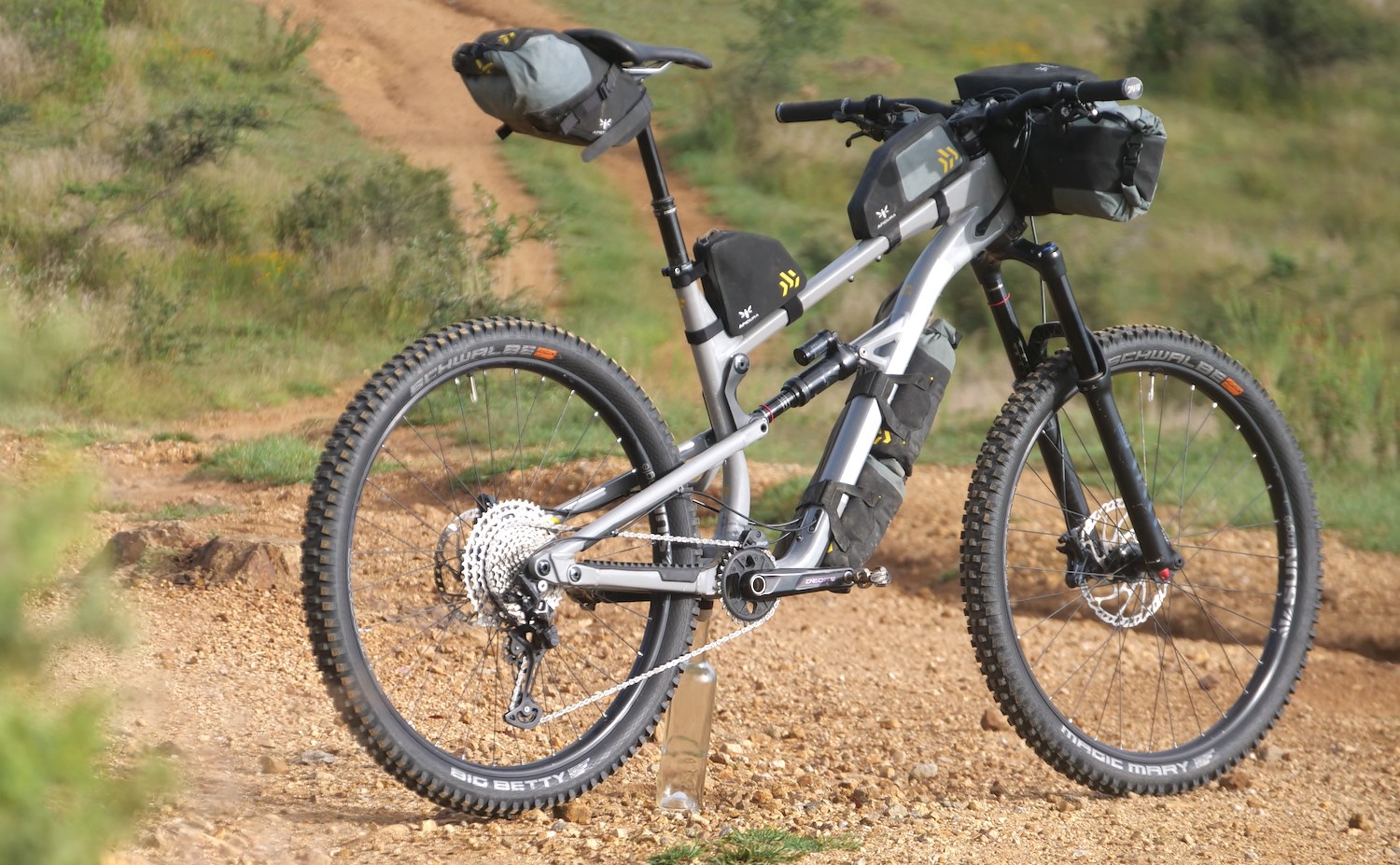
Handlebar vibration damping can noticeably affect ride feel, but it’s often lower on the list of factors that improve hand and upper body comfort. Consider addressing these changes first:
Lower your front tyre pressure. Tires with supple sidewalls and lower pressure make a big difference in terms of vibration damping. For example, we found on a gravel bike that reducing pressure from 40 to 30 psi cut handlebar vibrations by around 20%. We’ve also found that there is a 5 to 10% variation in vibration damping between different tyre models at the same tyre pressure.
Tyre inserts make a noticeable difference. On a gravel bike, we measured a 14% reduction in vibration levels with Cushcore tyre inserts at 30 km/h on a fast gravel road. And on a slower mountain bike trail, Cushcore still reduced vibration by around 8%.
Tune your suspension fork. Softer compression damping and quicker rebound can improve comfort, though these settings may compromise overall traction and performance on bigger hits.
Use more powerful brakes. Riders often grip the bars tightly when braking with weaker brakes. Upgrading to strong, responsive brakes (like SRAM Maven) allows a looser grip, reducing the vibrations transmitted to your hands.
Choose comfortable grips (or bar tape). Some grips and bar tapes are designed to absorb vibration. Skip hard lock-on grips and opt for silicone options like ESI or elastomer-based grips like RevGrips, which excel at damping vibrations.
Wear padded gloves. Gloves with palm padding help absorb vibration before it reaches your hands, adding another layer of comfort.
Summary
It’s often assumed that more handlebar flex equals more comfort, but Pinkbike’s lab tests show the relationship between flex and vibration damping is likely quite weak.
Using precise measurements of handlebar deflection under load and vibration transmissibility from stem to grips, they found an R² value of just 0.25, meaning only 25% of vibration damping can be explained by flex alone. Material properties, handlebar design, and damping characteristics matter far more.
The OneUp Components Carbon handlebar emerged as the top performer in the lab, filtering up to four times more vibration than some other bars at frequencies typical of mellow trails or rough dirt roads. Interestingly, it achieved this while being among the least flexible in the deflection test.
In contrast, the Race Face ERA Carbon transmitted far more vibration than most other bars despite showing the highest handlebar flex.
When looking at the data, carbon handlebars generally damp vibrations better than aluminium. The exception here was the Race Face Turbine Alloy handlebar, which offers strong damping and three width-specific designs to optimise the vertical compliance.


