

Carbon or Aluminium Handlebars: which material really makes a difference in comfort and vibration damping? Carbon handlebars are often praised for being lightweight and compliant in certain directions, while aluminium bars are typically stiffer, more durable, and less expensive.
But in real-world riding, does the material really matter, or are ergonomics more important? To find out, I tested a selection of popular gravel handlebars, both carbon and aluminium, across bumpy forest trails and fast gravel roads.
By measuring vibrations in the hoods, drops, and bar tops, I aimed to separate myth from reality and see which bars truly make riding more comfortable.
Carbon vs Aluminium Handlebars
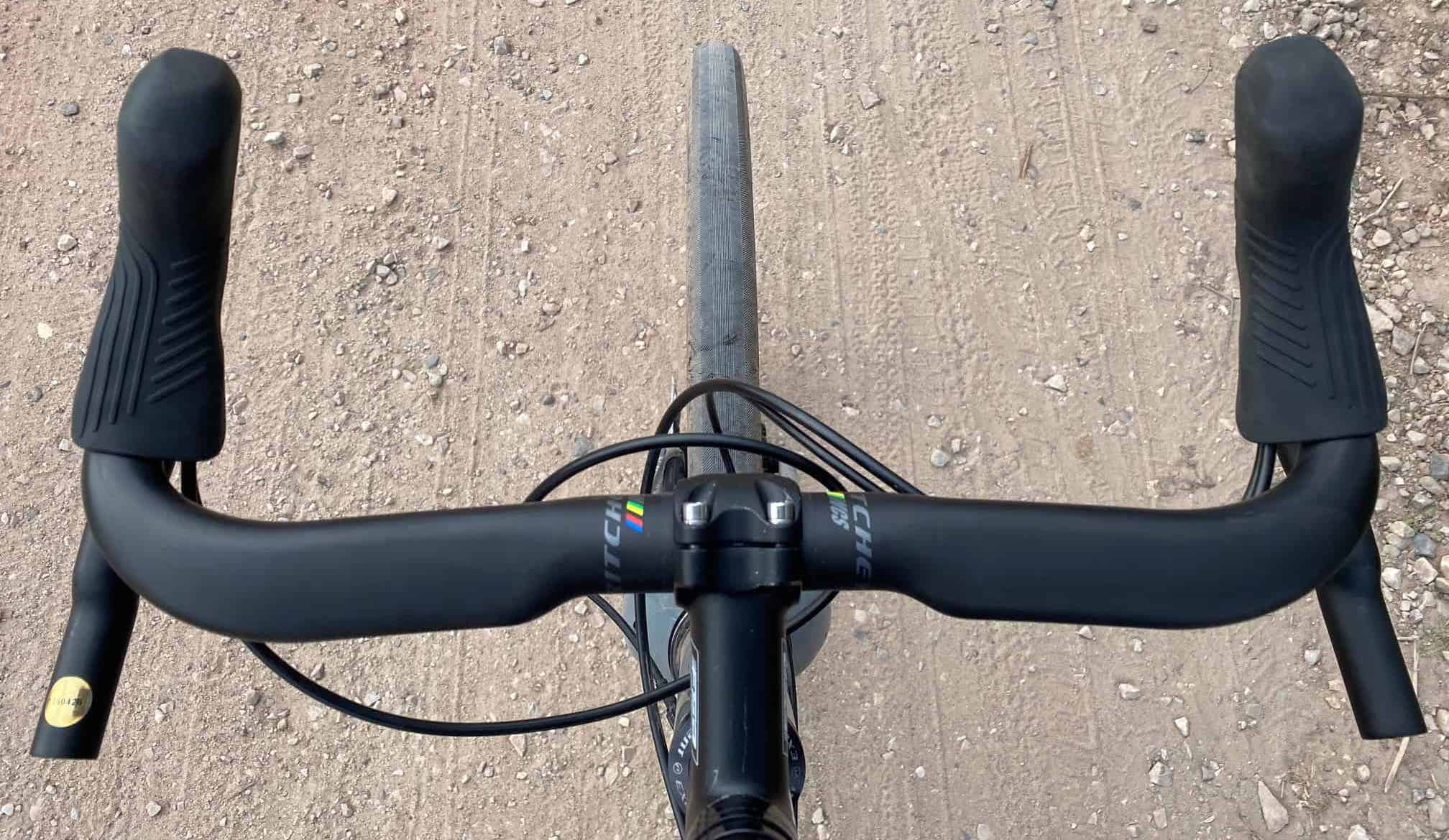
Carbon handlebars are special because their construction allows engineers to make them stiff in certain directions while remaining compliant in others. They’re also impressively lightweight – many drop bars come in well under 200 grams.
However, if you’re running carbon bars, there’s one crucial thing to keep in mind: installation requires care. It’s surprisingly easy for a stem to crush a carbon handlebar at the clamp area if the bolts are overtightened. To avoid this, always follow the manufacturer’s torque specifications and use a torque wrench when tightening everything down.
If that sounds like too much hassle, an aluminium handlebar might be the safer choice, but are you willing to give up that extra comfort?
I had to find out for myself.
The Handlebars On Test
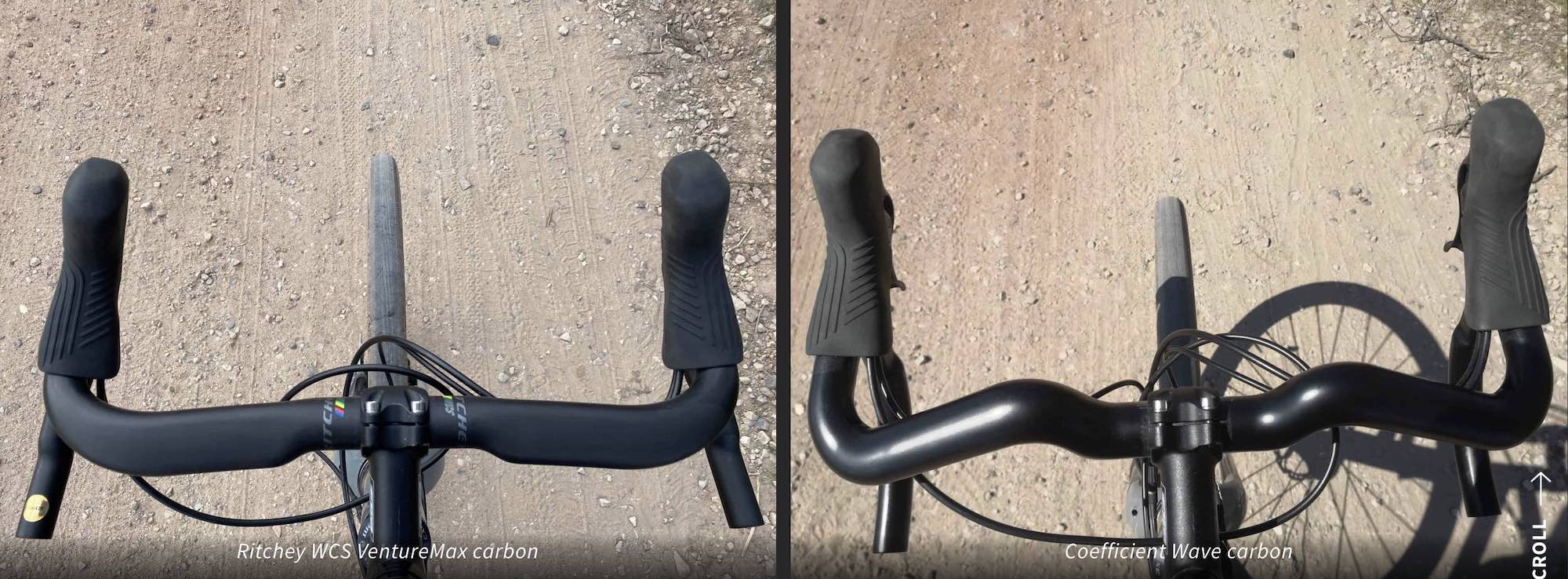
First up is the Coefficient Wave handlebar, easily recognised by its distinctive, sculpted shape. Some reviewers claim it delivers exceptional vibration damping, particularly when riding in the drops.
Also in the lineup is a more well-known carbon option, the Ritchey WCS VentureMax. This handlebar features uniquely flared drops and broad, comfortable tops, making it a popular choice among endurance and gravel riders alike.
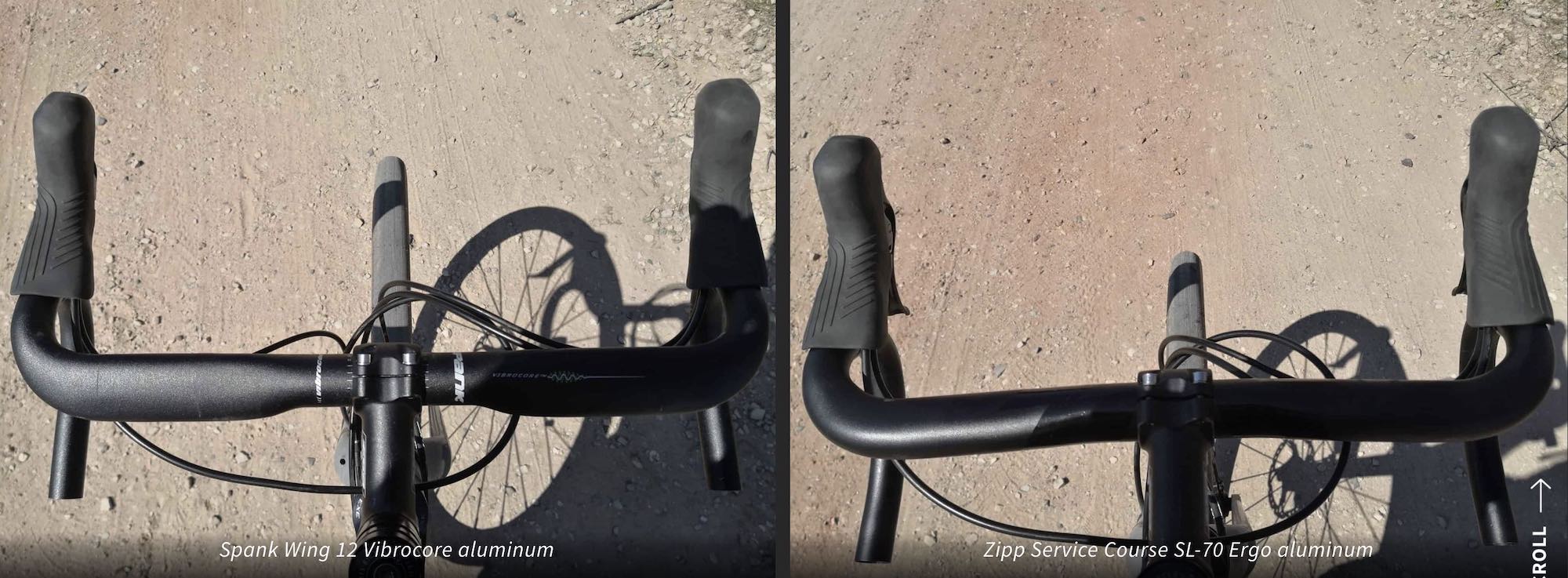
I’m also measuring the vibrations of the Spank Wing 12 Vibrocore aluminium handlebar. This bar features a special foam core designed to damp road buzz and reduce vibration transfer to the rider.
I’ll also be testing a long-time bike fitter favourite, the Zipp Service Course SL-70 Ergo. This aluminium handlebar is renowned for its stiffness, refined ergonomics, and low weight.
Key Differences Between The Handlebars
The Spank Wing 12 handlebar was slightly wider than the others at 440 mm, while the rest measured 420 mm.
Two of the tested handlebars, the Spank and Ritchey, feature a noticeable flare of 12° and 24°, respectively. In contrast, the Zipp has just 4° of flare, and the Coefficient Wave even less.
Both the Zipp and Coefficient bars use ovalized tops, whereas the Spank and Ritchey have broader, flatter top sections. This difference in shape could influence the vibration readings, especially when riding on the bar tops.
My Subjective Experience With These Handlebars
Before diving into the vibration test results, I want to share some subjective impressions.
The first noticeable difference was in overall flex. The aluminium handlebars felt extremely stiff; I had to put in serious effort to get them to bend at all. In contrast, the carbon bars flexed much more easily. Between the two carbon models, the Coefficient Wave felt slightly more compliant than the Ritchey. This flex was most pronounced when riding in the drops, though still noticeable when on the hoods.
As for the much-touted vibration-damping qualities of carbon, I honestly couldn’t feel a significant difference. Likewise, the Vibrocore foam inside the Spank aluminium bar didn’t produce any perceptible reduction in road buzz during the ride.
The Test Bike
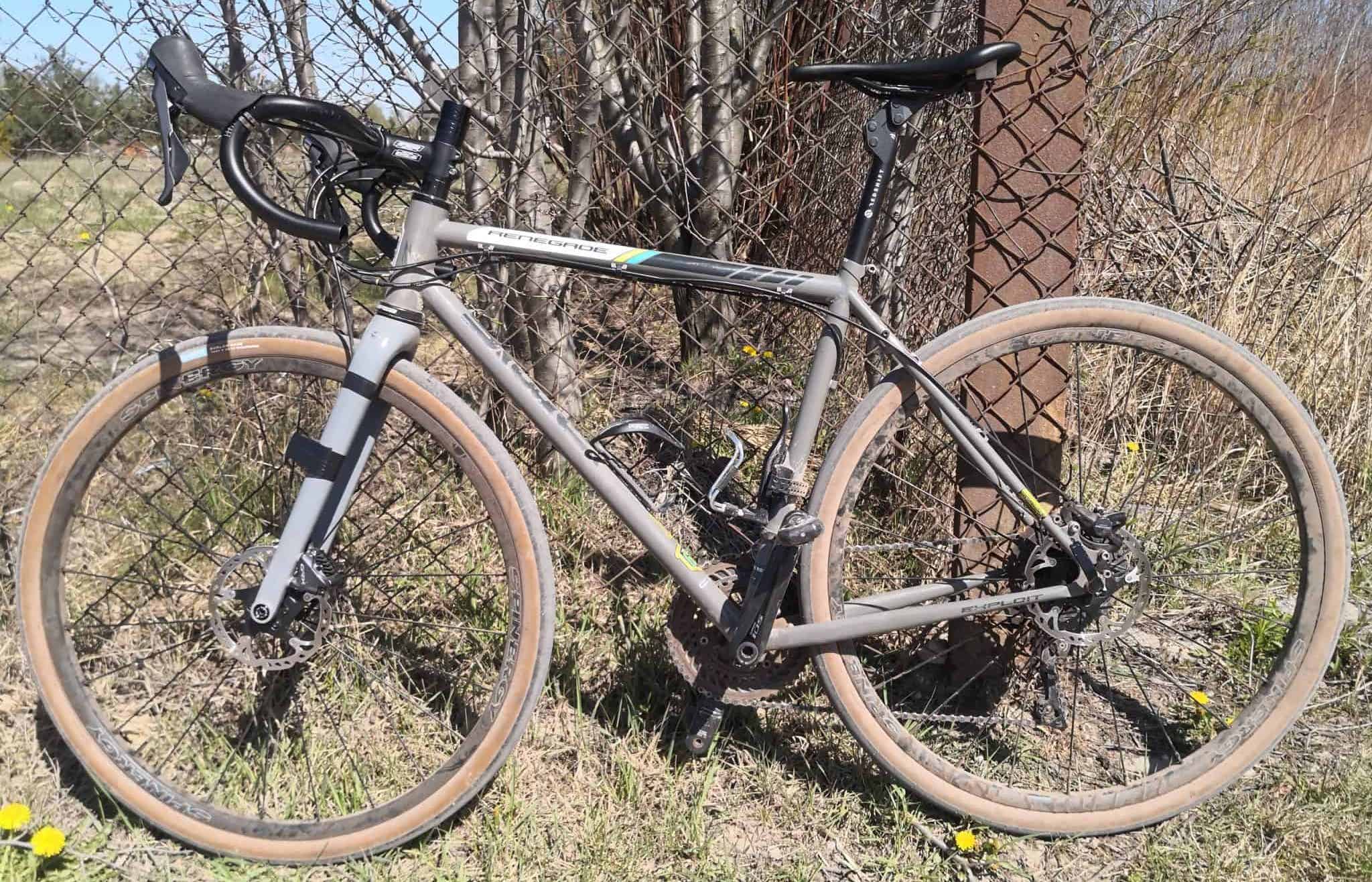
To make the differences between handlebars as visible as possible, I used my Jamis Renegade benchmark bike, fitted with a rigid Open U-Turn carbon fork and a 90 mm rigid stem (with 25 mm of spacers below).
Up front, I ran a Rene Herse Barlow Pass 38 mm tyre inflated to 40 psi. The rear tyre was the same model but inflated to 30 psi, paired with a Redshift ShockStop suspension seatpost and an SQlab 612 saddle. This setup ensured that any vibration from the rear wouldn’t affect the measurements at the front end.
I deliberately left the handlebars unwrapped, no bar tape, to avoid altering the test results, though I did wear my usual Giro gloves.
As usual, I first measured vibrations while riding in the hoods, then added additional tests on the bar tops and in the drops. For the bar-top measurements on the fast gravel road, I reduced the speed to 20 km/h instead of 35 km/h to better replicate my “cruise mode,” where I naturally spend more time holding that position.
Vibration Test Results
You can see my vibration measurement procedure & outdoor test courses HERE.
Bumpy Forest Trail Test
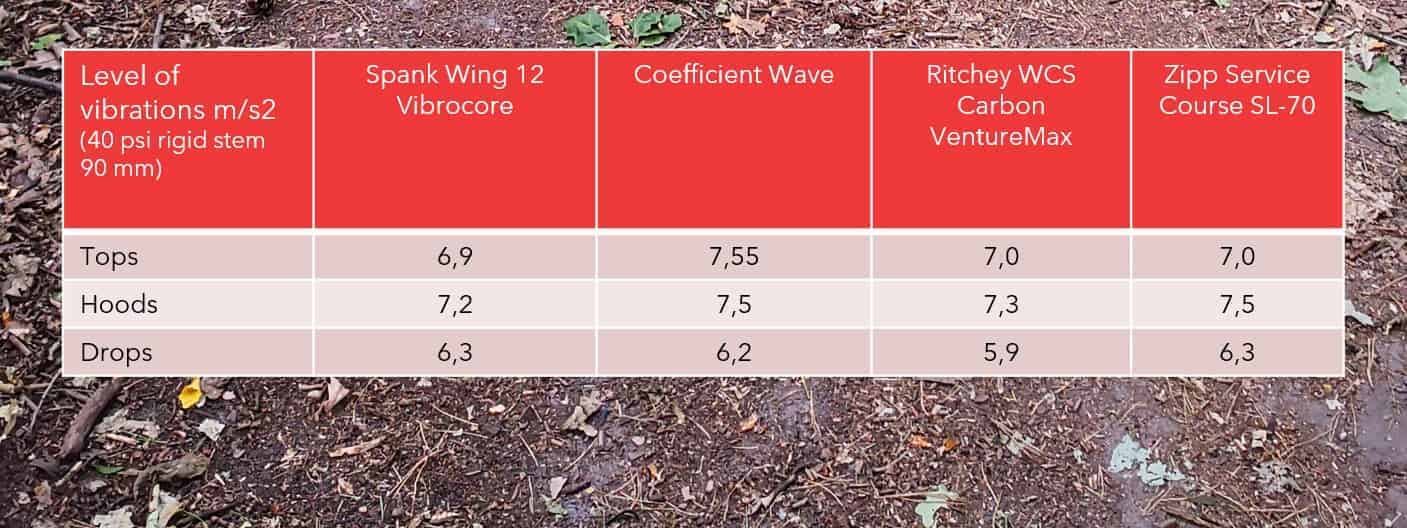
Let’s start with the bumpy forest trail test.
The most striking finding here is how small the difference actually was between aluminium and carbon handlebars. I expected to see around a 10% improvement in vibration damping from carbon, but in reality, the gap was closer to just 5 to 6% in the best cases.
When riding in the hoods, there were some variations between individual handlebars, though not specifically between materials. Interestingly, the flatter and more flared designs, like the Spank and Ritchey, performed slightly better, suggesting that handlebar shape may play a bigger role than material when it comes to absorbing larger impacts.
In the drops, the Ritchey came out on top, but again, the overall spread was minor – only about a 6% difference between the best and worst performers.
What really stood out, however, were the differences observed when riding on the bar tops. In this position, you naturally place less weight on the front wheel and allow your arms to move more freely. But the higher the tops sit, as with the Coefficient Wave, the less front-end load there is, which made the bike feel noticeably “bouncier.” In fact, the Wave registered 9% more vibration than the Spank in this position.
Objectively, the measurements showed more vibration on the bar tops overall, yet subjectively, this position still felt more comfortable. With my arms more relaxed and less tension through the shoulders, the extra vibration didn’t translate into additional fatigue.
Fast Gravel Road Test
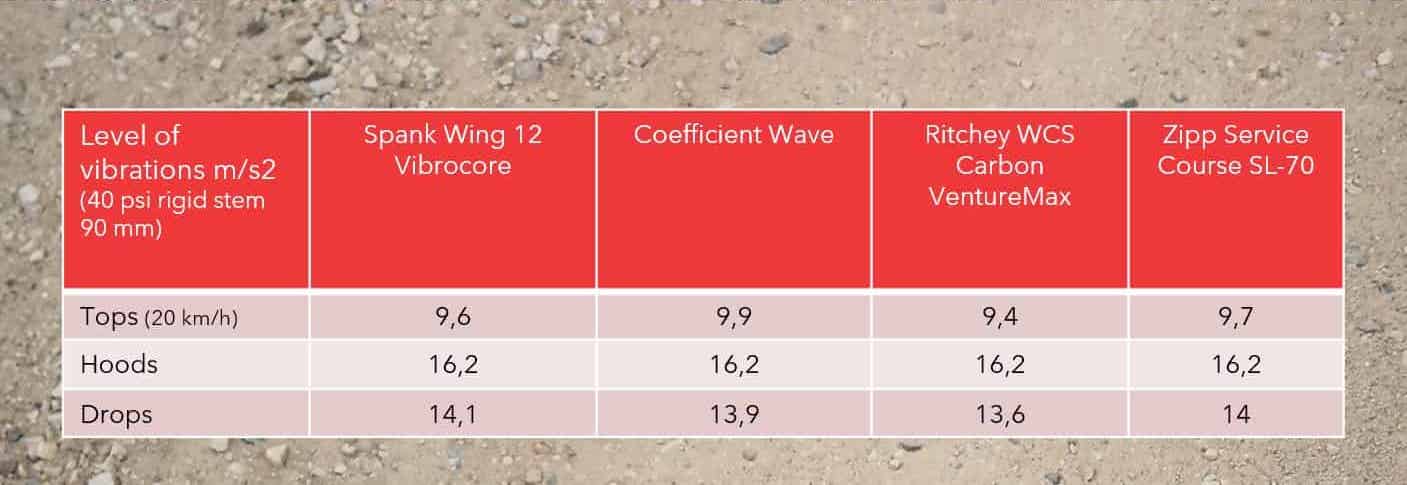
Moving on to the fast gravel road test.
I was quite surprised to find no measurable difference between the handlebars when riding in the hoods. The vibration levels were so high that I ended up running five test repetitions per handlebar instead of the usual three, just to confirm the results. Even after averaging all five runs, the vibration readings remained remarkably similar across every bar.
The drops, however, revealed a bit more variation. Both carbon handlebars performed slightly better, though the improvement was modest – around 1 to 3% at most.
When riding on the bar tops at 20 km/h, the Ritchey once again came out on top, measuring 5% lower vibrations than the worst performer. Interestingly, the Spank placed second, showing a 3% improvement, which might suggest that the Vibrocore foam does offer some small benefit after all.
That said, a more likely explanation is the shape of the bar tops. Flat sections, like those on the Spank and Ritchey, probably allow the rider’s weight to spread more evenly across the hands, improving comfort and reducing pressure points.
Once again, the Coefficient Wave, with its taller tops, was the worst performer in this position. Still, it’s worth noting that this bar also allows for a more upright, relaxed posture, so the higher measured vibration levels may not actually translate into greater fatigue in real-world riding.
Summary
Given how small the differences in vibration attenuation were between these handlebars, it’s clear that ergonomics matter far more than material choice.
In this test, the Ritchey WCS Carbon VentureMax showed slightly better compliance than the others, particularly in the drops, and to a lesser extent on the bar tops. Still, the improvement was subtle, nowhere near the level you might expect just from riding impressions.
Overall, you shouldn’t worry too much about whether your gravel handlebar is carbon or aluminium. The cheaper aluminium options deliver nearly the same level of comfort and compliance, with the added bonus of being more durable and less prone to damage from overtightening or crashes.
You can support the CYCLINGABOUT Comfort Lab by purchasing Ritchey WCS Carbon Venturemax handlebars on Amazon. Simply click HERE for 420mm width, HERE for 440mm width, HERE for 460mm width and HERE for 480mm width – and a small commission will come our way.


