


When it comes to bicycle touring rims, compromising on strength is the last thing you should do, as wheel failure will quickly derail your tour.
In my experience, rims rank among the top three most critical components of a touring bike, alongside racks (these are the best) and tyres (these are great). Even with perfectly tensioned, premium-quality spokes and strong hubs, inadequate rims will still fail under heavy loads.
The right rim strength depends on your body weight, total load, and the terrain you plan to ride. A 50 kg rider carrying 10 kg on smooth paved roads doesn’t need heavy-duty touring rims. But if you weigh 80 kg and are carrying 40 kg on bumpy roads in Africa, that’s a very different scenario.
In this guide, we’ll explore the essential features of the strongest and most reliable touring rims, and I’ll share my recommendations for the best brands and models available.
Note: This article was originally published in Dec 2015, but has just been updated in Dec 2025.
How Do Bicycle Touring Rims Fail?
Cracked Spoke Holes and Rim Centres
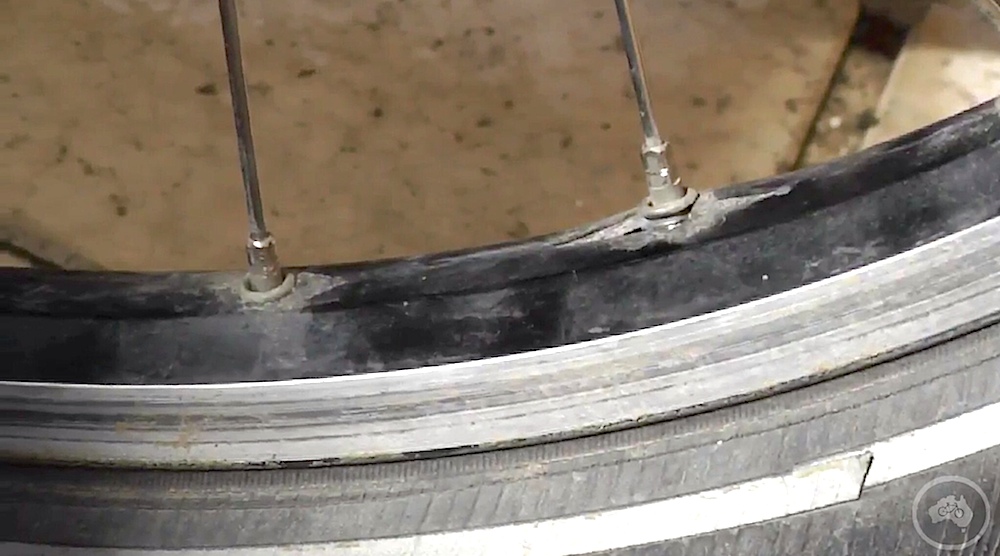
The most common form of rim failure on a touring bike is cracking around the spoke holes or at the rim centre.
If an aluminium rim isn’t thick enough, spokes can pull through or crack the metal around the spoke holes. While this type of failure is rare on proper cargo or touring rims, it is relatively common among lightweight rims weighing less than 600 grams.
Brake Track Splitting
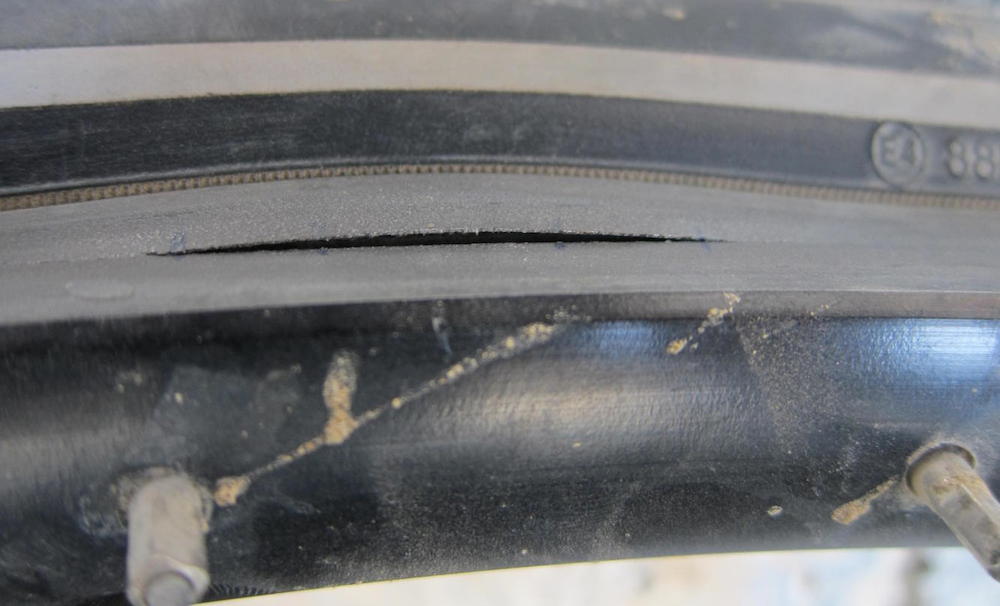
A less common form of rim failure occurs along the brake track. This is usually caused by exceeding the rim’s maximum tyre pressure, especially when combined with a heavy load. In rare cases, it may simply be the result of a manufacturing defect.
Brake Track Wear
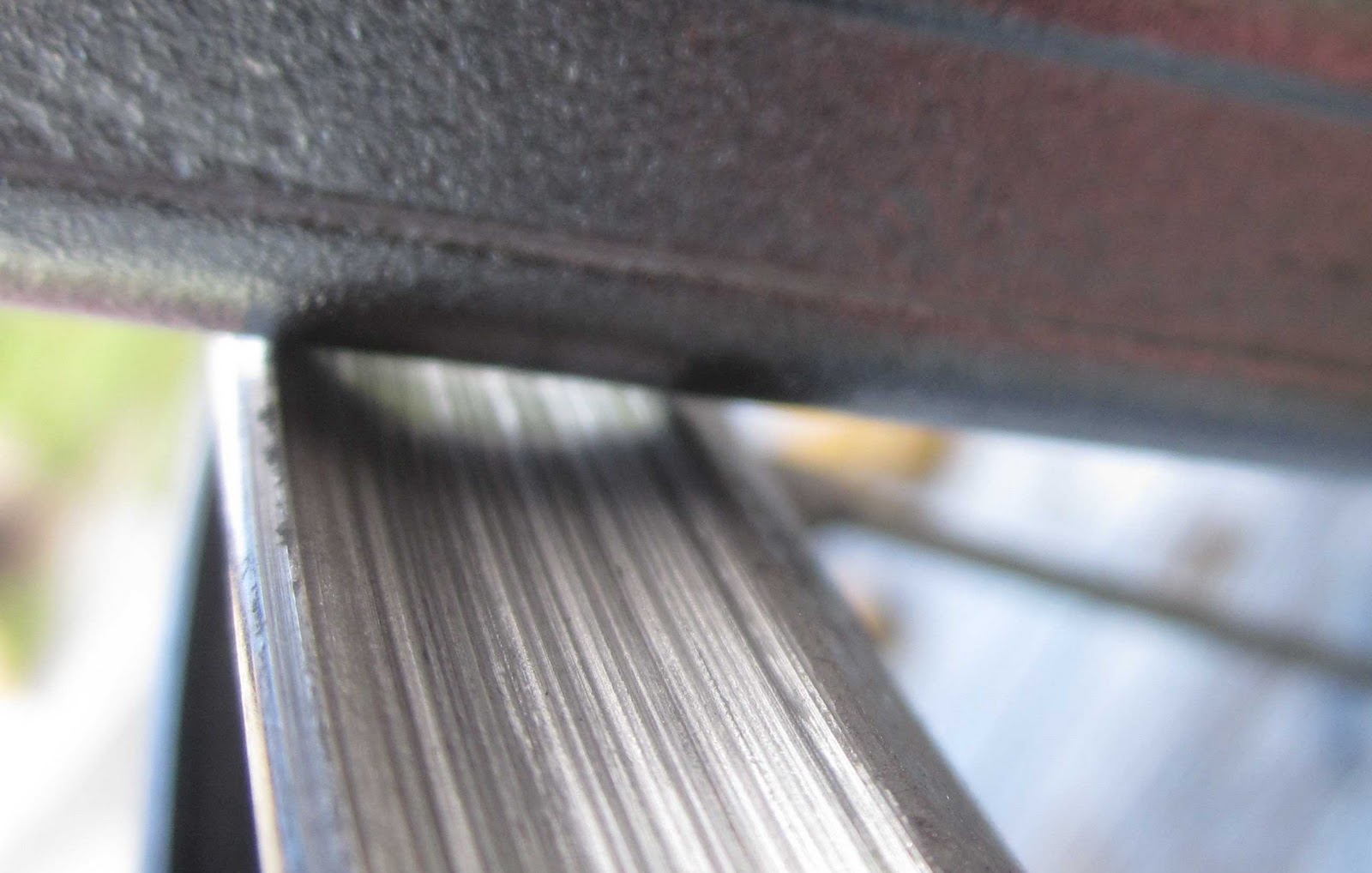
If you use rim brakes, the aluminium on your rims will gradually wear down from pad contact.
The rate of wear depends on factors such as riding conditions, terrain, and your braking style. Most touring cyclists can cover over 20,000 km before needing to replace their rims.
Key Attributes of the Best Bicycle Touring Rims
Rim Weights
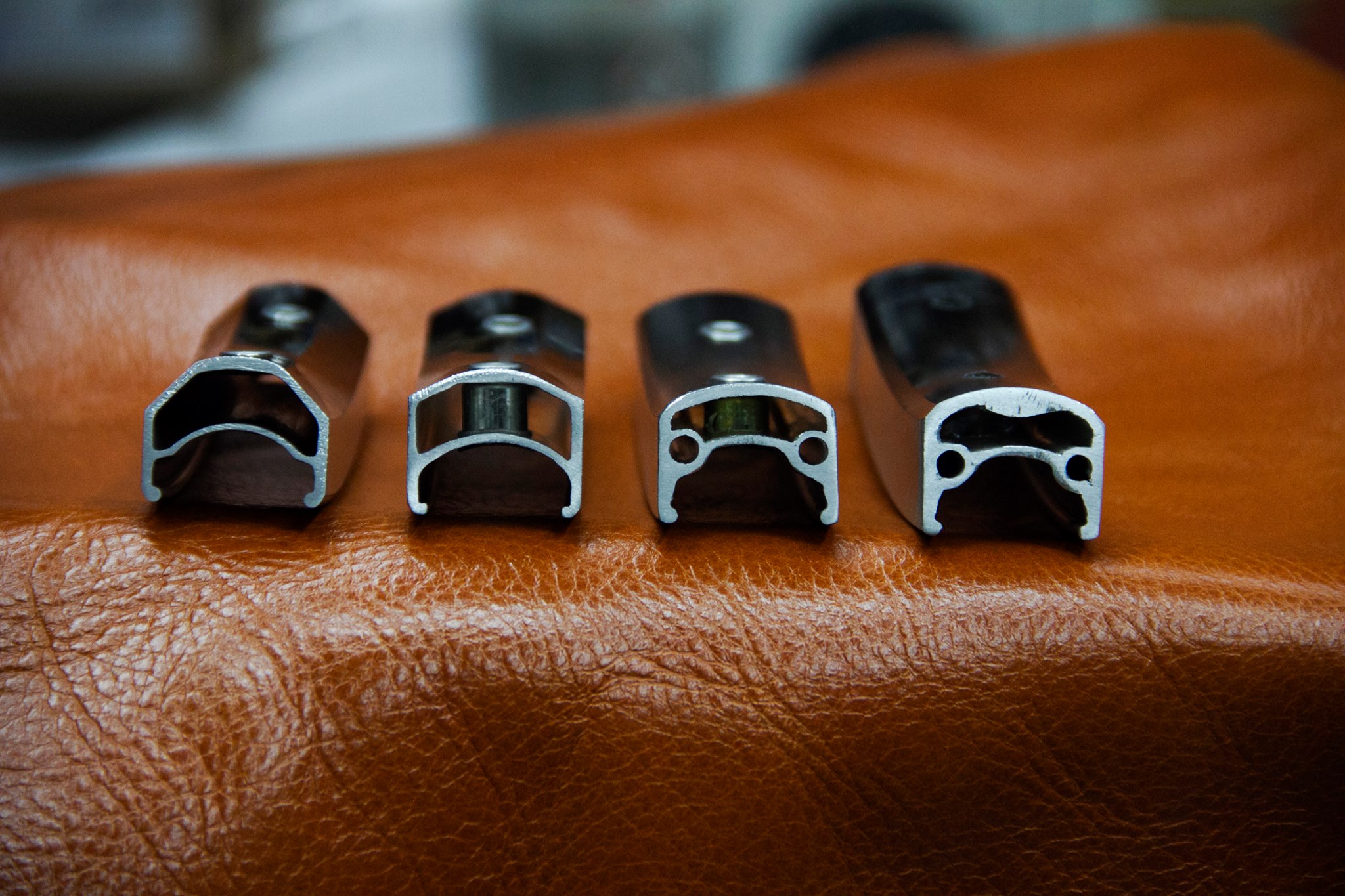
The most reliable indicator of rim strength is its weight. If you’ve ever cracked a rim, check its weight – I can almost guarantee it’s lighter than the rims listed below.
Adding a few hundred grams per wheel can greatly improve durability on long tours. Because heavier rims are usually stiffer, you’ll also spend less time constantly re-tensioning spokes.
High-strength touring rims achieve their strength, stiffness, and durability primarily through thicker aluminium. Aluminium rims can range from 300 to 950 grams, with high-quality touring rims typically falling between 600 and 900 grams.
Rim Materials
Almost all bicycle rims are made from aluminium. The manufacturing process involves extruding semi-molten aluminium through a mould to create a specific profile, which is then formed into a hoop and joined – either welded or pinned.
Aluminium replaced steel a few decades ago, thanks to its lighter weight, greater strength, rust resistance, and far better braking performance for rim-brake users.
Carbon rims are becoming increasingly common on road and mountain bikes, although they’re still relatively expensive. With carbon technology advancing quickly, it wouldn’t be surprising to see carbon rims become a more mainstream option on touring bikes in the coming years.
Rim Walls and Rim Eyelets
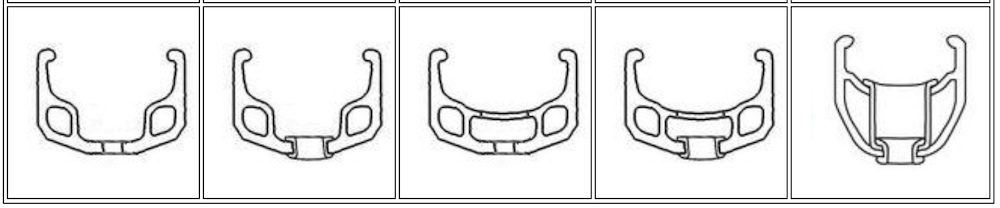
Rims can be single, double, or even triple-walled, though all high-quality touring rims are typically double-walled. This simply refers to the number of aluminium layers that make up the rim, and more layers tend to make it less prone to failure.
Eyelets are aluminium sleeves used to reinforce the spoke holes in a rim. Not all rims use them, but some manufacturers add eyelets to reduce weight without sacrificing strength – for example, Ryde trims about 70 grams from certain models by incorporating eyelets.
Double-wall rims may feature either single eyelets or double (socketed) eyelets. Double eyelets distribute spoke tension across both walls of the rim, allowing for a lighter yet stronger overall structure.
You’ll also notice that many of the strongest rims in the list below achieve their durability without using eyelets, relying instead on thicker aluminium walls. Eyelets aren’t essential for touring rims, but they can offer a small weight savings depending on the rim design.
Spoke Holes
Rims come in a variety of spoke hole counts, with 32, 36, and 40 holes being the most common options for touring. More spokes help distribute the load more evenly across the hub, spokes, and rim. With any of the touring rims listed here, most riders will find that 32- to 36-hole rims paired with high-quality spokes perform perfectly well.
While 36 spokes are usually sufficient, heavier riders, cyclists carrying substantial loads, and tandems running 700C wheels with cassette hubs may benefit from 40 or even 48 spokes.
Welded vs. Pinned Rims
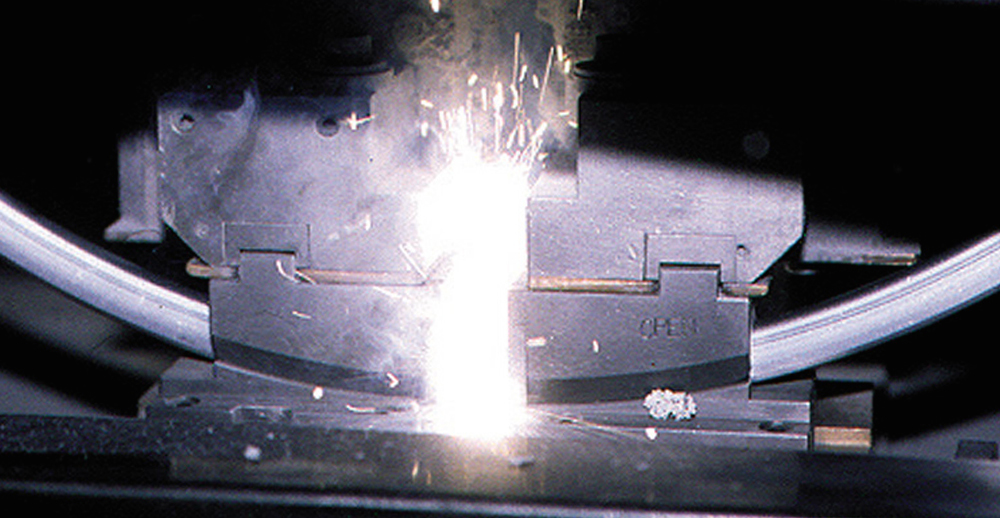
Once rims are extruded and formed into a hoop, they are either pinned together or joined with an arc weld. Lightweight rims generally benefit from being welded, as it creates a cleaner and stronger joint.
However, with heavy-duty rims (600 grams and above), the joining method contributes very little to overall strength – the sheer material thickness does most of the work.
Internal Rim Widths

In recent years, rims and tyres have been designed to work together more effectively by pairing each tyre with an appropriate inner rim width. When the rim width is well matched to the tyre, the tyre deforms far less in corners and avoids the exaggerated “lightbulb” shape when inflated.
Here’s a guide on pairing rim and tyre widths:
20-25mm internal width: 25 to 40 mm wide tyres
25mm internal width: 40 to 55 mm wide tyres
30mm internal width: 2.2″ or wider tyres
35mm internal width: 2.6″ or wider tyres
40mm+ internal width: 2.8″ or wider tyres
Rims For Internal Gear Hubs

Internal gear hubs have a much larger shell diameter than standard hubs. This causes the spokes to sit at a wider angle relative to the hub flanges, which changes how force is applied to the rim – spokes pull slightly sideways, increasing stress around the spoke holes. Over time, this can lead to cracking or spokes loosening if the rim isn’t designed to handle it.
Rims with angled spoke holes address this issue. The angled drilling aligns each spoke more closely with the direction of force from the hub, reducing lateral stress on the rim’s spoke bed. This helps prevent cracks, spoke pull-through, and premature rim failure.
Brands such as Ryde, Exal, Mach1, and RAD15 offer rims with angled spoke drilling specifically for use with internal gear hubs.
Tubeless Rims For Bicycle Touring

Tubeless tyres for bikes do exactly what the name suggests – they eliminate the inner tube, functioning much like a modern car tyre and rim. The benefits are significant: increased puncture resistance, lower rolling resistance, and the ability to run lower tyre pressures without pinching a tube.
Tubeless setups are now standard on mid to high-end mountain bikes and gravel bikes, and they’re becoming increasingly popular for touring bikes as well, especially with tyres wider than 2.2″ (55 mm).
A tubeless tyre looks much like a traditional clincher, but it requires no inner tube. Once the tyre is seated (meaning the beads snap securely into the rim), it forms an airtight seal. A valve, similar to those used with inner tubes, is fitted directly to the rim, and sealant (either poured into the tyre or injected through the valve) helps plug small leaks. The liquid sealant can even repair punctures while riding.
Rim and tyre fitment is critical: standard tolerances are roughly ±0.5 mm. Tyres that exceed this range can be impossible to seat, while tyres that are too small may blow off the rim. Unfortunately, not all rims meet this tolerance, but I’ve listed the ones that do below.
Disc and Non-Disc Rims

Some rims are designed exclusively for disc brake use and therefore lack a brake track. These disc-specific rims can be lighter while maintaining the same strength, since they don’t need to accommodate rim braking.
If you’re using rim brakes, it’s important to choose the correct type of rim – you can easily end up with an incompatible one. A rim with a brake track can be used on a disc-brake bike, but a disc-specific rim cannot be used with rim brakes.
Brake Track Treatment

For riders using rim brakes, some manufacturers apply special coatings to the brake track to increase rim longevity, improve braking performance, and reduce the risk of failure.
Ryde uses a Carbide Super Sonic (CSS) coating on some of their touring rims, which is claimed to slow rim wear by a factor of four. The process involves blasting tungsten carbide into the braking surface at several times the speed of sound, creating an extremely hard, wear-resistant layer.
Keep in mind that CSS rims work best with CSS-specific brake pads, such as those from Koolstop. Using standard pads will lead to faster pad wear than necessary.
The Best Bicycle Touring Rims For Strength & Durability
For heavy-loaded touring or cargo hauling, here’s my list of the strongest rims available.
My favourite brand for touring rims is Ryde. I have no affiliation with the company, but I’ve ridden more than 150,000 km on their rims – including 35,000 km on a super-heavy tandem – so I can personally vouch for their durability.
It’s no surprise that Ryde rims last a long time. They are often a couple of hundred grams heavier than comparable models, but that extra weight pays off. If you’re carrying four panniers, riding a heavier load, or heading out on an extended tour, 200 grams more per wheel provides real peace of mind.
Alex Rims

Alex DM24
- 26, 29, 700C
- 24mm Internal Width
- Tubes Only
- 32, 36h
- 712 grams (700C)
Alex EMC30
- 27.5, 29, 700C, 650B
- 30mm Internal Width
- Tubeless Ready
- 32h
- 684 grams (700C)
Alex EMC35
- 27.5, 29, 700C, 650B
- 35mm Internal Width
- Tubeless Ready
- 32h
- 727 grams (700C)
DT Swiss Rims

DT Swiss U 533
- 26, 27.5, 29, 650B, 700C
- 22mm Internal Width
- Tubeless Ready
- 28, 32h
- 655 grams (700C)
DT Swiss U 623
- 29, 700C
- 25mm Internal Width
- Tubeless Ready
- 28, 32h
- 685 grams (700C)
DT Swiss U 663
- 26, 27.5, 29, 650B, 700C
- 30mm Internal Width
- Tubeless Ready
- 28, 32, 36h
- 760 grams (700C)
DT Swiss U 683
- 27.5, 650B
- 35mm Internal Width
- Tubeless Ready
- 32h
- 730 grams (27.5″)
EXAL Rims

EXAL XL25
- 26, 27.5, 29, 700C, 650B
- 25mm Internal Width
- Tubes Only
- 32, 36h
- 834 grams (700C)
EXAL EM30
- 27.5, 29, 700C, 650B
- 35mm Internal Width
- Tubeless Ready
- 32, 36h
- 766 grams (700C)
EXAL EM35
- 27.5, 29, 700C, 650B
- 35mm Internal Width
- Tubeless Ready
- 32, 36h
- 822 grams (700C)
Idworx Rims

Idworx DaRim HD
- 29, 700C
- 30mm Internal Width
- Tubeless Ready
- 32, 36h
- 725 grams (700C)
Mach1 Rims

Mach1 Kargo L
- 26, 27.5, 29, 700C, 650B
- 25mm Internal Width
- Tubes Only
- 24, 28, 32, 36h
- 705 grams (700C)
Mach1 Kargo XL
- 26, 27.5, 29, 700C, 650B
- 27mm Internal Width
- Tubeless Ready
- 28, 32, 36h
- 825 grams (700C)
Mach1 Trucky 30
- 26, 27.5, 29, 700C, 650B
- 30mm Internal Width
- Tubeless Ready
- 28, 32, 36h
- 685 grams (700C)
Mach1 Trucky 35
- 26, 27.5, 650B
- 35mm Internal Width
- Tubeless Ready
- 28, 32, 36h
- 710 grams (27.5″)
Mach1 Trucky 40
- 26, 27.5, 650B
- 40mm Internal Width
- Tubeless Ready
- 28, 32, 36h
- 745 grams (27.5″)
Mavic Rims

A-27 Disc
- 27.5, 29, 700C, 650B
- 27mm Internal Width
- Tubeless Ready
- 28, 32h
- 807 grams (29″)
RAD15 Rims

RAD15 Storm26 (Angled Drilling)
- 26, 27.5, 29, 700C, 650B
- 26mm Internal Width
- Tubeless Ready
- 32, 36h
- 750 grams (700C)
RAD15 Storm33 (Angled Drilling)
- 26, 27.5, 29, 700C, 650B
- 33mm Internal Width
- Tubeless Ready
- 32, 36h
- 800+ grams (700C)
Rodi Rims

Brutus 30
- 26, 27.5, 29, 700C, 650B
- 30mm Internal Width
- Tubes Only
- 32, 36h
- 817 grams (700C)
Brutus 35
- 26, 27.5, 29, 700C, 650B
- 35mm Internal Width
- Tubes Only
- 32, 36h
- 838 grams (700C)
Ryde Rims
Ryde Andra 30 (Angled Drilling)
- 26, 29, 700C, 650B
- 19mm Internal Width
- Tubes Only
- 32, 36h
- 830 grams (700C)
Ryde Andra 321 (Angled Drilling)
- 29, 700C
- 21mm Internal Width
- Tubes Only
- 32, 36h
- 677 grams (700C)
Ryde Andra 25
- 29, 700C
- 25mm Internal Width
- Tubes Only
- 32, 36h
- 874 grams (700C)
Ryde Andra 40
- 26, 27.5, 29, 700C, 650B
- 25mm Internal Width
- Tubes Only
- 32, 36h
- 874 grams (700C)
Ryde Andra 29
- 29, 700C
- 29mm Internal Width
- Tubes Only
- 32, 36h
- 927 grams (700C)
Ryde Rival 35 (Angled Drilling)
- 27.5, 29, 700C
- 35mm Internal Width
- Tubeless Ready
- 32, 36h
- 785 grams (700C)
Velocity Rims

Velocity Atlas
- 26, 27.5, 29, 700C, 650B
- 20mm Internal Width
- Tubes Only
- 32, 36, 40, 48h
- 620 grams (700C)
Velocity Cliff Hanger
- 26, 27.5, 29, 700C, 650B
- 25mm Internal Width
- Tubeless Ready
- 32, 36, 40, 48h
- 675 grams (700C)
Velocity Dually
- 26, 27.5, 29, 700C, 650B
- 39mm Internal Width
- Tubeless Ready
- 28, 32, 36
- 675 grams (700C)
Weinmann Rims

Weinmann DYNO E40
- 26, 27.5, 29
- 26mm Internal Width
- Tubes Only
- 32, 36, 40
- 849 grams (700C)
Weinmann DH39
- 26, 27.5, 29
- 32mm Internal Width
- Tubes Only
- 32, 36, 40
- 919 grams (700C)


Velocity Dyad’s have held up real well under heavy loads Maine to Washington and on 200/300/400/600K rides. 240 pounds of me plus 3 person tent and panniers was quite a load.
I put Velocity Chukker on a Surly disk build . . Interested to know if anyone has thought of Chukker on a touring set up I am at 250 lbs plus gear and bike at 350 lbs
The Velocity Chukker rim is a very solid option. You should have minimal issues with those!
Great to hear – I’ve put many kilometres on Dyads myself.
I’ve been running Velocity Aeroheats on my Paratrooper for a few years now. Dics up front v-brake rear (a little wear showing) about to give them another workout for a few months.
Please help this guy out with advice, bicycle parts maybe a sponsorship from a wheel maker.
https://www.facebook.com/fatguyacrossamerica/
Nice article, as usual!
What do you think about the Ryde Andra 210 29″ for a disc brake bike Salsa Vaya?
It looks like a pretty solid rim, not too dissimilar from the Velocity Atlas Disc. I haven’t had any experience with it, but can imagine it would be strong enough for most touring.
Hey Alee, it’s a great post and very helpful for me. I’ve bought Surly Disc Trucker frame and at the moment, I am looking for a pair of rims. Here in Korea it’s not easy to get touring bike parts such as 36h/40h rims. As soon as I read your post I decided to buy one of the rims(Rigida Andra or Velocity Atlas Disc). Would you let me know any that I can order on the Internet? Oversea shipment should be available as I am living in Korea. Cheers
Hi Juntae. Sorry I missed this! Try SJS Cycles (UK) for a Rigida rim! Alee
Thank you for the review.
I strongly confirm Mavic XM719: is NOT RECOMMENDED
Got small problems with them on my 26 / 32 h / Rohloff . less than a year with 7’500 km !!! i am furious !
I am just 66 kg and ride with about 40 kg of materials
Hi Alee
I guess it doesn’t make much difference but Ryde have 28″ rather than 29″ listed.
http://www.ryde.nl/andra-30
Shane
Thanks – 700c, 28″ and 29″ are actually the same size, strangely!
I thought 700C Rims are 28″ but you write it is (29″)? anyway, the artical is amazing helpful! Thanks
700c, 28″ and 29″ are the same rims! The industry just measures tyres in slightly different ways to confuse us. :S
Rear wheel was having flat tyres, over a couple of days. As I use plugs instead of rim tape, i got a wet wipe and cleaned the rim and found a crack along the extrusion line. It was 5-10mm so to help till next shop I used a couple of layers of Tenacious Tape which worked. The crack had gotten bigger in that time.Had to make do with a Alex rim as it was the only 36 hole rim available at such short notice over the annual Japanese holiday period. Front still going strong. Now run discs front and rear, use pads really quickly with load and wet weather.
When did you buy them? I’ve got a pair on a tandem, so we weigh about 130 both of us together, + some 30kg luggage and we’ve ridden quite a bit already, without any problems.
I’ve been riding mine for several years now, built up on a Rohloff hub (36h) and have had no problems at all? I am using disc brakes too…
Just a side note about eyelets : the larger the hole drilled in the rim, the weaker the rim becomes. Eyelets are a way to reinforce what’s been weakened, but it’s still better not to weaken the rim too much. And Mavic 719 can be considered as lightweight rims, and not that appropriate for toaded tourism.
We have gone through a number of rims while tandem cycle touring over the decades. We carry about 20-25 pounds along with our 310 lbs of bodies on a 36 lb tandem. The high pressures we run, 120 psi in 28c tires and 105 psi in 32c tires puts a lot of stress on the rims. We use 32 hole front/36 hole rear rims for club rides and 36 hole front and rear for touring. We have had trouble with Velocity Fusion holding true and worst of all Velocity Deep V and FIR rims separating at their pinned joints. So we switched to welded/machined rims. Those with the smoothest joints, critical for braking with rim brakes, have been: Mavic A-719, HED Belgium Plus, H Plus Son Archetype polished (NOT their anodized), H Plus Son TB14, and DT-TK540 in that order from best to “worst”, with the worst still being better than a pinned joint rim. While I like the HED and H Plus Son Archetype, I have more faith in rims for touring with ferrules, so we use the Mavic A-719 touring.
A ferrule spreads the force around a wider area of the rim body, so is less likely to crack than a much smaller non ferrule hole spreading the force around the small diameter spoke nipple. I have had non ferrule rims stress crack, but not a ferruled rim.
I can’t find a store that sells Ryde Andra 30 in 700c in the US, well, or any where. . . Do they not make the rim in 700c anymore?
It’s still on the Ryde website, so not sure why shops don’t have stock of it. An alternative rim is the Sputnik (the eyeletted version of the Andra 30) which is available in 700c here: https://www.sjscycles.co.uk/rims-tape/32-rigida-sputnik-700c-622-touring-rim-black/
Hi Alee, Have you come across the DT Swiss 535 and 545 rims? They appear to be very solid rims built for e-bikes and trekking, and come in at less than a third the price of the TK 540. I’ve had no luck finding any reviews of them, but they would seem to be a very good option for the price. Would be keen to hear your opinion. Cheers
They’re obviously not as technologically advanced as the TK 540, but if they’re a third of the price, that’s great value for a rim that’s probably not far off the same strength.
I bot them on April 2015. Looking on various forums, I am not the only one who had problems with Mavic XM719. You wont have any problems before 5’000 km, but with Vbreaks, the rims get slimmer … I know it is under warranty but I do not want having any trouble anymore.
Luckily, my rims problems happen in Europe.
What would have happen in Iran or Burma, …
ah ah, make sens, i have Rohloff hub too with 32 holes BUT WITH V BRAKES
once the side get slimmer due to vbrakes, then you will have problems (starting about 6’000 km)
if you go to rolof website, they strongly recommend “Rigida/Ryde Andra 30 Rim
Available in a Rohloff-specific angled drilling to build a stronger wheel with Rohloff hubs ”
Those f…ing mavic rims where already mounted on my MTB Cycletech Papalagi.
The basterds, they just wanted to save money disregarding clients safety !
Supposed to be Swiss Quality, but actually made in China.
They are just bikes traders.
I strongly confirm that the (“supposed” Swiss ) MTB CYCLETECH is not professionnals.
I had many problems with their Geneva retailer JEAN BRUN (bike boutique ! not Walmart )
I reported to MTB CYCLETECH and asked for help. They just disregarded my distress.
SOLD IS SOLD.
No wonder, the founder of this company, Mr Butch Gaudi left the firm in 2013.
This is to say, if you are stuck in no where, forget about getting help !
if only i had known, I think I would have bot Koga
well, doing so, no wonder people build their own bike or buy at DECATHLON ( the best value for your money )
This message is not a prank !
Georges Thu ( my name ! not anonymous )
Hi Jas, I confirm, DT Swiss SPOKES are top quality !
I have now +10’000 km, no broken, still going strong .
although most of their stuff are made in china ( tawain is part of china, ah ah )
I normally ride with Oertlieb bag (very good quality) about 35 kg on forest/rough roads
this is NOT the case with mavic 719 rims, DE LA VRAIE MERDE !
Hey man, I know that this post is several months old but if you haven’t found a solution for a rim yet, any bike shop that has an account with the US Sapim dealer Provelo USA can order Ryde rims. There aren’t very many distributors but I know from my own shop experience that they can get that stuff. Hope that helps.
I’m about to buy a Bombtrack Beyond. The bike is “armed” with WTB “STS” double wall sleeved, TLC, i19, 32h. Does anybody have any expirence with those rims on a touring bike? Regards Piotr
They’re a pretty solid rim, Piotr. As to their durability, it really depends how much you’re loading your bike, and how rough the terrain is that you’ll be riding. For a big around the world trip with lots of gear, I’d probably suggest upgrading to a touring-specific rim (generally 100-300g heavier per rim). For a few tours here and there, you need not worry at all (especially if you’re loaded with two panniers or bikepacking bags).
I weigh 260 pounds what rims and tires do I need because the ones I got now look like I’m still riding on flat when they are full of air
You can pick many of the rims I’ve listed above. They’re as strong as it gets. As for tyres, you’ll want to go nice and wide to accomodate your weight. Check out the Schwalbe Marathon tyres.
140kg raider 2 heavy paniers in the back rack something in front rack plus trailer whit kid in the back. My spokes don’t like me.
I know the discussion is about which rims can withstand the most abuse on a touring bike, but the solution I have gravitated to was dispensing with overloading the bike altogether and simply loading up my Bob Yak or Yakima trailer that pulls behind very handily. I went through a lot of wheels and rims over the years, while going heavier and tougher and more spokes as I went along, but after switching to a trailer to haul all my stuff and noticing how light and responsive the bike was, with the weight offloaded, I became enamored with my trailer setup. I was even more amazed how well it tracks behind me in traffic and in tighter situations, that I thought it would never work. There are several companies that now make similar looking models, like the Bob Yak, and the one I recommend is the deluxe model with the built in shock absorber on the rear wheel. Another plus, is that you don’t have the problem of a very top-heavy bike, since now all the weight is next to the ground, making the bike much easier to maneuver when wheeling it around on rest stops and in and around places you stop on your trips.
This is definitely relevant information! I’ll hopefully be doing lots of trailer testing this year, including a big tour using a 10kg hybrid with a trailer which will actually weighs less in total than my touring bike.
I carry a passenger whom has poor health and tow a Bob. My bike is modified with a passenger seat. 26″ wheels and 1.5″ tyres and disk breaks My rear wheel has failed twice. Any specific advice on what wheel rim, spoke quantity and where to buy in Australia?
Hi,
I have a road bike, not quite suitable for loaded touring. Nevertheless, I do tours of up to 2 weeks with minimal gear (tent, sleeping bag), mostly 10kg on the back, about 4kg on the front, me(about 80 kg + 20L backpack). The wheels are starting to wear off, especially the rims and I can’t get much braking power anymore.
I would like to build a second wheelset on a pair of NOS Shimano Exage hubs I just bought (the reason for this choice is the 126 O.L.D. on my frame). There’s not much tyre clearance. I currently have Continental Gator HardShell 25x700C and I am not sure I can fit 28. The rim width can’t be 19 for sure, so the list of recommended tyres in the article doesn’t help in my case. My best option is a width of 15mm.
What rims do you recommend for the above setup?
Note: we have good and bad roads here. Unfortunately, I can’t avoid the bad roads (usually cracks, sometimes potholes), which can go on for tens of kilometers!
The Velocity Deep V would have to be the most bombproof rim available in a narrow width.
There are lots of options available to you. Call a shop that specialises in touring. For example: Cheeky Cycles, Omafiets in Sydney. Commuter Cycles, Abbotsford Cycles or St Kilda Cycles in Melbourne. Treadly in Adelaide.
I have toured extensively on 719s for 5 years. If they are built by a skilled builder they will be great. I have beaten mine to hell while loaded and they are in great shape.
I agree. My Mavic A719 700c rims have been flawless for the last few years of touring. But Ruzak may be referring to the Mavic XM719 26″ rims which are notoriously flimsy and should definitely be considered lightweight rims.
Alee, I have seen all the wheels you recommend for a heavier rider, but when I try to find wheels for sale on the internet, it is not easy? Many talk about selling you the rim? assuming this is for people that build wheels. I do not. I ride a Giant Cypress DX. My tire size is 700-38c. I weigh 264 lbs. What would you recommend. Josh
Velocity build complete wheels. Check out the Atlas Rim Brake Clydesdale Wheelset: http://www.velocityusa.com/product/wheels/clydesdale/atlas-rim-brake-clydesdale-wheelset
What do you think of this option?
http://www.spacycles.co.uk/products.php?show=3374
There’s not much information about the wheels, but it sounds like SPA Cycles have a bit of experience building tandem wheels (which need to be stronger than any other wheel).
I have a 27″ tourer and ride the Velocity Synergy rims. Have been very pleased with them.
They look like a fairly solid rim. Thanks for sharing!
Great article. Thanks for providing a ton of great content
Concur. The Mavic XM719 disc 26” 36h rims will crack. I ran them for several years without any issues. Then, as I was truing the wheels before a long tour, noticed a slight bulge in the sidewall on my rear rim. After removing the rim strip I saw a 9” crack down the middle. Luckily I had a replacement rim which I built up. Not a week later on a shake down ride noticed another bulge, where the sidewall split 6”. Unfortunately, I’m leaving on tour and had to use my last 719 rim and hope it survives the year long tour. Have not heard back from Mavic if they will warranty the rim.
I’m running Schwalbe Mondials 2.0 with around 55 psi. Total weight – bike, gear and rider is 280 lbs. Looking at the Mavic literiture I see the rims can’t handle much more air pressure.
The wife runs Sun Rhyno Lite and I ran Velocity Chukker several years back with no issues. Should have stayed with what works rather then trying to shave off a few grams.
I am in the process of assembling a bike for a 15 month expedition to South America. I thought the choice of the rim would be much simpler, but the difference between Andra 30 and Andra 40 is huge in my opinion.
I will ride a bike on 28 “wheels with disc brakes and Schwalbe Marathon EVO 28” x2.0 (50-622) tires. I will leave the option for for V-break. I prefer 36 spokes.
I will be very grateful for your help and I will share this knowledge on our travel forum (link to this comment). I have send similar question to RYDE, but I have to wait for response, and I am not sure if it will contain traveller practice.
I compared three rims from your offer and I can not decide which is the best:
ANDRA 30 – 19 mm internal width – https://www.ryde.nl/andra-30
1. Does the parameter ‘MAX. SYSTEM WEIGHT (KG)’ concern the weight of the entire bicycle with the cyclist and luggage? Or maybe for one wheel? I am sure that this parameter must be repeatedly exceeded, because it is on the verge of how much we weigh on a long trip. I have 85kg.
2. Is this the best choice for a 2.0 tire? Will it not be such a balloon with more defects? Perhaps I have to consider that temporarily I will put on another tire (wider or narrower) due to the lack of backup.
ANDRA 40 – 25 mm internal width – https://www.ryde.nl/andra-40
3. Is it not too wide and too heavy for my applications?
ANDRA 35 – 22 mm internal width – https://www.ryde.nl/andra-35
4. In my opinion, the rim is ideal for my use due to its width, but it is new and difficult to access.
Thank you very much for help. It will help me with my purchase and travel 😉
– I wouldn’t worry too much about system weight. The Andra series has proven itself on many ultra heavy touring tandems over the years.
– 2.0″ tyres are fine on 19mm rims. I’ve got them on my current Koga touring bike and Co-Motion touring tandem and the tyre profile is great.
– I recommend the Andra 30 because it’s the most proven touring rim. If you were using 2.25″+ tyres I’d suggest going to an Andra 35 or 40 to match the rim width to the tyre width.
– Wide rims are only really necessary for running low pressures off-road. When you’re carrying a load, you’ll want your pressure high to get the best mileage out of your tyres and to prevent pinch flats.
FYI…to most USA ride amateurs like me the KG KM stuff means not so much; like metrics applied to someone trying to reach a 6 to 7 foot high jump or 23 foot broad jump…not so Euro here in California. Otherwise good info on this site.
Hi, i ve seen ryde website and it states that the andra 40 is stronger than andra 30, what do you think?
Great post Alee! Been trying to figure out which rims to go with for my first tour and gotta go with the Andra 30s… Can these be used with disc brakes and are they compatible with tubeless tires?
I’ve had lots of experience with the Andra 30 and none with the Andra 40. It’s reasonable to suggest that it’s a stronger rim though, and I’d recommend it if you’re using tyres wider than 2.1″ (55C) because it will give a better tyre profile.
I try to accomodate with conversions as much as possible, but if there’s lots of numbers involved I tend to just run with metric to keep it easier to read.
thanks for the reply Alee, actually i usually use a 26 inch between 1,75 and 2,2, which one would you recomend? i found this thread looking for a bomb proof rim because ive had lots of trouble cracking them, especcialy double wall rims, not so much with single wall ones i never broke one, only spokes, i take long trips and carry usually around 40 kg of load on bad roads, and i enjoy climbing hard on the pedals so i find it frustrating to not be able of doing that with a weak wheel, thanks again !!
The Andra 30 will suit your needs, without doubt.
Hi, great review. I’d like to ask about DT Swiss 535. I’m looking for a good rim for my touring bike and it came as a good option.
Best regards
Looks like a pretty decent option for the price.
Thanks! Looking now, I realised it was asked before. Sorry for posing that question again.