


Terminology: Volts, Amps, Watts, mAh
To understand this article, it helps to first clarify a few terms.
Voltage (measured in volts, or V) and current (measured in amps, or A) together determine the total electrical power in a system.
I won’t go into too much detail about each one, but here’s the key idea: the output voltage of a dynamo is mostly fixed. Nearly all dynamo hubs are designed to produce 6 volts of AC power, which, once converted to the DC power required for charging devices, becomes roughly 5 volts.
What varies much more in a dynamo charging system is the current. At low riding speeds, the current might be below 0.1 amps, while at higher speeds it can exceed 2 amps.
If that sounds a bit confusing, don’t worry. The most important term to remember is watts, which represent the total power output. Throughout this article, I’ll use watts as the main way to compare different chargers and dynamo hubs.
Watts are calculated simply by multiplying volts by amps. For example, if a dynamo hub produces 5 volts at 1.1 amps, it delivers 5.5 watts at the USB plug (5V × 1.1A = 5.5W).
Lastly, I’ll be using milliamp-hours (mAh) when referring to both battery capacity and charging rates. You’ll always find the total energy capacity of a battery listed in mAh on the device or battery label.
Calculating Dynamo Charging Rates
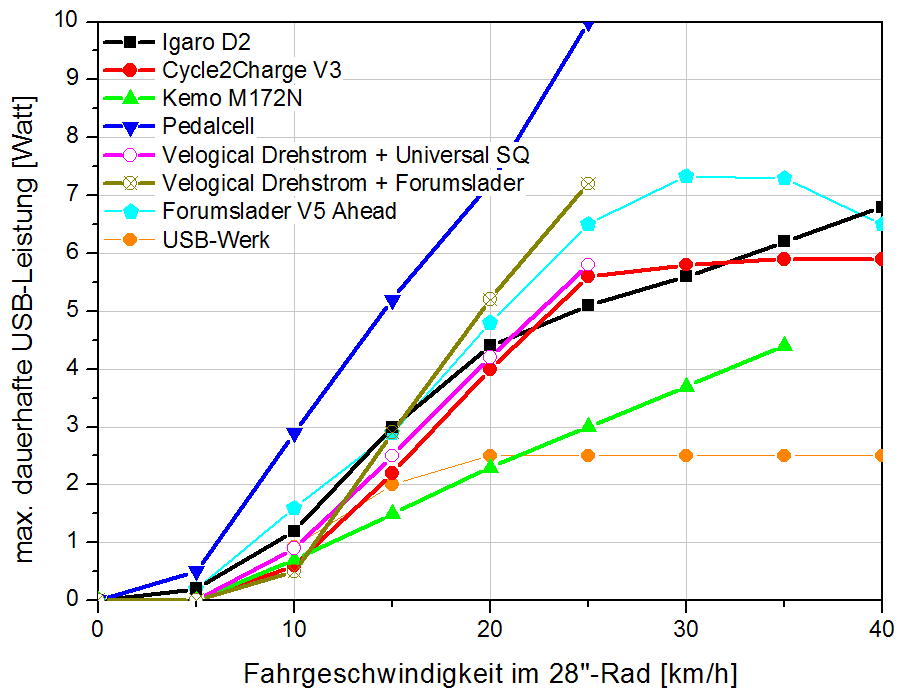
The simplest way to estimate how quickly a dynamo hub can charge your devices is by looking at a power curve graph. By choosing a cycling speed that reflects how fast you usually ride, you can determine how much power is available at the USB plug – and from there, estimate the charging rate.
Example: 15 kph with the Forumslader V5 Ahead Charger
Following the light-blue Forumslader V5 line up to 15 kph, we can see it produces about 3 watts of power. Because the voltage from a dynamo USB output is fixed at 5 volts, this equates to a current of 0.6 amps. Over one hour of riding, that’s 600 mAh of energy.
So, charging my Petzl CORE 1250 mAh headlamp battery from empty would take about 2 hours and 5 minutes at this rate.
Example: 15 kph with the PedalCell Rim Dynamo Charger
At the same 15 kph, the PedalCell (dark blue line) produces just over 5 watts (5 V and 1.04 A). Over an hour of riding, that equals about 1040 mAh.
At this rate, my Petzl CORE 1250 mAh headlamp battery would charge from empty in roughly 1 hour and 12 minutes.
Note: The data here is recorded in 5 kph intervals. To estimate power output more accurately, round your typical riding speed to the nearest 5 kph. In practice, USB chargers tend to deliver power in steps rather than a perfectly smooth curve—you’ll see this more clearly in the section “Battery Charging With Varying Speeds.”
Battery Storage Losses
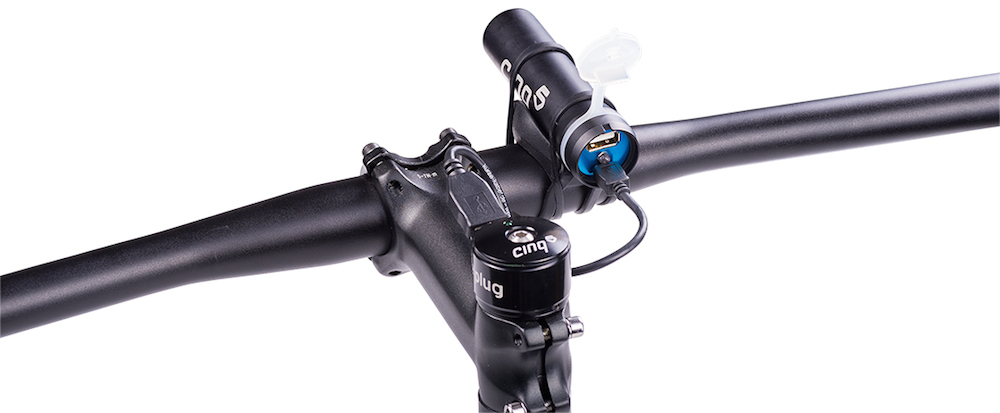
So far, our calculations have assumed that all the power goes straight into your device. But what if you’re charging into a battery first to save the energy for later use?
When energy is stored in a battery, there’s a storage loss of roughly 15–20%. In practical terms, this means you’ll need to ride 15–20% longer to deliver the same amount of usable energy to your device.
Using our previous examples:
-
Forumslader V5 @ 15 kph – storing the energy first means my Petzl CORE battery would take about 2 hours and 30 minutes of cycling to fully charge.
-
PedalCell Rim Dynamo Charger @ 15 kph – it would take roughly 1 hour and 26 minutes to fill the same battery.
So, whenever you’re charging via an intermediate battery, plan for slightly longer ride times.
Charging Differences Between Dynamo Hubs and USB Chargers

The power curve we looked at earlier highlighted differences between USB chargers, but what about differences between dynamo hubs themselves? It turns out, the variation can be significant.
Example: 15 kph with the Shimano UR700 hub
Paired with the kLite USB charger, the UR700 delivers 3 watts of power (5 V × 0.6 A), or 600 mAh per hour. This would fully charge my Petzl CORE 1250 mAh headlamp battery in about 2 hours and 5 minutes.
Example: 15 kph with the SON 28 hub
Using a SON 28 hub with the same kLite USB charger, the power output drops to 1.9 watts (5 V × 0.38 A), or 380 mAh per hour. Charging the same Petzl battery would then take over 3 hours – a 36% longer charge time compared to the UR700.
So, the choice of a dynamo hub can have a major impact on charging speed.

Looking at the Shimano UR700 across four different USB chargers, we see that it can deliver 20 to 50% more power at any given speed. While this comparison is limited to just four USB chargers, it’s a strong indication that the UR700 can noticeably boost power in almost any dynamo charging setup.
However, there’s a trade-off. The UR700 is less efficient than some other hubs – its drag at the wheel is often 2 to 3X higher than a SON 28 hub. Over long rides, that extra resistance can add up and slow you down.
You can read more about the dynamo hub drag HERE.
USB Charger Testing With Varying Speeds
While the previous graphs gave us a snapshot of power output at specific speeds, in real-world riding (especially on undulating terrain), you rarely maintain a constant speed for long stretches.
To better simulate these conditions, Fahrrad Zukunft ran a dynamic test using varied cycling speeds to see which dynamo USB chargers could deliver the most power under changing conditions.
The speed variations in the test are quite extreme, but it’s still revealing: some USB chargers handle fluctuations much better than others, adapting to speed changes more efficiently.
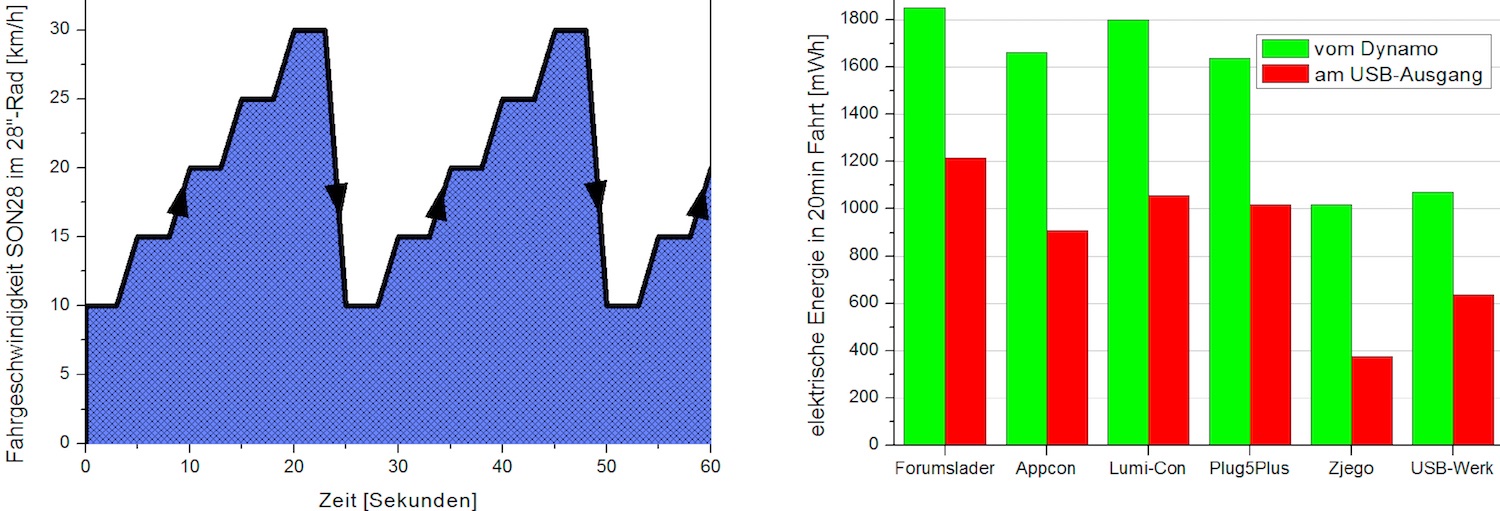
The test protocol varied cycling speed in 2-second steps from 10 kph up to 30 kph and back down to 10 kph, with 3-second accelerations between steps. Over the 20-minute test, this setup highlights how responsive USB chargers are as they constantly try to optimise the charging rate.
Output power at the USB port after 20 minutes:
-
Forumslader V5 – 1200 mWh (240 mAh)
-
Lumi Con P5 – 1000 mWh (200 mAh)
-
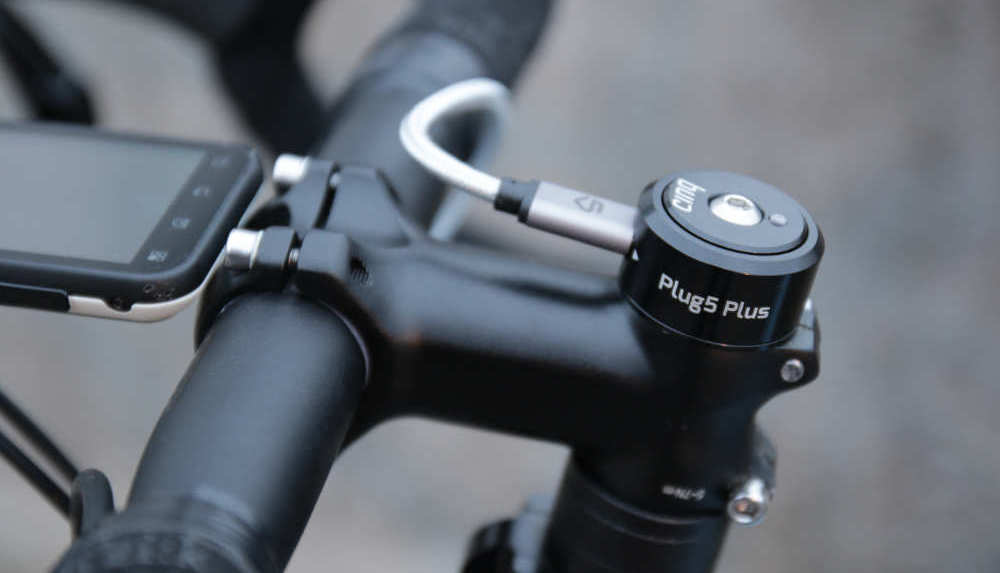
Plug5 Plus – 1000 mWh (200 mAh)
-
NC-17 Appcon 3000 – 900 mWh (180 mAh)
-
USB Werk – 600 mWh (120 mAh)
-
Zjego – 400 mWh (80 mAh)
As expected, chargers with higher overall power output performed best. However, the Lumi Con P5 is notable: despite producing less peak power than some top-four chargers, it still delivers a solid charge thanks to its superior ability to handle speed fluctuations.
Battery Charging With Varying Speeds

PedalCell recently ran a lab test (with contributions from me!) to see how their rim dynamo responds to changing cycling speeds. You can check out their white paper HERE.
The data is interesting because it shows how the USB charger constantly adjusts the power output depending on speed. Unlike the smooth curves shown in the FahrradZukunft graphs, power is actually delivered in “steps” rather than continuously.
For the PedalCell, the data suggests that a speed change of roughly 2 mph (3 kph) is enough to trigger a change in the charge rate.
By extracting the power and time data from the graph, we can estimate how much energy the PedalCell could deliver on undulating terrain.
For example, on a course with a 50-second descent followed by a 10-second climb, repeated 60 times, the PedalCell can deliver roughly 1583 mAh per hour. This is a surprisingly high output for a bicycle dynamo on bumpy terrain.
The Complexity of Calculating Smartphone Charging Rates
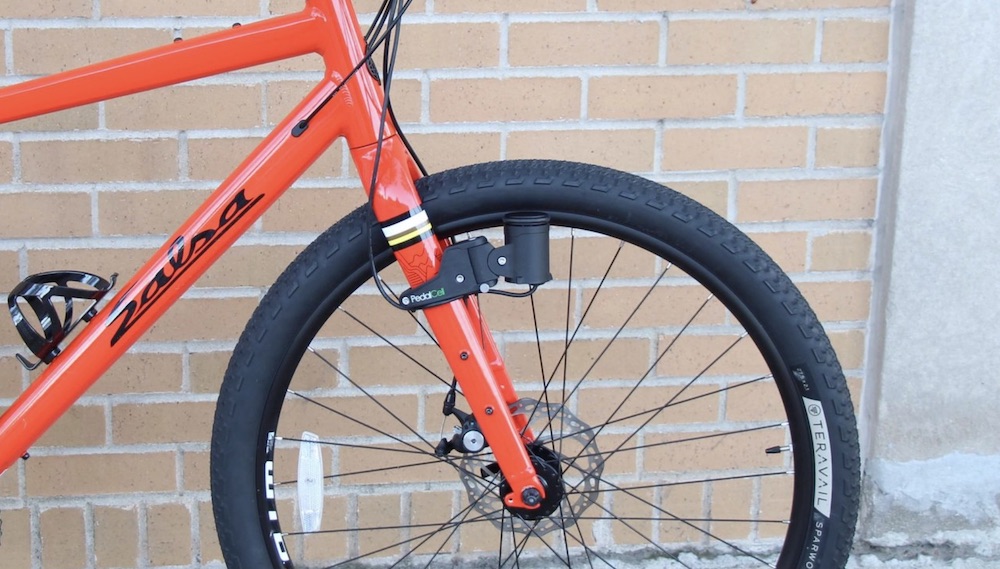
One of the most common devices cyclists try to charge on the road is a smartphone. However, predicting charge times can be tricky. That’s because the charging software decides how much power the phone accepts, and this varies a lot between devices and operating systems.
Here are the main factors that affect smartphone charging rates:
-
Battery percentage: Most phones charge quickly when the battery is low, then slow down as the battery approaches 100% to protect the cells.
-
Screen state: Phones often accept more power when the screen is on versus when they’re in standby.
-
Running apps: The apps you’re using can also influence how much power the phone draws.
-
USB charger compatibility: Your dynamo USB charger needs to support the appropriate charging protocols for your phone. There are dozens of standards created by industry groups and companies to safely deliver maximum power. If your charger doesn’t support the right protocol, your phone may not charge at full speed.
In short, smartphone charging is far less predictable than charging simpler devices like headlamps or power banks.
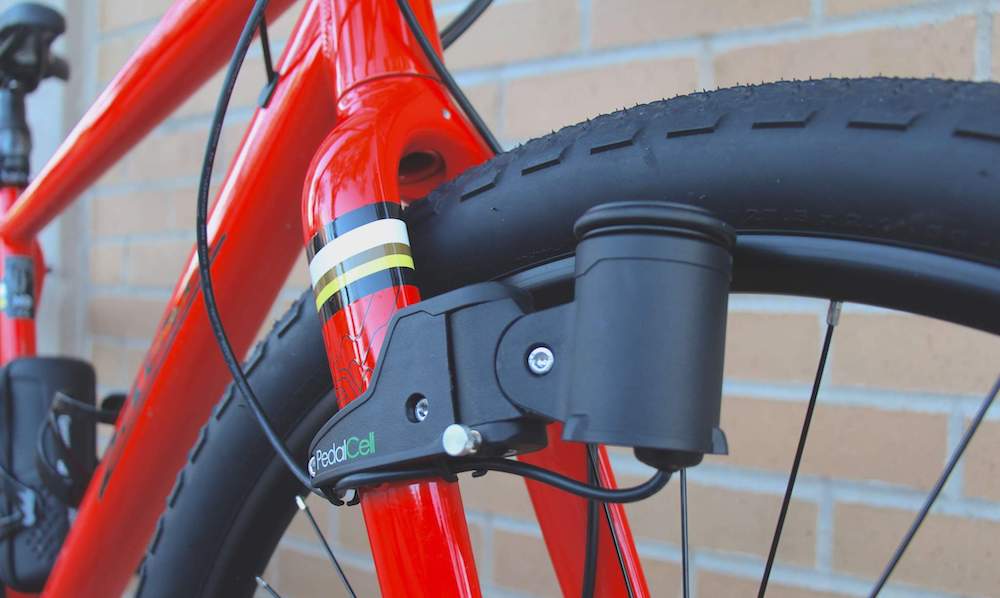
In some cases, smartphones don’t charge well from a dynamo because the charging software mistakes the input for a faulty wall charger, causing it to severely throttle the charge rate.
One reader reported that their Motorola smartphone only draws 0.3 A (1.5 W) regardless of cycling speed—even though their B&M USB Werk charger should be delivering 0.7 A (3.5 W).
The workaround? Charge into a power bank first, then feed that power to the smartphone. While this introduces the battery storage losses we discussed earlier, it also allows the phone to accept twice as much charge – a worthwhile trade-off on long rides.
Smartphone Charging With Varying Speeds
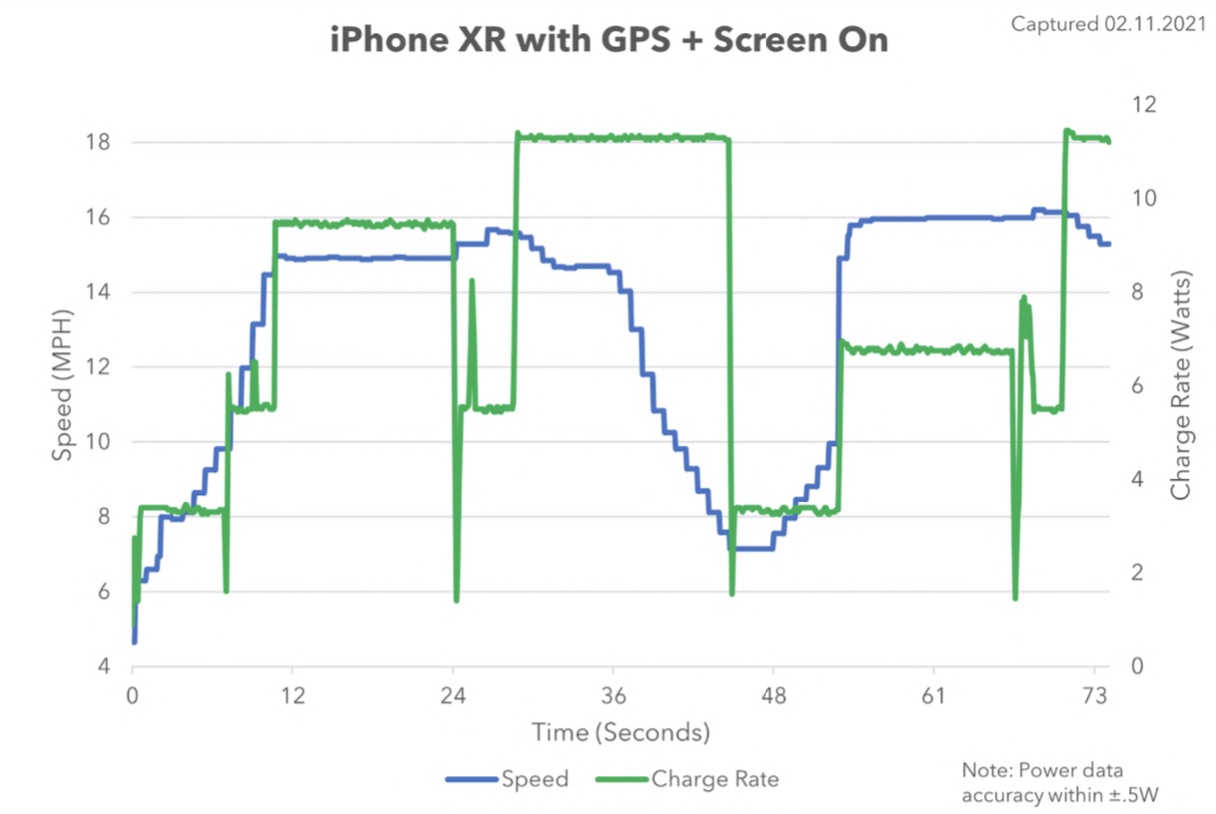
Now let’s look at smartphone charging data.
PedalCell ran a lab test with three different smartphones to see how well their charger could negotiate with the phone’s software to optimize charging speed. They measured rates with the screen on and off—for this resource, I’m using the screen-on data.
The batteries were all at 40–50% charge, which is important because smartphones tend to charge fastest in this range. You won’t see the same speeds at 80% or higher.
To estimate an iPhone XR’s charging speed on hilly terrain, we can extrapolate from the graph assuming a course with a 30-second descent followed by a 15-second climb, repeated 80 times.
On this riding profile, the charging rate works out to about 1666 mAh per hour, which is roughly 57% of the iPhone XR’s battery capacity—a surprisingly high number for a dynamo on undulating terrain!
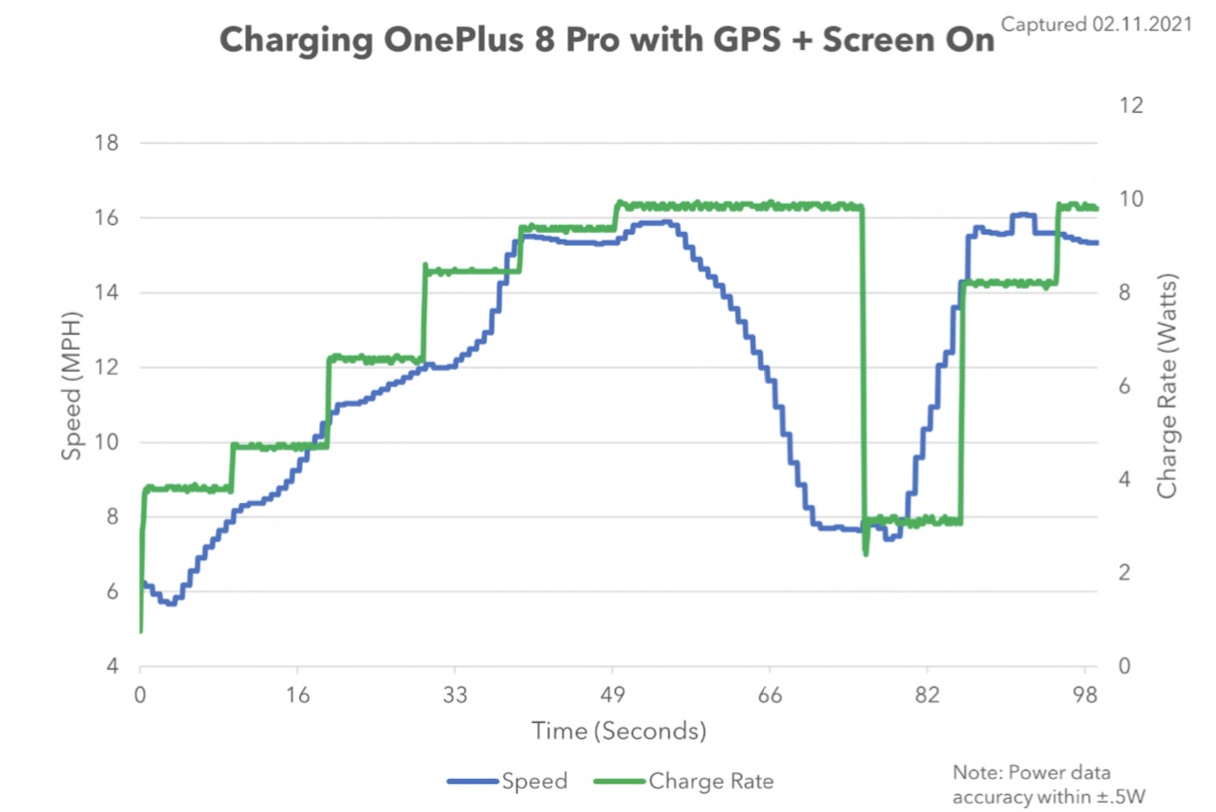
The PedalCell shows very little negotiation time when charging the OnePlus 8 Pro, so at first glance, it might seem like it charges similarly to a 10,400 mAh battery.
But does that mean it actually gets more charge than the iPhone XR? Not quite.
Calculating from the test data, the OnePlus 8 Pro receives about 1578 mAh per hour, which is only around 35% of its total battery capacity. Even though the charger ramps up quickly (short negotiation time), the peak charge rate is slightly lower than the iPhone XR, so it doesn’t accumulate as much charge at higher speeds.
This is based on a riding course of a 50-second descent followed by a 20-second climb, repeated 51 times.
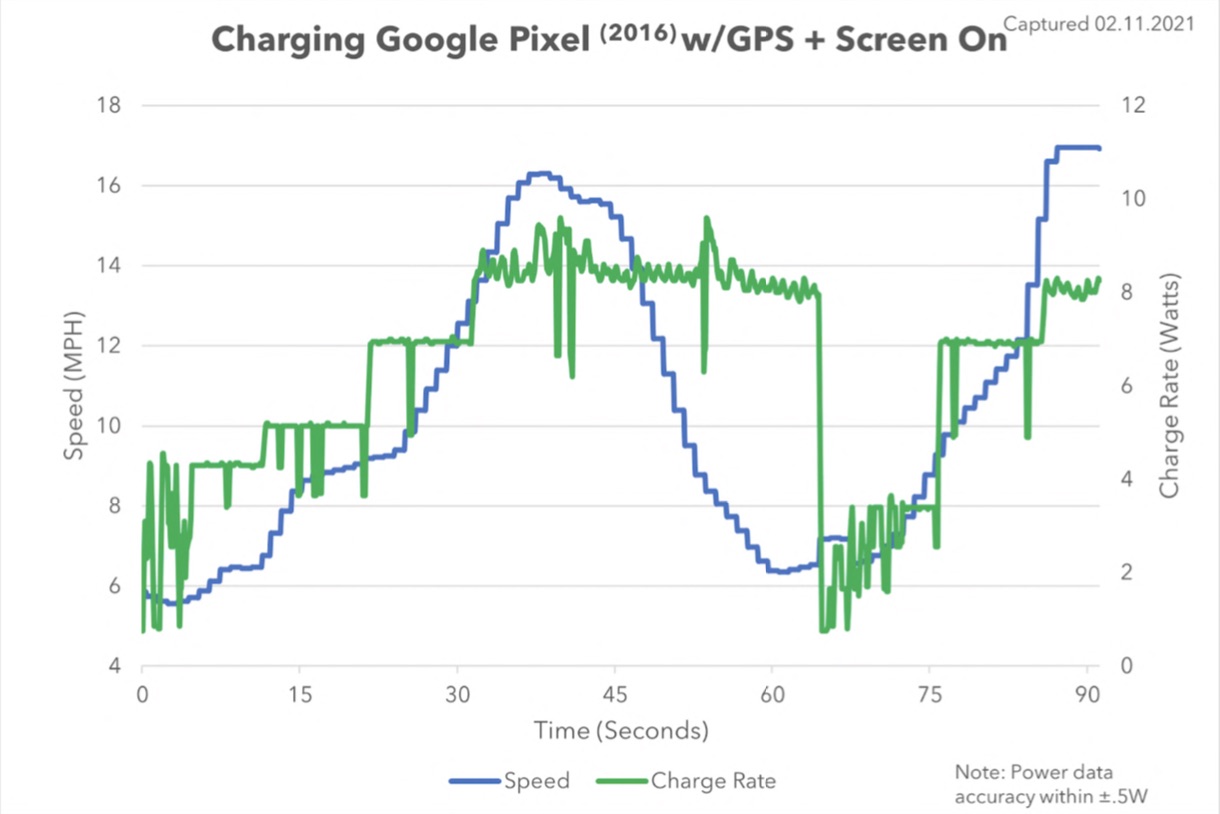
Among the smartphones tested, the Google Pixel (2016) had the lowest charge rate.
Interestingly, its software caused the current to fluctuate quite a bit compared to the other phones. PedalCell suggested this might be due to the battery being 4–5 years old, but looking at the Pixel 2 XL’s wall charging behaviour, it seems that this fluctuation is likely normal even when the battery is new.
Despite a lower peak charging rate of around 8.5 W, the Google Pixel still managed about 1362 mAh per hour, which is roughly 49% of its battery capacity.
This is based on a riding course of a 38-second descent followed by a 22-second climb, repeated 60 times.
Summary

This topic can get a bit tricky, so if you’ve made it this far—congratulations! 👏🏼
At constant speeds, it’s relatively straightforward to predict how quickly a dynamo USB charger will fill a standard battery. You can use the Fahrrad Zukunft power output graphs to estimate charge per hour, and the graphs clearly show that some chargers deliver substantially more power than others at different speeds.
Dynamo hubs also make a big difference. For example, the Shimano UR700 provides 20–50% more power than many other hubs at the same speed, though data from Skjegg indicates that this comes with higher drag relative to the power it produces.
When riding on hilly or undulating terrain, calculating charge times becomes more complex because some USB chargers handle varying speeds better than others. As a general rule, though, the most powerful chargers will extract the most charge from your dynamo, regardless of terrain.
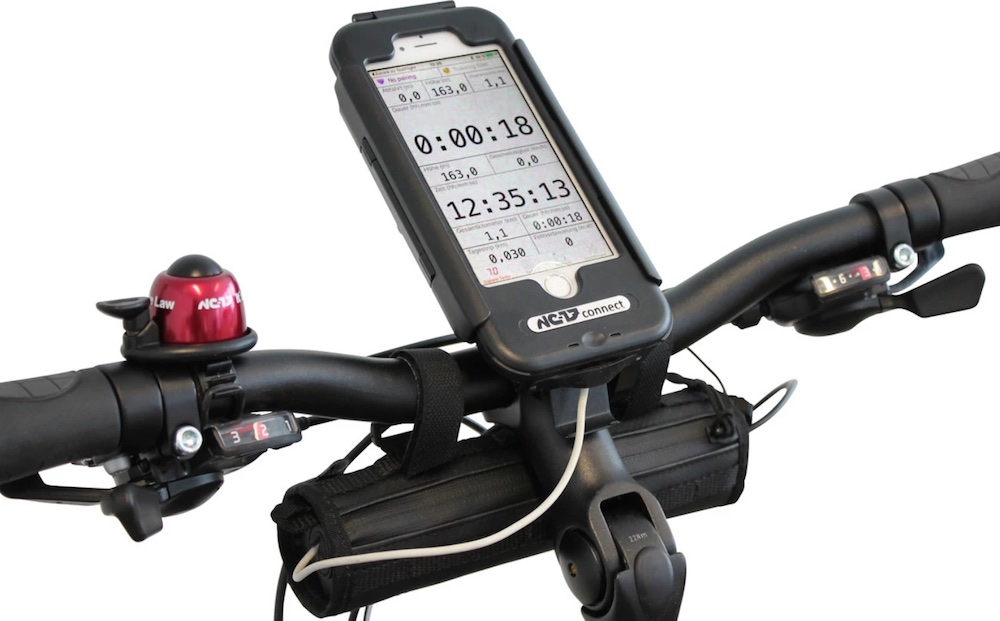
And finally, smartphone charging. I wish I could give a simple answer for charge times, but there are too many variables to account for.
As we saw in the PedalCell test with three different phones, the charging software heavily influences the rate. Battery percentage matters too – phones charge fastest when the battery is low. Whether the screen is on or off, and which apps are running, also affect how much power the phone can draw.
Big thanks to PedalCell for collecting detailed data on charging both batteries and smartphones at varying speeds, helping us better understand dynamo charging! You can also check out how the PedalCell rim dynamo produces more power than a hub dynamo, and at a higher efficiency HERE.
Learn About Dynamo USB Chargers HERE, Dynamo Hubs HERE, Dynamo Wiring Systems HERE, Pass-Through Batteries HERE and Dynamo Lights HERE
